

ENSv2 is live now, and Trezor is v2 ready.
Learn more about what the new ENS has to offer 👇
4.0/ 5
Our score
Very good
Secure element
Yes
Firmware
Fully open source
Supported assets
1,000
Bitcoin-only
No
What is Trezor?
Trezor makes non-custodial hardware wallets that generate and store private keys offline. The company says more than 2 million users rely on its devices, which use 100% open-source code and design. Trezor Suite adds desktop and mobile tools for managing assets without moving private keys off the device.
Company and ownership
Trezor began in 2013 and is part of SatoshiLabs Group, headquartered in Prague, Czech Republic. The company describes itself as fully self-funded, with no outside investors or venture capital.
How the wallet works
During setup, the device generates the wallet keys and creates a wallet backup, also called a recovery phrase. The backup can restore the wallet on another Trezor if the device is lost. Transactions are reviewed on the device screen before signing, while Trezor Suite handles portfolio tracking, buying, selling, swapping, and staking for selected assets.
Trezor supports thousands of coins and tokens across networks including Bitcoin, Ethereum, Solana, Base, and Arbitrum One. WalletConnect connects the device to more than 70,000 dApps and DeFi protocols. The company also lists more than 30 compatible wallet integrations, including MetaMask, Rabby, Backpack, and Cake.
Fees and availability
Trezor Suite is free to download. Sending crypto incurs the standard network transaction fee, paid to the relevant network. Buy, sell, and swap transactions show the full cost upfront. Provider and transaction costs may apply. The product is available through Trezor hardware and its desktop and mobile applications; supported assets and Suite services vary by asset and provider.
Track record and risks
Trezor has protected crypto owners with open-source hardware wallets since 2013. Its website reported more than 2 million users by October 2026. Suite updates continued through October 2026, when version 26.10.1 added longer passphrases, Arc EVM support, CSV trade-history export, and Bitcoin-to-EVM swaps.
Self-custody transfers responsibility for the wallet backup to the owner. Anyone who obtains that backup can control the assets. A lost or damaged device requires successful recovery. Buyers also face supply-chain risk when purchasing through resellers. In October 2026, Trezor reduced its reseller network after recent supply-chain incidents and said there was no evidence that its devices had been compromised. Network fees and third-party costs remain outside Trezor's control.
Founders
SlushCEO & Co-founder
StickCTO & Co-founder
Best for:Long-term crypto self-custodyOpen-source wallet usersMultichain asset holdersDeFi users with hardware signing
Pros and cons
Pros
- 100% open-source code and design
- Offline private-key storage with on-device transaction review
- Supports thousands of coins and tokens
- Works with more than 30 wallet integrations
- Connects to more than 70,000 dApps and DeFi protocols
Cons
- Users must protect the wallet backup from loss or theft
- Buy, sell, and swap services may add provider and transaction costs
- Standard network fees still apply when sending crypto
- Supported assets and Suite services vary by asset and provider
- Trezor reduced its reseller network after supply-chain incidents in October 2026
Our review
4.0/5
Very good
Trezor combines open-source cold storage with a long operating record, but hardware models and Suite services differ across the range.
Trezor is a non-custodial hardware-wallet brand from SatoshiLabs, founded in 2013. Its main security model is straightforward: private keys are generated and stored on the device, while transactions are checked on its screen before signing. Wallet backups can restore funds to another Trezor. Trezor also uses fully open-source code and design across the brand.
The company says it protects more than 2 million users. Its Trezor Suite app supports desktop and mobile portfolio management, buying, selling, swapping, staking and selected dApps.
Asset coverage is broad at 1,000s of coins and tokens, including Bitcoin, Ethereum, Solana, Base and Arbitrum One. More than 30 wallet integrations include MetaMask, Rabby, Backpack and Cake. Recent Suite updates added Tron staking, Robinhood Chain, HyperEVM, Arc EVM and Bitcoin-to-EVM swaps, although support can depend on the device, network and third-party integration. Trezor Suite shows the full cost of transactions upfront; sending crypto incurs the standard network fee.
There are trade-offs. The site describes Tropic01 as a transparent and auditable Secure Element. Self-custody shifts recovery responsibility to the owner. A lost or exposed backup can compromise the wallet.
Trezor says it is fully self-funded, with no outside investors or venture capital. In October 2026 it reduced its reseller network after recent supply-chain incidents, while stating there was no evidence that Trezor devices had been compromised.
Specs
| Secure element | Yes · unverified |
|---|---|
| Firmware | Fully open source · unverified |
| Bitcoin-only | No · unverified |
| Supported assets | 1,000 · unverified |
| BIP39 passphrase | Yes · unverified |
| Companion app | Trezor Suite · unverified |
| Backup options | Wallet backup, Recovery phrase · unverified |
Not disclosed by the provider: KYC required, Price from, Connectivity, Display, Air-gapped signing, Battery, Multisig support, Touchscreen, NFC.
Data from the provider's website and public sources. Fees and availability change; confirm on the official site before you sign up.
Key features
Offline key storage
The device generates and stores private keys offline, keeping them away from internet-connected applications.
On-device verification
Trezor displays transaction details for review before signing, rather than relying only on a computer or phone screen.
Wallet backup recovery
A wallet backup, also called a recovery phrase, can restore the wallet on another Trezor device.
Trezor Suite app
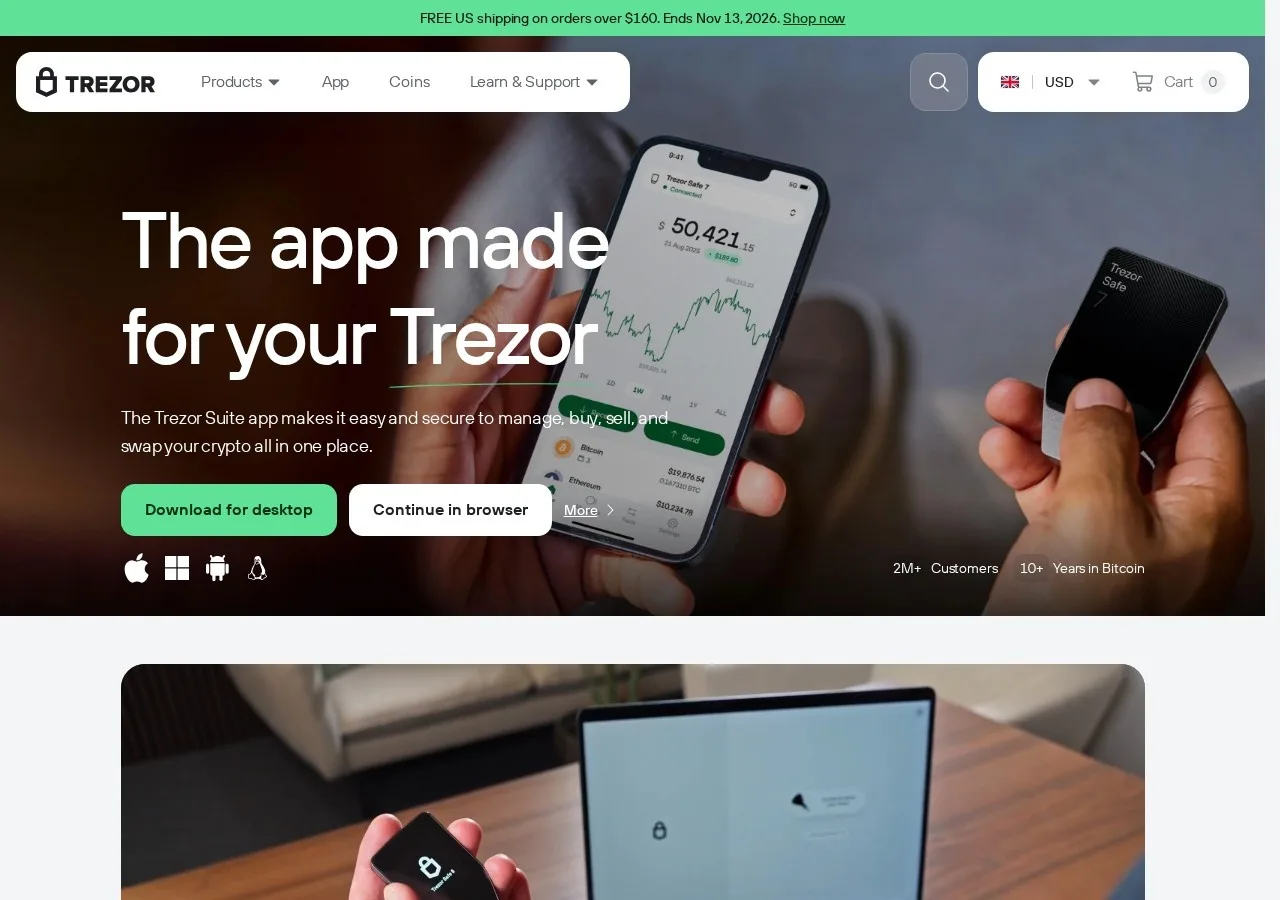
The free desktop and mobile companion app supports portfolio tracking, buying, selling, swapping, and selected staking.
Multichain asset support
Trezor supports thousands of coins and tokens across Bitcoin, Ethereum, Solana, Base, and Arbitrum One.
WalletConnect access
WalletConnect connects Trezor devices to more than 70,000 dApps and DeFi protocols.
Third-party integrations
The device works with more than 30 wallet apps, including MetaMask, Rabby, Backpack, and Cake.
Passphrase protection
An optional passphrase adds another wallet layer, with longer passphrases added to Trezor Suite in October 2026.
Inside Trezor
Hardware wallets
Trezor hardware wallets generate and store private keys offline. Users review transactions on the device and can recover the wallet on another Trezor with its wallet backup.
Trezor Suite
Trezor Suite is the companion app for desktop and mobile. It supports portfolio tracking, buying, selling, swapping, staking and selected dApps while the keys remain on the Trezor device.
Buy
The Buy function in Trezor Suite lets users purchase selected cryptocurrencies through supported payment providers. The app shows the full transaction cost upfront.
Sell
The Sell function in Trezor Suite supports selling selected cryptocurrencies through available providers. The available assets and payment options depend on the service used.
Swap
The Swap function lets users exchange supported cryptocurrencies in Trezor Suite. Recent updates added Bitcoin-to-EVM swaps.
Stake
The Stake function lets users stake selected cryptocurrencies through Trezor Suite. Recent updates added Tron staking, and Trezor announced SOL staking in October 2026.
dApps
Trezor connects to DeFi protocols, NFT marketplaces and other dApps through WalletConnect. The company lists more than 70,000 compatible dApps and DeFi protocols, including Aave, Uniswap, Morpho and OpenSea.
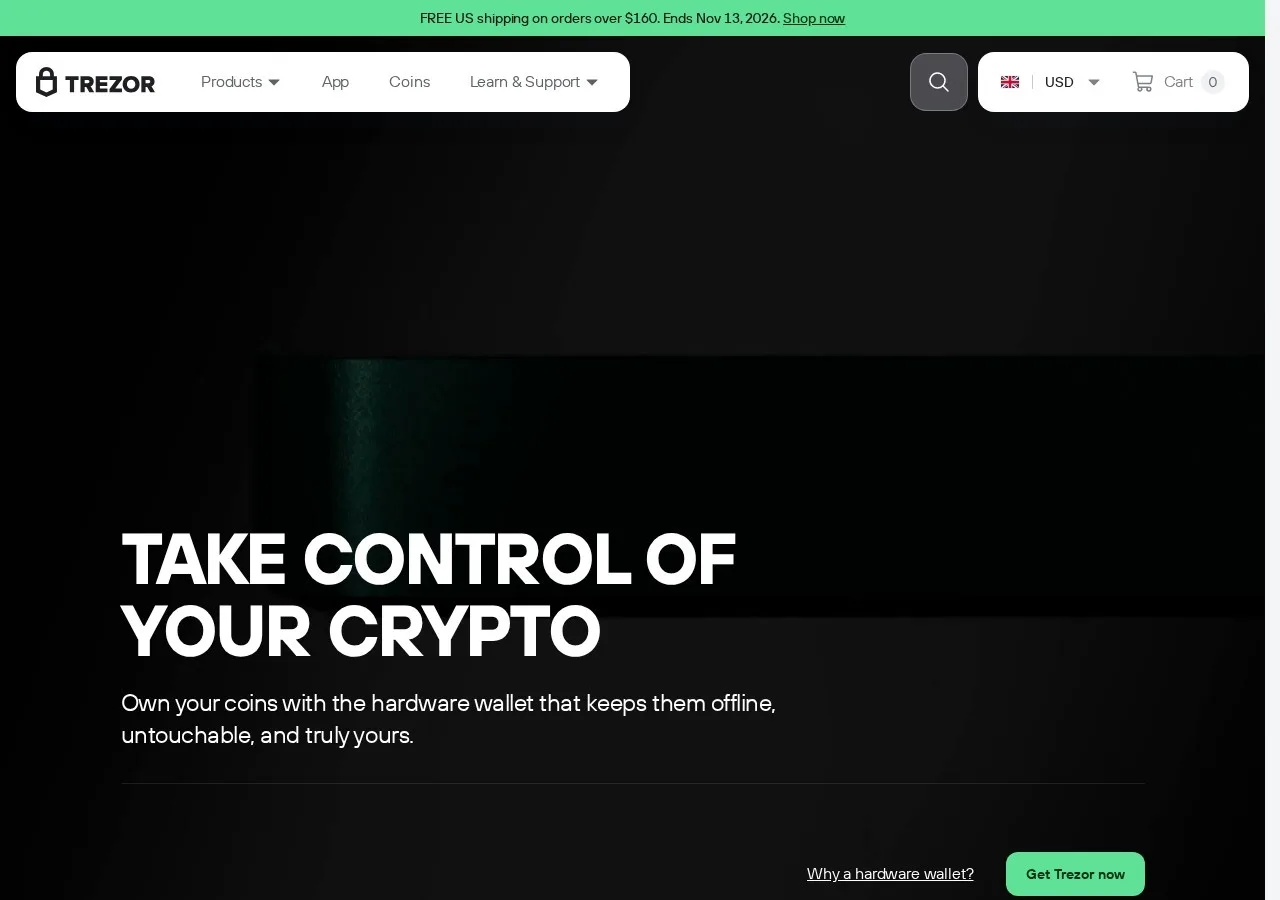
Trezor screenshots
What users say about Trezor
Reported complaints include customer-support delays, a shipping-provider data breach, and supply-chain concerns.
Top goods
In their own words
“Title: Ledger Supply-Chain Attack: Why We Should Use AI to Audit Our Hardware Wallets. Open Source for the Win! I own several Ledgers and Trezors. My Ledgers were purchased through Ledger's official Amazon store, while my Trezors came directly from Trezor.”
“Coldcard's issue was not hardware-based; it was faulty code that did not use true random number generation. Beyond that, Ledger had a third-party seller distributing compromised devices to buyers who failed to do their due diligence by purchasing directly from the first-party website.”
“It is not ‘discontinued’ to the full extent: model T still gets firmware updates.”
“Trezor Data Breach Ordered a trezor earlier this month and my data was leaked. Really pissed off. A simple emailed sorry isn’t enough. Never again.”
“Trezor support not working How do you even contact the support team? The website is glitchy, pressing the contact support button does nothing. I tried on both chrome and safari browser. Some pages on their website is 404. How did I trust this company? What do I do?”
“Browsers Cannot connect to Trezor Suite For some time my browsers cannot connect to the Trezor suite to sign transactions. The problem seems to be that all browsers (tested Chrome and Firefox) try to connect via WSS, but Trezor suit offers only a WS (non secure) on localhost.”
Scam warning: Phishing emails and letters impersonating Trezor have asked users to verify firmware or scan QR codes.
Scam warning: Fake Trezor apps and websites can prompt users for seed phrases or additional payments.
Based on 200 Reddit posts and comments from the last 12 months, checked Oct 18, 2026. These are posts by users on other sites, not reviews submitted on CryptoReview.
User reviews
No user reviews yet. Have you used Trezor? Share your experience below.
FAQ
Who founded Trezor?
Trezor began in 2013 and is part of SatoshiLabs Group, the company behind the hardware-wallet brand. Trezor says it is fully self-funded, with no outside investors or venture capital.
What fees does Trezor charge?
Sending crypto through Trezor incurs the standard network transaction fee. Trezor Suite shows the full cost of buy, sell and swap transactions upfront, with provider and transaction costs potentially applying.
Does Trezor require KYC?
Trezor hardware wallets are non-custodial devices that keep private keys on the device. Trezor Suite buying, selling and swapping can involve payment providers, so requirements can depend on the selected service.
Is Trezor safe for self-custody?
Trezor generates and stores private keys offline and lets users verify transactions on the device screen. In October 2026, the company reduced its reseller network after supply-chain incidents and said there was no evidence that Trezor devices had been compromised.
Which coins and networks does Trezor support?
Trezor supports 1,000s of coins and tokens, including Bitcoin, Ethereum, Solana, Base and Arbitrum One. Support also extends through more than 30 wallet integrations and changes with device and software compatibility.
What happens if a Trezor hardware wallet is lost?
A wallet can be restored on another Trezor using its wallet backup, also called a recovery phrase. The backup must remain private and stored offline because it controls access to the funds.
Latest from Trezor on X
Trezor now supports Arc, the stablecoin-native network.
Send, receive, buy, and swap on Arc directly in Trezor Suite. Your keys stay offline, and every transaction is confirmed on your Trezor's Trusted Display before you sign. https://t.co/g4sZxY9MKw
Send, receive, buy, and swap on Arc directly in Trezor Suite. Your keys stay offline, and every transaction is confirmed on your Trezor's Trusted Display before you sign. https://t.co/g4sZxY9MKw
One year ago today, we celebrated a milestone we'll never forget.
In the heart of Prague, the city where Trezor was born, we took the stage at our very own Trustless by Design event to introduce Trezor Safe 7 to the world.
It was more than just a product launch.
It was the culmination of years of innovation, countless hours of hard work, and the dedication of an incredible team united by one mission: making self-custody more secure, accessible, and convenient for everyone.
Since then, Trezor Safe 7 has gone on to earn recognition, including Best Hardware Wallet of the Year and a Red Dot Award for Product Design.
But what makes us proudest is the people behind it. Every team member whose passion and dedication brought Trezor Safe 7 to life.
One year later, that same passion continues to drive us forward.
To our team, our partners, and everyone who has supported us along the way: thank you for being part of this journey. 💚
The perfect accessories for your Trezor Safe 7 👇 https://t.co/vxds6yNQ8r

Stake $SOL and earn rewards on Trezor Suite.
Here’s how to do it 👇 https://t.co/6Q7secVSv7
Here’s how to do it 👇 https://t.co/6Q7secVSv7
Recent public posts from @Trezor, shown as published. Not reviewed or endorsed by CryptoReview.
Alternatives to Trezor
NFC hardware wallet with 14,100+ assets across 90+ blockchains
NFCSecure elementPartially open source

Air-gapped hardware wallet with QR signing, a CC EAL5+ chip and 10,000+ assets
QR code (air-gapped) · microSDSecure elementClosed source

Open-source hardware wallets supporting 100+ chains and 30,000+ coins and tokens
No KYCUSB-C · BluetoothSecure elementFully open source

Swiss-made open-source hardware wallet line launched in 2015 by Shift Crypto
Secure elementFully open sourceBitcoin-only

Air-gapped hardware wallet with three secure-element chips and QR signing
QR code (air-gapped) · microSDSecure elementFully open source

Hardware wallets with Secure Element chips, 100+ chains and 15,000+ supported assets
No KYCSecure elementPartially open sourcePrice from: $59