The exchange holds the keys, and you hold a claim on their records. If something goes wrong, you may not be able to get your assets out.
Self-custody means you hold the keys, so only you are in control.
Here’s how to move your funds, step by step 🧵

Hardware wallets with Secure Element chips, 100+ chains and 15,000+ supported assets
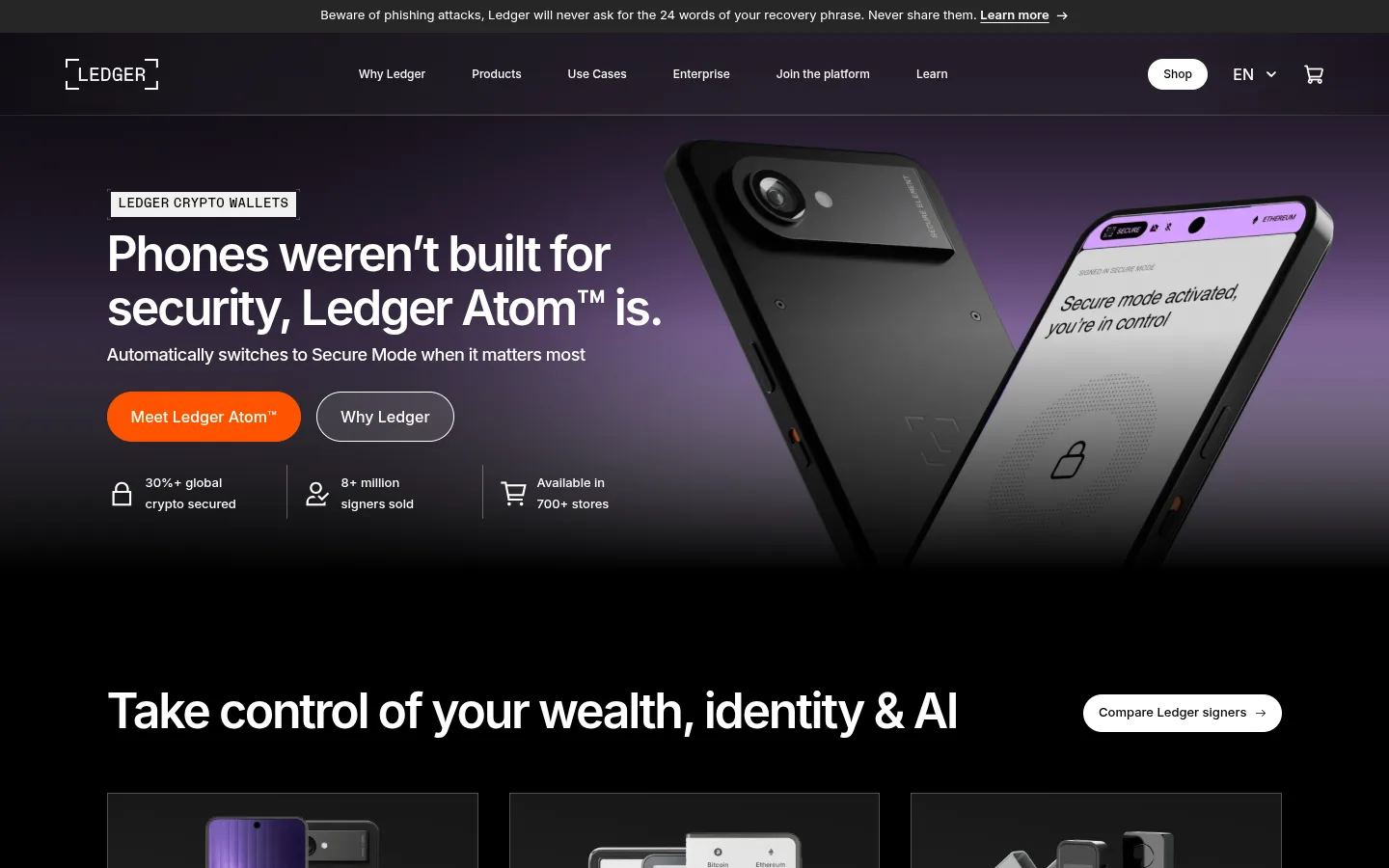
Ledger makes hardware wallets for self-custody. Its devices keep private keys in Secure Element chips and use Ledger OS to approve transactions on the device. The range includes Nano models, touchscreen signers, Ledger Stax, Ledger Flex and the Ledger Atom announced in October 2026. Ledger says it has sold more than 8 million signers and secures more than 30% of global crypto.
Ledger is a French company headquartered in Paris. Founded in 2011 by Éric Larchevêque, it is led by Pascal Gauthier, its chairman and CEO. The company has a team of 600 people. Its product work also covers Ledger Platform, which lets applications connect directly to Ledger signers and use features such as Clear Signing, Transaction Check and 2FA passkeys.
The devices use non-custodial key storage. A recovery phrase restores access if a device is lost, while the hardware device signs transactions after the user reviews them. Ledger Wallet handles sending, receiving, buying, swapping, staking, borrowing and portfolio management across 100+ chains. The app supports more than 15,000 crypto assets, including Bitcoin, Ethereum, Solana and XRP, as well as stablecoins.
Ledger's Secure Element chips are certified hardware components designed to resist physical and remote attacks. The operating system is only partially open source. Ledger Wallet code is open source under an MIT licence, while low-level code communicating with the Secure Element remains closed.
The Ledger Wallet app connects to third-party providers for transactions and on-chain services.
Ledger reported more than 8 million signers sold and availability in more than 700 stores by October 2026. In December 2023, an exploit in Ledger Connect Kit injected malicious code into decentralised applications. Users signing through affected EVM applications lost about $600,000 in assets. Ledger announced reimbursement for affected users, including non-customers. It also commissioned a third-party audit of access control and code promotion in early 2024.
The closed parts of Ledger OS reduce independent code review compared with fully open-source alternatives.
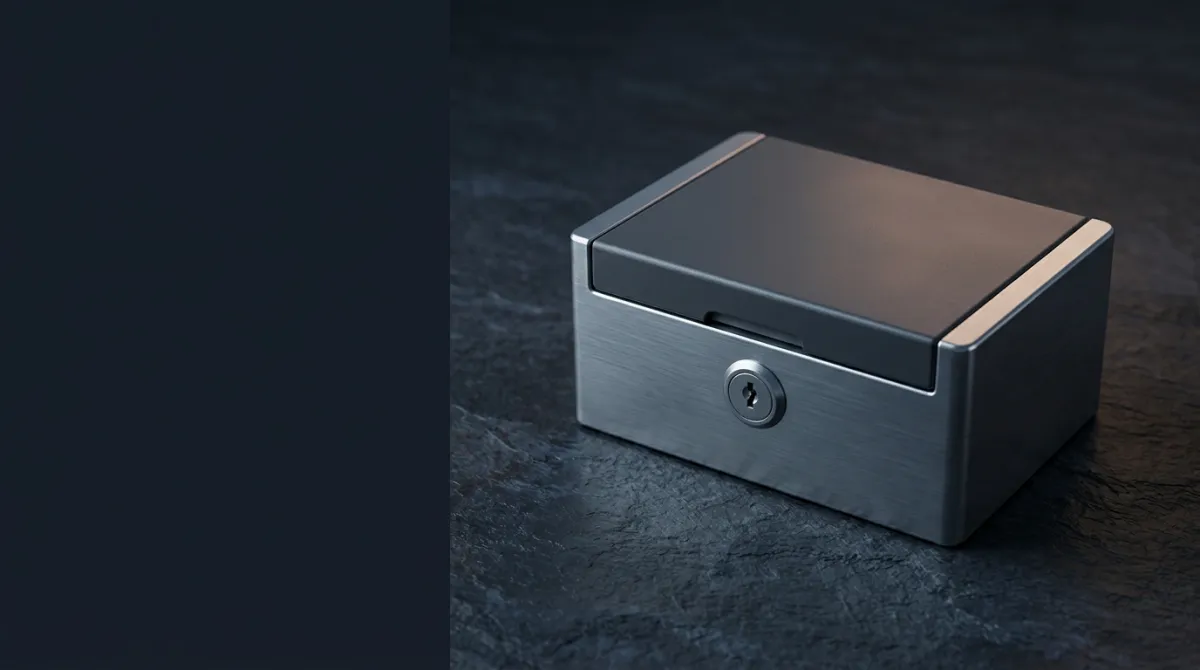
Ledger offers certified Secure Element hardware and broad asset support, but partially closed firmware and the 2023 Connect Kit exploit weaken its transparency record.
Ledger is a hardware-wallet maker with a broad device range, including Nano models with screens and buttons, touchscreen signers and Ledger Atom. Its devices keep transaction signing on dedicated hardware rather than a phone or computer. Ledger says its signers use certified Secure Element chips and a Secure Element-protected screen, which is a documented protection against remote and some physical attacks.
The main trade-off is firmware transparency. Ledger Wallet is open source under an MIT license, but Ledger OS remains only partially reviewable because low-level Secure Element code cannot be exposed under its agreement with STMicroelectronics. That is less transparent than fully open-source hardware wallets. Ledger’s current site lists USB-connected Nano devices, touchscreen models and Ledger Atom. Atom adds built-in 5G connectivity and switches to Secure Mode when private keys are involved.
Asset coverage is broad. Ledger Wallet supports 100+ chains and 15,000+ crypto assets, with tools for sending, receiving, buying, swapping, staking, borrowing and portfolio management.
The company was founded in 2011, is headquartered in Paris, and is led by Chairman and CEO Pascal Gauthier. Ledger says it has sold more than 8 million signers. Its record includes a serious incident: on December 14, 2023, a compromised former employee account enabled malicious Ledger Connect Kit code that led to about $600,000 in stolen assets. Ledger announced reimbursement for affected users and later described audits and access-control changes.
| KYC required ⓘ | No · unverified |
|---|---|
| Price from | $59 · unverified |
| Secure element | Yes · unverified |
| Firmware | Partially open source · unverified |
| Bitcoin-only | No · unverified |
| Supported assets | 15,000 · unverified |
| Battery | Yes · unverified |
| Companion app | Ledger Wallet · unverified |
| Backup options | Secret Recovery Phrase · unverified |
Not disclosed by the provider: Connectivity, Display, Air-gapped signing, BIP39 passphrase, Multisig support, Touchscreen, NFC.
Data from the provider's website and public sources. Fees and availability change; confirm on the official site before you sign up.
Ledger devices use certified Secure Element chips to protect private keys and support on-device transaction approval.
Users review and approve transactions on the signer instead of exposing private keys to Ledger Wallet or a connected computer.
Ledger Wallet supports more than 15,000 crypto assets across 100+ chains, including Bitcoin, Ethereum and Solana.
The companion app supports sending, receiving, buying, swapping, staking, borrowing and portfolio management.
Ledger Platform can decode transaction details on the Secure Element-protected screen before approval.
The product line includes touchscreen signers such as Ledger Stax and Ledger Flex, alongside Nano devices with buttons.
Ledger Agent Intent routes AI-agent requests to the Ledger signer, where the user approves them.
Ledger Atom is a signer with built-in 5G connectivity that switches to Secure Mode when private keys are involved. Ledger positions it for everyday apps, asset management and AI-agent approval flows.
These devices use touchscreen controls and a Secure Element-protected display for reviewing and approving transactions. Ledger lists clarity, transaction control and private backup among their functions.
Nano devices use Ledger OS, a compact screen and manual buttons. They provide a smaller hardware-wallet format for signing transactions and managing supported assets.
Ledger Wallet is the companion application for sending, receiving, buying, swapping, staking, borrowing and managing crypto. It supports 100+ chains and more than 15,000 crypto assets, with dApp access and portfolio tools.
Ledger Platform lets businesses and developers integrate Ledger security features into applications. Its named tools include Clear Signing, Transaction Check, 2FA passkeys and in-dApp signing.
Ledger Agent Intent collects requests from AI agents in one place while the user approves transactions on a Ledger signer. The signer remains the approval point for proposed actions.
Praise focuses on clean, sturdy hardware and hardware-based transaction controls, with some interest in broader app integration. Complaints center on supply-chain security, communication and accountability, launch timing, and account or transaction problems.
“Same. I finally opened up my nano s+. Was pretty easy compared to replacing phone lcd and I've done the latter before. Any way, mine is factory clean. 👍”
“Love approvals on the Ledger signer — hardware confirm beats blind clicks. The offline seed backup still matters when the device retires.”
“I lost 320,000 USDT after buying a Ledger Stax from authorized reseller @CryptoBilis. @Ledger has confirmed an implant in an affected device. Why should victims bear the loss? Will you compensate us? We demand a clear compensation plan and timeline.”
“Any more info yet? Hi, has there any more information since the first discovery? Its been around a week and I'm surprised ledger has still nott announced anything official. Do we know if only ledgers bought through cryptobills have been affected? what about time frame of those affected ledgers?”
“Cant Add DASH account to Ledger Wallet I found an old Ledger nano s, i tried to check all accounts i used to have. I could check almost every account i had but one: DASH account I do have the latest firmware on the device, the latet ledger wallet version, i unlock the ledger, open the app and click…”
Scam warning: Phishing calls and fake emails impersonating authorities or Ledger support have targeted users.
Scam warning: Fake reseller or support channels may be used to obtain access to users' funds.
Based on 100 Reddit posts and comments, 100 X replies from the last 12 months, checked Oct 17, 2026. These are posts by users on other sites, not reviews submitted on CryptoReview.
No user reviews yet. Have you used Ledger? Share your experience below.
Ledger was founded in 2011, and Éric Larchevêque is identified as its founder. The company is headquartered in Paris and Pascal Gauthier is its Chairman and CEO.
Ledger Wallet supports 100+ chains and more than 15,000 crypto assets. Support depends on the asset, device and Ledger or third-party app used.
Ledger devices keep private keys on hardware and use certified Secure Element chips with protected signing screens. A December 14, 2023 Ledger Connect Kit exploit led to about $600,000 in stolen assets, after which Ledger announced reimbursement and security changes.
Ledger Wallet code is open source under an MIT license, while Ledger OS is only partially reviewable. Ledger says low-level code communicating with Secure Element hardware cannot be exposed under its agreement with STMicroelectronics.
Ledger Wallet lets users send, receive, buy, swap, stake, borrow and manage crypto across 100+ chains. It also provides dApp access and live market alerts.
Ledger Nano models use a compact screen and manual buttons, while Ledger's touchscreen signers use touch controls. Ledger Atom adds built-in 5G connectivity and switches to Secure Mode when private keys are involved.


Recent public posts from @Ledger, shown as published. Not reviewed or endorsed by CryptoReview.
NFC hardware wallet with 14,100+ assets across 90+ blockchains
Air-gapped hardware wallet with QR signing, a CC EAL5+ chip and 10,000+ assets
Open-source hardware wallets supporting 100+ chains and 30,000+ coins and tokens
Swiss-made open-source hardware wallet line launched in 2015 by Shift Crypto
Air-gapped hardware wallet with three secure-element chips and QR signing
Open-source hardware wallet brand protecting crypto since 2013
Type at least two characters. Press ↵ to see all results.