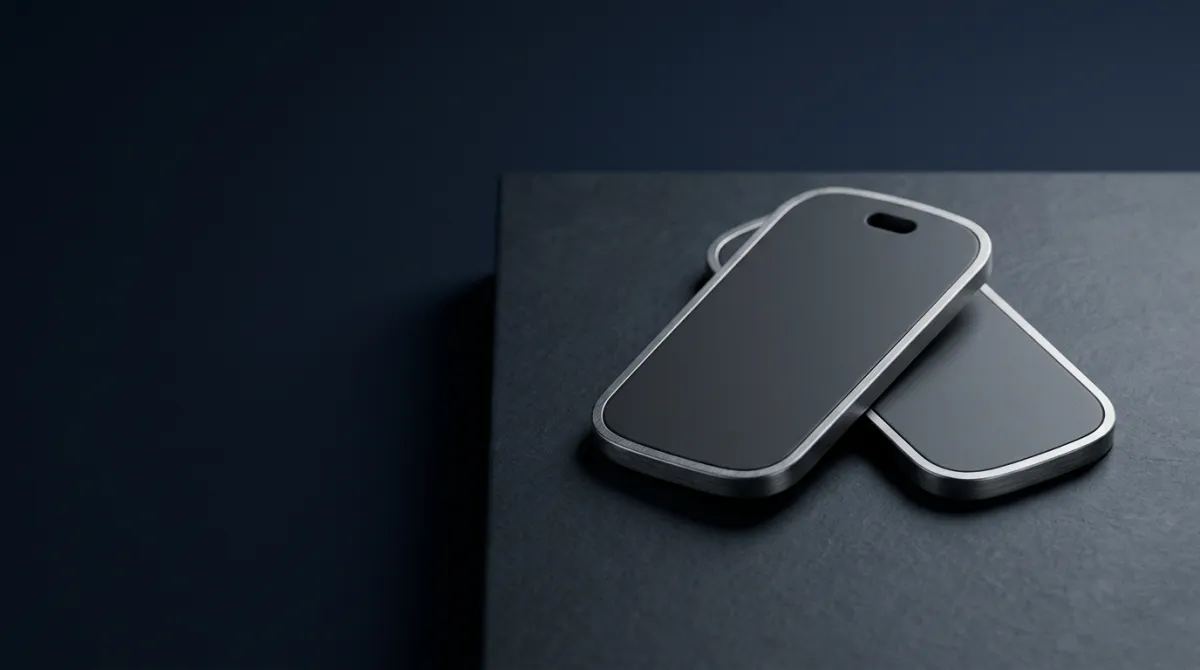

Most people hear “self-custody” and scroll past.
So we put it on a bus and drove it across America 🚌
21 days. 3,900 miles. Boston to San Francisco.
10 universities. 6 community events. 17 cities in 10 states.
💡At every stop, students went from “what is self-custody?” to holding their own keys: a quick lecture, a hands-on Tangem Wallet setup, and a first look at Tangem Pay.
Hundreds of students. Millions of impressions, online and offline.
One message, coast to coast: your crypto, your keys 🔐
This is Tangem Campus on the Road! 🎥

4.3/ 5
Our score
Very good
Secure element
Yes
Firmware
Partially open source
Connectivity
NFC
Supported assets
14,100
Bitcoin-only
No
What is Tangem?
Tangem is a non-custodial hardware wallet in NFC card and ring form factors. Its cards have no battery, cable or screen, and generate private keys inside a Samsung S3D350A secure element. The company says the wallet supports 14,100+ assets across 90+ blockchains.
Company and funding
Tangem AG is headquartered in Zug, Switzerland, and launched its hardware wallet in 2017. Andrey Lazutkin is the company’s chief technology officer, creator of the Tangem Wallet, and a fintech professional with more than 20 years of experience. Tangem says its team has more than 250 people across 40 countries. Shima Capital led an $8 million investment round announced in May 2023. SBI Digital Asset Holdings participated in Tangem’s first funding round.
How the wallet works
The wallet is self-custodial. A secure element generates the private key during setup, and signing requires tapping the card to a phone’s NFC reader. A two-card or three-card set creates linked physical backups of the same wallet. A recovery phrase is optional, while the default seedless setup keeps the key inside the chip. The Tangem app supports storage, sending, buying, swapping, staking, DeFi access and NFT management. It also connects to external applications through WalletConnect.
The app supports major networks including Bitcoin, Ethereum, Solana, BNB Chain, Polygon, Avalanche, Cardano, XRP and Tron, alongside other EVM networks and token standards. Tangem Pay adds contactless payment functions, including Apple Pay and Google Pay support.
Costs and availability
Product prices vary by region and promotional offer. The wallet ships to more than 230 countries. The cards have no battery to charge and no recurring hardware connection requirement. Network fees apply to blockchain transactions. Swap and purchase costs can depend on the integrated provider or asset.
Security and track record
Tangem says its secure element has EAL6+ Common Criteria certification. Firmware is factory-installed and non-updatable. Security reviews were conducted by Kudelski Security in 2018, Riscure in 2023 and Cure53 in 2026; Tangem says those audits found no vulnerabilities. The company reports 6M+ wallets shipped across 230 countries. Its design removes USB and Bluetooth attack paths, but the absence of a screen means transaction details are checked through the phone app.
Limits and risks
The firmware is closed and cannot be updated, which reduces remote update exposure but leaves less room for public firmware inspection or later fixes. Losing every linked card can remove access, so the backup model depends on keeping separate physical cards safe. Cards bought through resellers carry supply-chain and tampering risks. The app’s swaps and staking functions also add provider and smart-contract exposure beyond cold storage.
Founders
Andrey LazutkinCo-founder and CTO
He has more than 20 years of experience in the fintech industry and created the Tangem Wallet.
Best for:Long-term self-custodySeedless wallet backupsNFC phone usersMulti-chain asset storage
Pros and cons
Pros
- EAL6+ secure element from Samsung Semiconductors
- Battery-free card design removes charging and cable failure points
- Three-card sets provide two physical backups
- Supports 14,100+ assets across 90+ blockchains
- Audits from Kudelski Security, Riscure and Cure53
Cons
- Closed, factory-installed firmware cannot be updated
- No screen for independently checking transaction details
- Losing every linked card can remove wallet access
- App services add provider and smart-contract exposure
- Reseller purchases carry supply-chain tampering risk
Our review
4.3/5
Very good
Tangem offers simple, battery-free self-custody with strong chip security, but its screenless, non-updatable cards trade transaction visibility and firmware flexibility for simplicity.
Tangem is a non-custodial NFC hardware wallet built around a card rather than the USB devices common in this category. The card has no screen, battery or cable. Signing requires tapping it to a phone, and the phone must support NFC. That keeps the hardware compact and removes battery failure, but transactions are approved through the companion app instead of on a trusted display.
Tangem uses a Samsung S3D350A secure element with EAL6+ Common Criteria certification. The private key is generated on the chip and remains there, while two-card or three-card sets provide physical backups. A recovery phrase is optional. Firmware is factory-installed and non-updatable, which removes a class of remote firmware attacks but also prevents later firmware fixes and makes the sealed implementation more dependent on the manufacturer. The app and SDK are open source, while the card firmware is not fully open source.
Independent reviews by Kudelski Security in 2018, Riscure in 2023 and Cure53 in 2026 are positive evidence. Tangem reports six million wallets shipped and zero hacked cards since 2017, although that is a company track-record claim rather than a guarantee against theft or compromised supply chains. Cards bought from unofficial resellers add a physical tampering risk. The design also offers less protection against transaction-screen substitution than a wallet with its own display.
The app supports more than 14,100 assets across over 90 blockchains, including Bitcoin, Ethereum, Solana, BNB Chain and Polygon. Store, buy, swap and staking functions are integrated, along with Yield Mode and WalletConnect support. These services bring third-party and smart-contract risks that do not apply to simple offline signing.
Tangem suits holders who want long-term self-custody without handling a seed phrase or relying on cables and batteries, and who accept phone-based approval. A three-card set is useful for geographic backups. Users who need a built-in transaction display, fully open firmware or air-gapped QR signing should choose a different hardware-wallet design. Tangem AG is based in Zug, Switzerland, was founded in 2017, and raised $8 million from a round led by Shima Capital in 2023.
Specs
| Connectivity | NFC · unverified |
|---|---|
| Secure element | Yes · unverified |
| Firmware | Partially open source · unverified |
| Display | No screen · unverified |
| Air-gapped signing | No · unverified |
| Bitcoin-only | No · unverified |
| Supported assets | 14,100 · unverified |
| Battery | No · unverified |
| BIP39 passphrase | Yes · unverified |
| Companion app | Tangem app · unverified |
| Touchscreen | No · unverified |
| Backup options | Two-card backup, Three-card backup, Optional recovery phrase · unverified |
| NFC | Yes · unverified |
Not disclosed by the provider: KYC required, Price from, Multisig support.
Data from the provider's website and public sources. Fees and availability change; confirm on the official site before you sign up.
Key features
Seedless card backup
Two-card and three-card sets hold linked copies of the same wallet, while recovery-phrase setup remains optional.
Secure element
The Samsung S3D350A chip is certified EAL6+ and generates the private key inside the card.
NFC signing
Transactions are signed by tapping the card to a phone, with no battery, cable or Bluetooth connection.
Broad asset support
The wallet supports 14,100+ assets across 90+ blockchains, including Bitcoin, Ethereum and Solana.
Mobile wallet app
The app handles storage, sending, buying, swapping, staking, DeFi access and NFT management.
External app access
WalletConnect connects the wallet to applications such as MetaMask, Uniswap and OpenSea.
Contactless payments
Tangem Pay supports crypto payments through contactless functions, Apple Pay and Google Pay.
Inside Tangem
Store
The app tracks balances and lets users send funds with a tap of the Tangem card. It supports multiple accounts for organising assets.
Buy
Buy crypto in the app through integrated providers and payment methods. Availability and provider terms vary by region.
Swap
Swap tokens using quotes from a network of providers. Version 6.2 added swaps for USDT and other Tron-based tokens through DEX providers, along with Bitcoin Cash, Litecoin and Dash.
Earn
Earn includes staking and Yield Mode, where interest accrues through integrated providers. These services add provider and smart-contract exposure beyond cold storage.
Pay
Pay connects crypto spending with contactless payments, including Apple Pay and Google Pay support. Tangem says the app can also be used to withdraw cash from contactless ATMs.
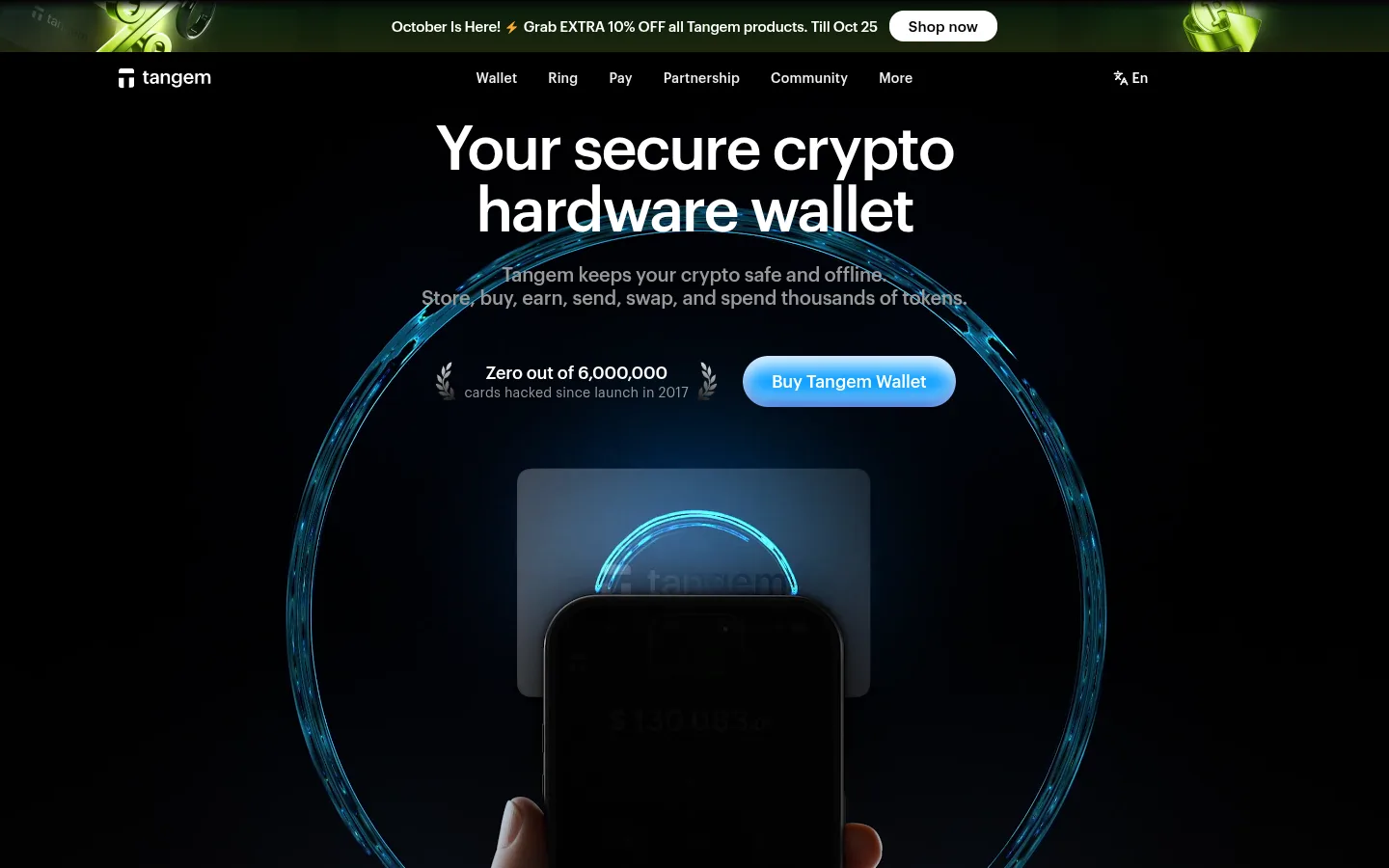
Tangem screenshots
What users say about Tangem
Users mostly praise Tangem for its simple, convenient all-in-one app, the seedless card design, and the security that comes from keys held in the card, with visible excitement around new physical cards. Complaints focus on the lack of a screen and the blind signing that follows. They also cite limited coin and chain support. App bugs affect balances and transactions, and support responses can be slow or missing.
Top goods
In their own words
“Please consider adding a user-defined passphrase option for Seedless Hi everyone, and hi to the Tangem team! I would like to make a suggestion for the future: please consider adding an option for Seedless users to create and choose their own passphrase. I really love Tangem.”
“Tangem is more than just storage, it makes managing crypto safer and more convenient”
“staking without moving funds across different apps is a nice bonus”
“Oh my goodness Tangem’s marketing is ridiculous. First off, I'm a Tangem user. The product is fine for what it is. But this marketing is misleading and people trusting real money to it deserve honesty, not spin. "no screen to spoof" Also no screen to verify.”
“I have been completely ignored by your support team since Oct 8. My Tangem Pay KYC has a duplicate profile error (Ticket #[removed]). I only receive automated emails and NO human has responded for a week. Please check my ticket and resolve this immediately!”
“You're spot on. When you're seedless, losing or breaking the cards results in permanent loss of crypto. If you generate a seed phrase, that could be stolen. Pick your poison. For me, I've had 2 cards fail without explanation over the years. So I do not trust them as a permanent thing.”
Scam warning: Fake Tangem apps and spam NFTs have targeted users' wallets and funds
Based on 100 X replies, 100 Reddit posts and comments from the last 12 months, checked Oct 17, 2026. These are posts by users on other sites, not reviews submitted on CryptoReview.
User reviews
No user reviews yet. Have you used Tangem? Share your experience below.
Funding and investors
$8MTotal raised
2Rounds
2Investors
FAQ
Who founded Tangem?
Tangem was founded in 2017, and Andrey Lazutkin is its CTO and the creator of Tangem Wallet. Tangem AG is headquartered in Zug, Switzerland, and the company says it has more than 250 teammates.
Where is Tangem available, and is KYC required?
Tangem Wallet ships to 230 countries. The wallet is non-custodial, while buying, selling and other integrated services can involve their own provider requirements.
Is Tangem safe?
Tangem uses a Samsung S3D350A secure element certified EAL6+ under Common Criteria, and its key is generated and kept on the chip. Kudelski Security, Riscure and Cure53 reviewed the firmware and security in 2018, 2023 and 2026; the card has no screen and its firmware is factory-installed and non-updatable.
How many coins and blockchains does Tangem support?
Tangem supports more than 14,100 assets across over 90 blockchains. The listed networks include Bitcoin, Ethereum, Solana, BNB Chain, Polygon, Avalanche, Cardano, XRP, Tron and Litecoin.
Does Tangem use a recovery seed phrase?
Tangem uses seedless backups by default, with two-card or three-card sets acting as physical keys for recovery. Users can also choose to generate or import a recovery phrase during setup.
Does Tangem have a screen or battery?
Tangem has neither a screen nor a battery. The NFC card draws power from the phone during a tap, so transaction approval takes place through the companion app.
Latest from Tangem on X
It’s Cyber Days in Argentina 🇦🇷
20% off Tangem wallets with code CYBERDAYS20, Nov 2 to 4 only.
Already have an affiliate code? Stack it for 30% off.
https://t.co/HYCqA8qQOA https://t.co/PCCXwwTDRW
20% off Tangem wallets with code CYBERDAYS20, Nov 2 to 4 only.
Already have an affiliate code? Stack it for 30% off.
https://t.co/HYCqA8qQOA https://t.co/PCCXwwTDRW

Tangem's $10,000 Giveaway is back 🚀
Moving your crypto? Tell the world why you chose to keep your keys:
1. Post with #WhyTangem & tag @Tangem. Show your Tangem Wallet or App, and share why you chose self-custody and Tangem
2. Fill out the form & QRT this post
3. Get rewarded in BTC:
📹Video: $30
🧵Thread with photos: $20
📸Photo post: $10
72 hours only🔥

Happy Diwali, India 🪔
The festival of lights is about fresh starts. This year, make it the one where your crypto finally lives in your hands, not on an exchange.
A Diwali gift for our community in India: 15% off Tangem Wallet
🛒 https://t.co/bUcPblC8D5: OWN15
📦 Amazon: DIWALI15
Own your keys. Own your crypto.
The festival of lights is about fresh starts. This year, make it the one where your crypto finally lives in your hands, not on an exchange.
A Diwali gift for our community in India: 15% off Tangem Wallet
🛒 https://t.co/bUcPblC8D5: OWN15
📦 Amazon: DIWALI15
Own your keys. Own your crypto.

Last chance for the Halloween special offer on a Tangem Wallet, just $10 🕷️
Recent public posts from @Tangem, shown as published. Not reviewed or endorsed by CryptoReview.
Alternatives to Tangem
Air-gapped hardware wallet with QR signing, a CC EAL5+ chip and 10,000+ assets
QR code (air-gapped) · microSDSecure elementClosed source

Open-source hardware wallets supporting 100+ chains and 30,000+ coins and tokens
No KYCUSB-C · BluetoothSecure elementFully open source

Swiss-made open-source hardware wallet line launched in 2015 by Shift Crypto
Secure elementFully open sourceBitcoin-only

Air-gapped hardware wallet with three secure-element chips and QR signing
QR code (air-gapped) · microSDSecure elementFully open source

Hardware wallets with Secure Element chips, 100+ chains and 15,000+ supported assets
No KYCSecure elementPartially open sourcePrice from: $59
Open-source hardware wallet brand protecting crypto since 2013
Secure elementFully open source1,000 supported assets