

In case you missed it, here’s what happened this week at Meteora.
→ Referral Staking Cycle 3 rewards now claimable
→ Expert Contributors
→ Rock Makes Money S4
→ UI upgrades
More details below! https://t.co/15vIUHPmn0


Meteora is a Solana decentralized exchange and liquidity infrastructure protocol built around Dynamic Liquidity Market Maker (DLMM) pools. It recorded $32 billion in trading volume during H1 2026 and reported $140 million in LP fees for the same period, with 75% coming from external token pools.
The project began as Mercurial Finance in 2021, focused on stablecoins, and relaunched as Meteora in 2023 with a broader set of liquidity products. It was founded by the team behind Jupiter. The MET token launched in October 2025, with staking and governance operational. The protocol's product documentation lists DLMM, DAMM, Dynamic Bonding Curve, vaults, Stake2Earn, Dynamic Fee Sharing, Referral Staking and Zap.
Meteora uses automated market makers on Solana. DLMM pools divide prices into concentrated bins. Liquidity providers choose where liquidity sits, while pool fees adjust with market conditions. DAMM v1 and DAMM v2 provide other pool programs, while Dynamic Bonding Curve supports token launches and Presale Vault supports token presales.
The interface also has Meteora Limit Orders. Traders set a target price, and swaps fill the order when that price is reached; the order can earn fees when it executes. DAMM v1 is a legacy product phased out of the main interface earlier in 2026 and scheduled for deprecation. Meteora operates on Solana and uses wallet-based on-chain transactions rather than a central exchange account.
Trading fees depend on the pool and its dynamic fee settings. LPs receive fees from completed swaps, while liquidity provision carries exposure to price movement, changing pool ranges and impermanent loss. Meteora's Referral Staking program continued into Cycle 4 in October 2026. The protocol's Dynamic Bonding Curve also funds MET buybacks from revenue across Meteora products.
Meteora's cumulative volume passed $200 billion by June 2026. Its trailing 30-day DEX volume was $5.955 billion in October 2026, while TVL was $163.9 million on October 16, 2026. Audit indexes list work by OtterSec and Zellic across DLMM, DAMM, DBC, vaults, staking and related programs. A bug bounty offers up to $500,000 through OOO Security.
On January 17, 2026, Meteora reported losing $1.5 million in a social-engineering scam involving a fake over-the-counter transaction during buyback operations.
Meteora offers DLMM pools and multiple liquidity products, but its single-chain scope, complex LP risks and January 2026 scam limit its appeal.
Meteora is a Solana-only DEX and liquidity protocol built around DLMM pools, where liquidity is placed into concentrated price bins and fees can change with market conditions. DEX volume reached $5.955 billion over the 30 days to October 2026, while TVL was $163.9 million on October 16, 2026. Its reported H1 2026 volume was $32 billion, with $140 million in LP fees.
Meteora offers Limit Orders, which let traders set a target price and earn fees when swaps fill the order. Concentrated liquidity, dynamic fees and launch pools expose LPs to price movement, impermanent loss, thin liquidity and token-launch risk.
Chain coverage is narrow. Meteora runs on Solana and does not provide cross-chain swaps. That suits traders who already operate on Solana, while assets held elsewhere require another product. The available figures describe protocol and LP fees, not a single universal swap fee, so costs depend on the pool and transaction conditions.
The protocol began as Mercurial Finance in 2021 and relaunched as Meteora in 2023. Its documentation lists audits by OtterSec and Zellic across DLMM, DAMM, DBC, vaults, staking and related products, and a bug bounty can pay up to $500,000. On January 17, 2026, Meteora reported losing $1.5 million in a social-engineering scam tied to a fake over-the-counter transaction during buyback operations. MET launched in October 2025, with staking and governance operational.
| Type | AMM |
|---|---|
| Chains | Solana |
| Limit orders | Yes · unverified |
| Cross-chain swaps | No · unverified |
| Audited | Yes · unverified |
| Governance token | MET · unverified |
| Perpetual futures | No · unverified |
| Routes across other DEXs | No · unverified |
| Points or rewards program | Yes · unverified |
Not disclosed by the provider: KYC required, Swap fee, Open source, Max leverage (x), MEV protection, Mobile app.
Data from the provider's website and public sources. Fees and availability change; confirm on the official site before you sign up.
DLMM pools use concentrated price bins and dynamic fees on Solana. LPs can set specific liquidity ranges.
Meteora Limit Orders let traders set a target price and earn fees when swaps fill the order.
Dynamic Bonding Curve supports token launches, alongside Presale Vault and Alpha Vault programs.
DAMM v1 and DAMM v2 provide separate liquidity market programs. DAMM v1 is being deprecated.
Liquidity providers earn fees from completed swaps, with $140 million in LP fees reported for H1 2026.
MET staking and governance became operational after the token launched in October 2025.
Referral Staking distributes eligible DLMM USDC rewards to MET stakers and referrers.
Dynamic Liquidity Market Maker pools use concentrated price bins and dynamic fee mechanisms for trading and liquidity provision on Solana. Liquidity providers can shape positions around selected price ranges.
DAMM provides Meteora liquidity markets through DAMM v1 and DAMM v2 pool programs. DAMM v1 is a legacy product being phased out of the main interface and scheduled for deprecation.
Dynamic Bonding Curve provides bonding-curve infrastructure for token launches. It also funds MET buybacks from protocol revenue across Meteora products.
Presale Vault is a vault program for token presales.
Alpha Vault is a vault program listed among Meteora's protocol products.
Stake2Earn is Meteora's staking product. MET staking and governance became operational after the token launched in October 2025.
Dynamic Fee Sharing is a fee-sharing product listed among Meteora's protocol products.
Referral Staking connects staking with referral rewards. DLMM USDC rewards became claimable by MET stakers and referrers from September 10, 2026.
Zap is a product listed among Meteora's protocol products.
Limit Orders let traders set a target price and earn fees when swaps fill the order.
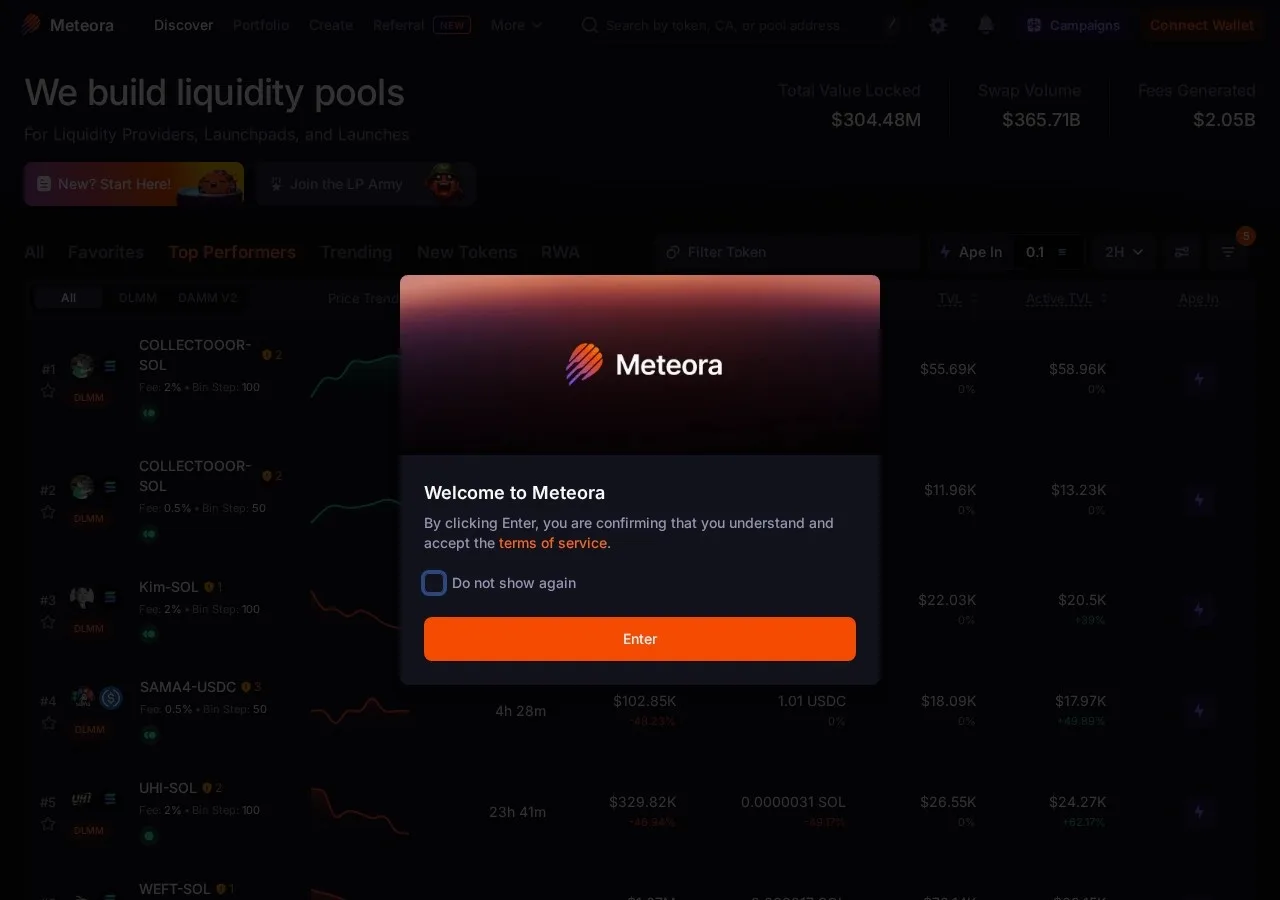
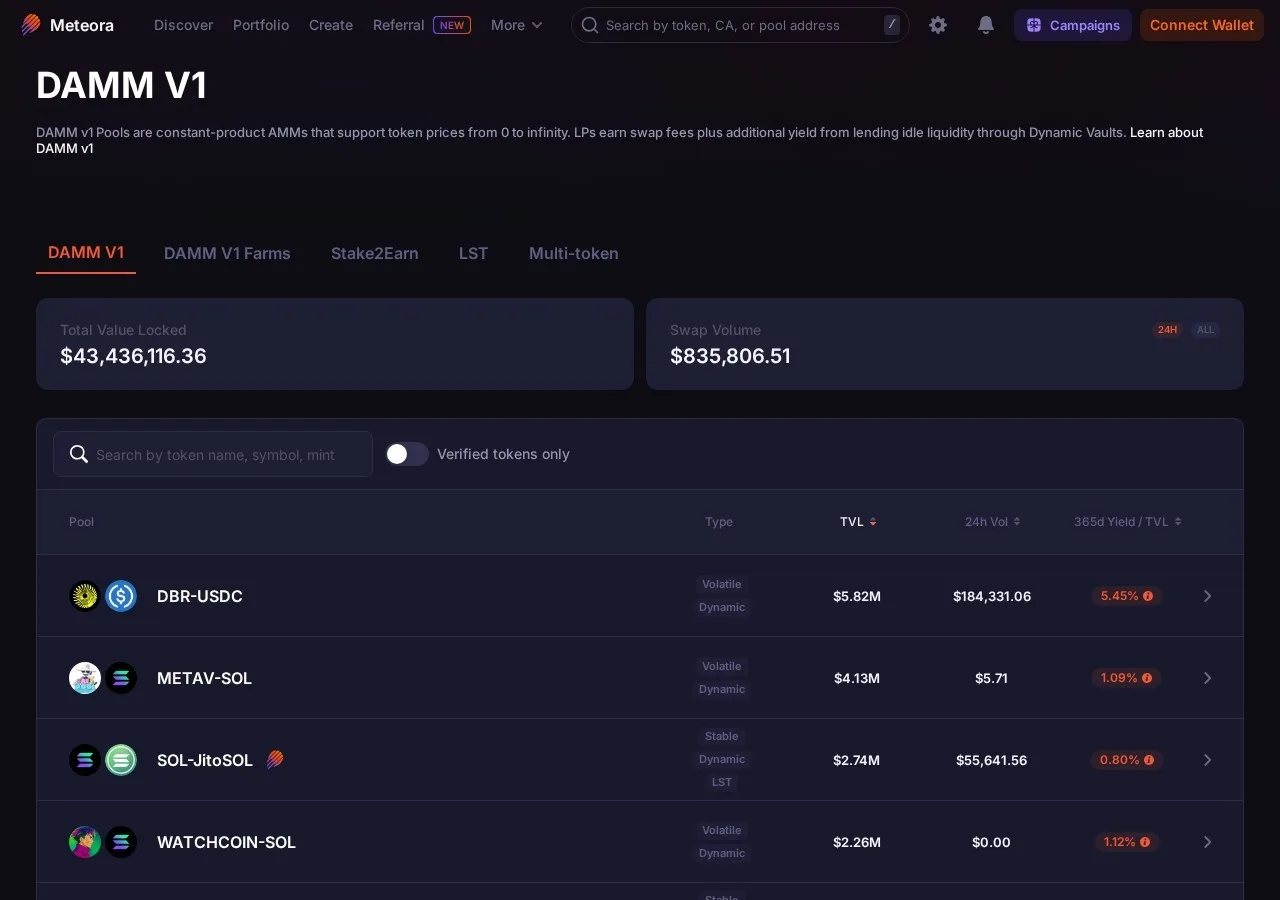
The material provides too little independent user feedback to establish recurring positives or complaints about Meteora. One author alleges a missed airdrop deadline and poor support, while other mentions are promotional, incidental, or general usage advice.
“Yeah meteora.ag is a legit website. If you stake jup or have used it in the past you should get an allocation”
Based on 16 Reddit posts and comments from the last 12 months, checked Oct 18, 2026. These are posts by users on other sites, not reviews submitted on CryptoReview.
No user reviews yet. Have you used Meteora? Share your experience below.
Meteora was founded by the team behind Jupiter and began as Mercurial Finance in 2021. It relaunched under the Meteora name in 2023.
Meteora uses pool-specific and dynamic fees rather than one universal swap fee. The protocol reported $140 million in LP fees for H1 2026, including $105 million from external token pools.
Meteora supports Solana. Its liquidity pools, launch tools and trading products are built for Solana assets.
Meteora has published audit indexes covering products reviewed by OtterSec and Zellic, and its bug bounty offers up to $500,000. On January 17, 2026, the team reported a $1.5 million loss from a social-engineering scam involving a fake over-the-counter buyback transaction.
Meteora has the MET token, which launched in October 2025. Staking and governance are operational, and MET buybacks totaled $13.7 million by March 2026.
Yes. Meteora Limit Orders let traders set a target price and earn fees when swaps fill the order.
Recent public posts from @MeteoraAG, shown as published. Not reviewed or endorsed by CryptoReview.
Decentralized AMM launched in 2018, with support across 16+ EVM mainnets
Cosmos appchain DEX and cross-chain AMM connecting over 100 ecosystems with IBC
Multichain AMM founded in 2020, with about $1.56B locked on October 17, 2026
Cross-chain liquidity and stablecoin activation stack settling transfers across 30+ blockchains
Perpetual and spot DEX with 50.1M reported users and a native 50ms Layer 1
DEX aggregator routing swaps across 18+ networks, including Ethereum and Solana
Type at least two characters. Press ↵ to see all results.