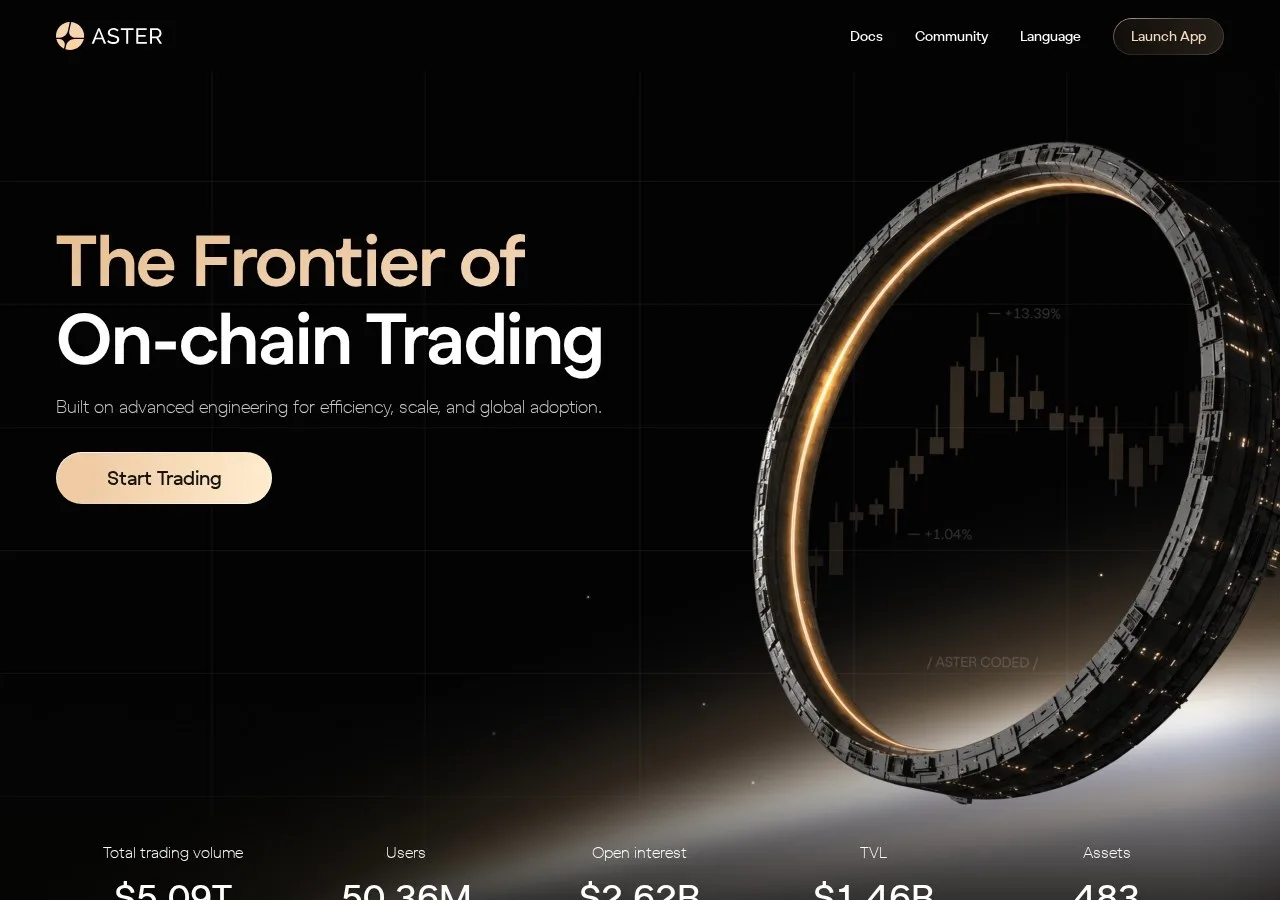
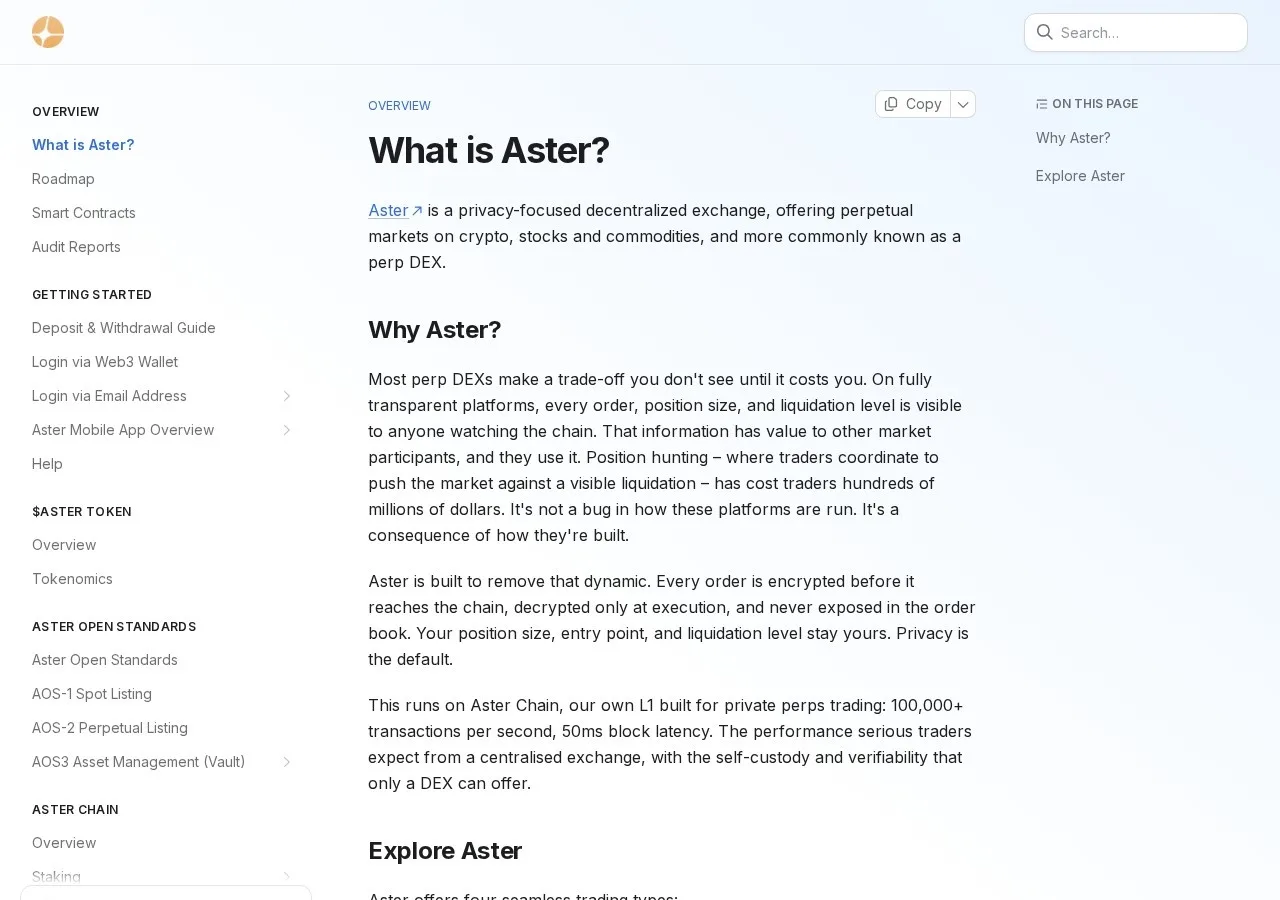
Aster is a non-custodial decentralized exchange for spot assets, perpetuals, stocks, forex, commodities and prediction markets. It reports 483 assets, $1.46B in TVL, $2.61B in open interest, 50.1M users and $5.08T in total trading volume. The project was created through the 2024 merger of Astherus and APX Finance.
Who is behind Aster
Aster’s CEO is identified publicly as Leonard. Aster launched its ASTER token on September 17, 2025, with an initial circulating supply of approximately 1.656 billion ASTER. Its stated token allocation includes airdrops, ecosystem and community, treasury, and team categories, along with liquidity and listing.
How the exchange works
Trading is wallet-based, so users retain custody of deposited assets rather than opening an account with a centralized exchange. Aster supports BNB Chain, Ethereum, Arbitrum, Solana and its own Aster Chain. The platform offers Simple and Pro modes, perpetual contracts, hidden orders and grid trading. Its native Layer 1 claims 50ms block times, up to 100,000 TPS, zero gas and ZK-encrypted orders with fresh stealth addresses. Aster also has a mobile application and supports direct BTC deposits and withdrawals through the Bitcoin network.
Fees and trading costs
Spot maker fees are 0.005%, while spot taker fees are 0.04%. Spot and perpetual VIP tiers use rolling 14-day volume, assessed at the end of each day in UTC. RWA perpetual pairs have a 1.25 bps taker fee effective September 7, 2026.
Availability and track record
Aster describes its exchange as permissionless and supports trading across four external networks plus Aster Chain. The formal rebrand was announced in April 2025. ASTER launched in September 2025, and Aster added a prediction market and developer platform called Aster Code.
Risks and limitations
Perpetuals can create rapid losses, especially where high leverage is available. Privacy features and validator-signed settlements add protocol dependencies, while ASTER rewards and buybacks connect some activity to token incentives.