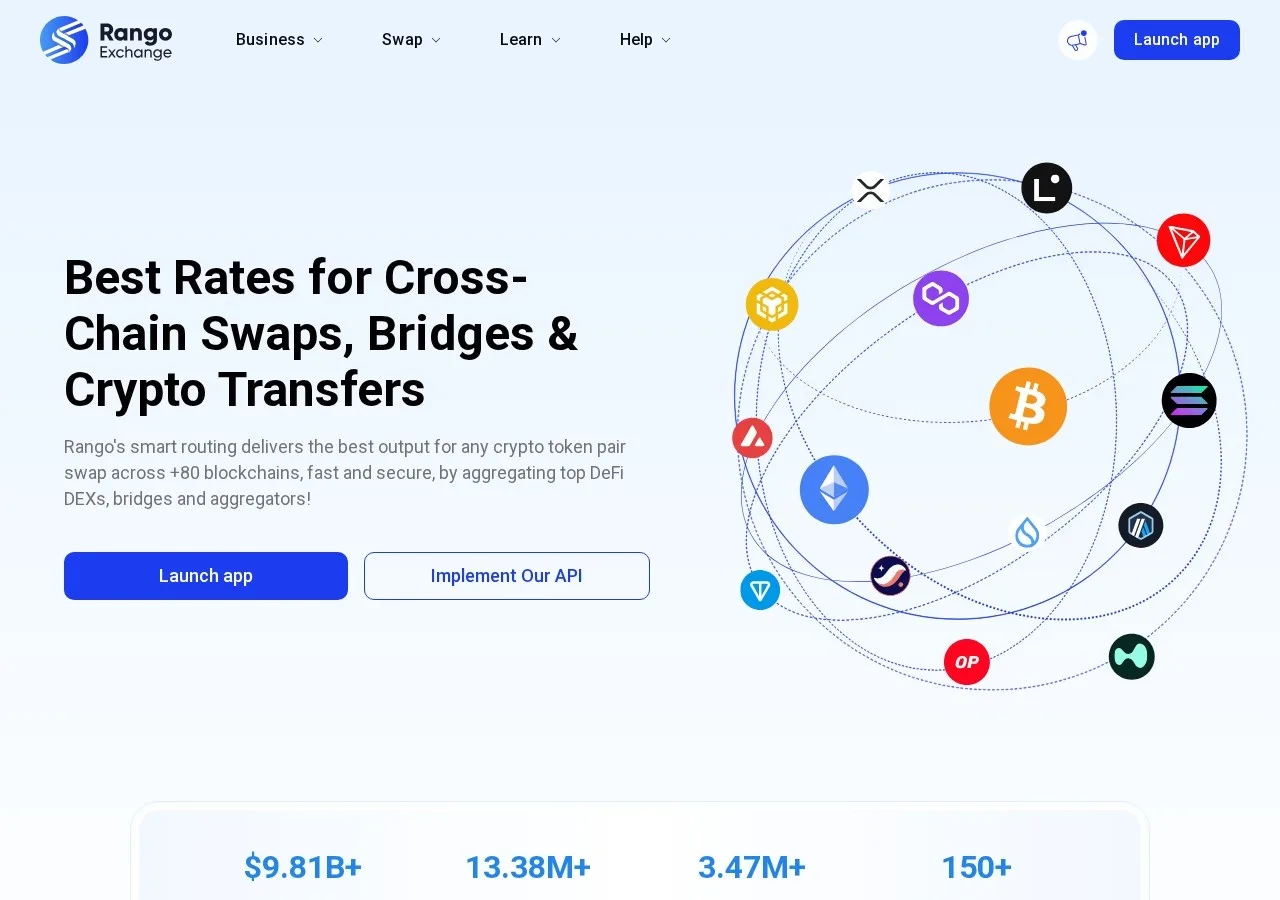
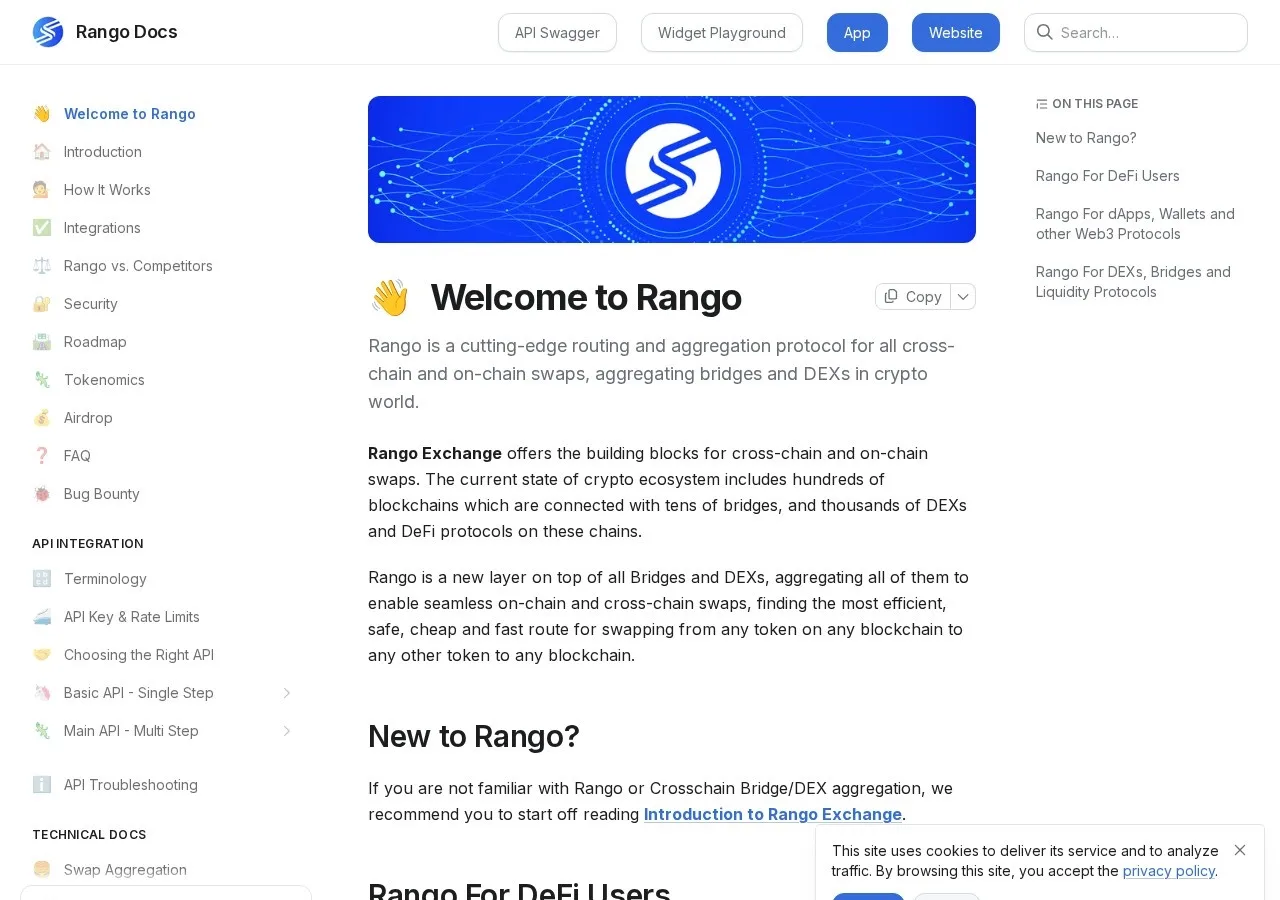
Rango Exchange is a multi-chain DEX and bridge aggregator that routes token swaps and transfers across more than 80 blockchains. It connects disjointed ecosystems, including UTXO networks like Bitcoin, smart contract environments such as Ethereum and Solana, and non-EVM chains like Tron and TON. It queries over 155 decentralized exchanges and 32 cross-chain bridges to locate multi-hop execution paths.
Team and backing
Founded in 2021, the project raised seed funding backed by investors including Binance Labs, Nomad Capital, Foresight Ventures, and D1 Ventures. Ecosystem partners include Thorchain, Celer, Chainflip, and Circle, while its routing infrastructure is integrated directly into wallets such as MetaMask, Trust Wallet, Binance Wallet, and Exodus.
How it works
Rango operates as a non-custodial meta-aggregator. Users connect their self-custody wallets without undergoing identity verification. When an order is placed, Rango's routing engine calculates single-chain swaps and cross-chain transfers across integrated bridges and DEX protocols. It also includes an intents-based settlement engine that coordinates solvers to execute transactions end-to-end. It also offers gasless swaps on selected networks such as Solana and EVM chains so traders can execute actions without holding native gas tokens.
Fees and availability
Rango does not require identity verification (KYC). Users may incur network, swap, and bridge fees charged by the protocols used for a route.
Track record and risks
Since launching in 2021, Rango has routed over $9.83B in lifetime swap volume across more than 13.4 million transactions and 3.47 million unique wallets. Smart contract audits are published in the protocol documentation. Because Rango aggregates third-party bridges and DEXs, users remain exposed to the security models, smart contract vulnerabilities, liquidity shortfalls, and stuck-transfer risks of the specific protocols executing each step of the swap.