

powered by garden 🌸
live on our API and SDK

Garden
Intent-based cross-chain bridge swapping native Bitcoin via Hash Time-Locked Contracts
3.3/ 5
Our score
Fair
Design
Intent-based
Chains supported
8
Typical transfer time
As little as 30 seconds
Security model
Hash Time-Locked Contracts with an off-chain solver layer and trustless atomic settlement
Audited
Yes
What is Garden?
Garden is an intent-based cross-chain bridge and atomic-swap protocol designed to transfer native Bitcoin and tokens across non-Bitcoin networks without relying on centralized wrapped asset custodians. Using Hash Time-Locked Contracts (HTLCs), the protocol matches user transfer requests with off-chain market makers known as solvers. Transactions can settle in as little as 30 seconds.
Team and background
Garden was co-founded by Jaz Gulati. The protocol has an associated token with the ticker SEED.
How transfers and swaps work
Swaps on Garden rely on atomic settlements anchored by Hash Time-Locked Contracts rather than pooled lock-and-mint bridge accounts. When a user requests a cross-chain swap, solvers compete to fulfill the order. Both parties lock assets into corresponding HTLCs across the origin and target networks. The transaction reveals a secret preimage upon redemption. This structure allows both sides to clear successfully, or the contracts automatically refund the funds to the original holders upon expiry. Supported networks include Bitcoin, Ethereum, Arbitrum, Base, BNB Smart Chain, Solana, Starknet, and Sui. Routes also incorporate third-party liquidity aggregation via SwapKit and spot connections to Hyperliquid.
Audits and security incidents
Smart contracts covering EVM, Move, Cairo, and Rust implementations have undergone multiple third-party audits. OtterSec assessed EVM contracts and Bitcoin HTLC scripts in August 2023. Trail of Bits reviewed the GardenStaker, HTLC, and FEEAccount contracts in April 2024. Zellic evaluated the Move-based implementation on Sui in June 2025, and Code4rena ran a competitive review over 15 contracts across EVM, Solana, Starknet, and Move environments in February 2026.
Garden experienced two major infrastructure breaches targeting solver operations. On October 30, 2025, a compromised solver key resulted in a theft between $10.8M and $11.4M across multiple chains, which the team stated affected solver inventory rather than deposited user balances. On July 26, 2026, an off-chain database breach allowed attackers to trigger unauthorized HTLC settlements, draining roughly $450,000 in USDT across Ethereum, Base, Arbitrum, and BNB Smart Chain. The protocol paused its front end for two weeks, completing incident reviews and resuming service on August 10, 2026.
Risks and considerations
While HTLC cryptographic logic prevents direct custody loss of user capital, users remain reliant on solver availability and liquidity to fulfill transfers quickly. Exploits targeting off-chain solver infrastructure can cause temporary settlement delays, unexpected timeouts, or front-end pauses.
Founders
Jaz GulatiCo-founder
Best for:Direct native Bitcoin cross-chain transfersUsers avoiding centralized wrapped asset custodiansMulti-chain traders bridging to EVM and Sui
Pros and cons
Pros
- Non-custodial atomic swaps avoid wrapped token counterparty risk
- Audits by OtterSec, Trail of Bits, Zellic, and Code4rena covered multiple contract implementations
- Native Bitcoin swaps settle in as little as 30 seconds
Cons
- Suffered two solver infrastructure compromises totaling over $11.2M between 2025 and 2026
- Off-chain solver dependency creates potential for temporary service pauses
- Database breach in July 2026 resulted in a two-week front-end downtime
Our review
3.3/5
Fair
Garden delivers fast atomic swaps between native Bitcoin and major blockchains without depositing assets into a centralized custodial pool, but recurring solver-infrastructure compromises remain a serious concern.
Garden operates as an intent-based cross-chain bridge specializing in peer-to-peer swaps between native Bitcoin and smart contract ecosystems. Co-founded by Jaz Gulati, the protocol uses Hash Time-Locked Contracts (HTLCs) combined with off-chain solvers who fulfill transfers directly. Because execution relies on atomic swaps, users do not surrender custody of their assets to a centralized pool or multi-signature treasury while initiating trades, without relying on centralized wrapped-asset custodians.
Speed and chain versatility stand out as Garden's main documented features. Swaps can settle in 30 seconds when matched against active solver liquidity. The protocol connects Bitcoin to Ethereum, Arbitrum, Base, BNB Smart Chain, Solana, Starknet, and Sui, with native routes expanding to networks like Hyperliquid. Liquidity routing has also been augmented via integrations with SwapKit.
However, the protocol's security track record is marred by repeated solver vulnerabilities:
- On October 30, 2025, a solver compromise led to between $10.8 million and $11.4 million drained across several chains, which the team stated was limited to solver inventory rather than deposited user balances.
- On July 26, 2026, an off-chain database breach allowed attackers to manipulate legitimate HTLC inputs, draining approximately $450,000 in USDT and forcing a temporary shutdown of the interface.
While third-party audits by OtterSec, Trail of Bits, Zellic, and Code4rena reviewed the on-chain contracts, both incidents involved vulnerabilities in off-chain infrastructure. Garden supports swaps from native Bitcoin to the listed networks without centralized custody.
Specs
| Design | Intent-based |
|---|---|
| Chains | Bitcoin, Ethereum, Arbitrum, Base |
| Chains supported | 8 · unverified |
| Typical transfer time | As little as 30 seconds · unverified |
| Security model | Hash Time-Locked Contracts with an off-chain solver layer and trustless atomic settlement · unverified |
| Audited | Yes |
| Token | SEED |
| Intent-based | Yes · unverified |
| Native token transfers (no wrapped tokens) | Yes · unverified |
Not disclosed by the provider: KYC required, Typical fee, Max transfer.
Data from the provider's website and public sources. Fees and availability change; confirm on the official site before you sign up.
Key features
HTLC atomic swaps
Executes cross-chain transfers using Hash Time-Locked Contracts that either complete settlement or release refunds automatically upon expiration.
Native Bitcoin bridging
Swaps native BTC directly with assets on EVM and alternative networks without minting synthetic wrapped tokens.
Multi-chain network support
Supports transfers across Bitcoin, Ethereum, Arbitrum, Base, BNB Smart Chain, Solana, Starknet, and Sui.
External route aggregation
Integrates third-party liquidity from providers such as SwapKit to source additional pricing routes for native transfers.
Hyperliquid integration
Enables direct onboarding and cross-chain routing between native Bitcoin and Hyperliquid spot or perpetual markets.
Inside Garden
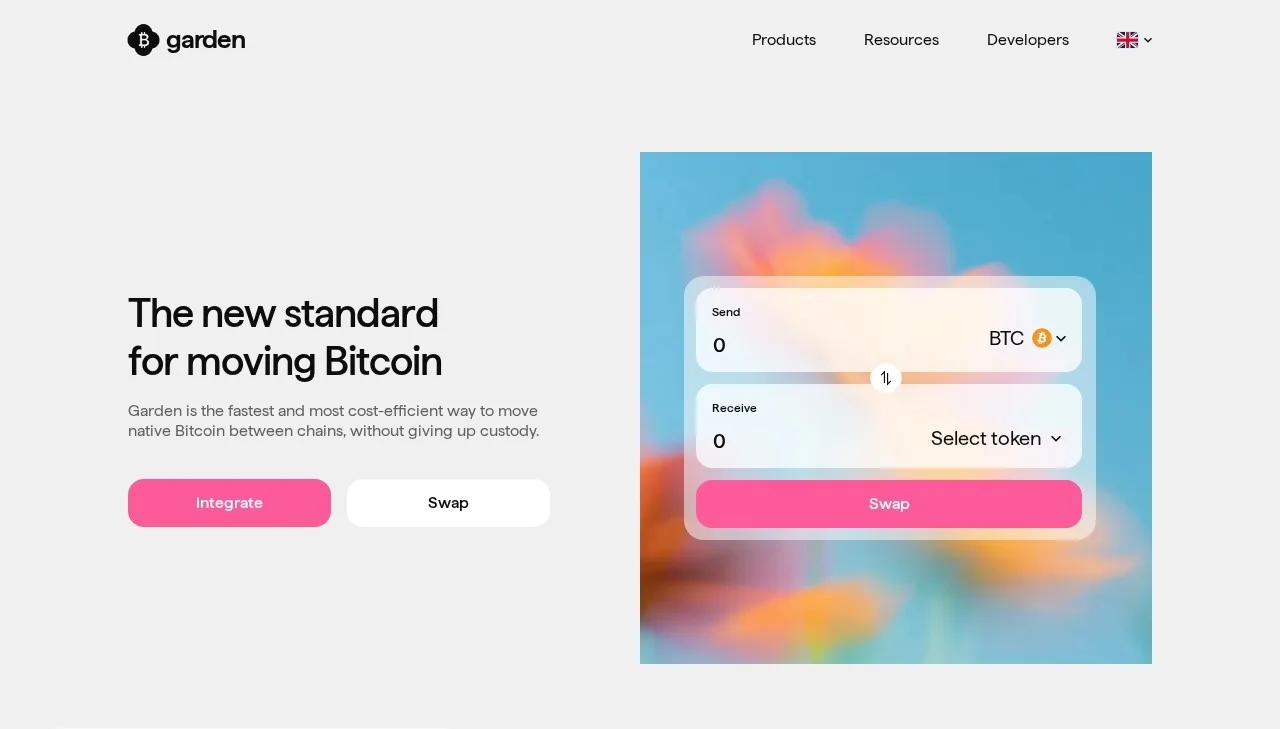
Garden Atomic Swaps
The core bridging interface where users execute peer-to-peer cross-chain trades between native Bitcoin and supported alternative chains via HTLCs.
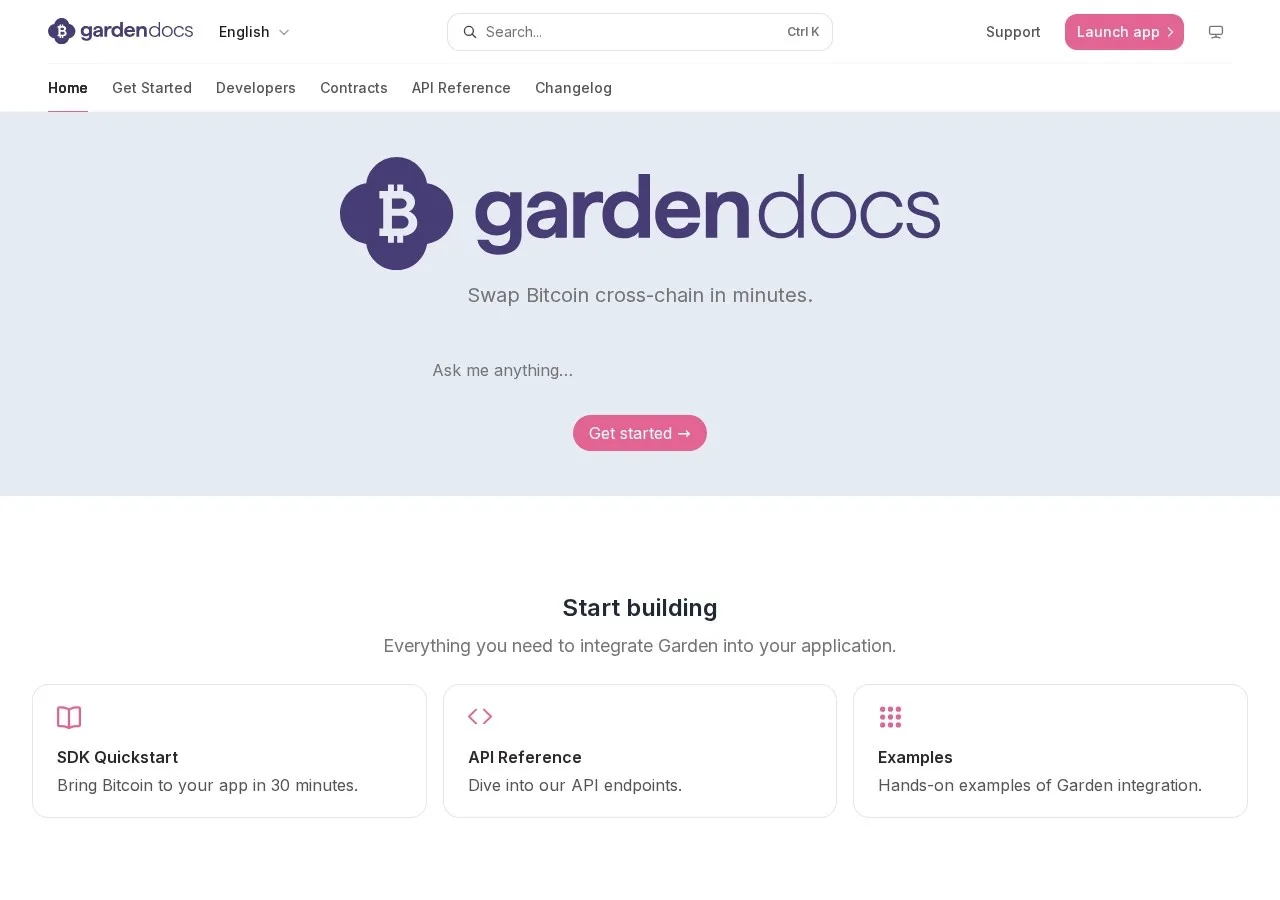
Garden screenshots
What users say about Garden
User mentions of Garden are extremely limited, with occasional praise for cheap and fast swaps alongside reports of UI transaction blocks due to sanctions restrictions.
In their own words
“For general swaps you can use: That's usually the cheapest, fastest and best overall from my experience”
“How to avoid sanctions when using Bitcoin bridges? I can buy USDT ERC20 (and TRC20) in <country>, but platforms like Thorchain Swap, garden.finance, symbiosis.finance have 'prohibited jurisdictions' in TOS, which kinda goes against my understanding of DeFi (not sure if the definition of DeFi…”
Based on 5 Reddit posts and comments from the last 12 months, checked Oct 20, 2026. These are posts by users on other sites, not reviews submitted on CryptoReview.
User reviews
No user reviews yet. Have you used Garden? Share your experience below.
FAQ
Who founded Garden?
Garden was co-founded by Jaz Gulati. Garden enables atomic swaps connecting native Bitcoin with multiple supported networks.
How does Garden work?
Garden uses Hash Time-Locked Contracts (HTLCs) and an intent-based architecture. Independent market makers, known as solvers, compete to fulfill trade intents. This allows atomic cross-chain swaps without users depositing assets into a centralized custodial pool.
Has Garden ever been hacked?
Yes, Garden has suffered two major security incidents. On October 30, 2025, a solver compromise resulted in losses between $10.8 million and $11.4 million, and on July 26, 2026, a solver database breach led to the theft of roughly $450,000 in USDT.
What chains does Garden support?
Garden supports Bitcoin, Ethereum, Arbitrum, Base, BNB Smart Chain, Solana, Starknet, and Sui. It also provides routes connecting to Hyperliquid.
Does Garden have a native token?
Yes, the protocol has an associated token with the ticker SEED.
Has Garden undergone security audits?
Yes, Garden's smart contracts have undergone audits by OtterSec, Trail of Bits, Zellic, and Code4rena covering EVM, Solana, Starknet, and Sui implementations.
Latest from Garden on X
BTC -> any asset
any asset -> BTC
just use garden https://t.co/P8IizGqM24
any asset -> BTC
just use garden https://t.co/P8IizGqM24

satoshi's vision
garden is coming to the home of htlcs https://t.co/Ah9yaEOsGn
garden is coming to the home of htlcs https://t.co/Ah9yaEOsGn
garden now aggregates routes and liquidity from @SwapKitPowered
more routes and more assets, on top of everything garden already covers
best bitcoin prices in the market https://t.co/oD7KyH5dur
more routes and more assets, on top of everything garden already covers
best bitcoin prices in the market https://t.co/oD7KyH5dur
garden now speaks español, 中文, and русский
multi-language support is now live on the app https://t.co/zBiLLlxmJa
multi-language support is now live on the app https://t.co/zBiLLlxmJa
Recent public posts from @gardenfi, shown as published. Not reviewed or endorsed by CryptoReview.
Alternatives to Garden

Cross-chain swap aggregator routing tokens across 100+ EVM and non-EVM blockchains
AggregatorEthereum · BNB Chain +7Audited

Intent-based cross-chain bridge using optimistic verification, processing over $40B in total volume
No KYCIntent-basedEthereum · Arbitrum +4Audited

Intent-based cross-chain bridge and payment network across more than 85 blockchains
No KYCIntent-basedEthereum · Base +9Audited

Intent-based cross-chain protocol settling transfers across 25+ networks without locked liquidity pools
No KYCIntent-basedEthereum · BNB Chain +7Audited

Cross-chain swap protocol using intent routing and CCTP across Solana, EVM chains, and Sui
No KYCIntent-basedSolana · Ethereum +9Audited

Cross-chain DEX and bridge aggregator routing swaps across more than 80 blockchains
No KYCAggregatorBitcoin · Ethereum +3Audited