

if it's worth building, it's worth building it on Ethereum 😉

SSV Network
Distributed validator protocol securing over 7 million ETH across 120,000 active validators
4.0/ 5
Our score
Very good
Type
Staking pool
Receipt token
cSSV
Audited
Yes
What is SSV Network?
SSV Network is a decentralized staking infrastructure protocol that uses Distributed Validator Technology (DVT) to split Ethereum validator duties across multiple independent node operators. Rather than running a validator key on a single server, the protocol fragments the key into multiple shares using a fault-tolerant consensus mechanism. As of October 2026, the network secures over 7 million ETH across more than 120,000 active validators on Ethereum.
Founders and backing
In February 2022, the project raised $10 million in financing from investors including Coinbase Ventures, Digital Currency Group (DCG), Gate Ventures, Lukka, and OKX Ventures.
How the technology works
The core architecture relies on an active-active fault-tolerant consensus mechanism known as QBFT. A typical distributed validator cluster runs across four separate node operators, where any three nodes can complete signing duties if one operator goes offline or malfunctions. Stakers retain non-custodial control of their underlying ETH, keeping operational validator keys split and isolated from individual operators. Beyond running distributed validators, token holders can participate in SSV Staking. Users stake SSV tokens to mint cSSV on a 1:1 basis, earning protocol rewards derived from network usage while retaining their DAO governance voting rights.
Fees and network mechanics
Validator operational costs consist of two separate components: operator fees and network fees. Individual node operators set their own service fees in an open market. The DAO sets the network fee, which transitioned in April 2026 from SSV denomination directly to ETH. These collected ETH validator fees flow to cSSV stakers as network yield. The unstaking process for cSSV requires a cooldown step before users can burn cSSV and withdraw SSV at the 1:1 ratio.
Track record and protocol risks
SSV Network has surpassed 1,800 active node operators and 200 integrated ecosystem projects, including integrations with Lido, EtherFi, and Renzo. SSV Network's smart contracts are audited. Despite fault-tolerant mechanics, participants face smart contract risks inherent to complex coordination protocols. Stakers using distributed validators remain exposed to underlying Ethereum protocol slashing rules if multiple operators collude or experience coordinated failures, as well as liquidity lockups during unstaking cooldown periods.
Best for:Liquid staking protocols decentralizing validatorsInstitutional stakers needing cold-storage key protectionSSV holders seeking ETH yield
Pros and cons
Pros
- Secures over 7 million ETH across more than 120,000 validators
- Active-active fault tolerance handles one offline operator in a four-node cluster
- Non-custodial key shares isolate node operators from full validator keys
- Network fee distributions to cSSV stakers are paid directly in ETH
Cons
- Operates exclusively on the Ethereum network
- Stakers pay both operator market fees and DAO network fees
- Unstaking cSSV requires waiting through a mandatory cooldown queue
- Coordinated operator failures can still trigger Ethereum slashing penalties
Our review
4.0/5
Very good
SSV Network delivers institutional-grade distributed validator infrastructure for Ethereum staking, though it adds protocol-level smart contract complexity and requires managing operator cluster configurations.
SSV Network provides decentralized infrastructure for Ethereum staking using Distributed Validator Technology (DVT). Rather than running a validator on a single machine or with a single key, SSV splits validator keys into shares across multiple non-trusting nodes via a QBFT consensus mechanism. If one operator fails or undergoes maintenance, the remaining nodes can maintain signing duties and reduce downtime.
Over 7 million ETH is staked across more than 120,000 active validators and 1,800 operators as of October 2026. Total value locked stands at approximately $12.6B. Staking providers such as Lido and Renzo run clusters on the protocol, as do institutional services like Kraken. Beyond validator operators, SSV token holders can participate through SSV Staking, depositing SSV to mint cSSV at a 1:1 ratio and earning network fees paid in ETH.
Key advantages include:
- Fault-tolerant validator operations that allow one out of four operators to fail without losing active consensus duties.
- Non-custodial key distribution, letting stakers maintain withdrawal credentials in cold storage while distributing operating duties.
- Real ETH yield distribution to cSSV stakers generated directly from ongoing validator cluster fees.
The system also carries trade-offs. Distributing validator duties introduces smart contract risk and operational dependencies across external node operators. Clusters require ongoing funding to pay both the DAO network fee and individual operator fees. Unstaking SSV via cSSV also requires a cooldown period before final withdrawal.
SSV Network suits staking pools and solo stakers seeking high fault tolerance without centralized custodial control.
Sources (2)
Specs
| Type | Staking pool |
|---|---|
| Stakeable assets | ETH |
| Receipt token | cSSV · unverified |
| Chains | Ethereum |
| Node operators | Permissionless operators running distributed validators |
| Audited | Yes |
| Restaking | Yes · unverified |
| Typical reward rate ⓘ | 20%+ · unverified |
Not disclosed by the provider: KYC required, Protocol fee, Minimum stake, Withdrawal time, Slashing cover.
Data from the provider's website and public sources. Fees and availability change; confirm on the official site before you sign up.
Key features
Distributed validator architecture
Splits validator keys across clusters of independent operators using a QBFT consensus engine that tolerates offline nodes.
Non-custodial key management
Enables staking setups from cold storage while individual node operators never hold full validator signing keys.
SSV staking and cSSV minting
Lets token holders stake SSV to receive cSSV at a 1:1 ratio and collect ETH-denominated network fees.
ETH-denominated network fees
Collects protocol fees directly in ETH from registered validator clusters to distribute to stakers.
Permissionless operator marketplace
Allows over 1,800 independent operators to compete and set their own operational fee rates.
Inside SSV Network
SSV Staking
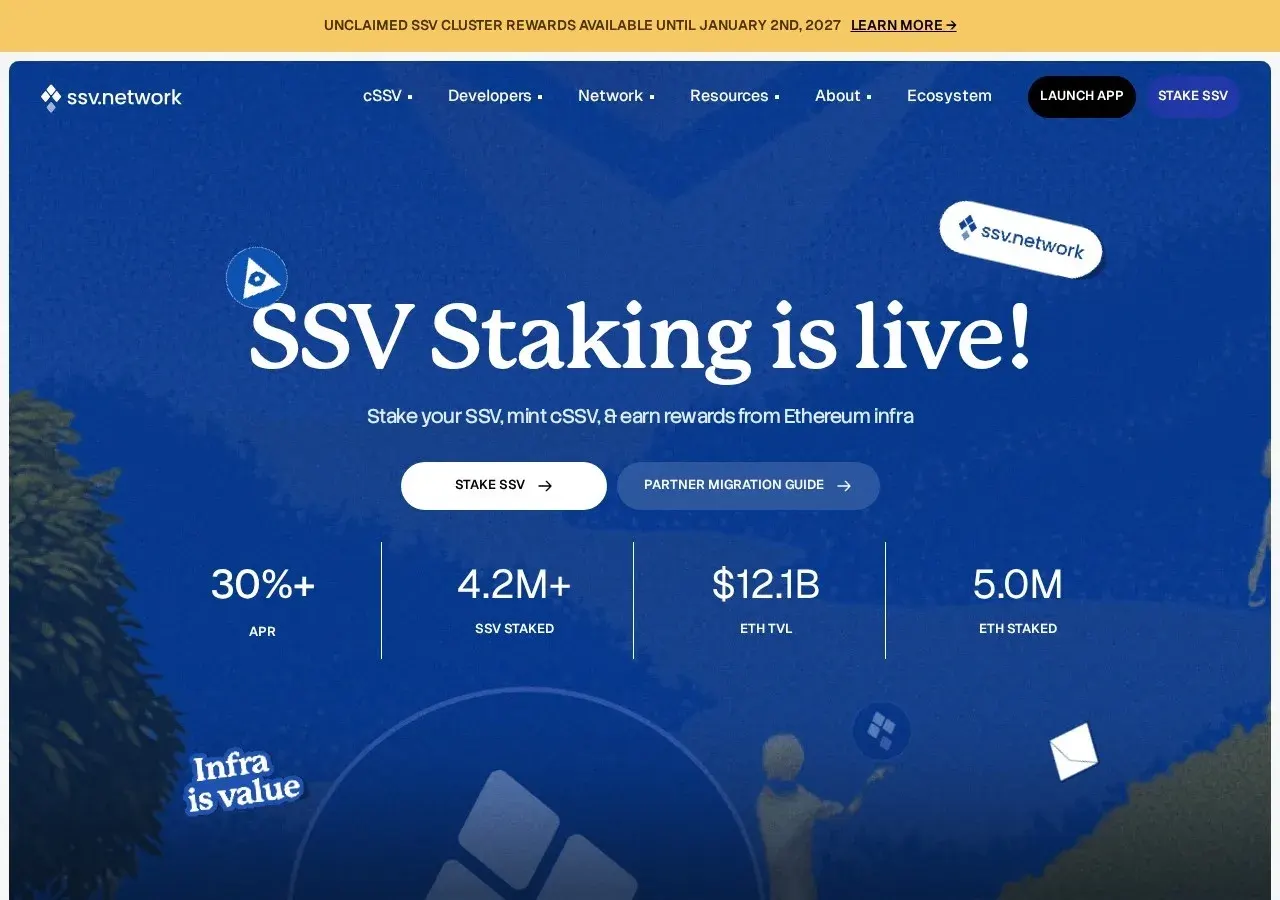
Allows SSV token holders to stake their tokens, mint liquid cSSV at a 1:1 ratio, and earn ETH network fees from validator activity while retaining governance voting rights.
Run a Validator
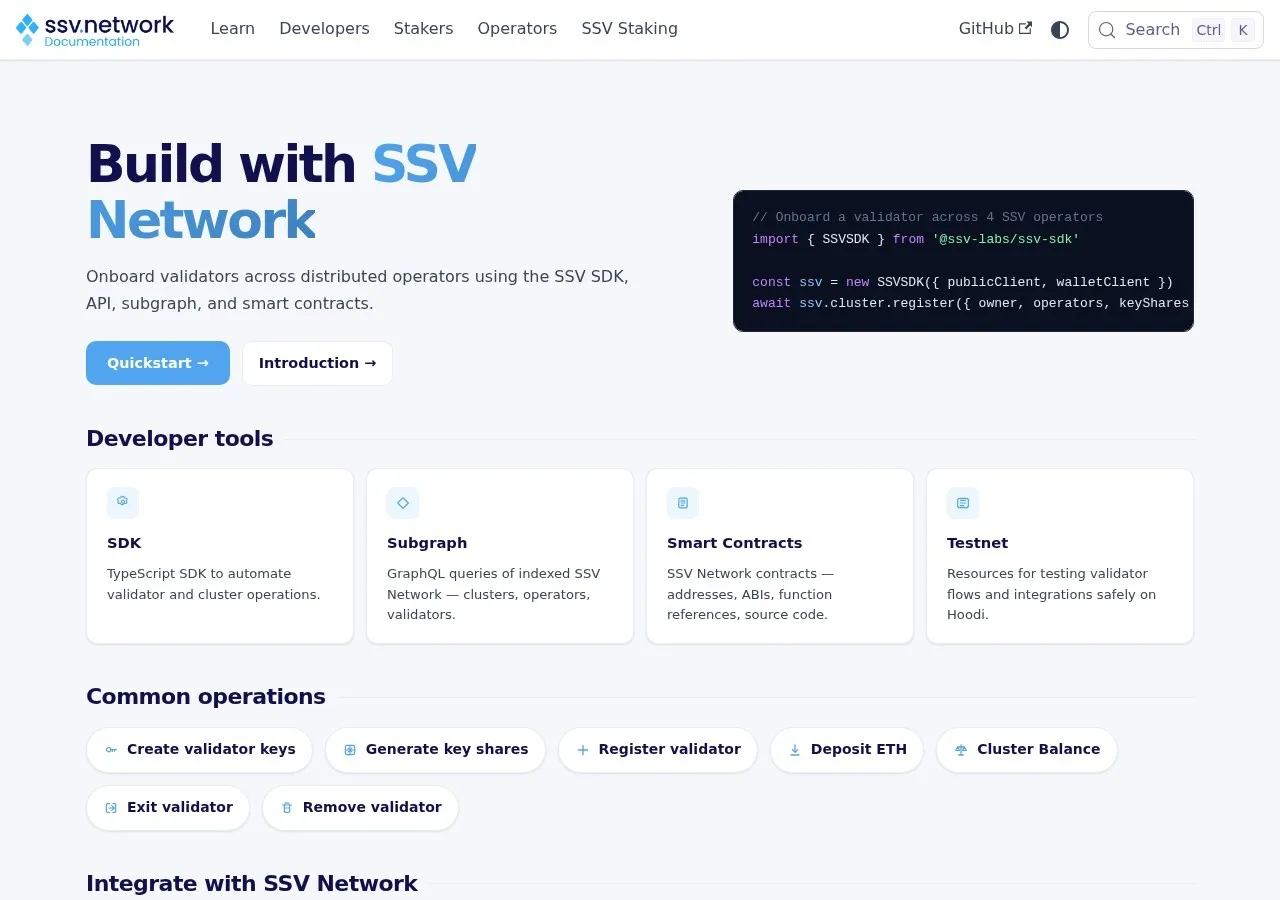
Enables Ethereum validator owners to distribute operational keys across selected operator clusters to improve fault tolerance and reduce downtime.
Run a Node
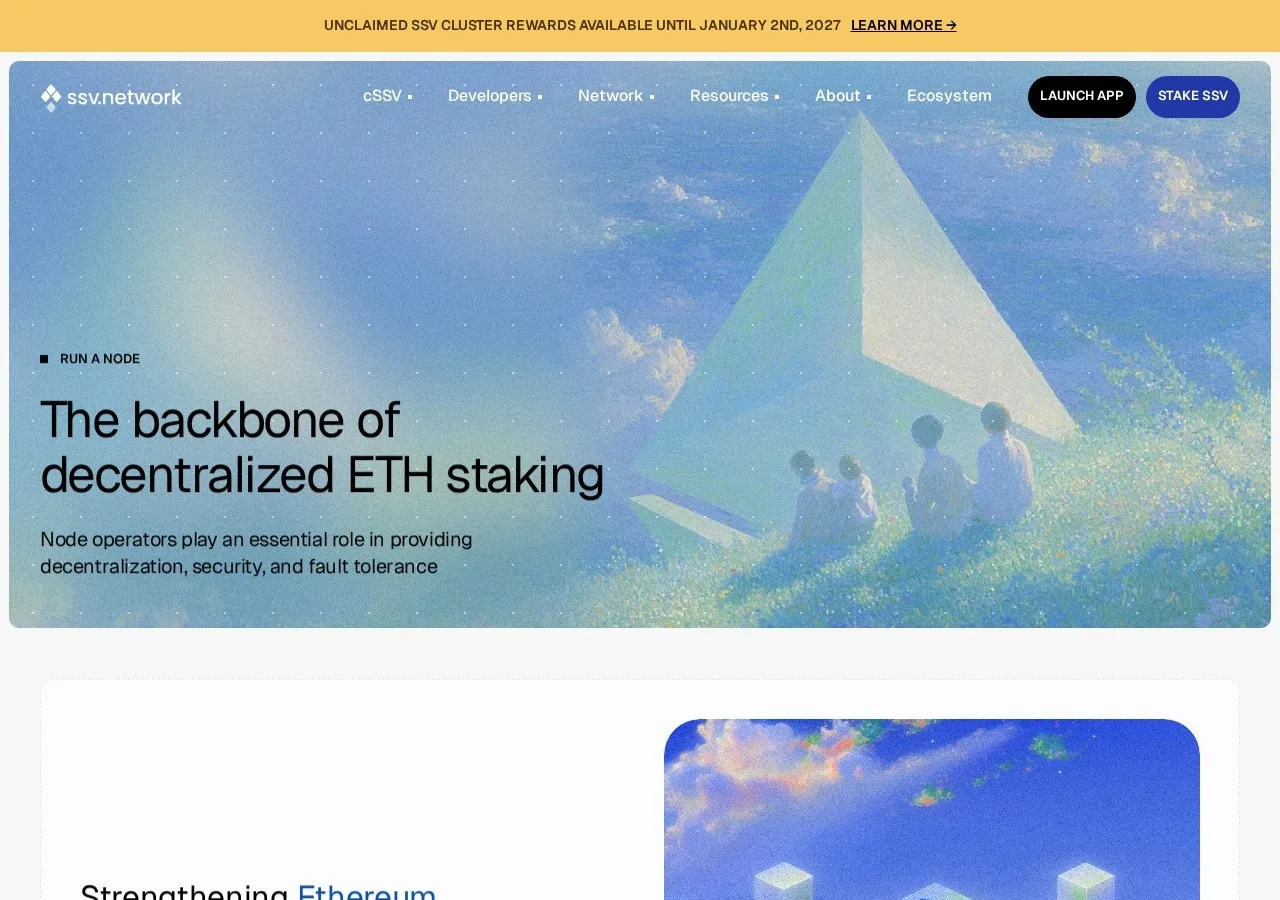
Provides software and tools for infrastructure providers to operate SSV nodes, join validator clusters, and charge customized operator fees in an open market.
Governance Hub
Hosts community proposals and voting for SSV DAO parameters, including protocol network fee rates and treasury grants.
SSV Network screenshots
What users say about SSV Network
User feedback for SSV Network primarily focuses on recommendations for staking Ethereum with decentralized operators. Discussions highlight the ability to maintain key ownership and mitigate downtime risks.
In their own words
“Look at running a validator on SSV.network Keep your keys and your own deposit address. Pay a modest fee to 4 operators who do the validating for you. (Like $20 each per year)”
“Just stake through SSV if you're worried about downtime. You can run your own machines or just stake with other operators:”
Based on 7 Reddit posts and comments from the last 12 months, checked Oct 20, 2026. These are posts by users on other sites, not reviews submitted on CryptoReview.
User reviews
No user reviews yet. Have you used SSV Network? Share your experience below.
Funding and investors
$10MTotal raised
3Rounds
5Investors
-
Funding round Feb 2022 $10M
-
Seed Feb 2022 $10MSource
 Coinbase VenturesExchange ventures arm
 Digital Currency GroupCorporate VC
GV Gate VenturesExchange ventures arm
LU LukkaVenture capital
 OKX VenturesExchange ventures arm
-
Funding round Amount undisclosed
FAQ
How do fees work on SSV Network?
Total validator fees consist of a DAO-determined network fee and individual operator fees set independently by each node operator. Since 2026, network fees are paid in ETH and distributed to cSSV stakers.
Is SSV Network audited?
Yes, SSV Network's smart contracts are audited. The architecture separates operational signing duties from validator withdrawal keys, keeping ownership non-custodial.
What assets and chains does SSV Network support?
SSV Network runs on Ethereum and supports Ethereum validation. Its native token is SSV, which can be staked to receive cSSV receipt tokens.
What is Distributed Validator Technology (DVT)?
Distributed Validator Technology splits an Ethereum validator key into multiple shares run across independent node operators. The cluster signs duties collectively through consensus and can tolerate one malfunctioning node in a four-node cluster.
Latest from SSV Network on X
infra is value
💠 https://t.co/9QVkUDJwQl
we're in the lab, cooking up a few interesting things for the last months of the year 🧑🍳
gm to everyone who builds on & believes in Ethereum 🫡
Recent public posts from @ssv_network, shown as published. Not reviewed or endorsed by CryptoReview.
Alternatives to SSV Network

Solana liquid staking infrastructure powering over 1,300 custom LSTs with pooled liquidity
Liquid stakingSolanaAudited

Solana liquid and native staking protocol automating delegation across validators since 2021
No KYCLiquid staking · Native stakingSolanaAudited

Solana liquid staking protocol capturing MEV rewards with over $1B in TVL
No KYCLiquid stakingSolanaAudited

Decentralized Ethereum liquid staking backed by permissionless node operators and a 0.01 ETH minimum
No KYCLiquid stakingEthereumAudited

Liquid staking protocol on Hyperliquid issuing kHYPE with over $860M in TVL
No KYCLiquid stakingHyperliquidAudited

Ethereum liquid staking with 600+ node operators and a 10% rewards fee
Liquid stakingEthereumAudited