







We are aware of the alleged Binance wallet drain incident. stETH is not affected and the Lido staking protocol continues to operate normally, including withdrawals.
Lido Earn has no direct exposure and is observing developments to manage risk and exposure accordingly. All user deposits remain secure.
More information will be provided here as needed.

4.1/ 5
Our score
Very good
Type
Liquid staking
Protocol fee
10%
Receipt token
stETH / wstETH
Audited
Yes
What is Lido?
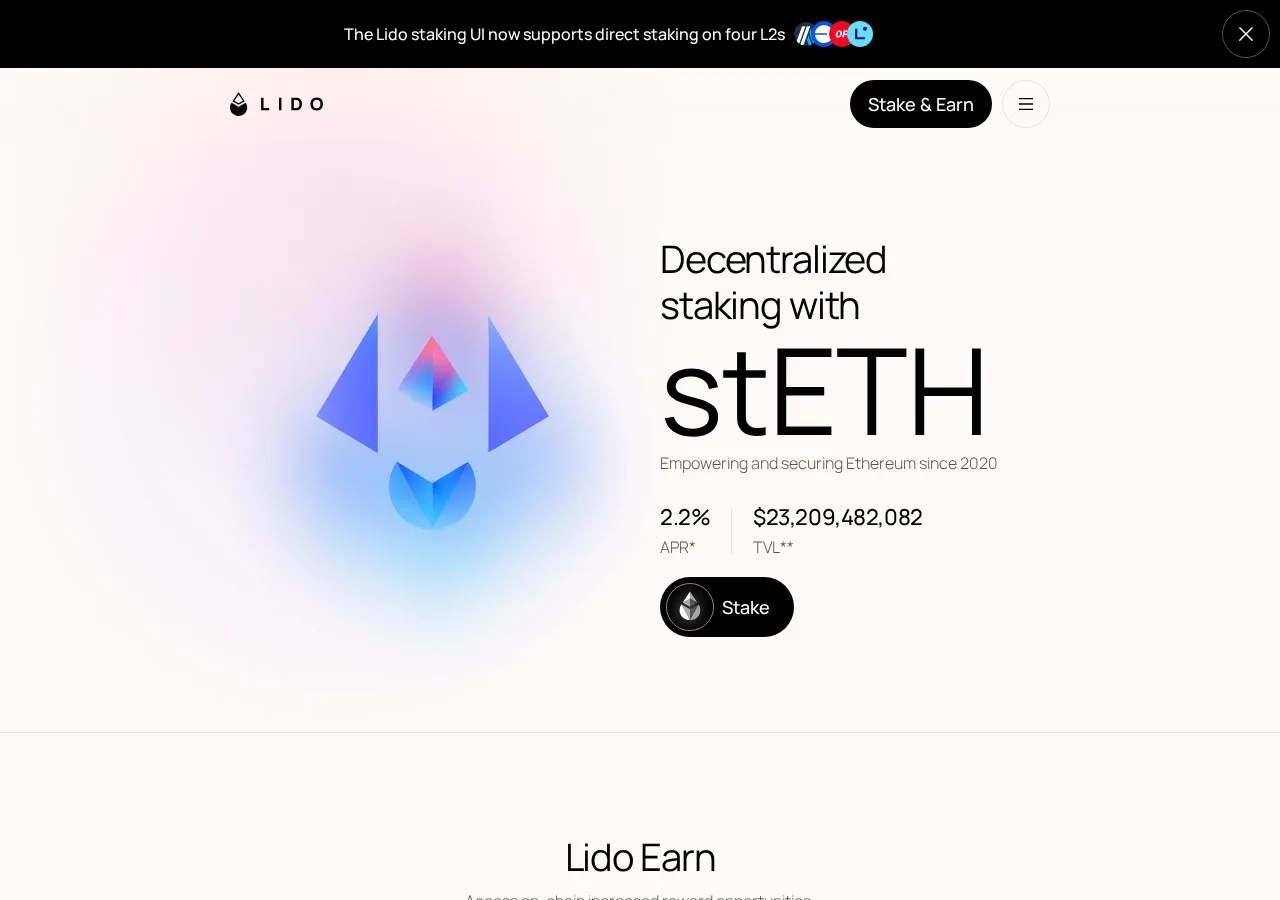
Lido is an open-source Ethereum liquid staking protocol. It lets ETH holders stake without locking their tokens and receive stETH, with wstETH available for applications that use a value-accruing token. The protocol reports $23,441,112,006 in TVL and 9,692,062 ETH staked as of October 17, 2026.
Who runs Lido
Lido is governed by the Lido DAO, with key decisions made through votes by LDO token holders. Its validator network includes more than 600 node operators across permissioned and permissionless modules. The protocol began operating in 2020. Funding records include a $73M private token sale led by Paradigm in May 2021, a $70M round led by Andreessen Horowitz in March 2022, and a $24M treasury diversification transaction involving Dragonfly in September 2022.
How staking works
Users deposit ETH through Lido and receive stETH, which represents staked ETH plus accrued rewards. stETH balances rebase daily, while wstETH uses a value-accruing format for DeFi integrations. Validators operated through Lido earn consensus-layer rewards, execution-layer rewards and MEV, while penalties can reduce holder balances. The Simple DVT Module uses Obol and SSV Network technology, with validator clusters operated by multiple participants. The Community Staking Module is permissionless for solo and community stakers.
Ethereum is the core supported chain. Direct staking through the Lido interface on Arbitrum, Base, Linea and Optimism went live in October 2026 without requiring users to bridge manually. stETH and wstETH are used across more than 100 integrations, including lending, trading and liquidity applications.
Fees and access
Lido charges a 10% protocol fee on staking rewards, split between node operators and the DAO treasury. The fee is waived during periods when consensus-layer penalties exceed earned rewards. The site reports a 2.2% staking APR as of October 17, 2026, though rewards depend on Ethereum network conditions and validator performance.
Track record and risks
Lido reports $3,012,654,615 in rewards paid since 2020 and more than $4M invested in audits and expert reviews. Its security materials include a Web3SOC Grade A assessment and an open-source codebase. In April 2026, a Kelp DAO bridge exploit left rsETH significantly underbacked. Lido DAO contributed 2,500 stETH to the response and activated EarnETH first-loss protection; EarnETH depositors reportedly faced no losses.
Staking still carries smart-contract and slashing risk. stETH can trade away from ETH, while withdrawals may depend on Ethereum exit processing and market liquidity. Validator concentration and oracle failures add exposure beyond ordinary ETH staking. Governance also depends on LDO tokenholder decisions.
Best for:ETH holders seeking liquid stakingDeFi users needing stETH collateralSolo stakers using shared validatorsUsers comfortable with DAO governance
Pros and cons
Pros
- 600+ node operators across multiple validator modules
- stETH remains usable in DeFi while ETH is staked
- Permissionless Community Staking Module supports solo stakers
- Simple DVT distributes validator operations across multiple participants
- Open-source protocol with published audits and security reviews
Cons
- 10% fee is deducted from staking rewards
- stETH can trade below or above the value of ETH
- Smart-contract, oracle and validator slashing risks remain
- Withdrawal liquidity depends on Ethereum exits and market conditions
- DeFi integrations add counterparty and layered protocol risk
Our review
4.1/5
Very good
Lido offers deep Ethereum liquidity and a broad validator set, but users accept smart-contract, depeg, governance and validator-concentration risks.
Lido is an Ethereum liquid-staking protocol with a large operating record: it began in 2020, reports 9,692,062 ETH staked and about $23.4 billion in TVL as of October 17, 2026, and says it has paid $3.01 billion in rewards.
Users stake ETH and receive stETH, which rebases daily, or wstETH, which accrues value without rebasing. The current published staking APR is 2.2%, and Lido takes a 10% fee from rewards. Ethereum withdrawals are supported, but exit timing can depend on validator exits and the withdrawal queue. Liquid staking avoids a fixed lockup, yet stETH can trade below the value of its underlying ETH during market stress.
The protocol is open source, has published audit material, has invested more than $4 million in audits and expert reviews, and uses 600+ node operators. Its Simple DVT Module distributes validator work across clusters of seven operators, while the permissionless Community Staking Module includes solo and community stakers.
Lido is non-custodial by design, but that does not remove smart-contract or receipt-token risk. In April 2026, a Kelp DAO bridge exploit left rsETH underbacked; Lido contributed 2,500 stETH to the response and used 144 ETH of first-loss protection for EarnETH. EarnETH depositors reportedly had no losses, but the event shows how Lido-linked products can add restaking and DeFi risks beyond ordinary Ethereum staking.
Lido suits ETH holders who want staking rewards while keeping a transferable receipt token and access to established DeFi liquidity. Direct Ethereum staking, including routes from Arbitrum, Base, Linea and Optimism, is available through the Lido interface.
Specs
| Type | Liquid staking |
|---|---|
| Stakeable assets | ETH |
| Receipt token | stETH / wstETH |
| Protocol fee | 10% |
| Chains | Ethereum |
| Node operators | 600+ operators · unverified |
| Audited | Yes |
| Typical reward rate ⓘ | 2.2% APR as of 2026-10-17 · unverified |
Not disclosed by the provider: KYC required, Minimum stake, Withdrawal time, Restaking, Slashing cover.
Data from the provider's website and public sources. Fees and availability change; confirm on the official site before you sign up.
Key features
ETH liquid staking
Deposit ETH and receive stETH, which represents staked ETH and accrued rewards without locking the original position.
Wrapped staking token
Wrap stETH into wstETH for a value-accruing balance format used across DeFi applications.
Daily reward rebase
stETH balances update daily around 12:30 UTC through the AccountingOracle, with timing subject to change.
Permissionless staking module
The Community Staking Module supports validators operated by solo and community stakers.
Distributed validators
The Simple DVT Module uses Obol and SSV Network, with clusters operated by multiple node operators.
L2 staking access
Direct staking through the Lido interface supports Arbitrum, Base, Linea and Optimism without manual bridging.
DeFi integrations
stETH and wstETH are available across more than 100 integrations, including lending, trading and liquidity applications.
Inside Lido
stETH
stETH is Lido's liquid staking token for staked ETH and accumulated staking rewards. It can be traded on secondary markets, used as lending collateral and integrated with DeFi applications.
EarnETH
EarnETH is an ETH growth vault that allocates ETH and stETH across selected DeFi protocols. The site reports $207.4 million in TVL and a 3.2% APY as of October 17, 2026.
EarnUSD
EarnUSD provides access to USD-denominated reward strategies with stated asset-selection, risk-control and reporting processes. The site reports $57.8 million in TVL and a 5.6% APY as of October 17, 2026.
Institutional staking
Institutional staking provides access to Lido's staking infrastructure for organizations. stVaults offer configurable ETH staking products, including dedicated validator deployments.
Curated Module
The Curated Module is a Lido validator module for selected Ethereum node operators. It forms part of the protocol's wider operator set.
Simple DVT Module
The Simple DVT Module uses Distributed Validator Technology from Obol and SSV Network. Validator clusters are operated by seven participants, including professional and solo operators.
Community Staking Module
The Community Staking Module is a permissionless module for validators operated by solo and community stakers. It is designed to widen participation in Lido's Ethereum validator set.
Lido screenshots
What users say about Lido
Discussion of Lido's cross-chain staking centers on improved UX and validator choice, alongside withdrawal delays and difficulty tracking staking rewards. Appreciation for the UX improvements sits with frustration over liquidity access and transparency.
Top goods
Scam warning: Phishing warnings via fake DEX links and social media impersonations have led to user losses.
Based on 51 X replies, 100 Reddit posts and comments from the last 12 months, checked Oct 17, 2026. These are posts by users on other sites, not reviews submitted on CryptoReview.
User reviews
No user reviews yet. Have you used Lido? Share your experience below.
Funding and investors
$532MTotal raised
4Rounds
9Investors
-
Treasury Diversification Sep 2022 $24M
-
Funding round Mar 2022 $70M
-
Private token sale May 2021 $73M
-
Funding round Amount undisclosed
FAQ
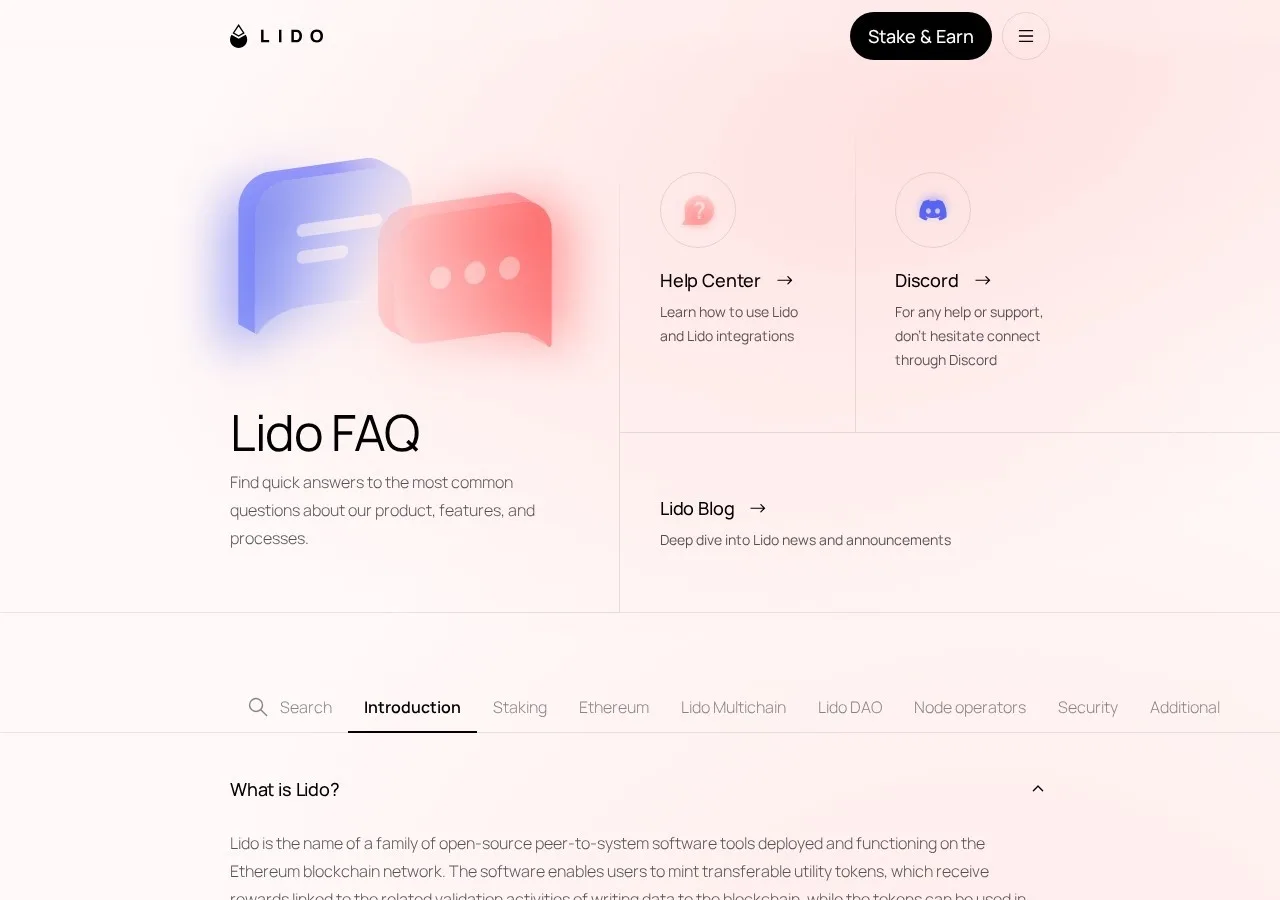
What fee does Lido charge?
Lido charges a 10% protocol fee on staking rewards, split between node operators and the DAO treasury. The fee is waived when consensus-layer penalties exceed earned rewards.
Which assets and chains does Lido support?
The core protocol supports ETH on Ethereum and issues stETH and wstETH. Direct staking routes are also available through the Lido interface from Arbitrum, Base, Linea and Optimism, without manually bridging to Ethereum and back.
Is Lido safe?
Lido is non-custodial and open source, with published audit material, more than $4 million invested in audits and expert reviews, and more than 600 node operators. Users still face smart-contract and oracle risks, along with possible stETH depeg losses.
Does Lido have a token?
Yes, Lido has the LDO governance token. LDO holders participate in public governance votes that decide key protocol matters.
How does Lido liquid staking work?
Users stake ETH through Lido and receive stETH, which reflects staking rewards through a daily rebase. wstETH offers a value-accruing wrapped form for DeFi applications, while withdrawals depend on Ethereum validator exits and the withdrawal queue.
Latest from Lido on X
Lido Poolside: Decentralization, October 2026 https://t.co/1MBurcl0Xu
Lido Poolside call starts in under 1 hour!
Today's agenda:
- Unveiling Lido Lend proposal
- Strengthening Ethereum validator operations
- Celebration of 0x02 CSM launch
As always, livestreamed on X, LinkedIn and YouTube!
More info here: https://t.co/l3Km25HfgA
Today's agenda:
- Unveiling Lido Lend proposal
- Strengthening Ethereum validator operations
- Celebration of 0x02 CSM launch
As always, livestreamed on X, LinkedIn and YouTube!
More info here: https://t.co/l3Km25HfgA
Celebrate spooky season with the upcoming Lido Poolside call 👻🎃
Agenda:
→ A panel on strengthening Ethereum validator operations with ValOS
→ A celebration of the 0x02 CSM launch
→ A closer look at the newly proposed Lido Lend
Details + RSVP: https://t.co/L4S3908GzF https://t.co/jxyoMc0NQk
Agenda:
→ A panel on strengthening Ethereum validator operations with ValOS
→ A celebration of the 0x02 CSM launch
→ A closer look at the newly proposed Lido Lend
Details + RSVP: https://t.co/L4S3908GzF https://t.co/jxyoMc0NQk

Lido Glamsterdam on Hoodie Update
On yesterday’s ACDE #248 call, Ethereum core developers made the decision to postpone the Glamsterdam upgrade on the Hoodi testnet to allow for further investigation into how EIP-8037 and EIP-8038 interacts with mainnet contracts:
https://t.co/TTc5Er0ENm
This testnet upgrade delay does not affect the mainnet Lido protocol, and no action is required from stETH or wstETH holders.
Since Lido’s Hoodi contracts had already been upgraded ahead of the previously scheduled October 26 activation, contributors are currently preparing a Hoodi vote to roll back the fork-specific changes and keep the testnet operational until a new upgrade date is set.
Lido DAO contributors are proactively coordinating the rollback with Lido Node Operators and the broader Ethereum ecosystem. If you operate a Hoodi node or validator, please make sure to check both your Execution and Consensus Layer clients for instructions reflecting the postponed activation before October 26.
Lido contributors have been screening EIP-8037 against Lido contracts since June and have found no breaking impact on the protocol’s core contracts so far, which has also been independently confirmed by ChainSecurity.
The review continues alongside the Ethereum core devs’ broader investigation.
Recent public posts from @LidoFinance, shown as published. Not reviewed or endorsed by CryptoReview.
Alternatives to Lido

Solana liquid staking infrastructure powering over 1,300 custom LSTs with pooled liquidity
Liquid stakingSolanaAudited

Solana liquid and native staking protocol automating delegation across validators since 2021
No KYCLiquid staking · Native stakingSolanaAudited

Solana liquid staking protocol capturing MEV rewards with over $1B in TVL
No KYCLiquid stakingSolanaAudited

Decentralized Ethereum liquid staking backed by permissionless node operators and a 0.01 ETH minimum
No KYCLiquid stakingEthereumAudited

Liquid staking protocol on Hyperliquid issuing kHYPE with over $860M in TVL
No KYCLiquid stakingHyperliquidAudited

Distributed validator protocol securing over 7 million ETH across 120,000 active validators
Staking poolEthereumAudited