


We’ll be at #SPARK26 by @FireblocksHQ in Barcelona, Nov 9–11 🇪🇸
@laszlo__szabo and Marco Severi will be there to talk about how platforms can offer staking and onchain yield.
Come say hi or DM us 👇 https://t.co/GUDhWHn41M


Institutional staking platform running multi-cloud validators across more than 30 PoS networks
Kiln is an institutional digital asset staking and rewards infrastructure platform operating multi-cloud validators across more than 30 Proof-of-Stake blockchains. The platform allows institutions, custodians, and fintechs to offer native staking, liquid staking, and DeFi yield through APIs and dedicated validators.
Founded in 2018, Kiln is headquartered in Paris, France. The platform was created by Chief Executive Officer Laszlo Szabo, previously a co-founder of recruitment firm Skill Hunter; Chief Operating Officer Thomas de Phuoc, formerly Country Lead for France at Circle; and Chief Product Officer Ernest Oppetit. The company has raised $35 million in venture capital, including a $5 million round in May 2022 with participation from ConsenSys and Kraken, and a $17 million Series A round in January 2024 led by 1kx to fund international expansion.
Kiln operates an enterprise architecture designed around a bring-your-own-custodian model, integrating natively with custody providers like Fireblocks, Copper, and Ledger. This setup ensures that institutions retain full custody of private keys while delegating stakes. The platform supports native and dedicated staking on networks such as Ethereum, Solana, Aptos, Avalanche, Cosmos, Cardano, NEAR, and Sui. Kiln also offers pooled staking options, such as single-nominator and pooled contracts on The Open Network (GRAM) with a 10 TON minimum stake. Beyond direct staking, the Kiln Connect API and Kiln Widget allow platforms to embed staking and DeFi lending strategies across more than 12 protocols into existing user wallets.
Kiln holds an active SOC 2 Type II compliance certification audited by Insight Assurance, which was renewed with zero exceptions in June 2026. The platform also contributed infrastructure to the Liquid Collective enterprise liquid staking standard, with smart contracts audited by Halborn. The team has expanded support across multiple networks, deploying Canton Network co-validation in September 2026 and introducing HYPE staking via the Fireblocks console in October 2026.
Staking through Kiln exposes capital to traditional network-level slashing rules, unbonding delays, and protocol downtime penalties. While institutional users retain private keys, deploying through pooled smart contracts or DeFi lending vaults introduces smart contract and protocol layering risks. Kiln experienced an infrastructure incident requiring a coordinated validator exit, though user funds were kept protected.
Kiln delivers enterprise-grade multi-chain staking infrastructure and compliance reporting, but its enterprise-focused model offers less utility for retail stakers wanting liquid, highly composable DeFi tokens.
Kiln is an institutional staking and developer infrastructure platform founded in 2018 in Paris, France, by Laszlo Szabo and Thomas de Phuoc. The platform enables custodians, exchanges, asset managers, and retail wallets to deploy validators across more than 30 Proof-of-Stake networks, including Ethereum, Solana, Cosmos, Aptos, Cardano, and Near. Kiln provides dedicated validators and API tooling for partners such as Fireblocks and Ledger.
Security and institutional custody are central to Kiln's architecture. Stakers retain asset custody through integrations with platforms like Fireblocks and Copper. The company renewed its SOC 2 Type II certification with Insight Assurance in June 2026 and underwent smart contract audits with Halborn for its liquid staking developments. Kiln also operates on a multi-cloud, multi-client setup. While Kiln resolved an earlier infrastructure issue by initiating a validator exit to protect user funds, delegating through institutional validators still carries base slashing and client uptime dependencies.
Asset support spans native PoS delegation, Ethereum pooling contracts, and restaking workflows via protocols like EigenLayer and Babylon. On Ethereum, Kiln accommodates dedicated 32 ETH validators alongside pooled fractional staking. Reward rates reflect native network yields, such as 2.6% on Ethereum and 6.5% on Solana as of October 2026. Kiln offers liquid staking through frameworks such as Liquid Collective.
Kiln suits institutions and fintechs seeking non-custodial validator infrastructure with programmatic APIs and audit trails.
| KYC required ⓘ | No · unverified |
|---|---|
| Type | Native staking, Liquid staking, Restaking, Staking pool · unverified |
| Stakeable assets | ETH, SOL, APT, ATOM, ALGO, AVAX, ADA, TIA, CRO, FET, FLR, IOTA, INJ, MON, NEAR, SEI, SUI, XTZ, TRX, BTC, GRAM · unverified |
| Chains | Ethereum, Solana, Aptos, Cosmos, Avalanche, Tron, Sui, Bitcoin, Other · unverified |
| Node operators | Kiln multi-cloud validator infrastructure · unverified |
| Audited | Yes · unverified |
| Restaking | Yes · unverified |
| Typical reward rate ⓘ | 0% to 30% · unverified |
Not disclosed by the provider: Receipt token, Protocol fee, Minimum stake, Withdrawal time, Slashing cover.
Data from the provider's website and public sources. Fees and availability change; confirm on the official site before you sign up.
Runs multi-cloud, multi-client validator infrastructure across more than 30 networks, including Ethereum, Solana, Cosmos, and Avalanche.
Enables staking delegation directly from custody accounts like Fireblocks, Copper, and Ledger without giving up key ownership.
Kiln Connect API and embeddable no-code widgets allow fintechs and wallets to integrate automated staking and reporting in their own apps.
Supports dedicated 32 ETH node deployment, pooled validator contracts, and liquid staking configurations.
Aggregates vaults across more than 12 protocols to let asset managers deploy composable onchain strategies.
Provides pooled contracts starting at 10 TON alongside single-nominator pools requiring about 1 million GRAM.
A capital management portal for tracking Earn programs, monitoring staking performance, generating compliance-ready audit reports, and managing portfolio rebalancing.
Enterprise-grade Validators-as-a-Service deployed across more than 30 Proof-of-Stake blockchains using multi-cloud and multi-client infrastructure.
A no-code embeddable interface that allows wallets, custodians, and fintechs to launch a white-label earn and staking experience directly inside their apps.
Customizable, white-label Ethereum staking smart contracts that support dedicated validator nodes, pooled staking options, or liquid staking token configurations.
An open yield layer and lending vault aggregator supporting over a dozen protocols to let asset managers build composable onchain strategies.
A unified REST API and SDK for developers to automate validator deployments, reward reporting, and programmatic staking flows.
A permissionless 1-click decentralized application where users can stake and restake assets like Ethereum directly onchain.
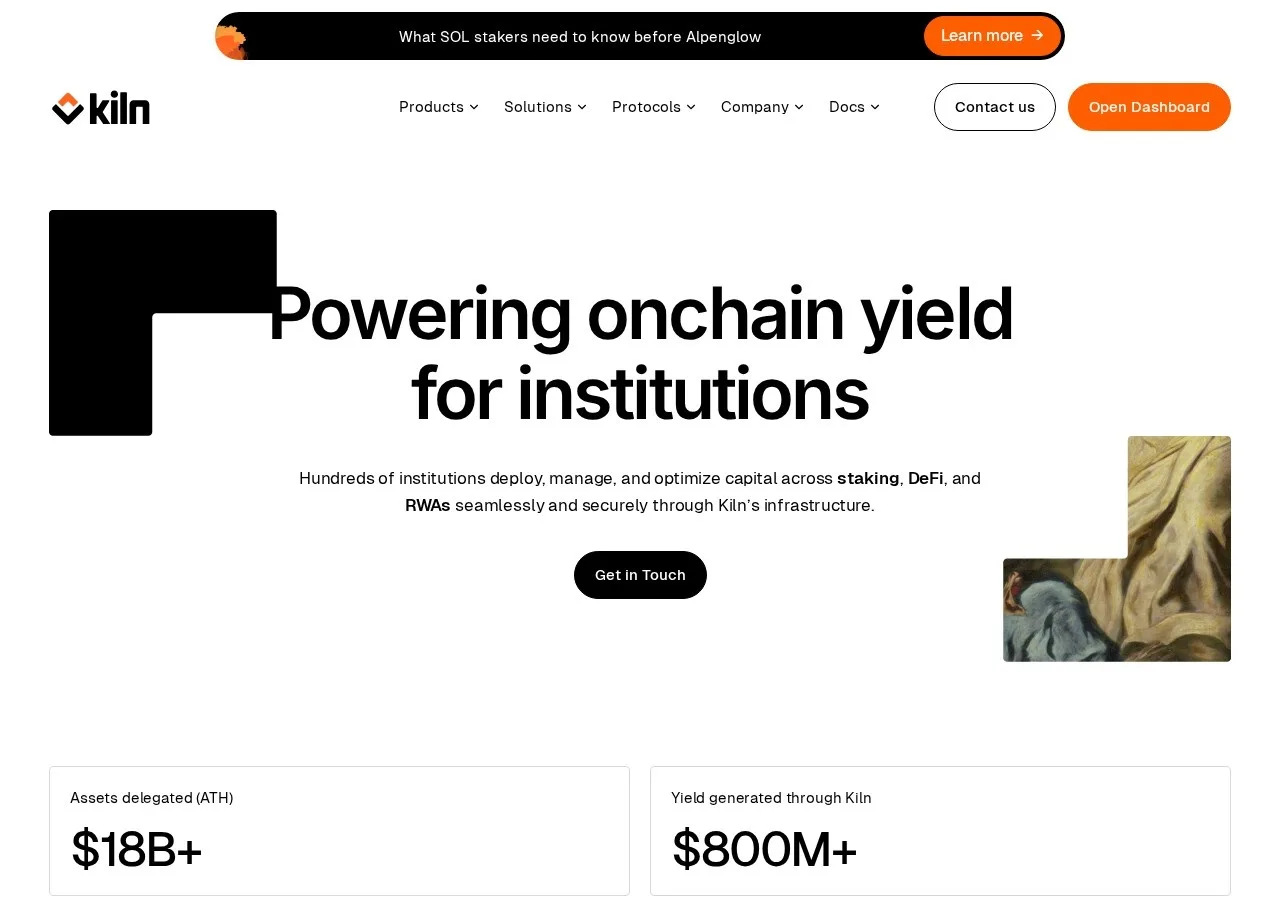
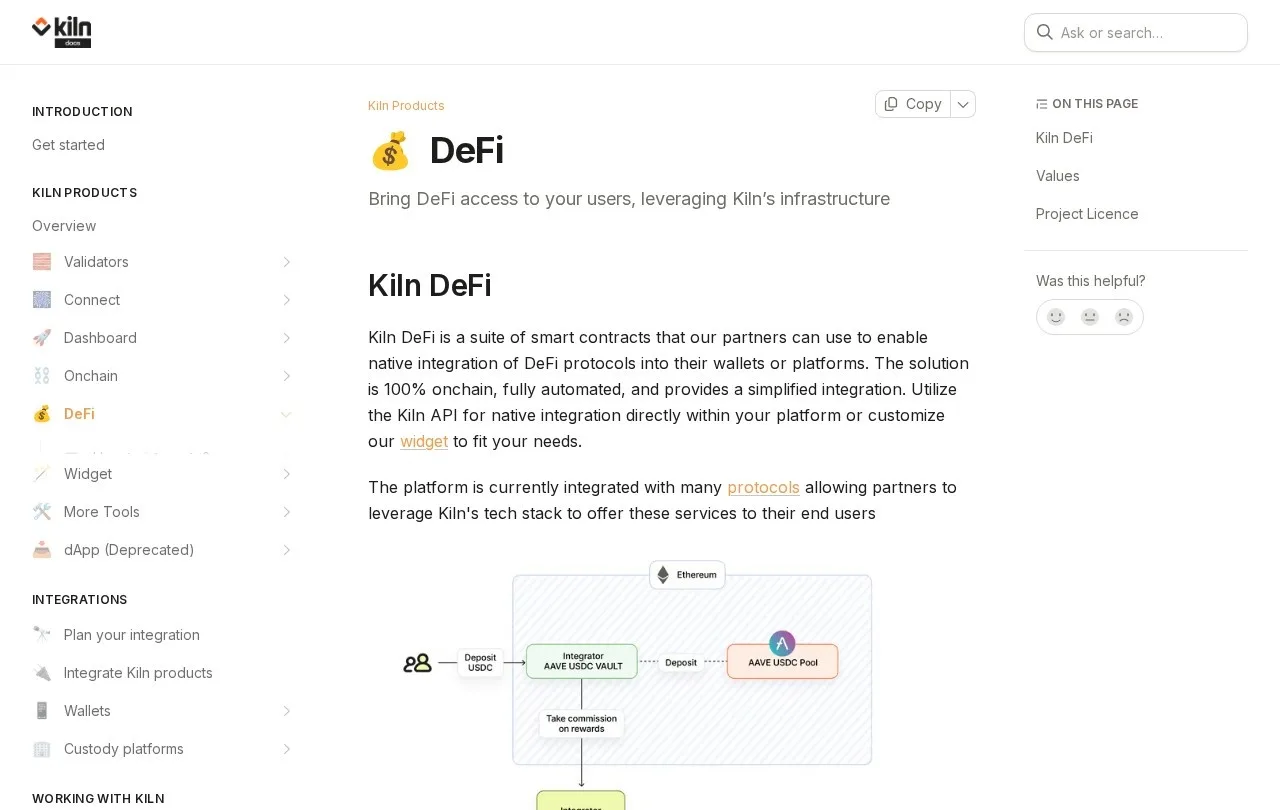
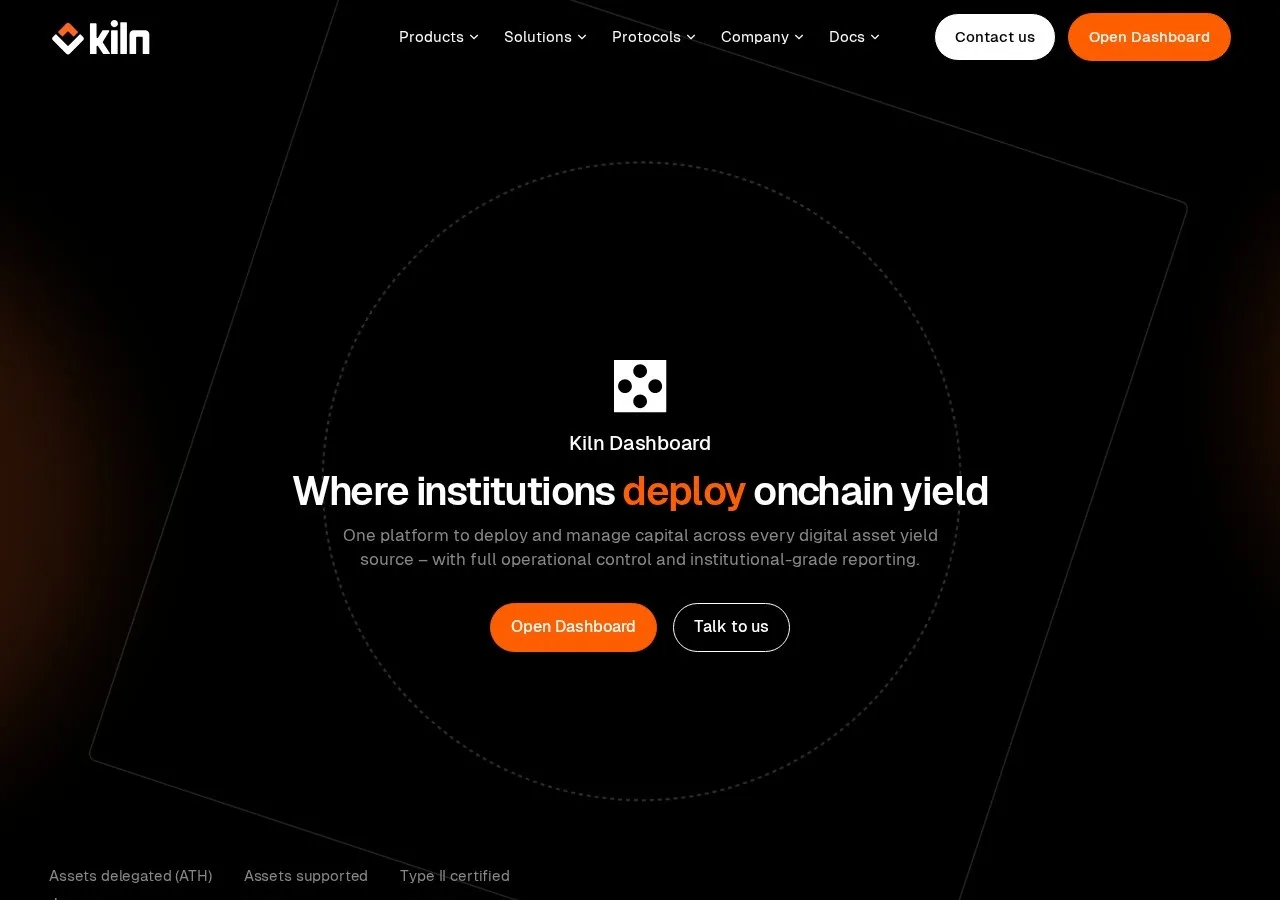
User reports highlight phishing sites mimicking Kiln rather than issues with the platform itself.
Scam warning: Scam tokens redirect users to cloned phishing sites attempting to harvest wallet recovery seeds.
Based on 1 Reddit posts and comments from the last 12 months, checked Oct 21, 2026. These are posts by users on other sites, not reviews submitted on CryptoReview.
No user reviews yet. Have you used Kiln? Share your experience below.
Kiln was founded in 2018 by Laszlo Szabo, who serves as CEO, and Thomas de Phuoc, who serves as COO, alongside founding team member and CPO Ernest Oppetit. The company is headquartered in Paris, France.
Kiln lets users and institutions retain custody of their private keys through third-party solutions like Fireblocks, Copper, or Ledger.
Kiln supports staking across more than 30 networks, including Ethereum, Solana, Bitcoin via Babylon, Cosmos, Aptos, Avalanche, Cardano, Near, Tezos, and Tron.
Kiln responded to a previous infrastructure issue by proactively triggering a validator exit to protect assets, resulting in no loss of user funds.
Minimums depend on the asset and product tier. Dedicated Ethereum validators require 32 ETH, while pooled staking contracts allow fractional deposits, such as 10 TON for Gram network staking.


Recent public posts from @Kiln_finance, shown as published. Not reviewed or endorsed by CryptoReview.
Recent posts from the official Telegram channel @Kiln_finance, shown as published. Not reviewed or endorsed by CryptoReview.
Solana liquid staking infrastructure powering over 1,300 custom LSTs with pooled liquidity
Solana liquid and native staking protocol automating delegation across validators since 2021
Solana liquid staking protocol capturing MEV rewards with over $1B in TVL
Decentralized Ethereum liquid staking backed by permissionless node operators and a 0.01 ETH minimum
Liquid staking protocol on Hyperliquid issuing kHYPE with over $860M in TVL
Ethereum liquid staking with 600+ node operators and a 10% rewards fee
Type at least two characters. Press ↵ to see all results.