

$KUSD lends against trade. Here is what a KUSD deal looks like, using one shipment of wheat. https://t.co/9ojeARuKXy


Liquid restaking protocol issuing rsETH across Ethereum and layer-2 networks
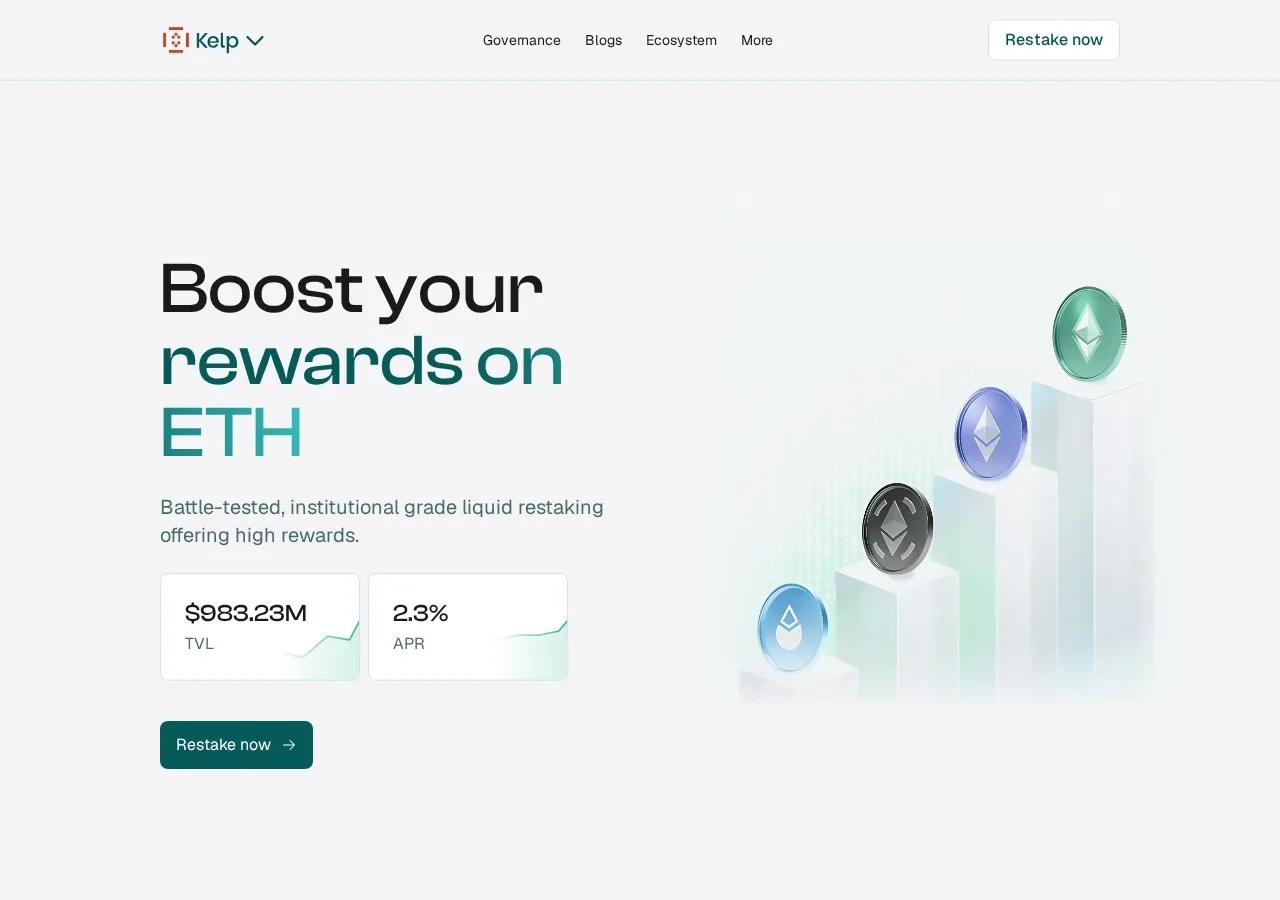
Kelp DAO is a liquid restaking protocol operating as part of the KernelDAO ecosystem. It issues rsETH, a liquid restaked receipt token backed by native ETH and liquid staking tokens restaked across underlying validation layers such as EigenLayer. In October 2026, protocol total value locked stood at approximately $977 million.
Kelp DAO was introduced in November 2023 by co-founders Amitej Gajjala and Dheeraj Borra, who previously co-founded Stader Labs. Gajjala formerly worked at Swiggy and A.T. Kearney and holds an MBA from IIM Calcutta. In May 2024, the protocol raised $9 million in a private token sale co-led by SCB Limited and Laser Digital, with participation from Bankless Ventures, Hypersphere Ventures, Draper Dragon, and GSR.
Users deposit ETH or liquid staking tokens such as stETH and ETHx to mint rsETH. Deposits earn base staking rewards alongside restaking incentives, while rsETH maintains utility across decentralized exchanges, lending markets, and yield vaults. Kelp DAO deployed rsETH bridging across layer-2 ecosystems including Base, Mantle, Linea, Optimism, and Ink, and completed a migration to Chainlink CCIP in October 2026.
Kelp DAO completed audits of its smart contracts and maintains a bug bounty program offering payouts up to $250,000. On 18 April 2026, an exploit targeting the protocol's previous LayerZero cross-chain bridge implementation resulted in a loss of roughly $292 million via cross-chain message spoofing. In September 2026, Kelp DAO initiated legal proceedings against LayerZero and its leadership related to the exploit.
Restaking introduces layered smart contract dependencies beyond baseline Ethereum staking. Holders face slashing risks from both Ethereum validators and secondary restaking networks, alongside the possibility of rsETH depegging on secondary markets. Bridge infrastructure risks also persist when moving restaked receipts across supported layer-2 networks.
Previously co-founded Stader Labs, worked at Swiggy and A.T. Kearney, and holds degrees from IIT Madras and IIM Calcutta.
Previously co-founded Stader Labs.
Kelp DAO offers broad multichain restaking liquidity through rsETH, but users take on complex cross-chain bridging risks and smart-contract exposure.
Kelp DAO is a liquid restaking protocol developed under the KernelDAO umbrella. Operating on Ethereum and bridging across multiple networks, it issues rsETH, a receipt token backed by native ETH and liquid staking assets including stETH and ETHx. The protocol automates allocation into EigenLayer. Depositors earn staking rewards and restaking yields simultaneously without running their own validation infrastructure.
The protocol brings noticeable advantages in utility and DeFi availability:
These features come alongside serious structural trade-offs. Restaking layers smart contracts on top of base consensus, which adds code risk and counterparty exposure. Kelp DAO experienced a severe security breach on April 18, 2026, when an exploit targeting its LayerZero bridge resulted in the loss of about $292 million through cross-chain message spoofing. The incident led to subsequent legal action against LayerZero and prompted a migration of rsETH bridging to Chainlink CCIP across chains such as Base, Mantle, Ink, Linea, and Optimism.
As of October 2026, Kelp DAO holds about $977M in total value locked. The protocol suits decentralized finance participants seeking automated EigenLayer rewards and multichain liquidity for their ETH. Users who focus on minimized smart-contract exposure, zero cross-chain bridging dependencies, or solo validation can choose native solo staking or standard liquid staking providers instead.
| Type | Liquid restaking |
|---|---|
| Stakeable assets | ETH, stETH, ETHx |
| Receipt token | rsETH |
| Chains | Ethereum |
| Audited | Yes |
| Restaking | Yes · unverified |
Not disclosed by the provider: KYC required, Protocol fee, Minimum stake, Withdrawal time, Node operators, Slashing cover, Typical reward rate.
Data from the provider's website and public sources. Fees and availability change; confirm on the official site before you sign up.
Minting rsETH allows depositors to retain liquidity across external DeFi protocols while their underlying assets remain restaked.
Accepts deposits in native ETH along with liquid staking tokens including Lido stETH and Stader ETHx.
Supports transfers of rsETH between Ethereum and layer-2 networks such as Base, Mantle, Ink, Linea, and Optimism.
Offers structured yield vaults like hgETH and agETH that employ leveraged restaking strategies on lending protocols.
Issues KEP tokens to provide liquidity and trading functionality for accrued restaking points.
The core liquid restaking token representing deposited ETH, stETH, and ETHx restaked on EigenLayer.
A token that makes earned EigenLayer restaking points liquid and tradable in DeFi.
A High Growth Vault product delivering yield strategies and rsETH upon redemption.
No user reviews yet. Have you used Kelp DAO? Share your experience below.
Kelp DAO was founded in November 2023 by Amitej Gajjala and Dheeraj Borra, who previously co-founded Stader Labs. The protocol operates under the KernelDAO ecosystem.
rsETH is Kelp DAO's liquid restaked receipt token. It represents deposits of ETH, stETH, and ETHx restaked into networks like EigenLayer.
Yes, on April 18, 2026, an exploit targeting the rsETH LayerZero bridge resulted in a loss of approximately $292 million due to cross-chain message spoofing. The protocol has since migrated bridge infrastructure to Chainlink CCIP.
Kelp DAO is part of the KernelDAO ecosystem, which held a Token Generation Event for its KERNEL token in April 2025. Kelp also introduced KEP to tokenize EigenLayer reward points.
Users can deposit native ETH as well as liquid staking tokens including Lido's stETH and Stader's ETHx.

Recent public posts from @KelpDAO, shown as published. Not reviewed or endorsed by CryptoReview.
Solana liquid staking infrastructure powering over 1,300 custom LSTs with pooled liquidity
Solana liquid and native staking protocol automating delegation across validators since 2021
Solana liquid staking protocol capturing MEV rewards with over $1B in TVL
Decentralized Ethereum liquid staking backed by permissionless node operators and a 0.01 ETH minimum
Liquid staking protocol on Hyperliquid issuing kHYPE with over $860M in TVL
Ethereum liquid staking with 600+ node operators and a 10% rewards fee
Type at least two characters. Press ↵ to see all results.