


Compound v3 on Ethereum is back up and running, apart from the WBTC market. You can supply, borrow and repay as normal.
Optimism, Arbitrum and Base are still paused for new collateral. An update will be shared when they reopen: https://t.co/yVm6ZaAUNd

Compound
Algorithmic money market lending single base assets across EVM networks since 2018
4.0/ 5
Our score
Very good
Lending model
Isolated markets
Chains
EthereumArbitrumBase
Main collateral assets
ETHWBTCUSDCUSDT
Audited
Yes
Governance token
COMP
Flash loans
No
What is Compound?
Compound is an algorithmic, autonomous money market protocol launched in 2018. It allows participants to deposit crypto collateral to borrow specific base assets or supply liquidity to earn variable yield. Across its versions, the protocol has processed $480 billion in cumulative deposits and borrows, holding about $1.41B in total value locked in October 2026.
Leadership and backing
The protocol is governed by a decentralized autonomous organization through the COMP token, alongside stewardship from the Compound Foundation. In August 2026, the DAO approved a $52 million development program and added executive director Aaron Schnarch, former CEO of Coinbase Custody, and chief product officer Steven Liu, previously at Maple Finance.
How the lending model works
Compound operates non-custodially across EVM-compatible networks, including Ethereum, Arbitrum, Base, Optimism, Polygon, Mantle, Linea, Scroll, and Unichain. In Compound III (Comet), each market isolates risk around a single borrowable base asset, such as USDC or WETH. Users deposit supported collateral like ETH or WBTC in markets that isolate failure modes between collateral types. Compound Institutional Market provides USDC borrowing facilities with a $10M borrow cap per collateral asset.
Fees and liquidation parameters
Interest rates are purely algorithmic and fluctuate based on pool utilization. Borrowers incur variable borrowing interest. In Compound Institutional Market, liquidation penalties range from 5% to 10%. Loan-to-value ratios generally span 81% to 87%, paired with liquidation factors between 86% and 93% in institutional setups. No identity verification or sign-up is required to access the standard non-custodial markets via Web3 wallets.
Track record and protocol risks
Compound's core smart contracts have undergone audits by firms including OpenZeppelin and ChainSecurity, alongside an active bug bounty on Immunefi offering rewards up to $1M. In October 2026, Compound DAO approved Proposal 612 to widen timelock execution windows from two days to ten days to guard against malicious governance takeovers. Primary trade-offs include oracle dependencies on Chainlink feeds, liquidation risk during high volatility, variable interest spikes during liquidity crunches, and the absence of a shared safety module fund to absorb bad debt.
Best for:USDC and WETH borrowersSuppliers avoiding rehypothecation riskUsers seeking yield on supported EVM networksInstitutional funds borrowing against crypto
Pros and cons
Pros
- Audited by OpenZeppelin and ChainSecurity with a $1M bug bounty
- Processed $480B in all-time deposits and borrows since 2018
- No KYC required to supply or borrow on standard markets
- Active on Ethereum, Base, and Arbitrum
Cons
- Lacks an umbrella safety module to cover protocol-wide bad debt
- Borrow rates vary with base-asset pool utilization
- Does not support permissionless market creation by users
- Borrowing is restricted to only one designated base asset per pool
Our review
4.0/5
Very good
Compound offers audited isolated lending markets on Ethereum and other supported EVM networks, but its TVL is lower than Aave's and its asset listings are curated.
Compound is an algorithmic money market founded in 2018 that helped pioneer pooled onchain lending. In its current Compound III (Comet) iteration, the protocol isolates risk by offering markets centered on single borrowable base assets such as USDC or USDT, backed by curated collateral pools that include ETH and WBTC. This isolated design prevents a shortfall in an obscure collateral asset from draining funds across unrelated lending pools.
The protocol holds audits from OpenZeppelin and ChainSecurity, alongside an active Immunefi bug bounty offering up to $1M in rewards. In October 2026, the DAO enacted Proposal 612 to expand treasury delays to ten days with cancellation powers, mitigating governance takeover vectors. The platform also has extensive battle-testing, handling over $480B in lifetime deposits and borrows across Ethereum, Arbitrum, Base, Optimism, Polygon, and new rollups like Unichain.
As of October 2026, Compound holds approximately $1.5B in TVL, trailing competitor Aave, which reached $14.8B in August 2026. Compound's curated approach excludes long-tail tokens and does not support permissionless market creation, so borrowers seeking niche altcoins will find fewer markets. Variable borrow rates adjust algorithmically based on pool utilization, exposing users to rate volatility during high-demand spikes.
Specs
| KYC required ⓘ | No · unverified |
|---|---|
| Lending model | Isolated markets |
| Chains | Ethereum, Arbitrum, Base |
| Main collateral assets | ETH, WBTC, USDC, USDT · unverified |
| Flash loans | No · unverified |
| Permissionless markets | No |
| Audited | Yes |
| Bug bounty | Yes |
| Governance token | COMP |
| Isolated markets | Yes · unverified |
| Real-world-asset collateral | No · unverified |
| Own stablecoin | No · unverified |
| Rates | Variable · unverified |
Data from the provider's website and public sources. Fees and availability change; confirm on the official site before you sign up.
Key features
Single-asset isolated markets
Compound III isolates each deployment to a single borrowable base asset, such as USDC, preventing bad debt in one asset from draining unrelated pools.
Institutional market tier
Curated USDC markets set a $10M borrow cap per collateral asset with liquidation penalties between 5% and 10%.
Multichain EVM availability
Markets operate on Ethereum, Arbitrum, Base, Optimism, Polygon, Mantle, Unichain, Linea, Scroll, and Ronin.
DAO timelock protections
Treasury operations use a ten-day execution delay after Proposal 612.
Inside Compound
Earn
Lets users deposit base assets such as USDC to earn variable algorithmic yields backed by overcollateralized loans.
Borrow
Allows borrowers to supply supported collateral like ETH and WBTC to draw liquidity in a single base currency without selling underlying holdings.
Compound Institutional Market
Provides specialized USDC borrowing facilities with transparent risk parameters, a $10M borrow cap per collateral, and loan-to-value ratios between 81% and 87%.
Governance
Enables COMP token holders to propose, vote on, and execute protocol parameter changes and market deployments.
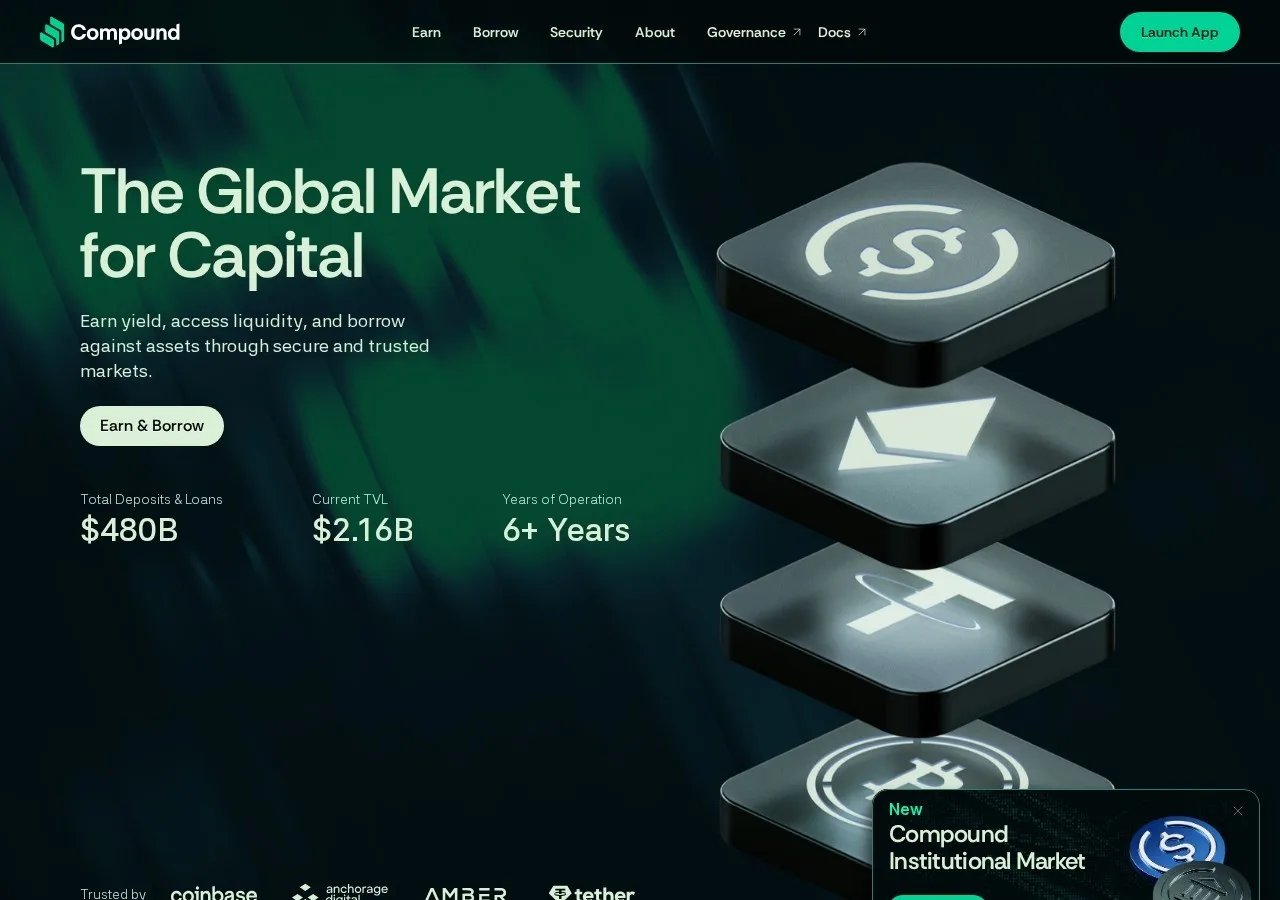
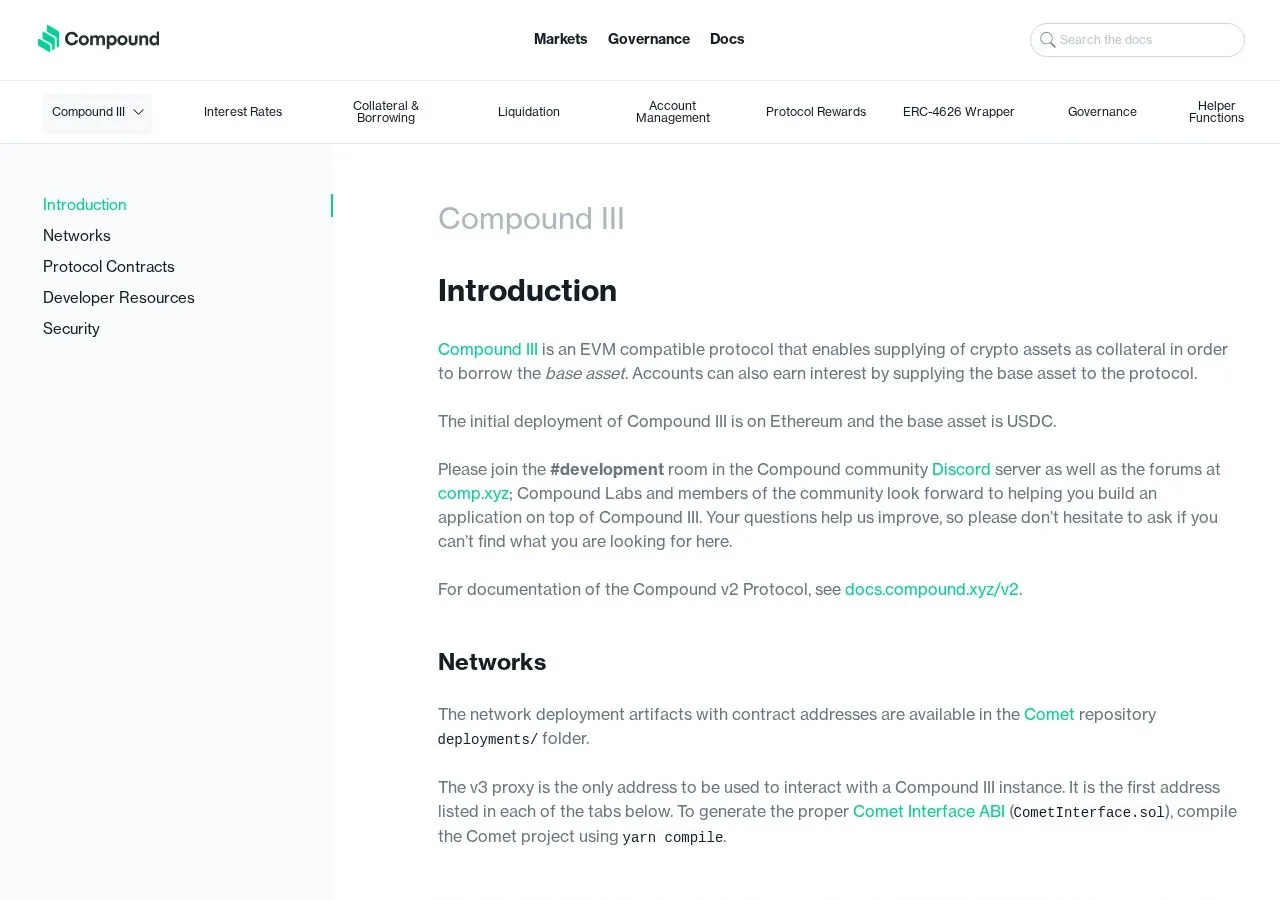
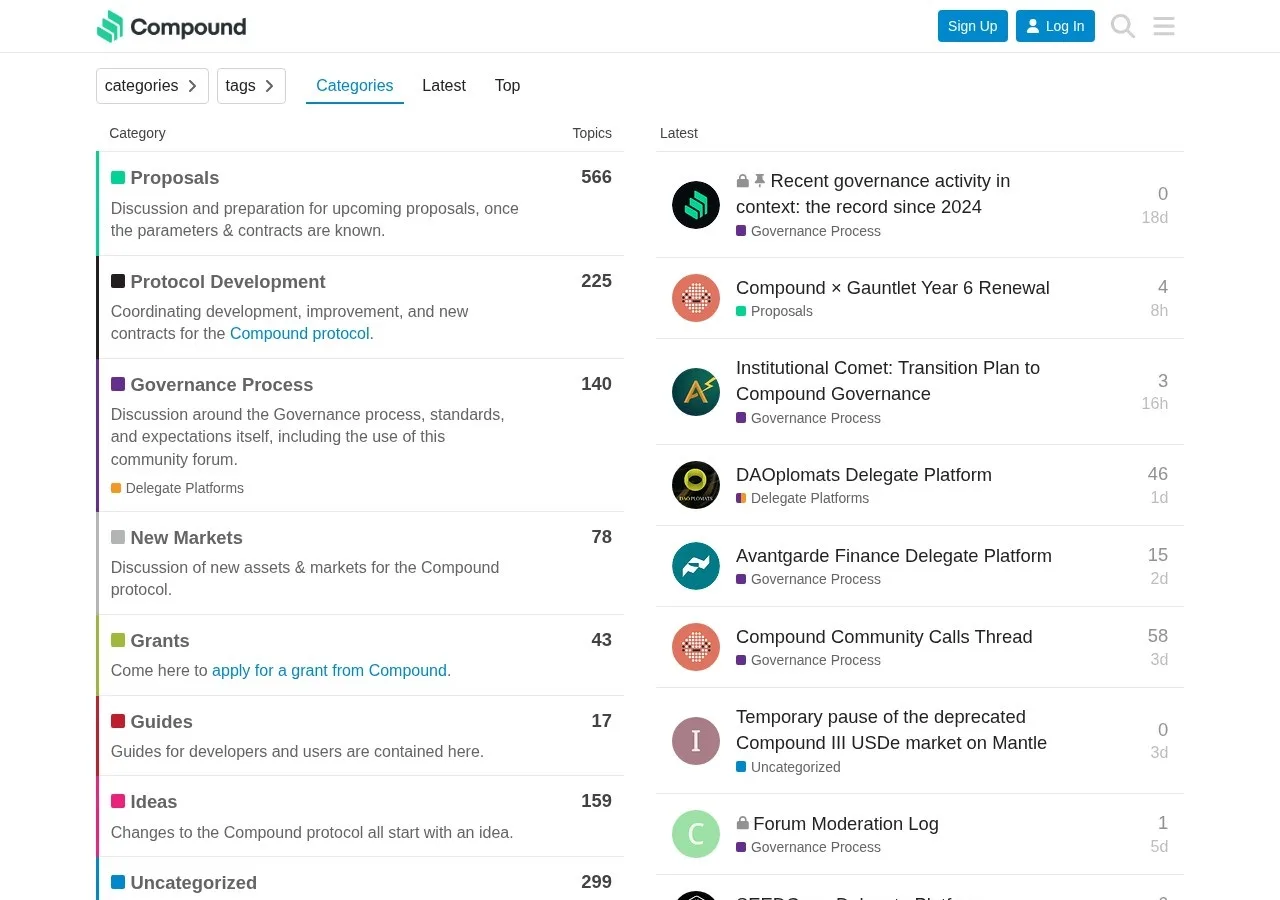
Compound screenshots
What users say about Compound
There is insufficient user feedback to evaluate the platform, as the only mention relates to domain sales rather than product usage.
Based on 1 Reddit posts and comments from the last 12 months, checked Oct 20, 2026. These are posts by users on other sites, not reviews submitted on CryptoReview.
User reviews
No user reviews yet. Have you used Compound? Share your experience below.
Funding and investors
1Round
3Investors
-
Funding round Amount undisclosed
FAQ
Who operates and leads Compound?
Compound was founded in 2018, and its ecosystem is supported by the Compound Foundation alongside DAO governance. In August 2026, the leadership brought on executive director Aaron Schnarch and chief product officer Steven Liu.
Is KYC required to use Compound?
No, Compound's core lending contracts are decentralized and permissionless to access with an Ethereum-compatible wallet. Users interact directly with smart contracts without identity verification.
Has Compound been audited?
Yes, Compound's smart contracts have undergone independent security audits by firms including OpenZeppelin and ChainSecurity. The protocol also maintains a bug bounty program on Immunefi offering rewards of up to $1M.
Which networks does Compound support?
Compound operates across EVM networks including Ethereum, Arbitrum, Base, OP Mainnet, Polygon, Mantle, Linea, Scroll, Ronin, and Unichain.
What is the COMP token used for?
COMP is the protocol's native governance token. Holders and delegates use COMP to vote on market parameters, treasury spending, and smart contract upgrades.
How does liquidation work on Compound III?
When a borrower's collateral value drops below the liquidation factor, liquidators can absorb the debt at a discount. In the institutional market, liquidation factors range from 86% to 93% with penalties between 5% and 10%.
Latest from Compound on X
New supplies to affected Compound markets are temporarily paused as a precaution following the reported security incident on Ethereum mainnet. Follow updates on the Compound forum: https://t.co/sL88RQWDXJ
Compound is bringing institutional credit onchain, and the first market is already live.
We’re hiring a Head of Growth to build our growth team and lead partnerships with custodians, exchanges, wallets and asset managers.
Know someone who’d be a great fit? Let us know. 👇 https://t.co/fTuxct8avT
We’re hiring a Head of Growth to build our growth team and lead partnerships with custodians, exchanges, wallets and asset managers.
Know someone who’d be a great fit? Let us know. 👇 https://t.co/fTuxct8avT

Compound is live in the @Safe App Store.
Safe{Wallet} users can now supply and borrow on Compound, directly from their wallet.
Now available to 60M+ Safe accounts.
8 years. Zero exploits. Zero bad debt.
Find us under Apps in Safe{Wallet} 👇
https://t.co/oJSA4O58ef https://t.co/B7BZ0j5EBe
Safe{Wallet} users can now supply and borrow on Compound, directly from their wallet.
Now available to 60M+ Safe accounts.
8 years. Zero exploits. Zero bad debt.
Find us under Apps in Safe{Wallet} 👇
https://t.co/oJSA4O58ef https://t.co/B7BZ0j5EBe
We’ve published the September v4 Program Update, our fourth monthly report on the program’s progress and priorities.
September Highlights:
• v4 moved from specifications into smart-contract development and code reviews
• The Institutional Market launched, and @Gate integrated it into Gate Earn. Participant feedback is now shaping v4 onboarding and product design
• The team finished development on the Integration Kit that lets partners embed Compound, with external security review continuing
• Development of partial liquidations is complete, with mainnet rollout pending
Read the full September update 👇
https://t.co/ZbsiTeiLst

Recent public posts from @Compound_xyz, shown as published. Not reviewed or endorsed by CryptoReview.
Alternatives to Compound

Permissionless lending protocol and curated vaults securing over $11B across EVM chains
No KYCIsolated marketsEthereum · Base +2Permissionless markets

Pooled lending protocol founded in 2017, operating across 23 blockchain networks
No KYCPooledEthereum · Base +4Audited

Solana money market protocol built by Jupiter with over $1B in total value locked
No KYCPooledSolanaAudited

Solana lending and liquidity protocol with over $1.3B in TVL and fixed-rate borrow markets
PooledSolanaAudited

Institutional onchain lending protocol managing over $4.6B across overcollateralized credit pools
KYC requiredPooledEthereumAudited

Non-custodial lending and isolated liquidity markets on the Sui network
No KYCPooledSuiAudited