



NAVI Protocol is not affected by the Binance incident.
User funds on NAVI are safe. Deposits, withdrawals, borrowing and repayments are all operating normally.
Our team is monitoring onchain activity and market conditions closely.
Markets may stay volatile over the next few days. Please keep an eye on your positions and health factor.

NAVI Protocol
Non-custodial lending and isolated liquidity markets on the Sui network
4.0/ 5
Our score
Very good
Lending model
Pooled
Chains
Sui
Main collateral assets
SUIUSDCUSDTwETH+4
Audited
Yes
Governance token
NAVX
Flash loans
Yes
What is NAVI Protocol?
NAVI Protocol is a non-custodial liquidity and lending platform native to the Sui blockchain. Built on Move, the protocol offers pooled money markets alongside isolated risk environments for borrowing, lending, and institutional vault strategies. In October 2026, the protocol held over $163M in total value locked and had handled more than $30B in cumulative loan volume.
Team and capitalization
NAVI Labs Inc. operates the platform, co-founded in 2023 by CEO Elliscope Fang, a former software engineer at LinkedIn, Expedia Group, and Disney ABC Television Group, alongside technologist Charles Huang, who previously worked at Apple. In January 2024, the project secured a $2M seed funding round co-led by OKX Ventures, dao5, and Hashed.
Lending mechanics and features
The protocol lets users supply assets to earn interest or borrow against collateral across pooled and isolated configurations. Supported assets on Sui include SUI, USDC, USDT, wETH, wBTC, tokenized gold through XAUm, and yield stablecoins such as USDY. LBTC was added in early 2025 to introduce Bitcoin liquid staking collateral to Sui. For larger capital deployments, NAVI Prime provides segregated vaults and isolated markets. Pricing data relies on oracles including Pyth and Supra, while programmatic liquidity strategies can use built-in flash loans.
Fees and access
NAVI functions through non-custodial smart contracts deployed on Sui mainnet. No KYC verification or centralized registration is required to open positions. Interest rates are determined programmatically based on pool utilization: in October 2026, deposit APYs reached up to 8.42% while subsidized borrowing rates started from -0.42% net APR. NAVX functions as the native governance and utility token across the system.
Security and operating risks
NAVI has reported zero smart contract exploit losses since its 2023 launch. The codebase has undergone 13 independent security audits by firms including OtterSec, MoveBit, Veridise, SALUS, and Asymptotic, supplemented by an ongoing bug bounty program valued at over $500,000. Core operational risks include liquidation slippage during high market volatility, potential oracle divergence between Pyth and Supra feeds, smart contract flaws in newer Move modules, and collateral depeg risks involving bridged tokens or stablecoins.
Founders
Elliscope FangCo-Founder and CEO
Former software engineer at LinkedIn, Expedia Group, and Disney ABC Television Group educated at the University of Southern California.
Charles HuangCo-Founder
Technologist with experience at Apple educated at UC Berkeley and USC.
Best for:Sui token holders earning yieldBorrowers needing non-custodial stablecoin loansDeFi traders collateralizing wrapped BitcoinInstitutions requiring isolated lending vaults
Pros and cons
Pros
- Over 13 security audits completed across Move smart contracts
- No KYC required for lending or borrowing on Sui mainnet
- Isolated Prime markets mitigate systemic debt contagion across pools
- Zero reported exploit losses since 2023 launch
- Supports yield-bearing stablecoins and tokenized gold collateral
Cons
- Confined entirely to the Sui blockchain ecosystem
- Variable borrowing rates can rise sharply during high pool utilization
- Liquidations rely on third-party oracle feeds from Pyth and Supra
- Exposed to depeg risks on bridged assets such as wBTC and wETH
Our review
4.0/5
Very good
NAVI Protocol provides deep lending liquidity on Sui with strong audit coverage and institutional vaults, but liquidity remains concentrated on a single network.
NAVI Protocol is the primary money market on Sui, running pooled lending, isolated markets, and institutional credit vaults built natively with Move. Operational since 2023, the protocol manages over $160M in TVL as of October 2026. Supported assets include SUI, USDC, USDT, and real-world assets like tokenized gold (XAUm) and USDY. For yield earners, variable deposit rates reach up to 8.42% APY, while base borrow APRs start as low as -0.42% when net of protocol incentives.
Risk management relies on isolated pools alongside general liquidity to prevent high-volatility collateral from contaminating the core protocol. Price feeds depend on oracles from Supra and Pyth to govern liquidations. Security is among the project's clearest strengths: the protocol has sustained zero security exploits since launch, published 13 audits from firms including MoveBit, OtterSec, and Veridise, and maintains an active $500,000 bug bounty program.
However, NAVI carries distinct trade-offs:
- Protocol activity is restricted entirely to the Sui blockchain, offering no native cross-chain borrowing across EVM or Solana ecosystems.
- Variable interest rates fluctuate widely based on pool utilization and recurring promotional incentive schedules.
- Smart contract risk persists across multi-collateral integrations like liquid-staked Bitcoin (LBTC) and tokenized real-world assets.
The company behind the protocol, NAVI Labs Inc., was co-founded by Elliscope Fang, a former software engineer at LinkedIn, alongside Charles Huang. The team secured a $2M seed round in January 2024 co-led by OKX Ventures, dao5, and Hashed. NAVI Protocol suits onchain traders and liquidity providers active in the Sui ecosystem who need deep collateralized borrowing, whereas users seeking multichain collateral support or fixed borrowing costs should consider established cross-chain alternatives.
Specs
| KYC required ⓘ | No · unverified |
|---|---|
| Lending model | Pooled |
| Chains | Sui |
| Main collateral assets | SUI, USDC, USDT, wETH, wBTC, USDY, LBTC, XAUm · unverified |
| Flash loans | Yes · unverified |
| Audited | Yes |
| Bug bounty | Yes |
| Governance token | NAVX |
| Isolated markets | Yes · unverified |
| Real-world-asset collateral | Yes · unverified |
| Own stablecoin | No · unverified |
| Rates | Variable · unverified |
Not disclosed by the provider: Permissionless markets.
Data from the provider's website and public sources. Fees and availability change; confirm on the official site before you sign up.
Key features
Pooled money markets
Users can deposit Sui assets such as SUI, USDC, USDT, and wBTC into shared pools to earn interest or draw loans.
NAVI Prime isolated vaults
Provides segregated collateral markets and curated vaults with tailored risk parameters for larger balance deployments.
Real-world asset integration
Accepts tokenized real-world assets including XAUm gold and Ondo USDY yield-bearing stablecoins as supported collateral.
Flash loan functionality
Developers can execute uncollateralized single-transaction borrowing for liquidations, arbitrage, and debt refinancing.
Bitcoin liquid staking markets
Supports LBTC to allow users to borrow stablecoins or native tokens against yield-bearing Bitcoin collateral.
Dual oracle feeds
Uses Pyth and Supra oracle networks to deliver live asset valuations and automate liquidation thresholds.
Inside NAVI Protocol
NAVI Lending & Borrowing
The core money market where users deposit crypto assets to earn real-time interest or collateralize holdings to borrow tokens.
NAVI Prime
An institutional tier offering isolated lending markets, curated yield vaults, and direct coverage for large capital allocations.
Isolated Markets
Dedicated lending pools wall off asset-specific risk so borrowers can access liquidity like USDC against volatile collateral.
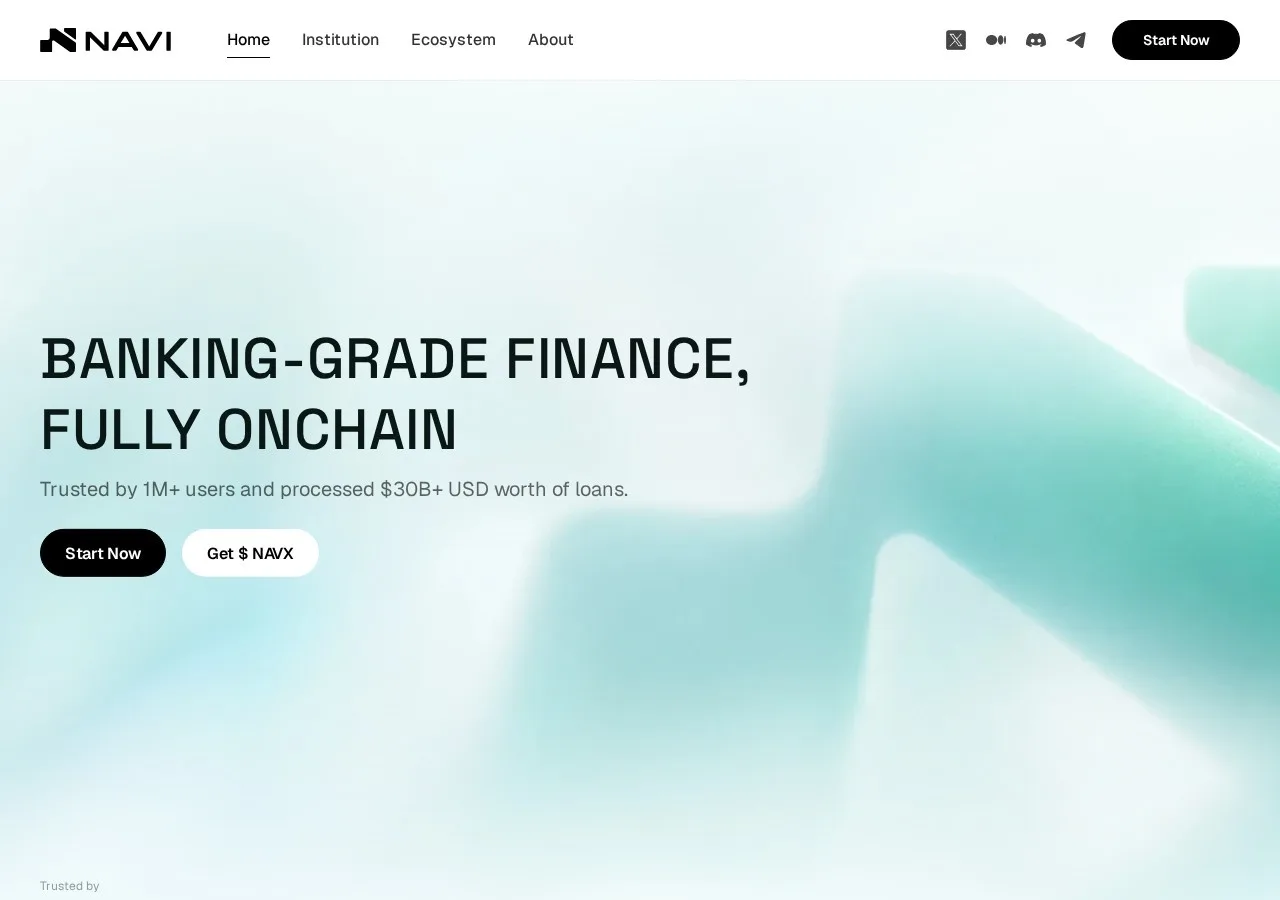
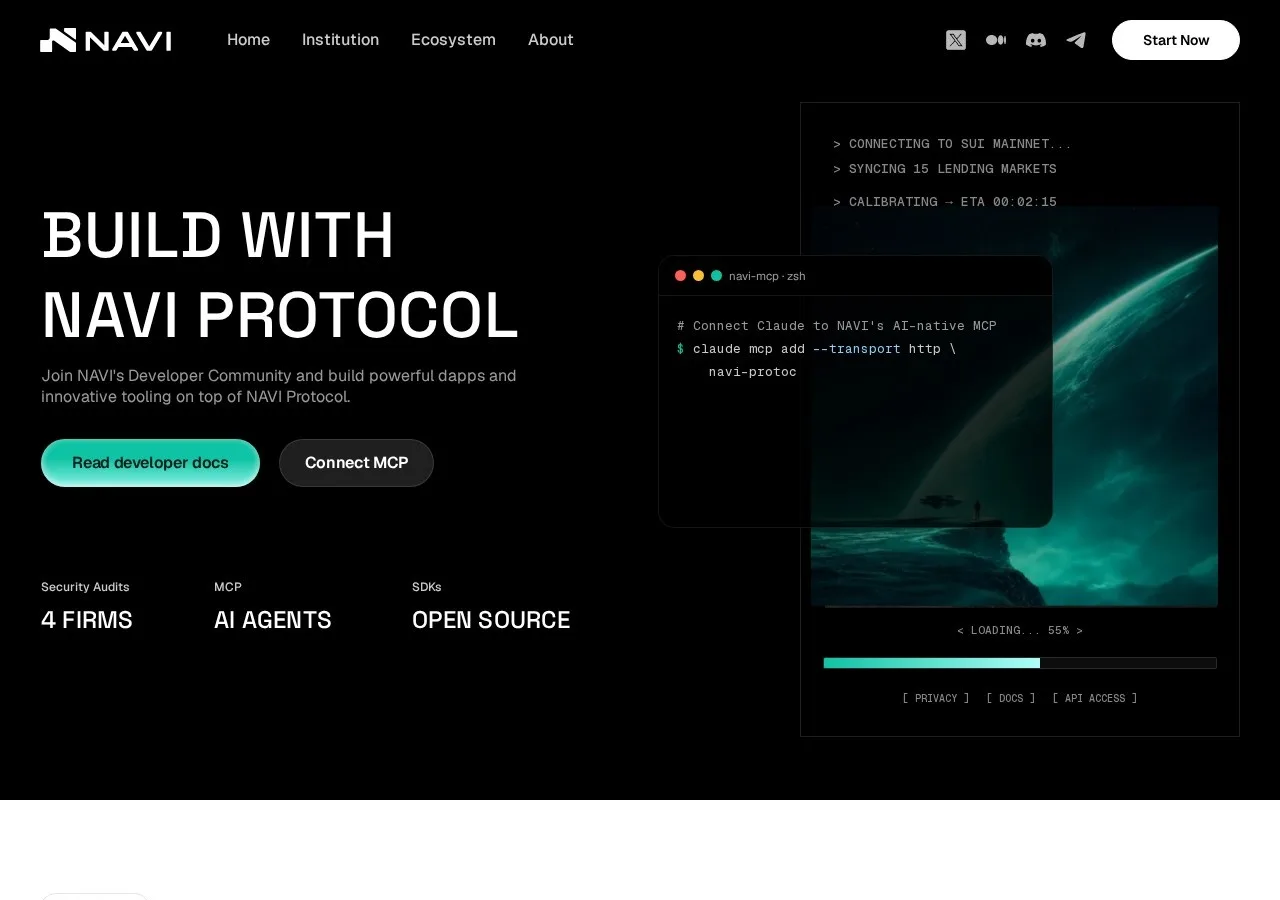
NAVI Protocol screenshots
User reviews
No user reviews yet. Have you used NAVI Protocol? Share your experience below.
Funding and investors
$2MTotal raised
1Round
3Investors
-
Seed Jan 2024 $2M
FAQ
Who founded NAVI Protocol?
NAVI Protocol was co-founded by CEO Elliscope Fang, a former software engineer at LinkedIn, alongside Charles Huang.
Is KYC required to use NAVI Protocol?
No, NAVI Protocol is a non-custodial decentralized platform that requires no identity verification or sign-up.
Has NAVI Protocol been audited?
Yes, NAVI has completed 13 audits from security firms including MoveBit, OtterSec, Veridise, SALUS, and Asymptotic.
What chains does NAVI Protocol support?
NAVI Protocol operates exclusively on the Sui blockchain.
Does NAVI Protocol have a token?
Yes, NAVI operates with NAVX as its native governance and utility token.
What collateral assets does NAVI Protocol accept?
NAVI accepts assets including SUI, USDC, USDT, wETH, wBTC, LBTC, USDY, and tokenized gold (XAUm).
Latest from NAVI Protocol on X
Security is an ongoing commitment at NAVI.
One year of collaboration with @HackenProof , 6 active bug bounty programs across NAVI, Volo, and Astros, and up to $300,000 in rewards for security researchers.
Thank you to HackenProof and the researchers helping us keep the ecosystem secure. 🔒
One year of collaboration with @HackenProof , 6 active bug bounty programs across NAVI, Volo, and Astros, and up to $300,000 in rewards for security researchers.
Thank you to HackenProof and the researchers helping us keep the ecosystem secure. 🔒
Borrowing USDC on NAVI now pays you
The vSUI/USDC isolated market on NAVI Prime is at a -0.6% borrow APR. Incentives more than cover the interest.
Your vSUI keeps earning staking yield, and the borrows earns you incentives on top. https://t.co/ZdbmTd6ZNB
The vSUI/USDC isolated market on NAVI Prime is at a -0.6% borrow APR. Incentives more than cover the interest.
Your vSUI keeps earning staking yield, and the borrows earns you incentives on top. https://t.co/ZdbmTd6ZNB

Are you taking full advantage of your positions?
During USDC Your Way, borrowing USDC in NAVI’s isolated markets costs 0% in borrow fees.
Your collateral stays isolated. Your USDC costs less. https://t.co/RemblQNWRF
During USDC Your Way, borrowing USDC in NAVI’s isolated markets costs 0% in borrow fees.
Your collateral stays isolated. Your USDC costs less. https://t.co/RemblQNWRF

USDC on Ethereum?
Supply it to NAVI in 1 step and earn 9% APR on Sui.
No bridging. No new wallets. Deposit from your EVM wallet and the NAVI curator puts it to work on NAVI Prime.
USDC High Yield Vault is live 👇
https://t.co/8uuh50TG5k https://t.co/Lr1xJ6fN3L
Supply it to NAVI in 1 step and earn 9% APR on Sui.
No bridging. No new wallets. Deposit from your EVM wallet and the NAVI curator puts it to work on NAVI Prime.
USDC High Yield Vault is live 👇
https://t.co/8uuh50TG5k https://t.co/Lr1xJ6fN3L
Recent public posts from @navi_protocol, shown as published. Not reviewed or endorsed by CryptoReview.
Alternatives to NAVI Protocol

Permissionless lending protocol and curated vaults securing over $11B across EVM chains
No KYCIsolated marketsEthereum · Base +2Permissionless markets

Pooled lending protocol founded in 2017, operating across 23 blockchain networks
No KYCPooledEthereum · Base +4Audited

Algorithmic money market lending single base assets across EVM networks since 2018
No KYCIsolated marketsEthereum · Arbitrum +1Audited

Solana money market protocol built by Jupiter with over $1B in total value locked
No KYCPooledSolanaAudited

Solana lending and liquidity protocol with over $1.3B in TVL and fixed-rate borrow markets
PooledSolanaAudited

Institutional onchain lending protocol managing over $4.6B across overcollateralized credit pools
KYC requiredPooledEthereumAudited