

☀️ August was a steady one at Celer.
Total inter-chain messages kept climbing all month. No noise, no drama, just smooth and steady progress across the bridge.
🌈 Let's take a look at what Celer looks like today: https://t.co/HWddBb4bcy

Celer cBridge
Cross-chain liquidity bridge supporting transfers across more than 50 networks
4.0/ 5
Our score
Very good
Design
Liquidity network
Chains supported
50
Typical transfer time
Minutes
Security model
Celer State Guardian Network (SGN)
Audited
Yes
What is Celer cBridge?
Celer cBridge is a cross-chain asset bridge developed by Celer Network that enables token transfers across more than 50 blockchain environments, including Ethereum, BNB Chain, Polygon, Arbitrum, Solana, and Polkadot. By June 2026, the protocol had processed over $100 billion in cumulative bridged volume across its liquidity network.
Team and background
cBridge is built by Celer Network, which was co-founded by Mo Dong. The platform launched in 2021 to provide fast cross-layer transfers for decentralized finance users. The team maintains open-source implementations for its infrastructure, including relay node software written in Go and smart contracts coordinating state changes across chains.
How transfers work
The system operates as a hybrid bridging architecture. It combines pooled liquidity deployed across individual target networks with the Celer State Guardian Network (SGN), a specialized proof-of-stake chain that monitors state updates, routes messages, and validates transfer attestations. Rather than relying solely on minting wrapped tokens, cBridge facilitates native token swaps using pooled reserves of major stablecoins like USDC and USDT alongside blue-chip tokens like ETH and BTC. Node runners execute transfers through smart contract interactions and record state data using CockroachDB.
Fees and access
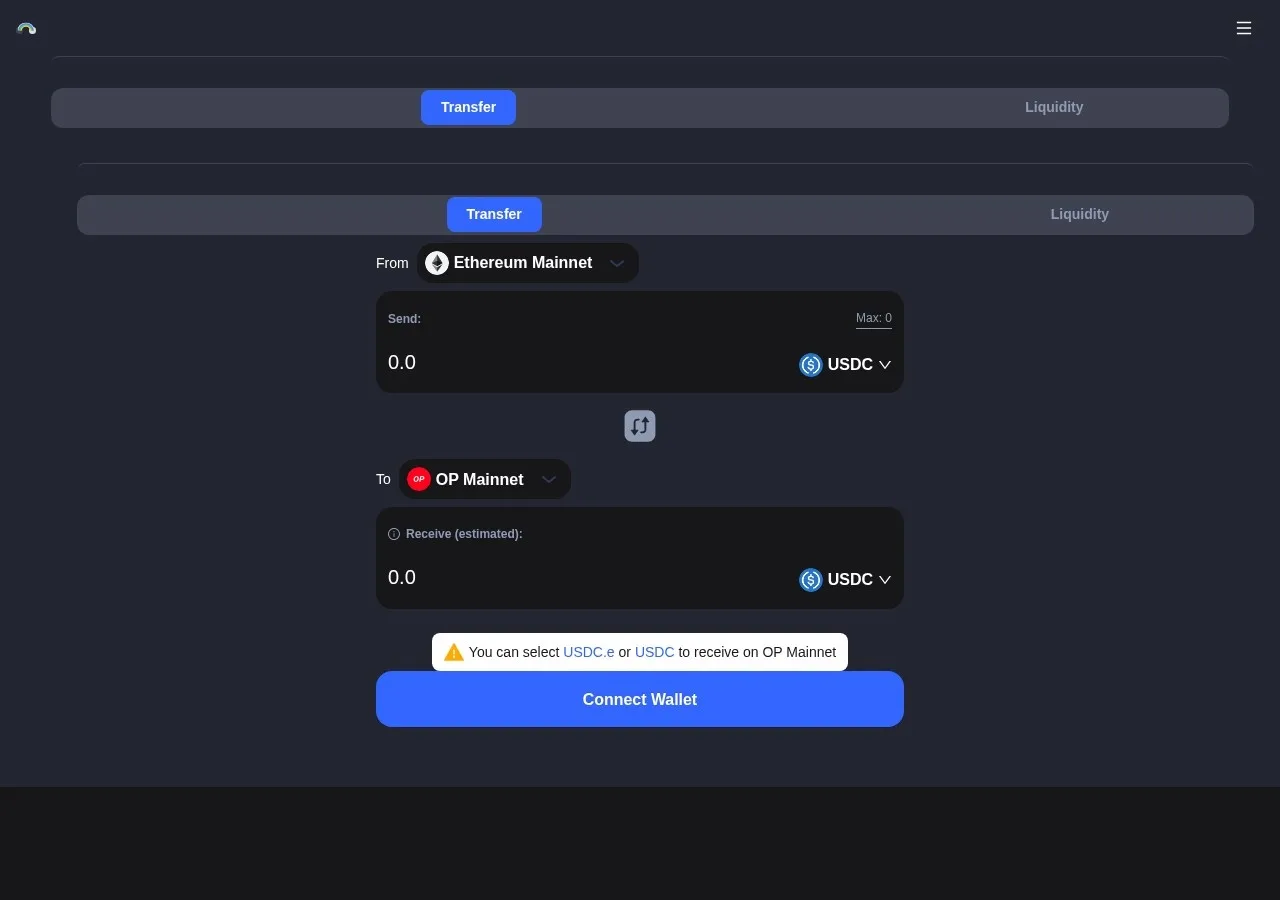
Using cBridge does not require account creation or identity verification (KYC). Users connect a compatible Web3 wallet directly to the interface. Transfer costs consist of source and destination network gas fees, plus a base liquidity fee that fluctuates according to pool depth. The protocol periodically runs fee discounts, such as zero-fee and zero-gas campaigns for USDC transfers to BNB Chain.
Track record and risks
Since its launch in 2021, cBridge has expanded to support over one million users. In October 2026, the protocol held approximately $13.2 million in total value locked. The underlying smart contracts have undergone audits by security firms including CertiK and SlowMist, with contract code and audit histories hosted publicly on GitHub. Bridge users face smart contract exposure and potential slippage or delays if destination pools experience liquidity shortfalls.
Best for:Cross-chain stablecoin transfersMoving assets across EVM layersTransfers avoiding wrapped tokens
Pros and cons
Pros
- Supports transfers across more than 50 EVM and non-EVM blockchains
- Processed over $100 billion in cumulative bridged volume by June 2026
- Smart contracts audited by CertiK and SlowMist
- No identity verification or account signup required to bridge
Cons
- Total value locked declined to about $13.2 million in October 2026
- Users face counterparty risk from State Guardian Network validator consensus
- Liquidity shortfalls in specific pools can delay or limit transfer sizes
Our review
4.0/5
Very good
Celer cBridge provides fast multi-chain transfers across dozens of networks using liquidity pools, but users rely on the State Guardian Network validator set rather than native light clients.
Celer cBridge launched in 2021 as a multi-chain cross-layer bridge developed by Celer Network, co-founded by Mo Dong. Rather than functioning as a lock-and-mint bridge, cBridge operates primarily as a liquidity network combined with Celer's State Guardian Network (SGN). This architecture routes transfers through deployed liquidity pools and independent relay nodes, which complete transfers across major networks in seconds to minutes without issuing wrapped tokens.
A clear strength is chain reach. The protocol connects over 50 networks, including Ethereum, BNB Chain, Arbitrum, Optimism, Polygon, and Avalanche, alongside non-EVM environments like Polkadot, Solana, and Near. Users can move core assets such as USDC, USDT, ETH, and BTC directly across layers. For developers and node runners, the open-source Golang relay node coordinates transactions directly with deployed smart contracts and stores transfer histories in CockroachDB.
Security relies on the Celer State Guardian Network, a specialized validator layer that tracks cross-chain state and verifies messages. The protocol's contracts have undergone audits by security firms CertiK and SlowMist. Cumulative bridging volume reached over $100 billion by mid-2026, though total value locked settled to approximately $13.2M in October 2026. This lower TVL pool compared to past peaks means large transfers face tighter liquidity limits on specific routes.
Celer cBridge suits DeFi users and decentralized application runners who need fast, non-custodial transfers between EVM rollups and non-EVM chains without KYC. Those seeking canonical or native light-client validation models without dependence on an external guardian network may prefer alternative messaging bridges.
Specs
| KYC required ⓘ | No · unverified |
|---|---|
| Design | Liquidity network |
| Chains | Ethereum, BNB Chain, Polygon, Arbitrum, Optimism, Avalanche, Other |
| Chains supported | 50 · unverified |
| Typical transfer time | Minutes · unverified |
| Security model | Celer State Guardian Network (SGN) |
| Audited | Yes |
| Token | CELR |
| Native token transfers (no wrapped tokens) | Yes · unverified |
Not disclosed by the provider: Typical fee, Intent-based, Max transfer.
Data from the provider's website and public sources. Fees and availability change; confirm on the official site before you sign up.
Key features
State Guardian Network verification
Cross-chain messaging and state validation are secured by Celer's specialized State Guardian Network proof-of-stake chain.
Pooled liquidity routing
Transfers draw on native token liquidity pools across supported chains, minimizing reliance on wrapped tokens for major assets.
Broad multi-chain support
Supports token movement across more than 50 networks, including Ethereum, BNB Chain, Arbitrum, Polygon, Solana, and Polkadot.
Open-source relay node software
Node operators can run Go-based relay infrastructure that syncs with deployed smart contracts and stores records in CockroachDB.
Zero-permission access
Transfers require no KYC registration and can be initiated directly by connecting a standard Web3 wallet.
Inside Celer cBridge
cBridge
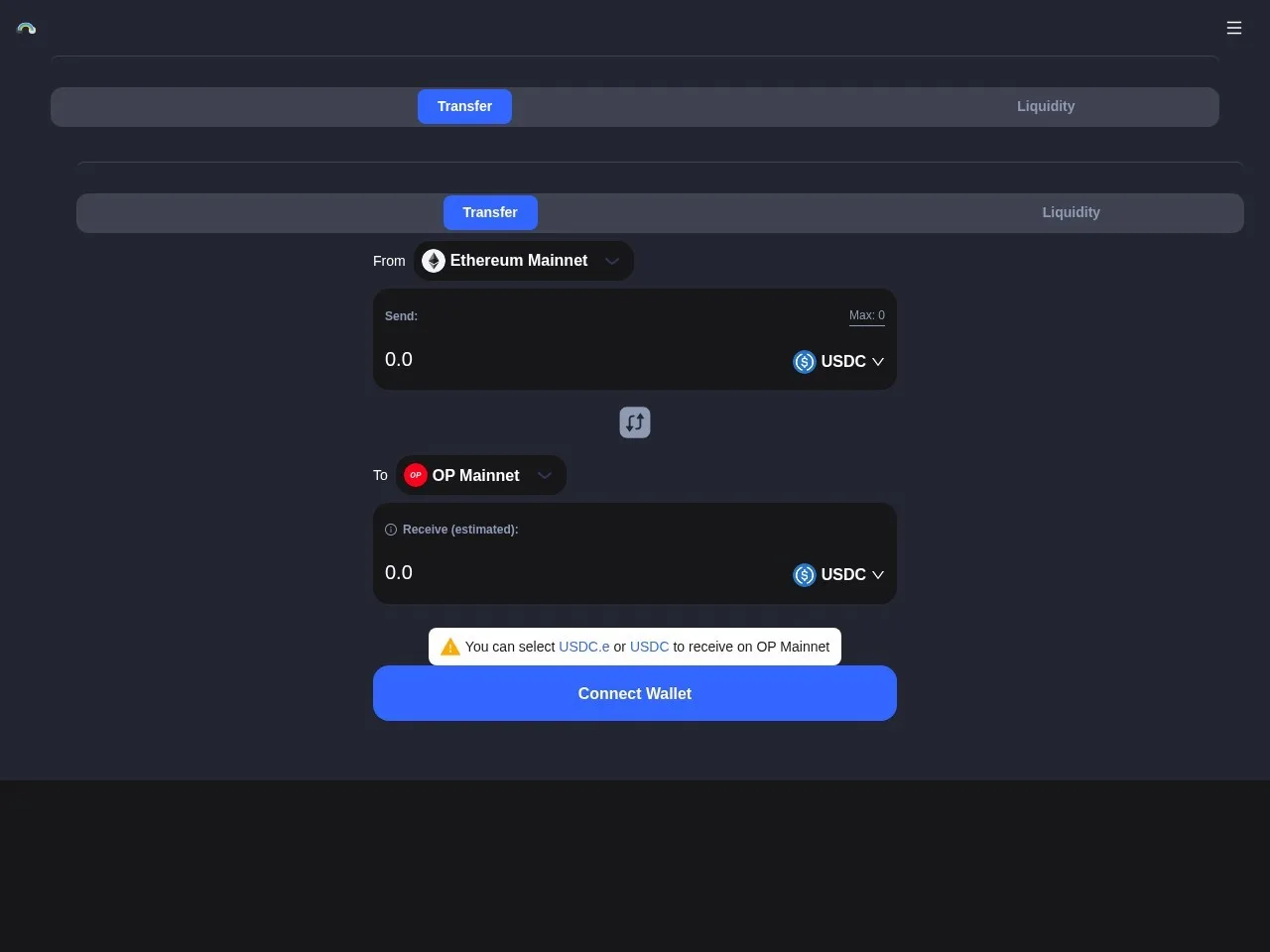
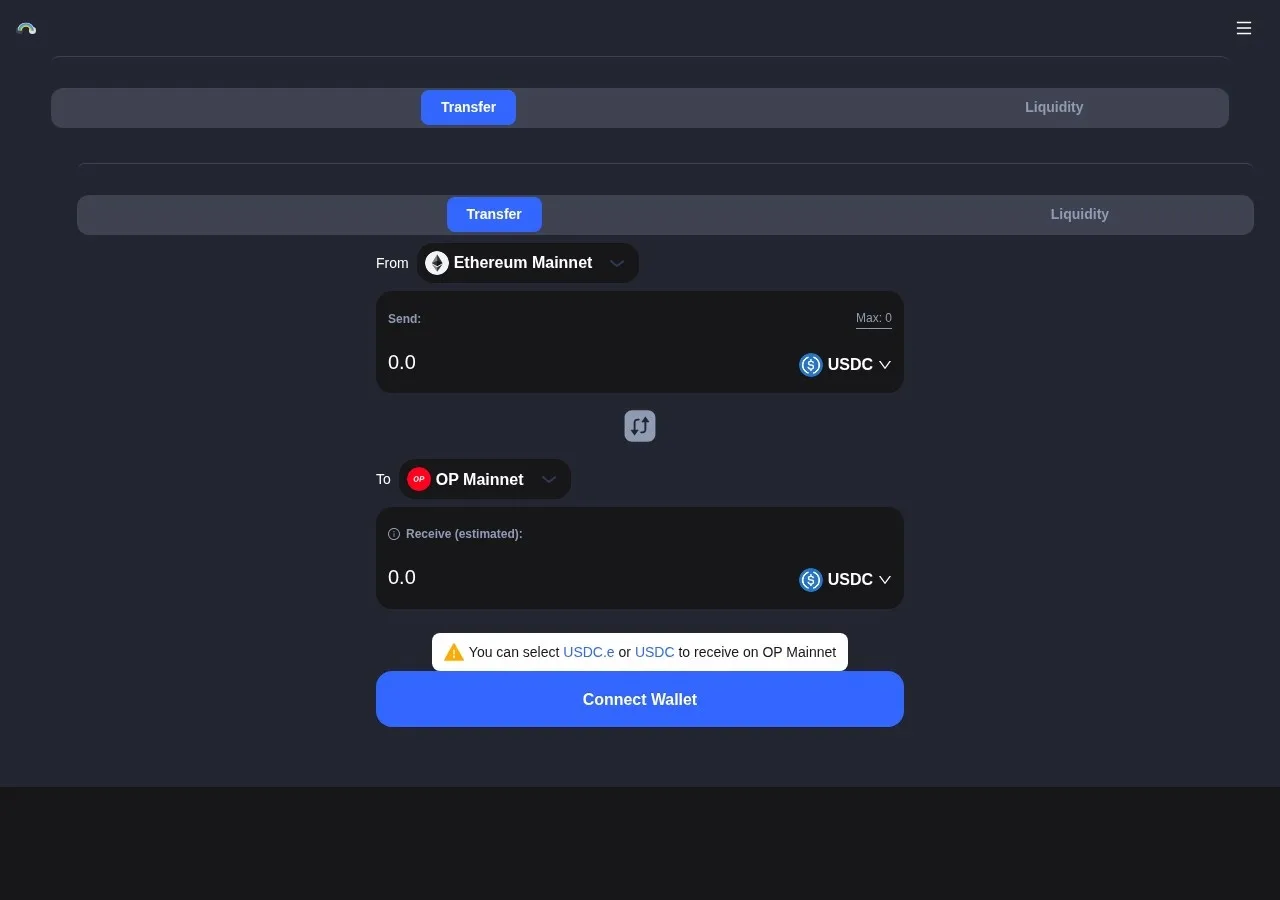
The primary web interface for routing cross-chain token transfers and stablecoin swaps across supported networks via liquidity pools.
cBridge Relay Node
An open-source Golang implementation that operators deploy to coordinate cross-chain transactions between smart contracts and record bridge transfers.
Celer cBridge screenshots
What users say about Celer cBridge
There is insufficient feedback to assess user sentiment or identify recurring themes regarding Celer cBridge.
Based on 1 Reddit posts and comments from the last 12 months, checked Oct 20, 2026. These are posts by users on other sites, not reviews submitted on CryptoReview.
User reviews
No user reviews yet. Have you used Celer cBridge? Share your experience below.
FAQ
Who founded Celer cBridge?
Celer cBridge was developed by Celer Network, which was co-founded by Mo Dong and launched the bridging protocol in 2021.
Does Celer cBridge require KYC verification?
No, Celer cBridge is a non-custodial protocol that interacts directly with Web3 wallets without identity verification or accounts.
What security audits has Celer cBridge completed?
The bridge contracts have been audited by blockchain security firms CertiK and SlowMist, with contract audit reports published on GitHub.
Which networks does Celer cBridge support?
Celer cBridge supports over 50 networks, including Ethereum, BNB Chain, Arbitrum, Polygon, Optimism, Avalanche, and non-EVM ecosystems like Polkadot and Near.
Does Celer have a native token?
Yes, Celer Network uses the CELR token, which functions within its ecosystem and State Guardian Network architecture.
How does Celer cBridge transfer assets across chains?
cBridge uses a liquidity network design backed by the State Guardian Network, transferring funds via local liquidity pools instead of minting wrapped tokens.
Latest from Celer cBridge on X
September's on the house 🎉
The 0 Fee Carnival is extended again: bridge $USDC to @BNBCHAIN through cBridge with zero gas and zero fees until Sept 30.
Move your stablecoins for free:
https://t.co/VmB2OImCx5
The 0 Fee Carnival is extended again: bridge $USDC to @BNBCHAIN through cBridge with zero gas and zero fees until Sept 30.
Move your stablecoins for free:
https://t.co/VmB2OImCx5
The 0 Fee Carnival rolls on 🎉
Bridge USDC to BNB Chain through cBridge with zero gas and zero fees, now extended through July 31.
Move your stablecoins for free:
https://t.co/VmB2OImCx5
Bridge USDC to BNB Chain through cBridge with zero gas and zero fees, now extended through July 31.
Move your stablecoins for free:
https://t.co/VmB2OImCx5
🌸 May was the month we put AgentPay to work.
We took it from architecture to a working demo: an AI agent autonomously buying @Polymarket data on @base, paying per call through a state channel.
🌈 Let's take a look at what Celer looks like today: https://t.co/w4sMlfafVs
We took it from architecture to a working demo: an AI agent autonomously buying @Polymarket data on @base, paying per call through a state channel.
🌈 Let's take a look at what Celer looks like today: https://t.co/w4sMlfafVs
📢 Today we're taking AgentPay from architecture to a working demo: an AI agent autonomously buying @Polymarket data on @base, paid per request through a state channel.
Open source. Plug in your own Claude or Codex agent.
Thousands of paid calls. One open channel. 🧵 https://t.co/0E0jMf23td
Open source. Plug in your own Claude or Codex agent.
Thousands of paid calls. One open channel. 🧵 https://t.co/0E0jMf23td
Recent public posts from @CelerNetwork, shown as published. Not reviewed or endorsed by CryptoReview.
Alternatives to Celer cBridge

Cross-chain swap aggregator routing tokens across 100+ EVM and non-EVM blockchains
AggregatorEthereum · BNB Chain +7Audited
Intent-based cross-chain bridge using optimistic verification, processing over $40B in total volume
No KYCIntent-basedEthereum · Arbitrum +4Audited

Intent-based cross-chain bridge and payment network across more than 85 blockchains
No KYCIntent-basedEthereum · Base +9Audited

Intent-based cross-chain protocol settling transfers across 25+ networks without locked liquidity pools
No KYCIntent-basedEthereum · BNB Chain +7Audited

Cross-chain swap protocol using intent routing and CCTP across Solana, EVM chains, and Sui
No KYCIntent-basedSolana · Ethereum +9Audited

Cross-chain DEX and bridge aggregator routing swaps across more than 80 blockchains
No KYCAggregatorBitcoin · Ethereum +3Audited