

Live now at Cypherpunk Congress 3: Privacy’s last mile problem — wallets https://t.co/1Wh9goaHkQ

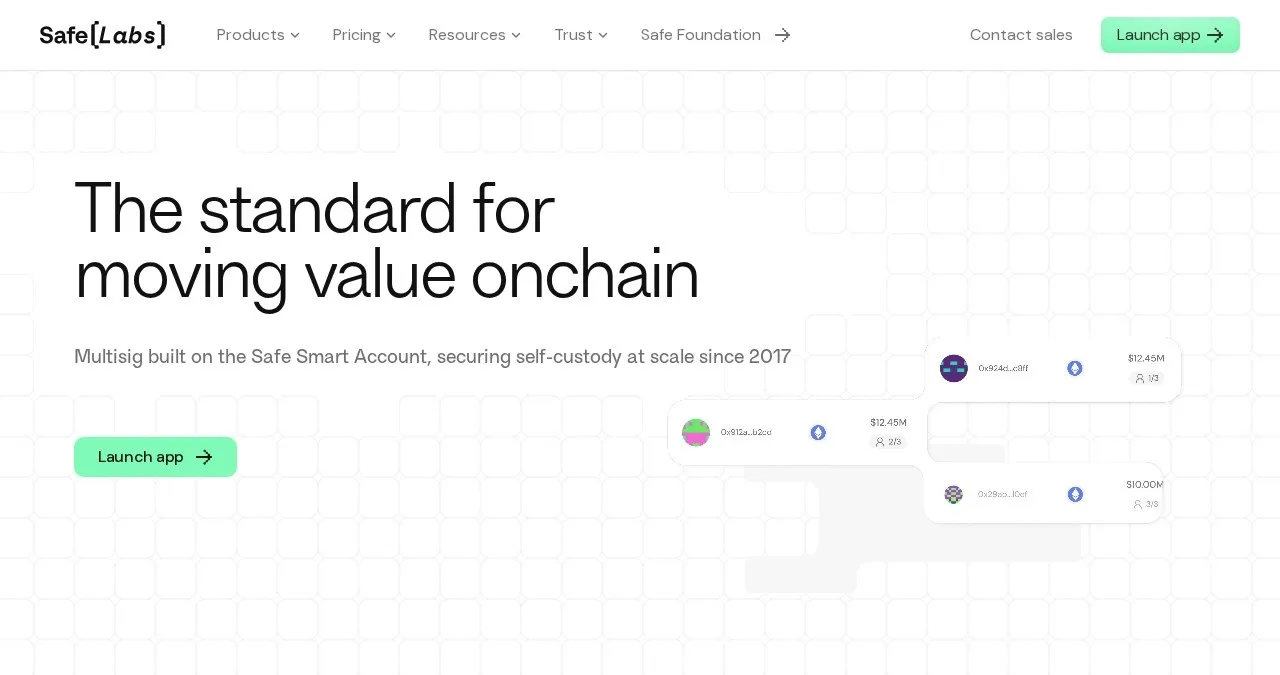
Safe is a self-custodial smart contract wallet built around multisig approval rules. Formerly known as Gnosis Safe, it has operated since 2017 and says its accounts have processed more than $1 trillion in transaction volume while securing over $60 billion in assets across 60 million accounts.
A Safe account can require a set number of signers to approve each transaction. Teams define the threshold, invite signers and manage assets through Safe{Wallet}; individuals can also use a Safe for personal treasuries. Safe{Mobile} supports signing and Safe management from iOS and Android. The wider platform includes Safe{API}, Safe CLI and Safe Shield for developers and operations teams.
The wallet is self-custodial. Safe does not hold the account assets in a central account, while its smart contracts enforce the signing rules onchain. Supported networks are Ethereum and EVM-compatible chains, including Ethereum Mainnet and OP Mainnet. Solana and Bitcoin assets are not supported. Hardware wallets such as Ledger can be used with Safe{Mobile}, and Safe modules include allowance controls, account abstraction, passkeys and recovery options.
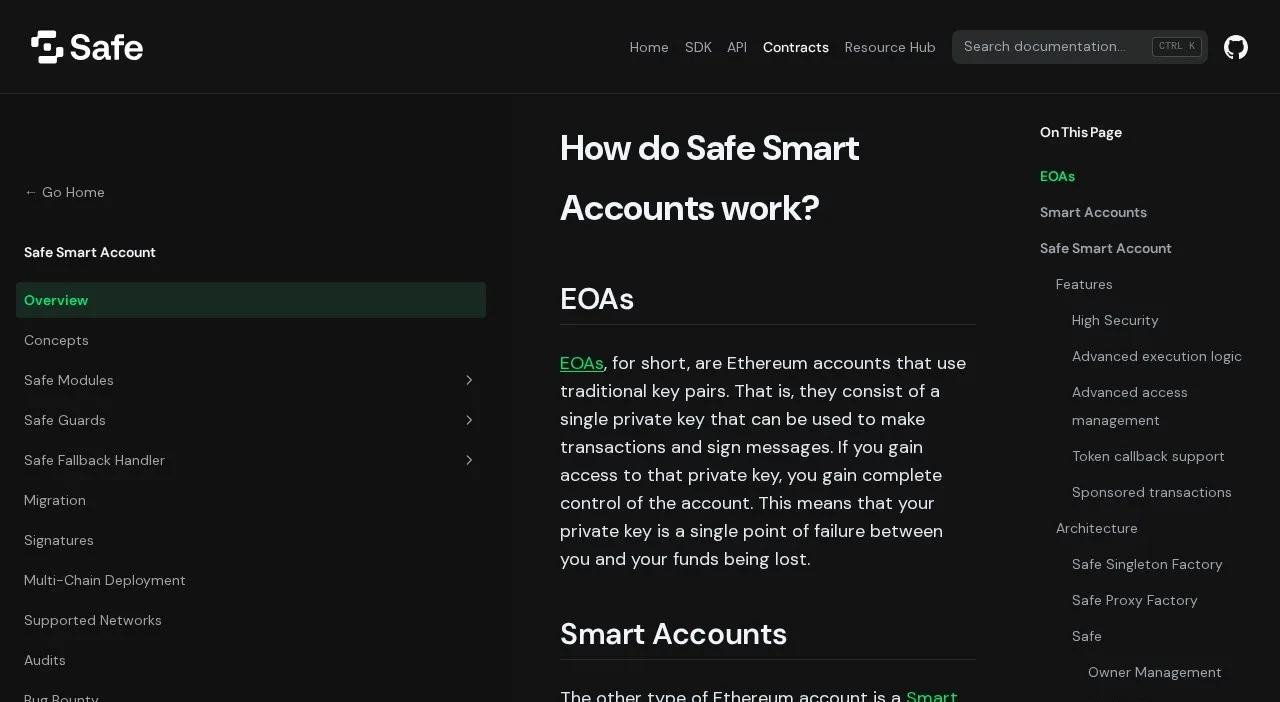
Safe supports programmable access controls, spending policies, transaction simulation and risk scanning. Safe Shield adds a Security Hub with signer, permission and risk information. Safe Pro adds spending limits and proposers. Proposers can queue transactions without signing rights. Account abstraction support enables sponsored or gasless operations where the selected implementation supports them.
Transactions require network gas, and Safe transactions can cost more than those from a regular externally owned account because smart contract execution adds overhead. The wallet also connects to third-party applications and services for monitoring and transaction functions. Any fees for those services depend on the selected integration.
Safe says it has been in production for more than nine years and supports 40+ networks. Its website lists 18+ independent smart account audits, including work by OpenZeppelin, Ackee Blockchain and Certora, with reports published through its security materials. Safe began as an internal Gnosis project and later became a separate product under the Safe name.
On February 19, 2025, malicious JavaScript replaced the benign file served by app.safe.global and targeted a Bybit Ethereum multisig cold wallet. The code activated during a Bybit transaction on February 21. The incident contributed to the theft of approximately $1.5 billion.
Safe's multisig model requires reliable signer coordination. Lost signer access or an incorrectly configured threshold can block funds or approve an unwanted transaction. Users still face phishing and malicious dApp risks, while smart contract and browser-based infrastructure risks remain. EVM-only coverage excludes Bitcoin and Solana, and smart contract transactions can carry higher gas costs than standard wallet transfers.
Safe offers audited, self-custodial multisig control across EVM networks, but its smart-account model adds gas costs and suffered a serious 2025 supply-chain attack.
Safe is a self-custodial smart contract wallet built around multisig approvals rather than a single private key. That gives it a stronger control model than a standard single-key wallet for shared treasuries: signers can set approval thresholds, spending limits and recovery rules. The trade-off is operational complexity, and gas fees are higher than for a regular account.
Safe supports Ethereum and EVM-compatible networks, with more than 40 networks cited by the company, but it does not support non-EVM assets such as Bitcoin or Solana. Safe{Mobile} supports Ledger and transaction simulation, while the wider product also includes browser-based wallet access, APIs and a command-line tool.
The contracts have passed more than 18 independent smart account audits, with OpenZeppelin, Ackee Blockchain and Certora among the named firms. Safe Shield adds account configuration, policy checks, pre-execution simulation and risk scanning. The smart contract design reduces dependence on one signer, although phishing, signer compromise and faulty transaction approvals remain possible.
On February 19, 2025, malicious JavaScript served by app.safe.global targeted a Bybit Ethereum multisig cold wallet. It activated during a February 21 transaction and contributed to the theft of about $1.5 billion from Bybit. Investigators linked the compromise to a leaked or compromised AWS S3 or CloudFront credential. The incident affected the web application delivery layer, rather than proving that every Safe contract was compromised, but it shows that multisig security does not remove front-end and operational risk.
Safe began as an internal Gnosis project and has operated since 2017. The company says its system has handled more than $1 trillion in transaction volume, secures more than $60 billion in assets and has 60 million-plus accounts. It is a strong fit for DAOs, companies, funds and personal treasuries that need several signers and programmable controls.
| KYC required ⓘ | No · unverified |
|---|---|
| Wallet type | Mobile, Web, Smart contract wallet · unverified |
| Custody | Self-custodial |
| Chains | Ethereum |
| Platforms | iOS, Android |
| Hardware wallet support | Yes · unverified |
| Security features | Multisig, Programmable access control, Transaction simulation, Risk scanning, Transaction guards, Spending limits, Passkey module, Recovery module · unverified |
| Recovery without a seed phrase | Yes · unverified |
| Passkey login | Yes · unverified |
| Multisig | Yes · unverified |
Not disclosed by the provider: Open source, In-app swaps, Staking, NFT support, Buy crypto in app, WalletConnect, Built-in dApp browser, Swap fee, Perpetuals trading.
Data from the provider's website and public sources. Fees and availability change; confirm on the official site before you sign up.
Each Safe transaction executes only after the configured number of signers approves it, instead of relying on one private key.
Spending limits, proposers, allowance controls and transaction guards set who can initiate or approve particular actions.
Safe supports Ethereum and EVM-compatible networks, with more than 40 networks listed across its products.
Safe Shield shows signers, permissions and risk signals, while signing flows include transaction simulation and risk scanning.
Safe{Mobile} supports hardware wallets including Ledger for signing while keeping key control with the signer.
Safe smart accounts support programmable access, sponsored operations and gasless transactions where the implementation allows them.
Safe modules include passkey and recovery options alongside the Allowance Module and Safe 4337 Module.
Safe{Wallet} manages digital assets through smart contract accounts with multisig approvals, programmable access controls and treasury tools. Teams can set signer thresholds and spending rules across supported EVM networks.
Safe Pro adds workspace management, Security Hub monitoring, spending limits and proposers. Proposers can queue transactions without holding signing rights, while custody remains in the user's Safe account.
Safe{Mobile} lets users manage Safes, sign transactions and review activity from a mobile app. It includes transaction simulation and hardware wallet support including Ledger.
Safe Shield provides account configuration, signer and policy views, risk signals and pre-execution simulation inside Safe{Wallet} and Safe Pro.
Safe{API} provides the APIs and SDKs used to build products and services on Safe smart account infrastructure.
Safe CLI is the command-line tool in Safe's infrastructure toolchain for building on and operating Safe smart accounts.
Safe modules extend account behavior through components such as the Allowance Module, Safe 4337 Module, Safe Passkey Module and Safe Recovery Module.
Reddit posts describe Safe's multisignature setup as requiring multiple approvals.
“Security Tip Safe is a multi-sig smart wallet, meaning a transaction can require approval from multiple wallets before it executes. For example, you could set it so that 2 out of 3 wallets must confirm a transaction.”
“safe.global multisig utilizing a 2/3 threshold with hardware wallet diversity.”
Based on 12 Reddit posts and comments from the last 12 months, checked Oct 18, 2026. These are posts by users on other sites, not reviews submitted on CryptoReview.
No user reviews yet. Have you used Safe? Share your experience below.
Safe began as an internal project at Gnosis and was formerly known as Gnosis Safe. The system began securing self-custody through its multisig smart account model in 2017.
Safe is a self-custodial smart contract wallet with threshold-based multisig approvals and more than 18 independent smart account audits. A malicious JavaScript file served by app.safe.global contributed to the February 2025 theft of about $1.5 billion from Bybit, so the wallet's contract controls do not remove application and signer risks.
Safe supports Ethereum and EVM-compatible networks, with more than 40 networks cited by the company. It does not support non-EVM assets such as Bitcoin or Solana.
Safe is a self-custody wallet and its wallet setup does not require a custodial account. KYC requirements for individual third-party services connected through the wallet can differ.
Yes. Safe has the SAFE token symbol.
Yes. Safe{Mobile} supports hardware wallets including Ledger. Hardware signing can be combined with Safe's multisig approval rules.

Recent public posts from @SafeLabs_, shown as published. Not reviewed or endorsed by CryptoReview.
Open-source, self-custodial mobile wallet supporting over 100 blockchains and built-in cross-chain swaps
Self-custodial mobile wallet with built-in DEX routing across more than 18 blockchains
Open-source, non-custodial multi-chain wallet with built-in Tor and privacy-preserving assets
Non-custodial DeFi wallet and multichain aggregator covering 10,000+ assets across 48+ networks
Self-custodial Cosmos wallet launched in 2021, now supporting almost 350 networks
Self-custodial multichain wallet from Kraken with passkey support and zero platform swap fees
Type at least two characters. Press ↵ to see all results.