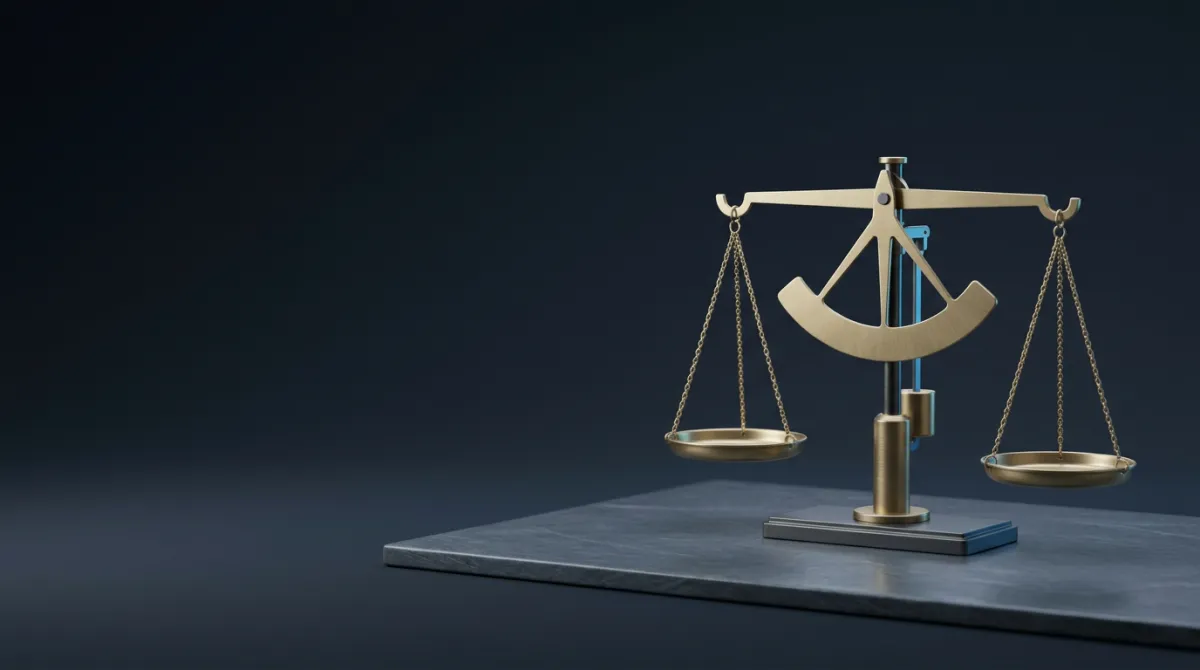

👑 The votes are in. The scariest money monster of 2026 is…
🐉 The Debt Hydra by @web3UniHQ!
Credit cards, loans, mortgages, unpaid bills. Cut off one head and two more grow back. 69.6% of you agreed: this one is truly terrifying.
Congrats! $100 in BTC is heading your way 🏆
Every monster this month had one thing in common: they only have power over money you don’t control. That’s what freedom money is for. 🟧
#FiatNightmares
Bitcoin.com
Self-custodial multichain wallet with over 85 million wallets created since 2015
3.5/ 5
Our score
Good
Custody
Self-custodial
Chains
BitcoinEthereumPolygonAvalanche+2
Platforms
iOSAndroid
In-app swaps
Yes
What is Bitcoin.com?
Bitcoin.com Wallet is a non-custodial software wallet application designed for managing, transacting, and swapping cryptocurrencies. Originally introduced as part of the broader Bitcoin.com services portal, the wallet has recorded more than 85 million wallets created since its introduction.
Corporate background and leadership
The company behind the wallet was founded in 2014 by early crypto investor Roger Ver, who previously invested in companies including Kraken, BitPay, and Ripple. Headquartered in Saint Kitts and Nevis, Bitcoin.com maintains an operating team of roughly 115 employees. Former Apple and Rakuten executive Dennis Jarvis served as chief executive officer starting in May 2020 before stepping down in February 2024, when Corbin Fraser took over as CEO.
Custody model and chain support
The application runs on a non-custodial architecture; users retain sole control of their private recovery phrases. It supports core networks including Bitcoin (BTC), Bitcoin Cash (BCH), and Ethereum (ETH), alongside integration with the Verse decentralized exchange for token swaps. In addition to peer-to-peer sending and receiving, the app incorporates a fiat-to-crypto on-ramp, a native block explorer, and decentralized application connectivity across supported networks.
Fees and platform availability
Using the basic wallet software and block explorer incurs no base subscription or account maintenance fees. When moving assets onchain, users pay standard network miner fees. Third-party payment processors handle fiat purchases and sales inside the application, applying identity verification (KYC) requirements and variable processing fees depending on the selected payment method and local jurisdiction. The core software is distributed internationally across 175 countries via iOS, Android, and desktop builds.
Track record and operational trade-offs
Launched in June 2017, the wallet logged 4.6 million downloads during 2025 alone. Self-custody introduces standard user responsibilities: losing the seed phrase permanently revokes access to wallet balances. Fiat on-ramp operations require third-party identity verification despite the wallet itself being non-custodial, and swap executions across integrated decentralized exchanges remain subject to slippage and protocol transaction costs.
Founders
Roger VerExecutive Chairman
Dennis JarvisCEO
Best for:Bitcoin and Bitcoin Cash holdersUsers wanting self-custodial mobile storageBeginners buying crypto via card
Pros and cons
Pros
- Over 85 million wallets created since launch
- Full self-custody architecture where users hold their own seed phrase
- Integrated Verse DEX enables onchain swaps without leaving the app
- Available across iOS, Android, and desktop in 175 countries
Cons
- Fiat on-ramps rely on third-party providers requiring full KYC identity checks
- Integrated DEX token swaps incur protocol swap fees and network gas costs
- Missing recovery phrase results in permanent loss of funds
Our review
3.5/5
Good
Bitcoin.com offers an accessible self-custodial wallet backed by an established brand, but its integrated features rely on third-party on-ramps and focus heavily on specific networks.
Launched in June 2017, the Bitcoin.com Wallet is the main mobile client for the company founded in 2014 by early crypto investor Roger Ver. Operating out of Saint Kitts and Nevis with CEO Corbin Fraser leading a team of roughly 115 staff, the software has registered over 85 million created wallets. It functions strictly on a self-custodial model. Users hold their own private keys rather than leaving them on centralized servers.
The application balances core asset storage with fiat onboarding across 175 supported countries. Users can buy, sell, store, and swap assets, with dedicated support centered on Bitcoin (BTC) and Bitcoin Cash (BCH), alongside decentralized trading through the affiliated Verse DEX. For everyday transactions, the built-in interface allows transaction tracking and direct integration with Bitcoin.com's block explorer tools.
However, the platform presents notable trade-offs:
- Its multi-chain footprint is more selective than general EVM or Solana-first Web3 wallets, leaning historically toward the Bitcoin and Bitcoin Cash ecosystems.
- In-app fiat purchases and sales operate via third-party payment providers, which introduce variable processing fees and identity verification checks.
Bitcoin.com suits individuals seeking a self-custodial mobile wallet to manage Bitcoin and Bitcoin Cash alongside integrated news and market data. Traders needing extensive altcoin coverage, deep DeFi protocol access across emerging Layer-2s, or direct hardware-wallet integration should look toward broader multi-chain alternatives.
Specs
| KYC required ⓘ | No · unverified |
|---|---|
| Wallet type | Mobile, Desktop · unverified |
| Custody | Self-custodial · unverified |
| Chains | Bitcoin, Ethereum, Polygon, Avalanche, BNB Chain, Other · unverified |
| Platforms | iOS, Android · unverified |
| In-app swaps | Yes · unverified |
| Buy crypto in app | Yes · unverified |
| WalletConnect | Yes · unverified |
| Multisig | Yes · unverified |
Not disclosed by the provider: Open source, Hardware wallet support, Staking, NFT support, Security features, Recovery without a seed phrase, Passkey login, Built-in dApp browser, Swap fee, Perpetuals trading.
Data from the provider's website and public sources. Fees and availability change; confirm on the official site before you sign up.
Key features
Non-custodial private keys
Users manage their own recovery seed phrase directly on their device without third-party key storage.
Multichain transaction support
Enables sending, receiving, and balance tracking across Bitcoin, Bitcoin Cash, and Ethereum networks.
Built-in DEX swaps
Connects to Verse DEX for permissionless token trades directly inside the application.
Integrated fiat on-ramp
Enables purchases of supported cryptocurrencies via credit card, bank transfer, and regional payment methods.
Native block explorer access
Provides real-time block, address, and transaction lookups across the Bitcoin blockchain for free.
Inside Bitcoin.com
Bitcoin.com Wallet
A non-custodial multi-chain mobile application for holding, sending, receiving, buying, and swapping assets like Bitcoin and Bitcoin Cash.
Verse DEX
A decentralized exchange platform that enables permissionless token swaps directly from Web3 wallets.
Bitcoin Block Explorer
A free search tool to verify and inspect live blocks, transactions, addresses, and fees on the Bitcoin blockchain.
Bitcoin.com News
A media portal offering market analysis, economic reporting, and educational guides for cryptocurrency users.
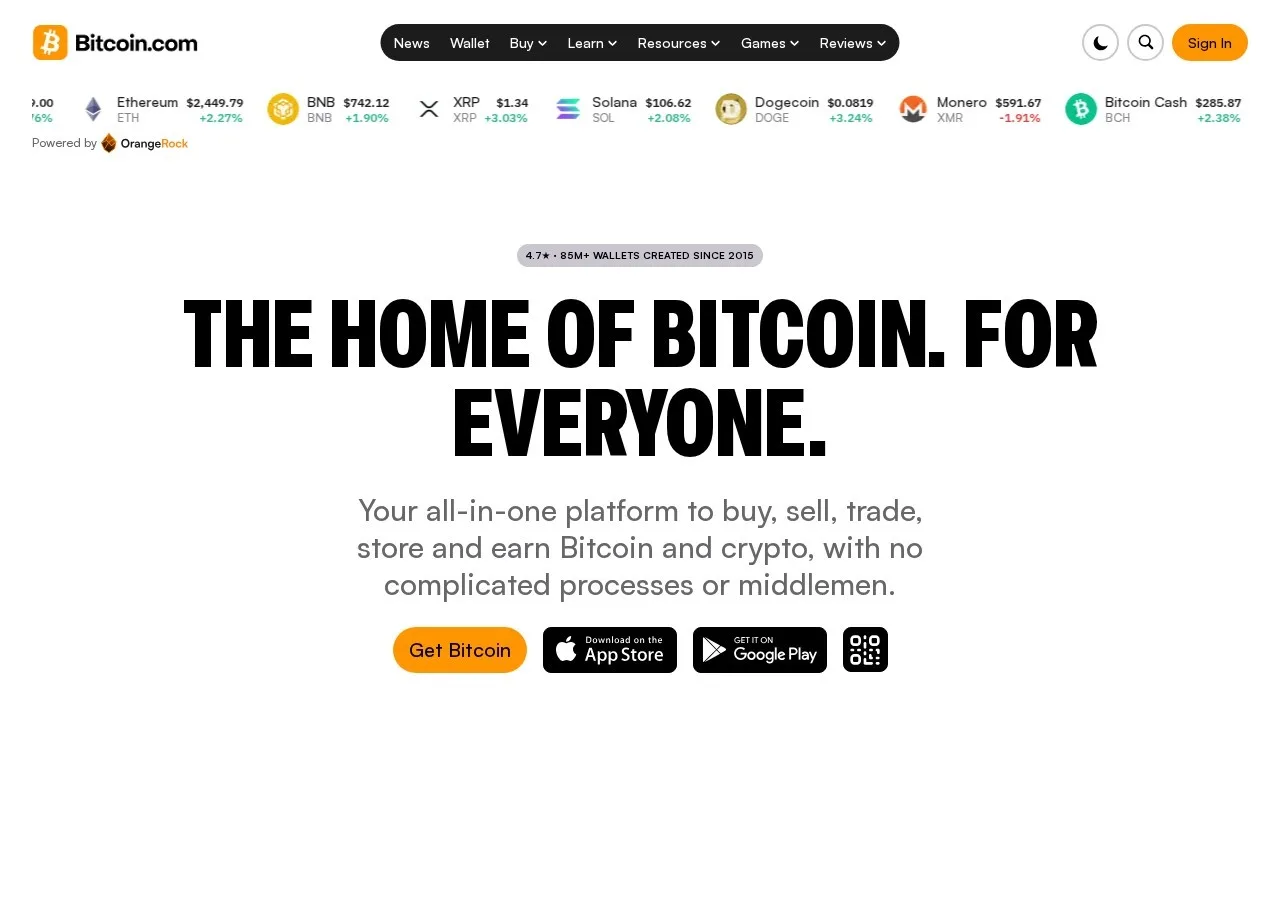
Bitcoin.com screenshots
What users say about Bitcoin.com
Reviews are divided between positive feedback on the beginner-friendly setup and sharp criticism over high fees and verification hurdles. Positive reviews highlight the simple layout alongside educational quests and rewards, but negative feedback centers on expensive transaction costs, sudden identity checks and delayed withdrawals.
In their own words
“Easy to use The app is easy to use and if you have any questions Customer Support is great.,”
“Great so far Quests & rewards make it fun to invest for beginners.”
“fees+fees+fees+fees i do not think the world will embrace self custody crypto when in a 1st world country you get sleeved by fees on top of fees to self custody your own crypto.. its so expensive its in the hundreds of dollars easily if you are big investor. expect to pay fees for everything.”
“Awful customer service. Customer service is sorely lacking. Woman spoke in circles, I kept explaining why her instructions were impossible due to app error which was 100% why I was reaching out. She didn’t listen nor did she help in any way, just caused frustration.”
“Garbage Absolutely garbage. Used this for a while no issues ever varified everything worked fine then all of a sudden it’s constantly having problems delayed processing delayed this you need to take this selfie that selfie verify you are you what are doing with your coin what’s your purpose.”
Based on 37 App Store reviews, 100 Reddit posts and comments from the last 12 months, checked Oct 20, 2026. These are posts by users on other sites, not reviews submitted on CryptoReview.
User reviews
No user reviews yet. Have you used Bitcoin.com? Share your experience below.
FAQ
Who founded Bitcoin.com?
Bitcoin.com was founded in 2014 by early crypto investor Roger Ver, who acquired the domain that year. The company is currently led by CEO Corbin Fraser, who took over from Dennis Jarvis in February 2024.
Is Bitcoin.com Wallet custodial or non-custodial?
The Bitcoin.com Wallet is non-custodial. Users hold and manage their own private keys directly on their devices, meaning Bitcoin.com cannot freeze accounts or access funds.
Does using the Bitcoin.com Wallet require KYC?
Creating and using the wallet for basic storage, sending, and receiving does not require identity verification. However, purchasing or cashing out crypto through third-party fiat on-ramp partners requires completing KYC documentation.
What cryptocurrencies does Bitcoin.com support?
The wallet supports major assets including Bitcoin (BTC) and Bitcoin Cash (BCH), along with selected tokens and trading via the Verse DEX ecosystem.
Where is Bitcoin.com available?
Bitcoin.com services and the wallet app are accessible across 175 countries globally.
Latest from Bitcoin.com on X
https://t.co/cDtnCmGpDw

A 5-cent altcoin can still have a massive valuation.
Price alone tells you almost nothing.
Supply, market cap, liquidity, token unlocks, utility, and control all matter.
“Altcoin” covers thousands of very different assets.
Here’s the breakdown 👇
https://t.co/SIe8k2RsI6 https://t.co/vgwV40KjsA
Price alone tells you almost nothing.
Supply, market cap, liquidity, token unlocks, utility, and control all matter.
“Altcoin” covers thousands of very different assets.
Here’s the breakdown 👇
https://t.co/SIe8k2RsI6 https://t.co/vgwV40KjsA
🎃 The monsters have been chosen. Now YOU decide which one is the scariest.
Meet the 3 #FiatNightmares finalists 👇
🅰️ Elsar, The Asset Freezer by @misterclean_
🅱️ The Debt Hydra by @web3UniHQ
©️ Inflatura, The Silent Wealth Eater by @sadikufavo38425
Vote in the poll below 👇 The winner is revealed on Halloween 🏆
Meet the 3 #FiatNightmares finalists 👇
🅰️ Elsar, The Asset Freezer by @misterclean_
🅱️ The Debt Hydra by @web3UniHQ
©️ Inflatura, The Silent Wealth Eater by @sadikufavo38425
Vote in the poll below 👇 The winner is revealed on Halloween 🏆

https://t.co/HgGednJ9Sm

Recent public posts from @bitcoincom, shown as published. Not reviewed or endorsed by CryptoReview.
Latest from Bitcoin.com on Telegram

Bitcoin.com News
Join
@www_Bitcoin_com · 51.9K subscribers
💯 Ripple's CEO sees XRP becoming the institutional gold standard for crypto rails within five years. 🏛️✨
Ripple's David Schwartz also envisions mass retail adoption, with blockchain reshaping how people manage money, pay, invest, and borrow.
Ripple's David Schwartz also envisions mass retail adoption, with blockchain reshaping how people manage money, pay, invest, and borrow.

110 View on Telegram
🏅 Bitcoin miners closed October with their highest monthly revenue in 11 months ⛏️📊
Hashprice has dropped 17.54% over the past 30 days amid price declines following the $6.3 billion Binance hack.
Hashprice has dropped 17.54% over the past 30 days amid price declines following the $6.3 billion Binance hack.

224 View on Telegram
⚡ Bitcoin News Daily | November 1, 2026
🌀 Thorchain Pauses After Ethereum Reorg Glitch
💣 Binance Investigates Multibillion Dollar Security Breach
🤖 Family Sells Yard Sale Bowl for 2.2 Million
🎯 Noncustodial Crypto Firms Face License Requirements
⚠️ FBI Attributes $6.3B Binance Hack to North Korea
Follow on X →
🌀 Thorchain Pauses After Ethereum Reorg Glitch
💣 Binance Investigates Multibillion Dollar Security Breach
🤖 Family Sells Yard Sale Bowl for 2.2 Million
🎯 Noncustodial Crypto Firms Face License Requirements
⚠️ FBI Attributes $6.3B Binance Hack to North Korea
Follow on X →
321 View on Telegram
A one-block Ethereum reorganization triggered an emergency pause on Thorchain, disrupting cross-chain swaps. The malfunction delayed activity connected to a major exchange hack while authorities pressed node operators to block linked.

312 View on Telegram
Recent posts from the official Telegram channel @www_Bitcoin_com, shown as published. Not reviewed or endorsed by CryptoReview.
Alternatives to Bitcoin.com

Open-source, self-custodial mobile wallet supporting over 100 blockchains and built-in cross-chain swaps
No KYCMobileSelf-custodialEthereum · Bitcoin +13

Self-custodial mobile wallet with built-in DEX routing across more than 18 blockchains
No KYCMobileSelf-custodialEthereum · BNB Chain +7

Open-source, non-custodial multi-chain wallet with built-in Tor and privacy-preserving assets
No KYCMobile · DesktopSelf-custodialBitcoin · Ethereum +7

Non-custodial DeFi wallet and multichain aggregator covering 10,000+ assets across 48+ networks
No KYCMobile · WebSelf-custodialEthereum · Bitcoin +9

Self-custodial Cosmos wallet launched in 2021, now supporting almost 350 networks
Mobile · Browser extension +1Self-custodialEthereum · Bitcoin +4
Self-custodial multichain wallet from Kraken with passkey support and zero platform swap fees
No KYCMobile · WebSelf-custodialBitcoin · Ethereum +7