

Is “Uptober” losing its magic? Bitcoin fell 7.3% in October, defying historical trends.
XYO Co-Founder Markus Levin tells @Cointelegraph that when traders anticipate an October rally, those gains may already be priced in before the month begins.
https://t.co/F83JorlS6C

XYO
Decentralized physical infrastructure network verifying real-world geospatial and IoT data across chains
3.2/ 5
Our score
Fair
Services
OracleDeveloper tooling
Chains supported
3
Free tier
Yes
Token
XYO
What is XYO?
XYO is a decentralized physical infrastructure network and purpose-built Layer 1 blockchain engineered to collect, validate, and verify real-world geospatial and physical data on-chain. Launched as a location-focused oracle network in May 2018, it allows applications to confirm physical events without recording massive raw data sets directly onto public ledgers.
Team and origins
XYO was founded in 2017 by Arie Trouw, Markus Levin, and Scott Scheper.
How the network operates
The network decouples off-chain data generation from on-chain verifiability. Smartphones and connected hardware act as off-chain producers through applications like the COIN app, collecting active user confirmations alongside passive environmental sensor signals. XYO Layer One processes these interactions using Bound Witness Trees and Lookback Windows, eliminating the requirement for every validator node to preserve full historical chain data. Network gas fees and contract execution run on the XL1 utility token, which has an inflation rate decaying toward 0.7% annually, while the fixed-supply XYO token serves as the core staking asset.
Track record and expansion
In May 2019, XYO partnered with Chainlink to improve data interconnectivity between external physical data sets and decentralized protocols. The project launched its dedicated XYO Layer One mainnet on September 16, 2025, deploying a Proof of Perfect consensus mechanism and establishing an XL1 bridge to Ethereum.
Founders
Scott ScheperCo-founder
Arie TrouwCo-founder
Markus LevinCo-founder
Best for:DePIN developers tracking physical assetsTeams building location-dependent smart contractsAI developers requiring verifiable real-world inputs
Pros and cons
Pros
- Eliminates full archive node storage requirements using Lookback Windows and Bound Witness Trees
- Supports Ethereum and Solana, with Chainlink collaboration
- Operational track record in decentralized geospatial verification running since 2018
Cons
- Layer One transaction gas is paid in XL1 tokens
- Sparse hardware presence in rural regions limits real-time physical confirmation coverage
Our review
3.2/5
Fair
XYO offers decentralized verification of geospatial and physical data across multiple chains, but its specialized dual-token network uses separate assets for staking and gas.
Founded in 2017 by Scott Scheper, Arie Trouw, and Markus Levin, XYO verifies real-world location and sensor data through a DePIN network and Layer 1 blockchain. In September 2025, the project launched its dedicated XYO Layer One mainnet, introducing a dual-token architecture that splits validation staking and gas execution across separate assets.
The platform separates data generation from on-chain verification through cryptographic mechanisms such as Bound Witness Trees, Step Hashes, and Lookback Windows. Rather than requiring validator nodes to maintain full ledger history, the protocol validates data off-chain and posts compact proofs on-chain. Off-chain data collection is driven largely through the consumer-facing COIN mobile app, which collects passive sensor signals like movement and altitude alongside user-submitted active verifications. Verified proofs settle on XYO Layer One, and the XL1 Bridge transfers tokens between XYO Layer One and Ethereum.
The architecture reduces chain storage demands by verifying proofs without bloating the execution layer. Official SDK tooling supports verifiable AI agent workflows.
- Gas execution on Layer One uses the inflationary XL1 utility token, while XYO is used for staking.
- Chain coverage includes Ethereum, Solana, and the native XYO Layer One.
XYO suits teams developing geospatial applications, IoT tracking tools, or AI workflows that need verifiable real-world input feeds.
Specs
| Services | Oracle, Developer tooling · unverified |
|---|---|
| Chains supported | 3 · unverified |
| Free tier | Yes · unverified |
| Open source | Yes · unverified |
| Token | XYO · unverified |
Not disclosed by the provider: Pricing from, Enterprise SLA, Uptime SLA, Free tier limits, Server regions.
Data from the provider's website and public sources. Fees and availability change; confirm on the official site before you sign up.
Key features
Bound witness verification
Generates cryptographic proofs for verifying real-world geospatial and sensor data.
Dual-token architecture
Employs fixed-supply XYO for network staking alongside the XL1 utility token for smart contract execution and transaction gas fees.
Lookback windows
Reduces node storage bloat on XYO Layer One by pruning obsolete historical states while maintaining consensus validity.
Mobile data collection
Sources passive geospatial metrics and active verified user inputs from mobile devices running the consumer COIN app.
Cross-chain bridge
Transfers XL1 between XYO Layer One and Ethereum.
AI developer SDK
Provides software tools to feed verified off-chain physical sensor data into autonomous AI agent workflows.
Inside XYO
XYO Layer One
A dedicated blockchain designed for data validation that avoids full historical data storage by using Lookback Windows and Bound Witness Trees. Transaction fees on this network are paid in XL1 tokens.
COIN App
A mobile application for iOS and Android that gathers passive sensor telemetry and active survey submissions from smartphone users. Contributors earn in-app points redeemable for XYO tokens and physical items.
XYO Crypto Cards
An on-chain card prediction game where players make calls against Gate AI models. The predictions are verified on XYO Layer One.
XYO AI SDK
A development kit that provides tools to build verifiable applications and integrate cryptographic proofs into automated AI agent workflows.
XYO Layer One Bridge
A cross-chain bridge mechanism that moves XL1 utility tokens between the native XYO Layer One network and Ethereum.
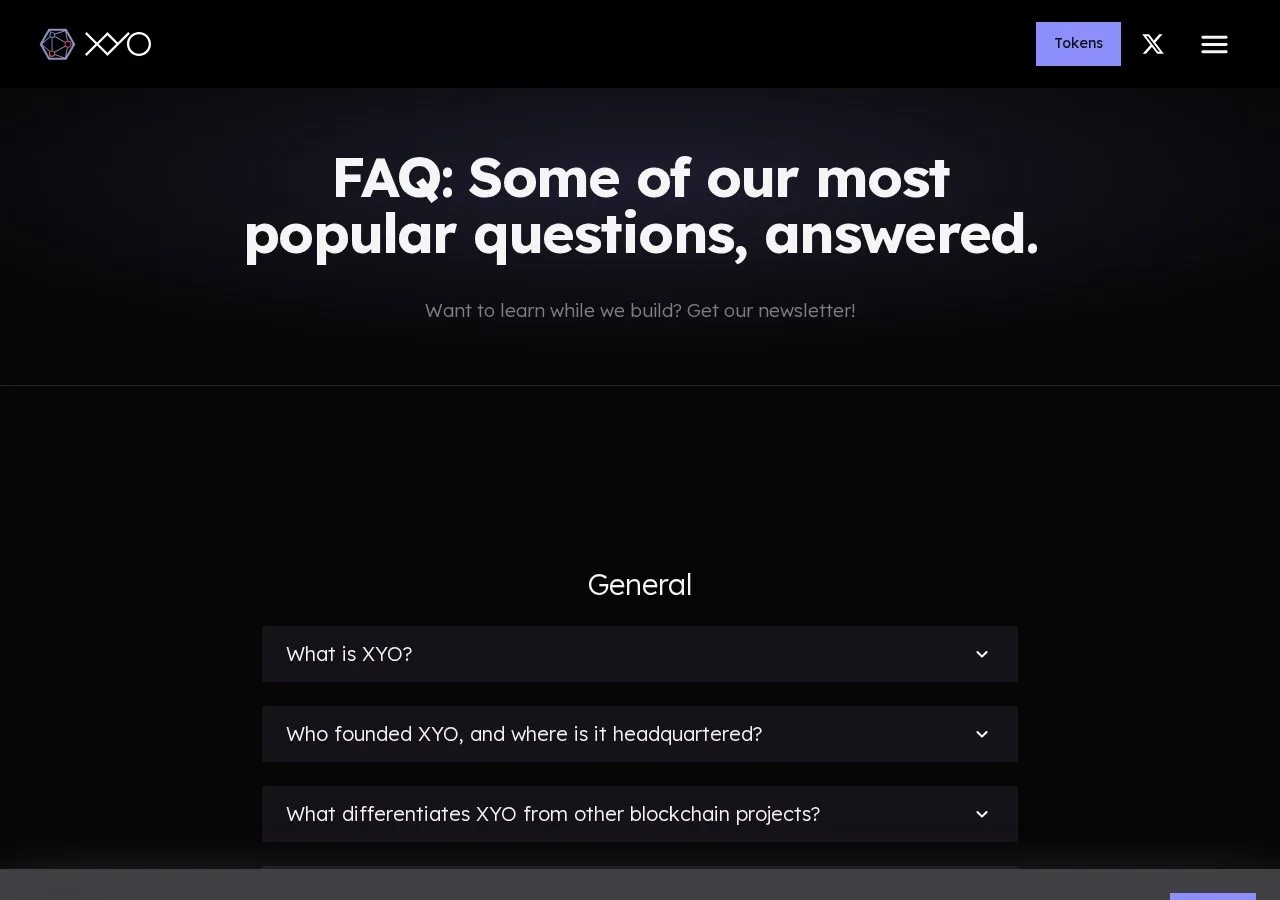
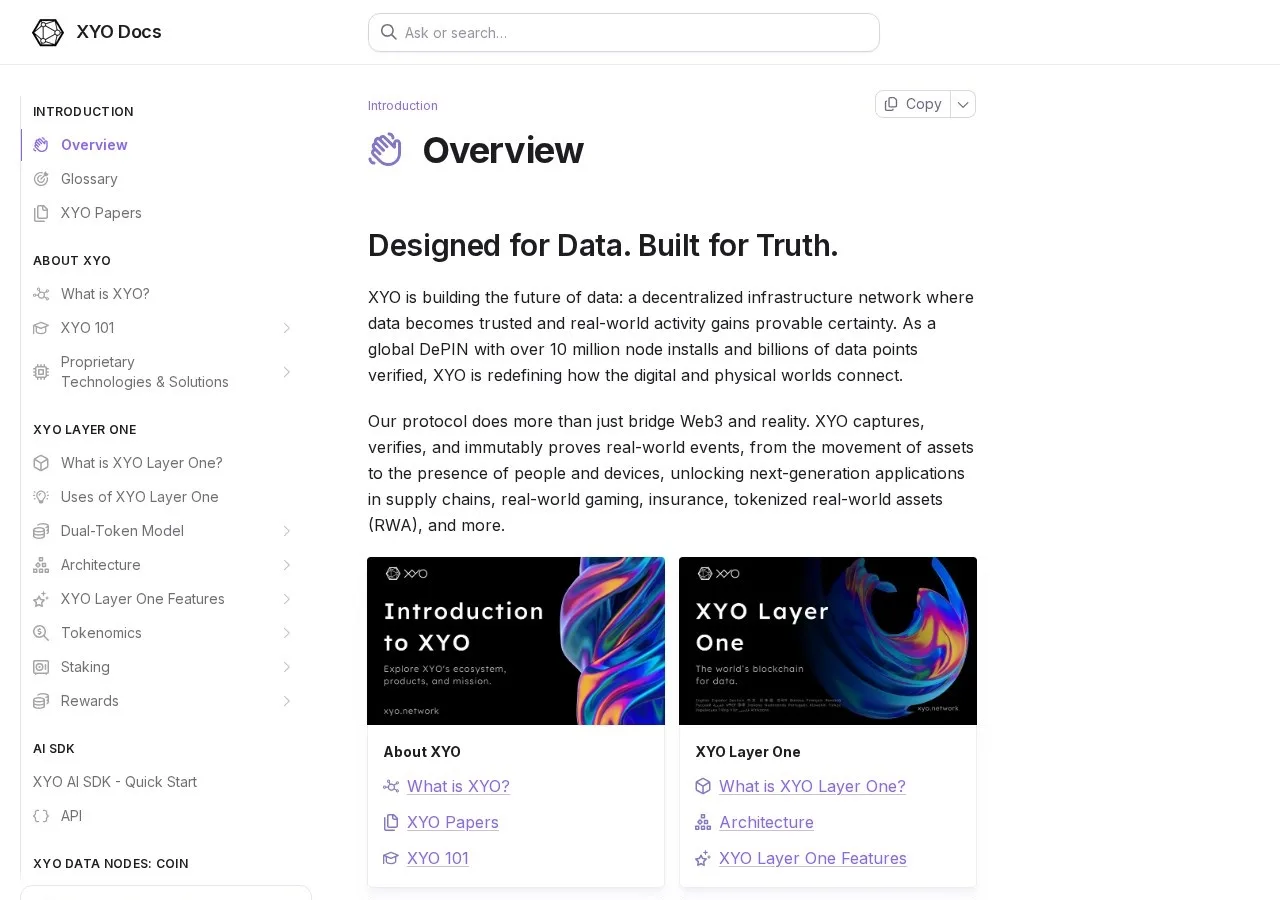
XYO screenshots

What users say about XYO
User sentiment is heavily critical, dominated by complaints regarding nerfed reward payouts, stuck withdrawals, and technical bugs across the Coin App and staking platform. Minimal praise focuses on long-term project belief and staking yield accumulation.
Top goods
In their own words
“I’m gonna have to rethink it I think I’m gonna have to rethink quitting the game. I was on the brink of it but they came out with an update today. I’m on free and these vid rewards got way better. I imagine it’s better for premium player and I just might have to go back to pro…”
“I have no plans of selling, I don't have a lot, so far I've got over 100k XYO staked, but I'm slowly accumulating more, and watching my daily XL1 reward going up slowly from time staked.”
“I am using iOS. When I press "Check it out," a white screen appears, and I can't return. The only way is to close the app and reopen it.”
“Not gonna lie, fair play to you but im getting sick of spending my money on a pro account to see my account earning less and less each month. Each to their own i guess but I think im done and im not gonna keep giving my money away each month to earn less and less. Im out.”
“They have reduced Ad payouts to a 1/3rd of what they used to be on premium plans and now just scraps for the basic plan. More profits for the company and less for the users. Sad.”
“xyo.network unstake Has anyone been able to process an unstake at xyo.network and get tokens back in your wallet after the cooldown period? If so, how long did it take? I have been waiting in pending withdrawal for 67 days.”
Scam warning: Beware of fraudulent accounts sending private messages directing users to external phishing sites claiming to fix staking or wallet issues.
Based on 200 Reddit posts and comments from the last 12 months, checked Oct 21, 2026. These are posts by users on other sites, not reviews submitted on CryptoReview.
User reviews
No user reviews yet. Have you used XYO? Share your experience below.
FAQ
Who founded XYO?
Scott Scheper, Arie Trouw, and Markus Levin founded XYO in 2017. The network was established to verify location data cryptographically.
What tokens are used in the XYO ecosystem?
The ecosystem uses a dual-token model consisting of XYO and XL1. XYO has a fixed supply used primarily for network staking, while XL1 functions as the gas token for transactions and smart contract execution on XYO Layer One.
Which blockchains does XYO support?
XYO is active on Ethereum, Solana, and its own dedicated network, XYO Layer One. The team also operates an XL1 Bridge to transfer tokens between Ethereum and XYO Layer One.
What is the COIN App in the XYO network?
The COIN App is a mobile application where users act as off-chain data producers by gathering active surveys and passive sensor signals. Contributors earn in-app rewards that can be redeemed for XYO and other assets.
How does XYO handle blockchain bloat?
XYO Layer One uses Lookback Windows and Bound Witness Trees to decouple data payloads from on-chain proofs. Nodes validate state transitions without requiring the entire historical chain data from the genesis block.
Latest from XYO on X
Your city puts a live display at every bus stop showing one useful piece of local data. 🚏 What should it show besides arrival times?
Reminder! Deadline is Wednesday, November 4!
Details ⬇️ https://t.co/GKihUcSvKS https://t.co/1QJ9MaH1qt
Details ⬇️ https://t.co/GKihUcSvKS https://t.co/1QJ9MaH1qt

You can spend a week at a research station with the scientists who work there. 🔬 Where would you want to go, and what would you want to see them studying?
If aliens land on Earth, I hope the welcome page doesn't ask them to prove they're human. https://t.co/CPdsax3xUk

Recent public posts from @OfficialXYO, shown as published. Not reviewed or endorsed by CryptoReview.
Alternatives to XYO

Open-source smart contract libraries and enterprise security tooling backing over $38T in transfers
Developer toolingFree tier10 chains supported

Blockchain infrastructure platform supporting 100+ chains with a free 30M-compute-unit tier
RPC / nodes · Data APIs +3Free tier100 chains supported

Managed blockchain infrastructure across 70+ chains with a free 3M-request monthly tier
RPC / nodes · IndexingFree tier70 chains supported

EVM development and simulation platform supporting transaction debugging and testing across 50+ chains
Developer toolingFree tier50 chains supported

Open-source distributed ledger foundation hosting Fabric, Besu, and Cacti under the Linux Foundation
RPC / nodes · Developer toolingFree tier2 chains supported

Blockchain infrastructure platform providing RPC nodes and data streams across 76 networks
RPC / nodes · Data APIsFree tier76 chains supported