

Power Up Your Luck: Results
🔋 Battery #3 charged first
✔️ We’ve drawn our winners
What’s next? Our team will:
— Email the winners at their EMCD Mining Pool registration addresses this week
— Ask for their X handles, proof they completed the remaining giveaway steps, and USDT (TRC20) wallet addresses
— Check who gets the extra 10 USDT bonus and announce the winners here
Watch for our email, including in your spam folder 👀

EMCD
Multi-coin mining pool founded in 2017 controlling over 2% of Bitcoin network hashrate
3.7/ 5
Our score
Good
Type
Mining poolFirmware & software
Pool fee
1.5% to 4%
Payout schemes
FPPSPPS+PPLNS
Hashrate
32 EH/s
Coins
BTCLTCDOGEBCH+4
What is EMCD?
EMCD is a multi-coin cryptocurrency mining pool and digital asset management platform. Operating since 2017, the pool accounts for over 2% of the global Bitcoin network hashrate and has mined more than 30,000 BTC across its operational history.
Team and background
The company was founded in 2017 by Michael Jerlis, who serves as Chief Executive Officer. Jerlis previously worked as an IT support specialist before establishing EMCD as an industrial-scale mining pool in Europe. Executive leadership also includes Chief Operating Officer Elena Tonoyan, a compliance specialist affiliated with the International Compliance Association.
Mining operations and supported coins
EMCD supports 9 mineable cryptocurrencies, including Bitcoin, Litecoin, Dogecoin, Bitcoin Cash, Ethereum Classic, Kaspa, Dash, and Zcash. Hardware miners connect to low-latency Stratum servers using ASIC or GPU equipment. EMCD distributes rewards through multiple payout schemes: FPPS, PPS+, and PPLNS. For Litecoin miners, merged mining with Dogecoin is supported, allowing payouts for both assets without splitting hashrate or consuming extra electricity. Beyond the core pool, EMCD provides custom Antminer firmware developed alongside Vnish to optimize ASIC power consumption, along with a dedicated monitoring dashboard for fleet management.
Fees and payout terms
Mining pool base fees range between 1.5% and 4% depending on the mined asset. Altcoin mining fees start at 1.5%, while the standard fee for Bitcoin mining is 4%. High-hashrate operators qualify for VIP tier discounts with reduced fee schedules, direct support, and lower minimum payout thresholds. Beyond mining, EMCD runs secondary financial products, including an integrated custodial wallet, a savings account called Coinhold, and a fee-free peer-to-peer cryptocurrency exchange.
Availability and operational risks
EMCD operates across more than 120 countries, enforcing account verification and AML/CTF compliance standards for user balances and withdrawals. As with all mining operations, earnings remain subject to network difficulty changes, halving events, and rising power costs. Holding mined assets inside the integrated Coinhold savings account or wallet introduces centralized custodial risk, meaning payouts held on the platform depend on the company's internal solvency rather than self-custodial onchain settlement.
Founders
Michael JerlisFounder & CEO
Best for:ASIC operators seeking daily FPPS payoutsScrypt miners targeting merged LTC and DOGEFarms needing integrated fleet monitoring tools
Pros and cons
Pros
- Controls over 2% of total Bitcoin network hashrate
- Continuous operations and tracked pool performance since 2017
- Merged mining enabled for simultaneous LTC and DOGE yields
- Supports multiple reward distribution models including FPPS and PPLNS
- Pool fees start at 1.5% for supported altcoins
Cons
- Bitcoin mining pool fee is 4% on standard tiers
- Merged mining payouts require meeting withdrawal thresholds on both assets simultaneously
- Platform wallet and Coinhold products require custodial trust
- Mining accounts are subject to mandatory AML and CTF verification checks
Our review
3.7/5
Good
EMCD offers stable multi-coin mining with integrated firmware and farm monitoring, but its 4% Bitcoin pool fee sits well above standard industry rates.
Founded in 2017 by Michael Jerlis, EMCD has grown into an established European mining pool operation holding over 2% of the global Bitcoin network hashrate. Its Bitcoin mining pool delivers 38 EH/s as of October 2026, with miners having extracted more than 30,000 BTC across nine years of continuous operations. The infrastructure extends well beyond Bitcoin, offering mining across nine coins including Litecoin, Dogecoin, Bitcoin Cash, Ethereum Classic, Kaspa, Dash, and Zcash.
Payout mechanics provide useful flexibility depending on operational preferences. The pool supports FPPS, PPS+, and PPLNS reward distribution models, alongside merged mining configurations for paired assets like Litecoin and Dogecoin that incur no additional electrical overhead. Operational support is strengthened by custom Vnish-based Antminer firmware for efficiency optimization and the EMCD Monitoring dashboard for tracking hardware health, temperatures, and fan speeds.
Pricing represents the primary trade-off. While altcoins carry competitive pool fees starting from 1.5%, the standard Bitcoin pool fee reaches 4%. This makes default BTC mining expensive unless hash volume qualifies an operator for negotiated VIP fee reductions. The platform also integrates custodial tools such as Coinhold interest accounts and peer-to-peer exchange services, which introduce custodial counterparty exposure for miners who choose to store rewards directly on the platform.
EMCD suits mid-scale farm operators and multi-coin miners seeking integrated Antminer firmware alongside merged altcoin payouts. High-volume, pure Bitcoin operations that fail to negotiate lower fee tiers should consider pools with lower baseline FPPS charges.
Specs
| Type | Mining pool, Firmware & software · unverified |
|---|---|
| Coins | BTC, LTC, DOGE, BCH, ETC, KAS, DASH, ZEC · unverified |
| Pool fee | 1.5% to 4% · unverified |
| Payout schemes | FPPS, PPS+, PPLNS · unverified |
| Hashrate | 32 EH/s · unverified |
| Hardware models | Antminer · unverified |
Not disclosed by the provider: Minimum payout, Stock ticker, Locations, Energy sources.
Data from the provider's website and public sources. Fees and availability change; confirm on the official site before you sign up.
Key features
Multi-asset mining pool
Supports mining across 9 cryptocurrencies including Bitcoin, Litecoin, Dogecoin, Bitcoin Cash, Ethereum Classic, Kaspa, Dash, and Zcash.
Multiple payout schemes
Offers daily reward distributions using FPPS, PPS+, and PPLNS reward models depending on miner preferences.
Merged Litecoin and Dogecoin mining
Enables simultaneous mining of LTC and DOGE without hashrate division or added electrical consumption.
Custom ASIC firmware
Integrates custom firmware developed with Vnish for Antminer units to lower power draw and increase hash efficiency.
Fleet monitoring dashboard
Provides real-time telemetry on worker health, fan speeds, hardware temperatures, and worker downtime alerts.
Zero-fee P2P exchange
Allows direct peer-to-peer crypto trades without trading fees through an integrated custodial exchange interface.
Inside EMCD
Mining pool
Supports mining across nine cryptocurrencies using FPPS, PPS+, and PPLNS payout schemes, with merged mining options for Litecoin and Dogecoin.
Firmware
Custom ASIC firmware developed with Vnish to optimize Antminer power efficiency, enable overclocking, and stabilize hashing performance.
Monitoring
A centralized dashboard that tracks mining farm fleet status, device temperatures, fan speeds, and operational alerts.
Wallet
A multi-asset digital wallet for storing, sending, and receiving mined payouts and supported cryptocurrencies.
Coinhold
An interest-bearing savings product that allows users to earn yields on their deposited crypto assets.
P2P
A peer-to-peer exchange system that enables direct user-to-user crypto trading with zero platform fees.
EMCD Academy
A free educational hub offering beginner guides, courses, and reference materials on cryptocurrency and finance.
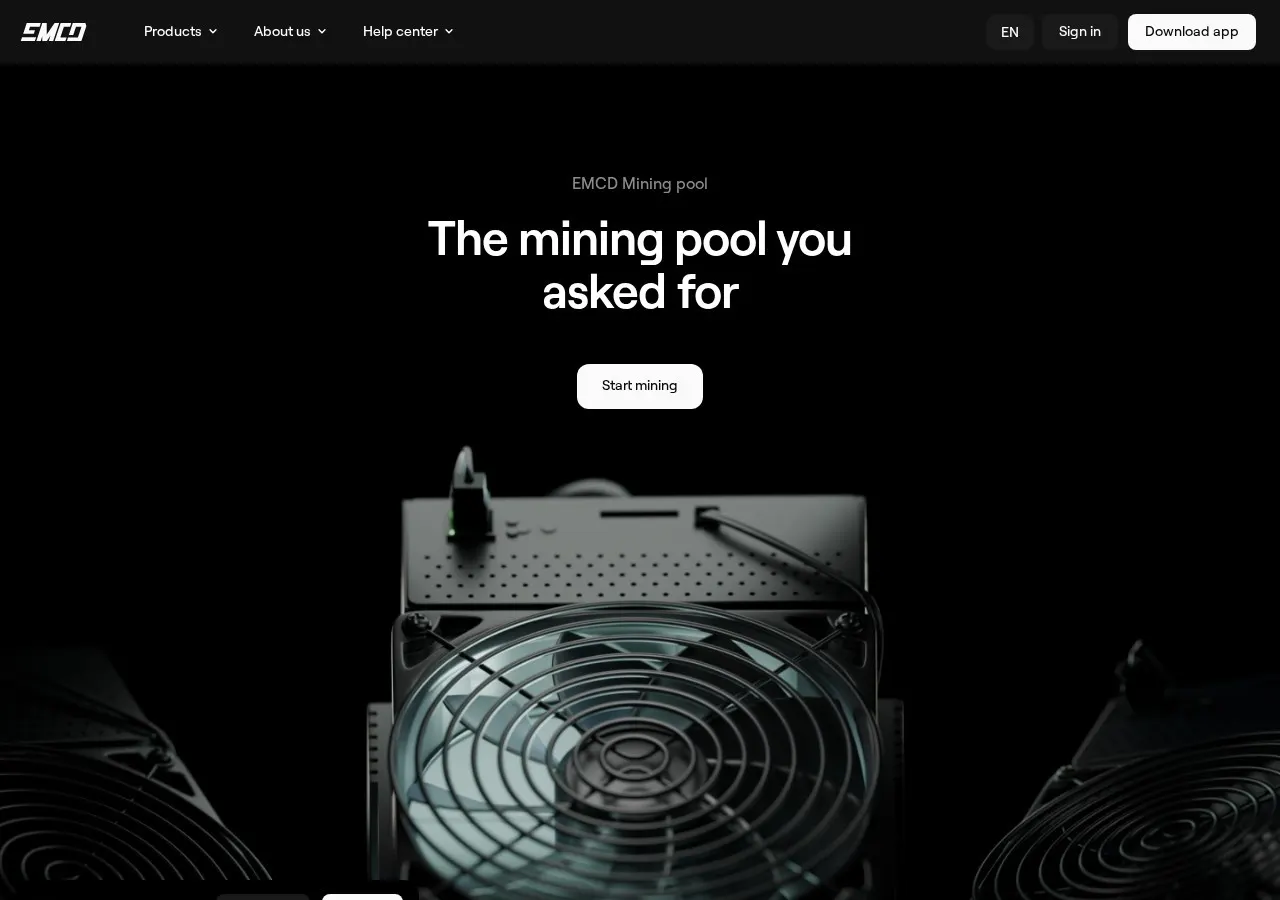
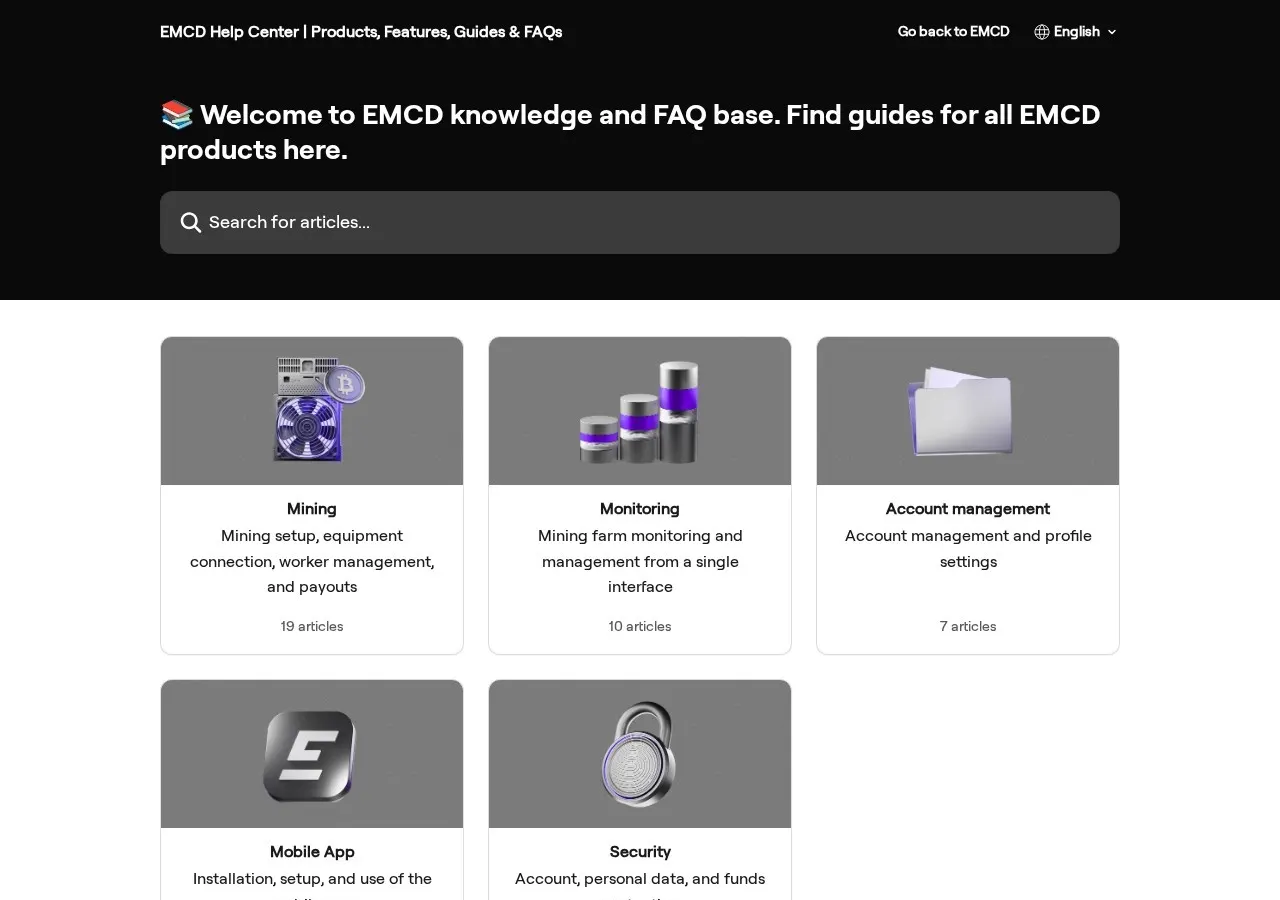
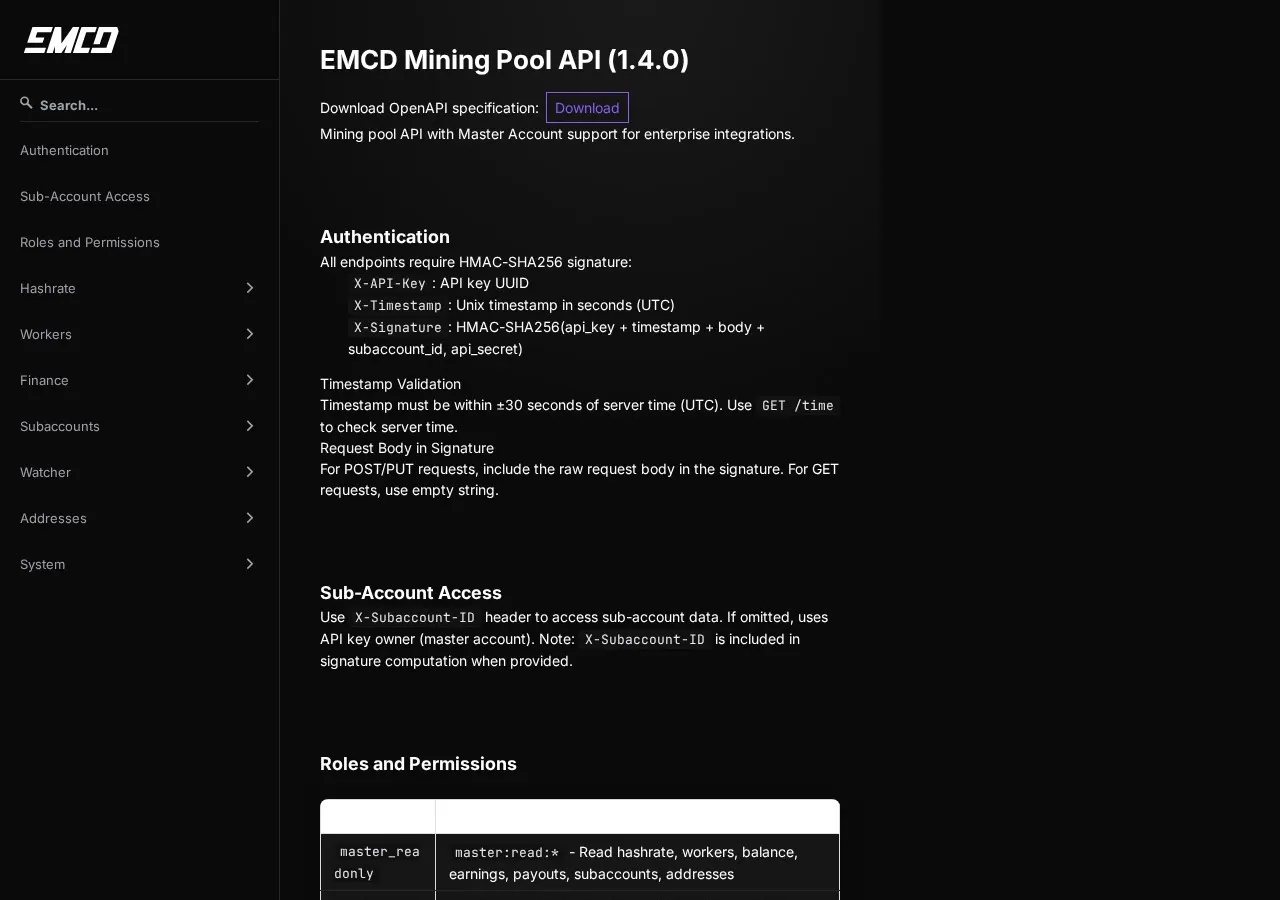
EMCD screenshots
What users say about EMCD
User feedback for EMCD is minimal and generally positive, focusing on satisfaction with its mining pool and application.
In their own words
“Good mining pool Good app. Nice mining pool”
“Best pool Super, the best mining pool for me, tnx”
Based on 3 Reddit posts and comments, 2 App Store reviews from the last 12 months, checked Oct 26, 2026. These are posts by users on other sites, not reviews submitted on CryptoReview.
User reviews
No user reviews yet. Have you used EMCD? Share your experience below.
FAQ
Who founded EMCD?
Michael Jerlis founded EMCD in 2017 and serves as the company's Chief Executive Officer.
What are the mining pool fees on EMCD?
Fees start at 1.5% for most altcoins and reach 4% for Bitcoin mining. P2P exchange trading on the platform carries a 0% fee.
Which coins can you mine on EMCD?
EMCD supports nine coins, including Bitcoin, Litecoin, Dogecoin, Bitcoin Cash, Ethereum Classic, Kaspa, Dash, and Zcash.
What payout schemes does EMCD support?
EMCD supports FPPS, PPS+, and PPLNS payout models, as well as merged mining for Litecoin and Dogecoin.
Does EMCD require identity verification?
EMCD implements AML and CTF compliance checks alongside two-factor authentication for user accounts across its supported jurisdictions.
Latest from EMCD on X
October took 10.52% off PPS per PH/s — the biggest monthly hit from difficulty in 2026.
#EMCDMiningDigest | Oct 26 – Nov 1 ⛏️
🟣 Difficulty rose 5.54% on Oct 29 to 148.36T, the second consecutive increase after +5.92% on Oct 16. The month’s three retargets add up to +11.75%, and PPS per PH/s pays 5.25% less than before this one.
🟣 FPPS came to $35.52 per PH/s/day over the week, down 3.7%, while $BTC closed down 4.79%. The 7-day hashrate estimate still ended higher at 1,055 EH/s — harder network and weaker price in the same week.
🟣 San Diego’s council voted unanimously on Oct 27 for a 45-day pause on new data centers, renewable up to 20 months. The 400 MW NAVWAR project is exempt — federal land.
🟣 Zcash Foundation shipped Zebra Ándale 7.1.0-alpha.0, a test build that cuts the delay before pools get new work. In its own benchmarks, prepared mixed blocks process 9.6× faster than Zebra 7.0.0.
🟣 Binance is gradually normalizing withdrawals after the ~$6.3B security incident. It says withdrawals are running relatively smoothly and ~95% of affected assets have been replenished.
🟣 Two solo miners found blocks on Oct 26 and 27, taking ~3.154 and ~3.14 BTC. The second reportedly ran 16.2 TH/s — an expected wait of nearly 1,200 years.
See you next week — EMCD Mining Pool: https://t.co/VMa54VWJFQ

Hong Kong is on EMCD's calendar this week 🇭🇰
Nov 2–6: Hong Kong FinTech Week
Nov 5–6: Hong Kong Digital Asset Summit
EMCD’s Partnerships Director APAC, Kin Fung, will be at both events.
Attending either one? Let’s catch up 💜
#HKFinTechWeek #HKFTW2026 https://t.co/8SPHuWQ6DD
Nov 2–6: Hong Kong FinTech Week
Nov 5–6: Hong Kong Digital Asset Summit
EMCD’s Partnerships Director APAC, Kin Fung, will be at both events.
Attending either one? Let’s catch up 💜
#HKFinTechWeek #HKFTW2026 https://t.co/8SPHuWQ6DD

Boo!
Keep hashing and have a spooktacular Halloween 🎃
$BTC • $ZEC • $LTC • $DOGE • $PEP • $ETC • $KAS • $BCH https://t.co/tWm3jLOzaT
Keep hashing and have a spooktacular Halloween 🎃
$BTC • $ZEC • $LTC • $DOGE • $PEP • $ETC • $KAS • $BCH https://t.co/tWm3jLOzaT
Happy #Halloween, miners 🎃
Our mining horror story isn’t over yet… Too scared to continue?
Today’s your last chance to add a plot twist and win EMCD VIP merch!
👉 Join the story on Telegram: https://t.co/kqtdo7r75Y
#Halloween2026 #HappyHalloween #EMCD https://t.co/miu6Qcblnh
Our mining horror story isn’t over yet… Too scared to continue?
Today’s your last chance to add a plot twist and win EMCD VIP merch!
👉 Join the story on Telegram: https://t.co/kqtdo7r75Y
#Halloween2026 #HappyHalloween #EMCD https://t.co/miu6Qcblnh

Recent public posts from @emcd_io, shown as published. Not reviewed or endorsed by CryptoReview.
Alternatives to EMCD

Institutional digital asset mining infrastructure operating the largest Bitcoin mining pool
Mining pool · Firmware & softwareBTC · ZEC0%

Public Bitcoin miner operating 50 EH/s across self-managed data centers
Public minerBTC50 EH/s

Bitcoin mining pool, LuxOS firmware, and compute derivatives with over 40 EH/s in hashrate
Mining pool · Firmware & softwareFPPS · Fixed +1>40 EH/s

Publicly traded clean-energy Bitcoin miner and HPC provider operating 440 MW of data center capacity
Public miner · HostingBTC25.1 EH/s

Publicly traded digital infrastructure enterprise and Bitcoin miner with 1.9 GW of energized power capacity
Public miner · Mining pool +1BTCNASDAQ: MARA

ADX-listed digital infrastructure operator running over 550 MW of power across six markets
Public miner · HostingBTC15.9 EH/s