
Open-source, self-custodial mobile wallet supporting over 100 blockchains and built-in cross-chain swaps
No KYCMobileSelf-custodialEthereum · Bitcoin +13

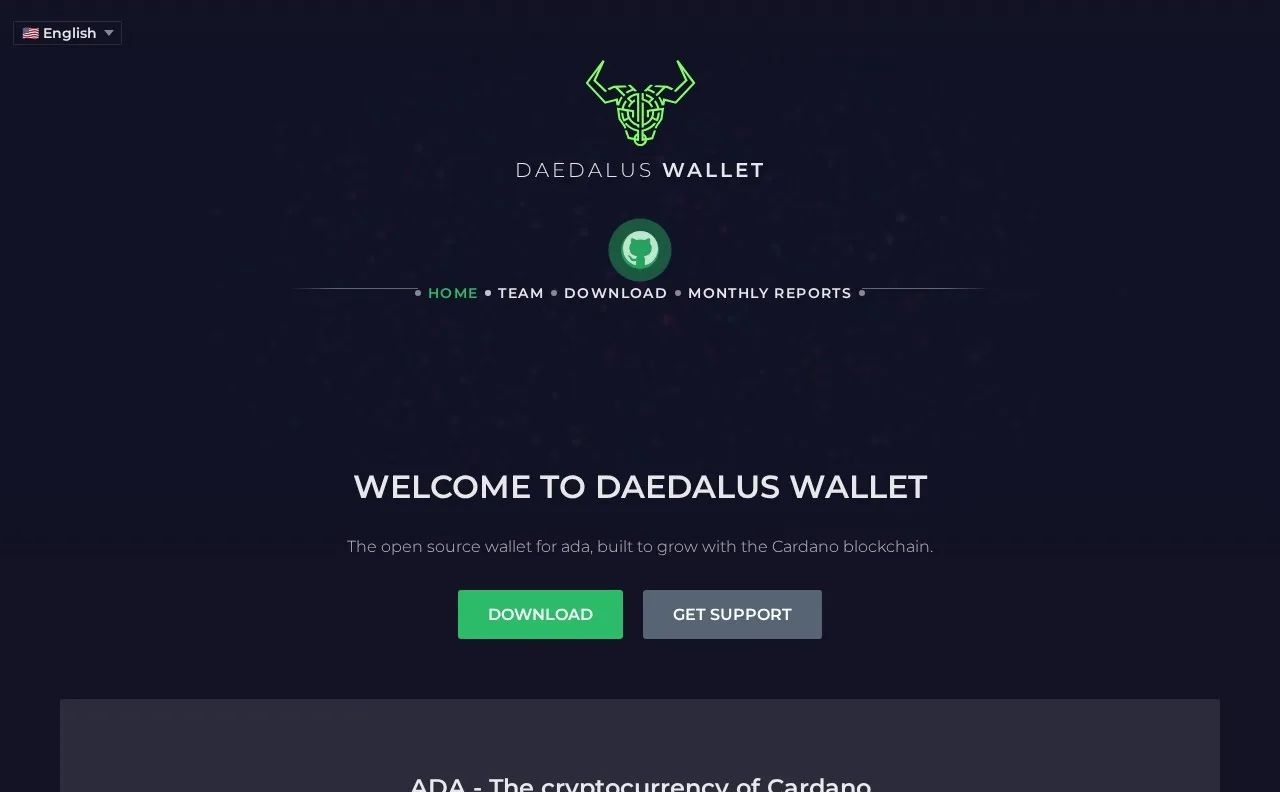
Daedalus is an open-source, self-custodial desktop wallet built exclusively for Cardano. Launched in 2015, it operates as a full node. Rather than trusting remote servers, it downloads and independently validates the entire history of the Cardano blockchain directly on the user's local machine.
The wallet was developed by Input Output Global, also known as IOHK. Charles Hoskinson serves as co-founder and chief executive officer alongside Jeremy Wood, who is co-founder and chief strategy officer. Input Output Global maintains the core Cardano codebase, and the team designed Daedalus as the primary reference implementation wallet for the network.
Daedalus gives users complete control of their private keys through a hierarchical deterministic setup. Because it is a full node, it verifies blocks and transactions locally. Users can send and receive ADA, hold native assets, and delegate balances to stake pools. The software also integrates with Ledger and Trezor hardware devices to keep private keys offline while managing staking and transfers.
Daedalus is free to download and use, with no software platform fees or subscription costs. Transactions require only standard dynamic Cardano network fees paid in ADA, determined by transaction size and network conditions. There are no built-in fiat on-ramps or token swaps. The software is available globally without identity verification and runs on Windows, macOS, and Linux.
Since its release in 2015, Daedalus has recorded no security breaches. However, its full-node architecture imposes heavy operational requirements. Storing the entire Cardano blockchain requires tens of gigabytes of disk space. Initial synchronization can take many hours or days depending on connection speeds and computer hardware. It does not support mobile operating systems or blockchains other than Cardano.
Daedalus delivers trustless validation as a full-node Cardano desktop wallet, but demands heavy disk space and lacks mobile support or multichain compatibility.
Daedalus is an open-source, non-custodial desktop wallet built by Input Output Global, formerly known as IOHK. The software operates as a full node. It downloads and independently validates the entire history of the Cardano blockchain locally, which removes reliance on third-party servers to confirm balances or incoming transactions.
This validation model provides strong security. Keys remain on your local machine, and the software supports hardware integrations with Ledger and Trezor. It also includes native ADA delegation across stake pools, multi-wallet management, custom UI themes, and display support for native assets and NFTs. Through October 2026, the software has operated without reported security breaches since launching in 2015.
The trade-offs stem directly from its full-node architecture:
Daedalus suits technical Cardano holders and stake pool operators who put independent local validation ahead of convenience. Anyone needing quick mobile access or low storage requirements should look at light wallets such as Yoroi or Eternl instead.
| KYC required ⓘ | No · unverified |
|---|---|
| Wallet type | Desktop · unverified |
| Custody | Self-custodial · unverified |
| Chains | Other · unverified |
| Platforms | Windows, macOS, Linux · unverified |
| Open source | Yes · unverified |
| Hardware wallet support | Yes · unverified |
| In-app swaps | No · unverified |
| Staking | Yes · unverified |
| NFT support | Yes · unverified |
| Buy crypto in app | No · unverified |
| Security features | Full-node validation, Hardware wallet integration, Hierarchical deterministic addresses · unverified |
| Recovery without a seed phrase | No · unverified |
| Passkey login | No · unverified |
| Built-in dApp browser | No · unverified |
| Perpetuals trading | No · unverified |
Not disclosed by the provider: WalletConnect, Multisig, Swap fee.
Data from the provider's website and public sources. Fees and availability change; confirm on the official site before you sign up.
Downloads and independently validates the entire Cardano blockchain history on your local machine without trusting third-party nodes.
Delegates ADA to Cardano stake pools directly from the wallet interface without surrendering custody of funds.
Pairs with Ledger and Trezor devices to sign transactions while keeping private keys isolated offline.
Creates and manages multiple independent hierarchical deterministic wallets within a single desktop installation.
Displays, receives, and transfers Cardano native assets and NFTs alongside ADA balances.
Generates a fresh receiving address for each incoming transaction to prevent address reuse on the Cardano ledger.
Downloads and independently verifies the complete Cardano blockchain ledger locally without relying on centralized servers.
Allows users to browse stake pools and delegate ADA holdings directly from their desktop interface.
Connects with Ledger and Trezor hardware devices to keep private keys offline while interacting with Cardano.
Displays Cardano-based native assets and non-fungible tokens directly alongside standard ADA balances.
Daedalus is barely mentioned in recent discussions, appearing primarily as an option for legacy Byron-era wallet support alongside other Cardano tools.
Based on 200 Reddit posts and comments from the last 12 months, checked Oct 21, 2026. These are posts by users on other sites, not reviews submitted on CryptoReview.
No user reviews yet. Have you used Daedalus? Share your experience below.
Daedalus was developed by Input Output Global (formerly IOHK), which was co-founded by Chief Executive Officer Charles Hoskinson and Chief Strategy Officer Jeremy Wood. The wallet launched alongside the Cardano project in 2015.
Yes, Daedalus is completely free and open-source software to download and use. Users only pay standard Cardano network transaction fees in ADA when sending funds or executing transactions.
No, Daedalus does not require identity verification or account registration. It is a non-custodial desktop wallet where users directly manage their private keys.
Daedalus supports only the Cardano blockchain. It holds Cardano (ADA), Cardano native tokens, and Cardano NFTs, with no support for other networks like Bitcoin or Ethereum.
Daedalus is self-custodial, open-source, and runs a full Cardano node that validates every block locally. It integrates with Ledger and Trezor hardware wallets and has had no recorded security breaches since its 2015 release.
No, there is no official Daedalus mobile application for iOS or Android. Daedalus operates only as a desktop full-node wallet on Windows, macOS, and Linux.
Open-source, self-custodial mobile wallet supporting over 100 blockchains and built-in cross-chain swaps
Self-custodial mobile wallet with built-in DEX routing across more than 18 blockchains
Open-source, non-custodial multi-chain wallet with built-in Tor and privacy-preserving assets
Non-custodial DeFi wallet and multichain aggregator covering 10,000+ assets across 48+ networks
Self-custodial Cosmos wallet launched in 2021, now supporting almost 350 networks
Self-custodial multichain wallet from Kraken with passkey support and zero platform swap fees
Type at least two characters. Press ↵ to see all results.