

On 31 October 2008, Satoshi published nine pages that explained Bitcoin to the world.
Today we’re explaining it to everyone else.
Two pizzas, 10,000 BTC, 21 million coins, and one key you never share. Everything you need to know, in a comic.
Happy 18th birthday, Bitcoin whitepaper.
Tether
US dollar stablecoin backed by US Treasuries with over $90B issued on Tron alone
4.0/ 5
Our score
Very good
Tickers
USDTEURTXAUT
Pegged to
US dollar
Backing
Cash & treasuries
Supply / market cap
>$90 billion on Tron alone
Reserve reports
Quarterly BDO Italia attestations and KPMG US financial audit
Regulated issuer
No
What is Tether?
Tether issues USD₮ (USDT), the crypto market's largest fiat-collateralized stablecoin pegged 1:1 to the US dollar. USDT serves as the dominant quote currency across digital asset exchanges and peer-to-peer settlement networks, handling $13.3 trillion in annual transfer volume in 2025.
Corporate structure and leadership
The stablecoin was originally launched as Realcoin in July 2014 by co-founders Brock Pierce, Reeve Collins, and Craig Sellars before rebranding to Tether in November 2014. The token is operated by Tether Holdings Limited, where Giancarlo Devasini serves as Chairman and Paolo Ardoino acts as Chief Executive Officer. In January 2025, Tether relocated its primary corporate headquarters to San Salvador, El Salvador, maintaining a distributed team of about 200 employees worldwide.
Reserves and operational mechanics
Tether backs USDT through a reserve pool comprised largely of short-term US Treasury bills, cash equivalents, and alternative reserve holdings. By December 2025, Tether held $141 billion in US Treasuries and reported a reserve surplus of $6.814 billion. The issuer deploys USDT natively across multiple networks, including Tron, Ethereum, Solana, Avalanche, Polygon, Algorand, Near, Celo, and Tezos. Tron hosts the largest share of circulating tokens, accounting for more than $90 billion in USDT supply in July 2026. Tether tokens do not pay yields directly to holders.
Audits and compliance track record
Tether publishes regular quarterly reserve attestations conducted by BDO Italia under the ISAE 3000 standard. In August 2026, KPMG U.S. completed an independent audit of financial statements for Tether International, delivering an unqualified opinion under US GAAP. Under European Union Markets in Crypto-Assets (MiCA) rules, cryptocurrency exchanges began delisting spot USDT trading pairs for EU residents in 2024 because the token lacks an EU e-money or asset-referenced token license.
Risks and past incidents
USDT token smart contracts contain freeze functions that allow Tether to halt assets at the address level. By February 2026, Tether had executed cumulative freezes totaling $4.2 billion on sanctioned and illicit addresses. The stablecoin experienced past volatility, including dropping to $0.88 during banking stress in October 2018. A 2021 CFTC settlement revealed that Tether held fully sufficient fiat reserves backing circulating supply on only 27.6% of days across an examined 26-month period.
Founders
Giancarlo DevasiniChairman
Best for:High-frequency crypto exchange tradersCross-border transfer recipients outside the EUTron network settlement users
Pros and cons
Pros
- Over $90 billion in liquidity on the Tron network alone
- Completed a full independent US GAAP financial statement audit by KPMG U.S
- Maintained a reserve surplus over liabilities of $6.814 billion at year-end 2025
- Supported across virtually every major centralized exchange and trading pair
Cons
- European spot trading pairs delisted under EU MiCA regulatory requirements
- Issuer retains smart contract authority to freeze token balances arbitrarily
- CFTC found reserves were fully backed on only 27.6% of days in 2016-2018
- No direct yield paid to retail stablecoin token holders
Our review
4.0/5
Very good
Tether provides substantial cross-chain liquidity and trading adoption, but users accept centralized token-freeze capabilities and regulatory friction in jurisdictions like the European Union.
Tether issues USD₮, the largest stablecoin by circulating supply, backed primarily by cash, bank deposits, and US Treasuries. In August 2026, KPMG U.S. completed an independent audit of Tether International's financial statements under US GAAP, issuing an unqualified opinion on reserves that included $141 billion in Treasury holdings and a $6.814 billion reserve surplus as of late 2025. BDO Italia also provides regular quarterly attestations under the ISAE 3000 standard. The asset maintains wide operational breadth, settling on networks such as Tron, Ethereum, Solana, and Avalanche, with Tron alone hosting over $90 billion in supply by mid-2026.
Trading volume and global depth remain Tether's primary operational advantages. USD₮ processed $13.3 trillion in annual transfers across 2025, compared to Circle's USDC at $18.3 trillion. Deep pairing on spot and derivative venues ensures tight trading spreads and steady dollar parity during ordinary market conditions.
Holding Tether involves structural counterparty and compliance trade-offs:
- Centralized address freezing: Tether works directly with law enforcement and has frozen more than $4.2 billion in illicit or sanctioned tokens by early 2026.
- Regulatory exclusion: European Union exchanges began delisting USD₮ spot pairs for EU residents in 2024 because the issuer lacks an e-money or asset-referenced token license under MiCA.
- Historical peg stress: USD₮ dropped to $0.88 on secondary venues in October 2018 amid Bitfinex credit concerns, and the CFTC cited reserve shortfalls across earlier operating periods.
Tether suits international traders and users transacting in emerging markets where deep peer-to-peer liquidity and broad network availability are mandatory. Users requiring full regulatory integration in the European Union or non-custodial decentralized designs should consider alternatives.
Specs
| Tickers | USDT, EURT, XAUT · unverified |
|---|---|
| Pegged to | US dollar · unverified |
| Backing | Cash & treasuries · unverified |
| Yield-bearing | No · unverified |
| Regulated issuer | No · unverified |
| Supply / market cap | >$90 billion on Tron alone · unverified |
| Chains | Tron, Ethereum, Solana, Avalanche, Polygon, Celo, Near, Tezos, Algorand, EOS, Liquid Network, Omni · unverified |
| Reserve reports | Quarterly BDO Italia attestations and KPMG US financial audit · unverified |
| Issuer can freeze tokens | Yes · unverified |
Not disclosed by the provider: Licenses & charters, Redemption terms.
Data from the provider's website and public sources. Fees and availability change; confirm on the official site before you sign up.
Key features
Multichain issuance
Circulates natively across blockchains including Tron, Ethereum, Solana, Avalanche, Polygon, and Tezos.
US Treasury reserve backing
Backed primarily by short-term US Treasury bills, which totaled $141 billion at the close of 2025.
Independent reserve audits
Reports reserves through quarterly BDO Italia attestations and an annual financial statement audit by KPMG U.S.
Centralized address freezing
Maintains contract-level blacklist capabilities, having frozen $4.2 billion in illicit funds through early 2026.
Secondary fiat and gold pegs
Issues complementary stable assets, including euro-denominated EURT and physical-gold-backed XAUT.
Inside Tether
USD₮ (USDT)
A US dollar-pegged stablecoin backed by US Treasury bills and reserve assets, settling across networks including Tron and Ethereum.
EUR₮ (EURT)
A euro-pegged digital token issued on blockchains such as Ethereum to provide euro-denominated settlement.
Tether Gold (XAU₮)
A digital asset backed by physical gold reserves, representing direct ownership of allocated London Good Delivery gold bars.
Tether screenshots
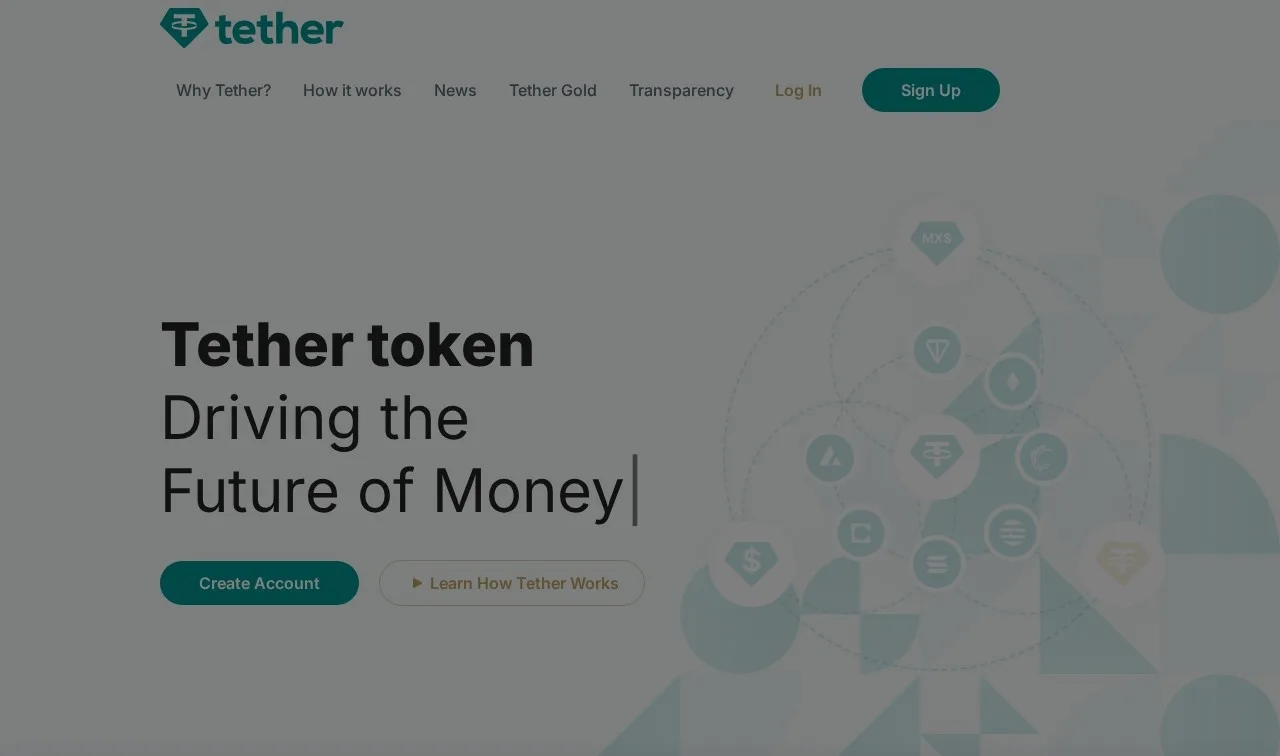
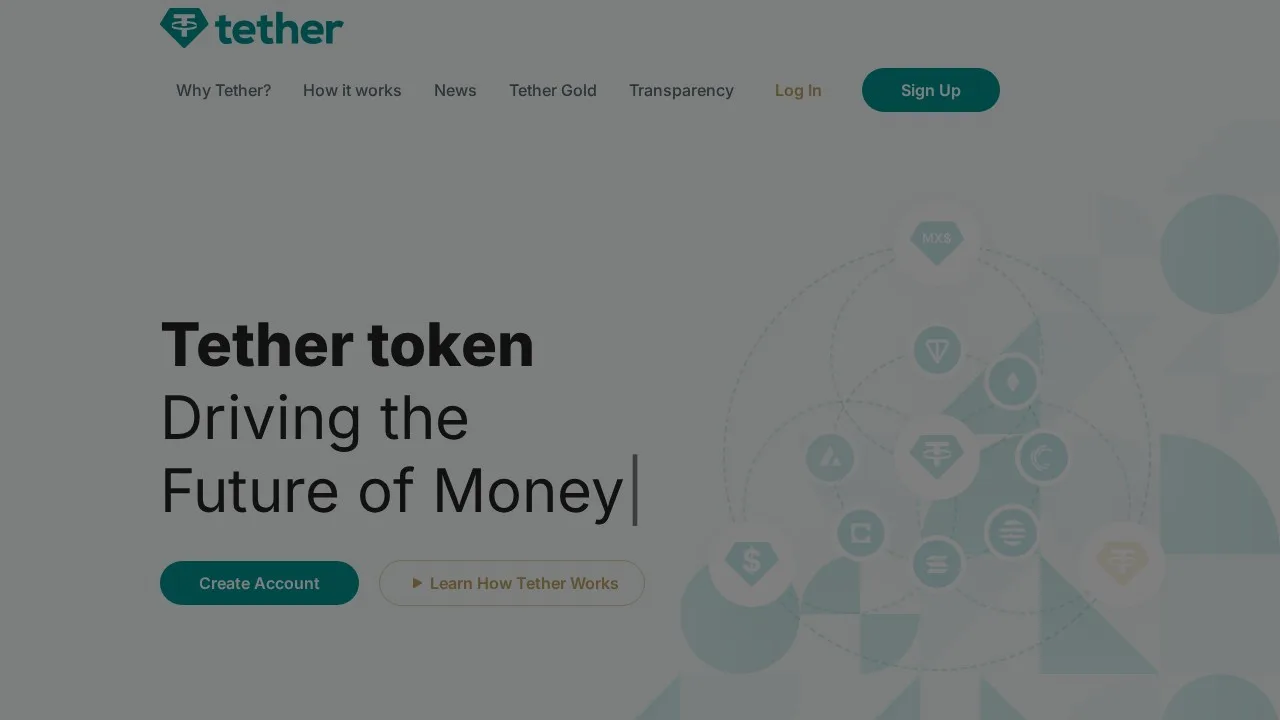
What users say about Tether
Users discuss Tether primarily in the context of its reserve backing and published attestation reports, as well as the platform's ability to assist with recovering misdirected funds. Major concerns revolve around wallet blacklisting or freezing, high minimum deposit thresholds for support recovery, and skepticism regarding reserve audits.
Top goods
In their own words
“Sorry this happened. Straight answer, because it depends on WHAT you sent there: If you sent USDT itself to the Tether contract address: this is one of the very few "sent to a contract" cases with a real (if slim) path.”
“It's litterally on their website. This might not be a full "audit" per say. But im not expert enough to really know the difference. But to claim they arent at least a little transparent and arent releasing information via third parties doesnt seem accurate at all.”
“Title: $40,000 USDT Life Savings Blacklisted - Seeking Advice on Tether Investigation ( Ticket Number)-#966396: Hello, I am seeking advice or a nudge for my current case with Tether. My USDT address was recently blacklisted, and it contains $40,000, which is my entire life savings.”
“Tether Released New Audits **TL;DR:** Tether claims $181 billion in reserves but holds only $30 million in actual cash. In 3 months, they shifted heavily into illiquid assets while profit margins exploded. Something doesn't add up, as usual.”
Scam warning: Scammers falsely claim they can unlock frozen USDT or recover lost tokens for a fee.
Based on 115 Reddit posts and comments from the last 12 months, checked Oct 23, 2026. These are posts by users on other sites, not reviews submitted on CryptoReview.
User reviews
No user reviews yet. Have you used Tether? Share your experience below.
Funding and investors
$600MTotal raised
1Round
1Investor
-
Equity Nov 2023 $600M
FAQ
Who founded Tether and who leads it today?
Tether was founded in 2014 by Brock Pierce, Reeve Collins, and Craig Sellars under the initial name Realcoin. Paolo Ardoino leads the company as Chief Executive Officer, having taken the role in October 2023, while Giancarlo Devasini serves as Chairman.
What reserves back USD₮?
USD₮ is backed by cash equivalents and US Treasury bills, with Treasury holdings totaling $141 billion as of late 2025. Independent reserve reporting includes quarterly attestations from BDO Italia and an audit completed by KPMG U.S. in August 2026.
Can Tether freeze funds in user wallets?
Yes, Tether has contract-level controls on supported blockchains to blacklist and freeze token balances. The issuer had frozen approximately $4.2 billion in illicit or sanctioned tokens cumulatively as of February 2026.
Which blockchains support Tether?
Tether issues tokens across multiple networks, including Tron, Ethereum, Solana, Avalanche, Celo, Near, Polygon, Tezos, Algorand, and the Liquid Network. Tron hosts the largest share, carrying more than $90 billion of the token supply in 2026.
Is Tether regulated in the European Union?
No, Tether does not hold an e-money license or asset-referenced token license under European MiCA regulations. As a result, European exchanges began removing USD₮ spot trading pairs for EU residents in 2024.
Has Tether ever lost its $1.00 peg?
Yes, USD₮ traded down to $0.88 on secondary exchanges in October 2018 during a period of market stress and banking scrutiny. The token restored its parity and has traded consistently near $1.00 in subsequent years.
Latest from Tether on X
Tether Generates $1.5 Billion in Q3 Net Operating Profit as Reserve Buffer Doubles to Almost $8 Billion
Learn more: https://t.co/VKJmdLSrDn
Learn more: https://t.co/VKJmdLSrDn
Tether is hiring.
With USD₮ we built the biggest financial inclusion story in history. Now we’re dissolving the borders of finance, building unstoppable communications, evolving private superintelligence, and powering it all with real energy infrastructure.
👉 https://t.co/0DFF6RiGGV
With USD₮ we built the biggest financial inclusion story in history. Now we’re dissolving the borders of finance, building unstoppable communications, evolving private superintelligence, and powering it all with real energy infrastructure.
👉 https://t.co/0DFF6RiGGV
Proud to be a founding member of @FASEFoundation
https://t.co/G9PrmgLoBc
https://t.co/G9PrmgLoBc
Tether and Industry Collaborators Launch FASE Foundation to Fight Scams, Support Trafficking Survivors, and Pilot Stablecoin Aid in Vulnerable Communities
Learn more: https://t.co/bVvkFxkrl6
Learn more: https://t.co/bVvkFxkrl6
Recent public posts from @tether, shown as published. Not reviewed or endorsed by CryptoReview.
Alternatives to Tether

Regulated dollar and euro stablecoins backed by cash and reserve assets
US dollarCash & treasuriesRegulated issuer

Regulated stablecoin issuance and payments infrastructure across 30+ chains with zero-basis-point ramps
US dollarCash & treasuriesRegulated issuer

Regulated stablecoin issuer behind USDP, PYUSD and USDG across seven networks
US dollarCash & treasuriesRegulated issuer

Yield-bearing stablecoin backed by US Treasuries and licensed under the Bermuda Monetary Authority
US dollarCash & treasuriesYield-bearing

UK-domiciled sterling stablecoin backed 1:1 with segregated GBP reserves across five chains
British poundRegulated issuerGBPA

Synthetic dollar protocol backed by delta-neutral spot and derivatives positions
US dollarDelta-neutral (synthetic)Yield-bearing