

Check your kids’ Halloween candy! Someone hid a sealed 30th Celebration ETB in mine. https://t.co/9mPqqAFckd

Courtyard
Polygon-based marketplace for trading physical graded collectibles vaulted and tokenized as 1:1 NFTs
3.5/ 5
Our score
Good
What is Courtyard?
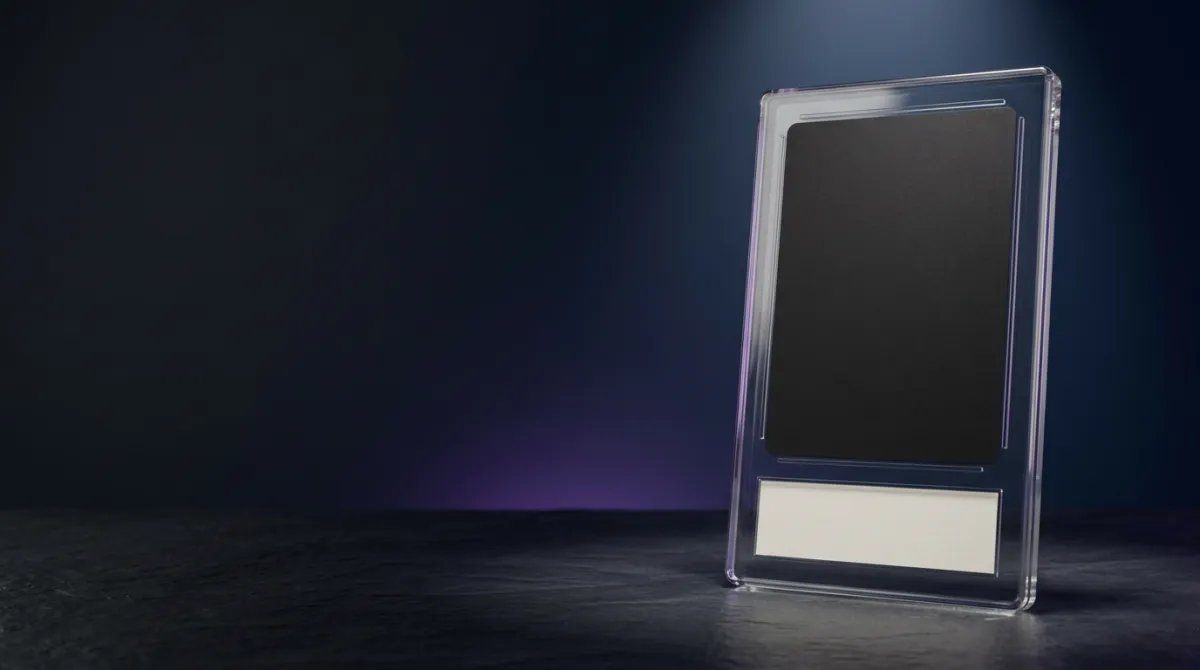
Courtyard is an NFT marketplace and asset tokenization platform on Polygon that turns physical, graded collectibles into digital assets. Each token represents a specific physical item held in a secure, insured vault. Collectors can trade the physical assets onchain without packing or shipping them for every transaction. Owners can burn the NFT to redeem the underlying physical card for delivery.
Team and funding
Courtyard was founded in 2021 and is based in the United States. The company completed a $7 million Seed round in November 2022 backed by New Enterprise Associates, Y Combinator, OpenSea Ventures, and Brink's. In July 2025, Courtyard closed a $30 million Series A funding round led by Forerunner Ventures, with continued backing from NEA, Y Combinator, Burst Capital, ParaFi Capital, Prelude, and Operator Partners.
How tokenization and trading work
The platform accepts authenticated and graded collectibles, primarily focusing on Pokémon cards alongside sports cards such as basketball, baseball, and football. Once an asset is verified and deposited into the custody vault, Courtyard mints an NFT on Polygon that acts as a 1:1 digital twin. Users buy and sell these tokens directly on the marketplace using Polygon-compatible wallets. When a collector chooses physical delivery, the redemption mechanism burns the token and initiates shipping to the owner's address.
Track record and market volume
Trading activity expanded significantly during 2025, reaching a record monthly secondary volume of approximately $78 million in Pokémon card transactions in August 2025. By October 2026, the marketplace counted more than 132,000 unique token holders and generated over 215 ETH in daily volume, representing a collection market capitalization of about 1.14K ETH ($2.73 million). Courtyard has not issued a native token or airdrop; transactions settle directly on Polygon.
Risks and custody trade-offs
Holding tokenized collectibles introduces physical custody risk, as asset security depends on the integrity, insurance coverage, and operational stability of the vaulting arrangements. Secondary liquidity can also fluctuate sharply. Floor prices for tokenized cards declined by approximately 96% following a February 2026 peak, and secondary liquidity remains heavily concentrated in high-demand Pokémon cards while lower-tier inventory trades thinly.
Best for:Graded Pokémon card collectorsTraders wanting instant physical liquidityCollectors seeking insured asset vaulting
Pros and cons
Pros
- Polygon integration keeps network transaction costs low for trading physical cards
- Physical assets can be redeemed by burning the corresponding NFT
- Secured $37M in total venture backing from Forerunner Ventures, NEA, and Y Combinator
- Over 132,000 unique NFT holders active on the platform by October 2026
Cons
- Relies on centralized vault custody for storage and physical redemption
- Secondary liquidity drops sharply outside high-demand Pokémon cards
- Market floor prices fell roughly 96% from their February 2026 peak
Our review
3.5/5
Good
Courtyard lets collectors trade vaulted physical cards on Polygon, but secondary liquidity concentrates heavily in top Pokemon cards and exposes buyers to sharp floor price drops.
Courtyard operates a specialized collectibles marketplace on the Polygon network. The platform mints NFTs that correspond one-to-one to physical, graded collectibles stored inside secure, insured vaults. Owners can hold the token, trade it instantly without shipping delays, or burn the token to claim physical delivery of the underlying asset.
Trading takes place on Polygon rather than Ethereum mainnet. Inventory centers primarily on graded Pokemon trading cards, alongside sports cards covering basketball, baseball, and football. In August 2025, secondary trading volume for Pokemon cards reached approximately $78 million. However, inventory remains narrow for collectors seeking digital art or avatar collections, as the catalog focuses strictly on physical collectibles.
Liquidity is a documented concern outside blue-chip items. While the platform counted over 132,000 unique NFT holders by October 2026, floor prices declined roughly 96% from their February 2026 peak, and secondary demand drops sharply for non-marquee items. Courtyard has issued no native token and does not operate a multi-marketplace aggregator.
The company behind the marketplace was founded in 2021. It secured $30 million in a July 2025 Series A funding round led by Forerunner Ventures, with backing from New Enterprise Associates, Y Combinator, and ParaFi Capital. Brink's participated in earlier seed backing.
Sources (2)
Specs
| Chains | Polygon |
|---|---|
| Focus | Collectibles |
Not disclosed by the provider: KYC required, Marketplace fee, Creator royalties, Launchpad, Aggregates other markets, Mobile app, Token, Zero marketplace fee, Points or rewards program.
Data from the provider's website and public sources. Fees and availability change; confirm on the official site before you sign up.
Key features
One-to-one vaulted backing
Every NFT minted on Polygon corresponds directly to an authenticated, graded collectible stored in a dedicated physical vault.
Physical redemption mechanism
Cardholders can burn their Polygon NFT through the platform to receive the physical card by mail.
Polygon secondary trading
Trades execute on Polygon. Transfers are near-instant and network gas fees are lower than on mainnet Ethereum.
Digital pack drops
The platform hosts pack openings featuring graded cards ranging from low floor values to rare grail items.
Graded collectibles support
Inventory centers primarily on graded Pokémon cards alongside graded sports cards across baseball, basketball, and football.
Inside Courtyard
Marketplace
A trading platform on Polygon where users can buy and sell NFTs tied one-to-one to graded physical trading cards.
Physical Vaulting and Tokenization
The custody and minting pipeline that accepts graded physical cards, secures them in an insured vault, and issues corresponding Polygon tokens.
Card Redemption
The delivery portal that burns the digital NFT and ships the physical collectible directly to the holder.
What users say about Courtyard
Courtyard provides a catalog of vaulted physical collectibles, digital pack openings, and an online secondary marketplace. On community forums, customers frequently raise issues about unresponsive support staff, strict passport verification rules preventing fund withdrawals, and digital packs yielding cards valued well below the purchase price.
Top goods
In their own words
“I’ve been contacting support and emailing for the last 3 days. No reply”
“Just use the market one of the best places to get cards under market price”
“I have already verified my identity using my KTP (ID card) and linked it to my MetaMask wallet. However, when I tried to transfer funds to my MetaMask wallet, I was asked to verify my identity again using a passport.”
“So I just started using two of them and I'll post pros and cons thus far. Courtyard.io- I can't believe no one has mentioned this one. I've ripped: $25 pokemon pack: CGC 9$18 on pull, now $25.80 a week later $25 one piece pack:PSA 10 $18 pull today $15 pokemon pack: PSA 8 $18 pull today Pros:.”
“My honest opinion on courtyard.io from 🇬🇧 I’ve been using courtyard.io for the last 2 months and had 15+ cards shipped I’ve noticed that a lot of cards reflect American pricing and is a fair chunk behind ours in doing so I picked up 3 lucario vstar crown zenith promos for $89 dollars each for…”
“Warning when using Courtyard.io Serious Concerns About Courtyard.io – “Vaulted” Card Could Not Be Produced I’m posting this as a warning to other collectors. I redeemed a high-end card from Courtyard.io that was explicitly represented as being held in their vault.”
Based on 200 Reddit posts and comments from the last 12 months, checked Oct 20, 2026. These are posts by users on other sites, not reviews submitted on CryptoReview.
User reviews
No user reviews yet. Have you used Courtyard? Share your experience below.
Funding and investors
$37MTotal raised
2Rounds
11Investors
FAQ
Who founded Courtyard?
Courtyard was founded in 2021.
Which blockchain does Courtyard use?
Courtyard runs on the Polygon blockchain, minting NFTs that represent physically vaulted items.
Does Courtyard have a token?
No, Courtyard has no native cryptocurrency, has not released a COURT token, and does not conduct airdrops.
How does physical redemption work on Courtyard?
Each NFT represents a specific physical graded card stored in a vault. Holders can burn their token on the platform to request delivery of the physical item.
Who vaults the physical cards sold on Courtyard?
Cards are kept in insured vaulting facilities. Brink's was listed among the seed investors.
Latest from Courtyard on X
scariest costume ever 😭😭 https://t.co/olyGJy6G3k

won't say when I make it, but there'll be signs https://t.co/rlzNGtjFdT
We passed 100,000 followers on IG 🥂🔥
Doing a big ol' giveaway there to celebrate 👀 https://t.co/zlxAQf3wo1
Doing a big ol' giveaway there to celebrate 👀 https://t.co/zlxAQf3wo1

This sign should work, right?? https://t.co/0rkpWt4L81

Recent public posts from @Courtyard_io, shown as published. Not reviewed or endorsed by CryptoReview.
Alternatives to Courtyard
Creator-owned smart contracts and direct NFT minting across Ethereum, Base, and OP Mainnet
No KYCEthereum · BaseEnforcedArt

On-chain generative art marketplace and launchpad on Ethereum, Arbitrum, and Base
No KYCEthereum · Arbitrum +1EnforcedArt
Multichain NFT minting and tokenization infrastructure supporting Cardano, Solana, and Aptos
Bitcoin · Solana +2EnforcedArt · Collectibles +1

Multi-chain gaming and collectibles NFT marketplace built on the AtomicAssets standard
Polygon · Avalanche +1EnforcedGaming · Collectibles +1

Tezos digital art and NFT marketplace with 5% seller fees and royalty support
OtherEnforcedArt
Solana NFT and real-world asset ecosystem featuring embedded licensing and the AART token
Solana · SuiArt · Collectibles +1Launchpad