

SOLD OUT.
150 editions burned. 30 physicals redeemed by @InvsbleFriends via @manifoldxyz
Manifold
Creator-owned smart contracts and direct NFT minting across Ethereum, Base, and OP Mainnet
4.0/ 5
Our score
Very good
Chains
EthereumBase
Creator royalties
Enforced
Launchpad
Yes
Aggregates other markets
No
What is Manifold?
Manifold is an onchain creator platform and NFT marketplace that allows digital artists to deploy their own smart contracts and sell digital art directly to collectors. Operating across Ethereum, Base, and OP Mainnet, the system lets artists retain sovereign ownership over their token contracts rather than minting through shared storefront architecture. More than 25,000 creators have used its tools to publish editions, 1-of-1 auctions, and interactive drops.
Corporate background
The platform is operated by Manifold Technologies Ltd. The company provides open-source smart contracts, developer tools, and web-based applications designed to separate digital creators from proprietary marketplace infrastructure. Its tools have powered notable independent drops, including open editions and burn mechanisms for digital creators such as 6529 The Memes.
How minting and sales work
Manifold operates as non-custodial infrastructure. Artists deploy self-sovereign ERC-721 or ERC-1155 smart contracts that they control directly via their own web3 wallets. Onboarding requires connecting a compatible wallet without identity verification. Once a contract is deployed, creators can configure minting mechanics using Manifold Drops, which handles fixed-price drops alongside burn-and-redeem mechanics. Metadata and underlying media assets are stored decentralized via Arweave. The native marketplace interface supports set-price purchases as well as reserve auctions with quick-bidding increments.
Fees and global access
Deploying contracts and configuring drops requires standard network gas fees on Ethereum, Base, or OP Mainnet. The platform operates globally without geographic blocklists or KYC checks, giving any connected wallet direct access to mint or buy. Over its history through October 2026, cumulative protocol fees reached $2.44M, with 30-day protocol revenues standing at $2,771.
Risks and track record
Secondary trading activity on Manifold remains modest compared to dominant aggregators and trading venues. In October 2026, weekly protocol fees measured under $500. This lower fee volume corresponds with limited native secondary trading activity for artists seeking immediate liquidity. Because the platform relies on external decentralized storage networks like Arweave, maintenance windows can intermittently interrupt asset uploads. Creators must also manage their own private keys, as smart contract ownership cannot be restored by the platform if a wallet is compromised.
Best for:Digital artists deploying independent contractsCreators hosting burn-and-redeem dropsCollectors buying 1-of-1 Ethereum art
Pros and cons
Pros
- Smart contracts remain fully owned and controlled by the creator wallet
- No identity verification or KYC needed to mint or purchase
- Supports Ethereum, Base, and OP Mainnet network deployments
- Built-in burn-and-redeem and open edition drop mechanics
Cons
- Secondary trading volume and fee revenue are low compared to major aggregators
- Asset uploads depend on Arweave availability and can experience downtime
- Creators must manage their own contract deployment gas costs
Our review
4.0/5
Very good
Manifold gives digital artists direct control through creator-owned smart contracts and flexible drop mechanics, though secondary liquidity remains modest compared to dominant venues like OpenSea.
Manifold, operated by Manifold Technologies Ltd., provides onchain creator infrastructure that focuses on creative sovereignty over centralized market control. Instead of minting tokens through shared platform contracts, artists deploy their own custom smart contracts across Ethereum, Base, and OP Mainnet. This setup lets creators retain ownership of their work and direct custody of their contracts regardless of where the assets are displayed.
The platform combines direct-to-creator sales mechanisms with developer tooling. Users can organize fixed-price primary drops, open editions, blind mints, burn-and-redeem mechanics, and standard auctions. Because secondary sales can settle through custom marketplace widgets or natively on the site, creators avoid platform lock-in. A profile on Manifold aggregates primary editions alongside listings available across external venues like SuperRare.
Trading liquidity represents Manifold's primary trade-off. Over the 30-day window ending in mid-October 2026, Manifold generated roughly $2,771 in protocol fees, compared to $1.57M earned by OpenSea over the same period. While total cumulative protocol fees stand at $2.44M across more than 25,000 artists, total value locked is recorded at $0. This metric aligns with the protocol's focus on non-custodial primary distribution rather than escrowed liquidity pools. Creators seeking organic secondary trading volume frequently find their works trading on broader aggregators rather than Manifold's direct storefront.
Technical dependencies also present occasional operational delays. Metadata and media assets rely on decentralized networks like Arweave, where scheduled maintenance can temporarily pause mint creation or burn setups. Manifold suits fine artists and independent creators who require contract sovereignty and custom mechanics. Collectors seeking high-volume floor trading or automated liquidity pools will find general NFT aggregators more practical.
Sources (2)
Specs
| KYC required ⓘ | No · unverified |
|---|---|
| Chains | Ethereum, Base |
| Creator royalties | Enforced · unverified |
| Focus | Art |
| Launchpad | Yes · unverified |
| Aggregates other markets | No · unverified |
| Mobile app | No · unverified |
| Points or rewards program | No · unverified |
Not disclosed by the provider: Marketplace fee, Token, Zero marketplace fee.
Data from the provider's website and public sources. Fees and availability change; confirm on the official site before you sign up.
Key features
Creator-owned contracts
Deploys sovereign ERC-721 and ERC-1155 smart contracts directly from your wallet across Ethereum, Base, and OP Mainnet.
Drop mechanics
Supports open editions, limited series, burn-and-redeem interactions, and blind mints through modular contract apps.
Native marketplace
Enables zero-intermediary sales through set-price listings and reserve auctions directly on artist profile pages.
Arweave permanent storage
Uploads metadata and visual assets directly to Arweave for decentralized and persistent storage.
Developer widgets
Provides open APIs and embeddable frontend widgets for hosting custom mint experiences on external websites.
Inside Manifold
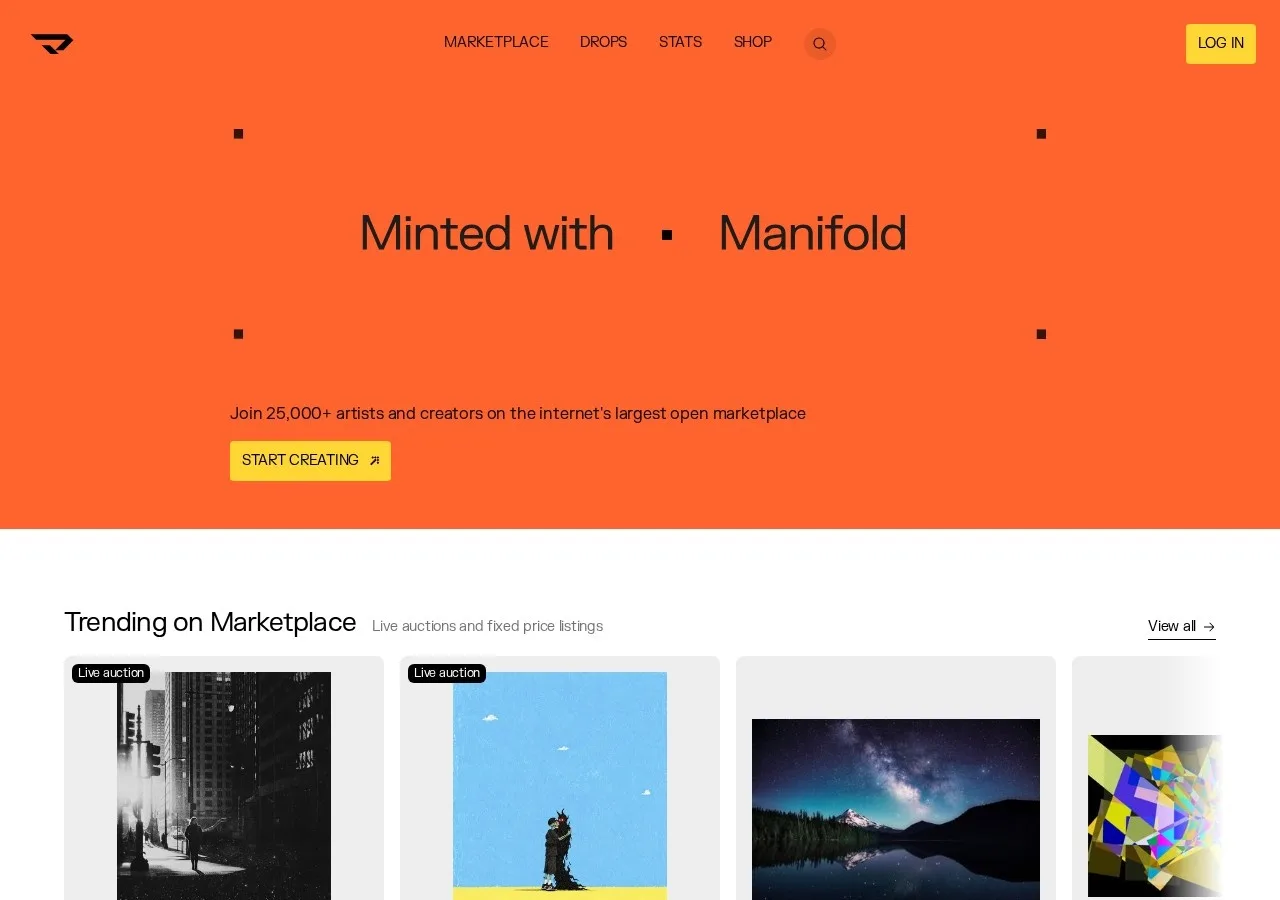
Manifold Marketplace
A venue for 1/1s and editions where collectors can place auction bids or complete direct, fixed-price purchases.
Trending drops
A launchpad section featuring live edition sales, burn-and-redeem interactions, and blind mints across supported networks.
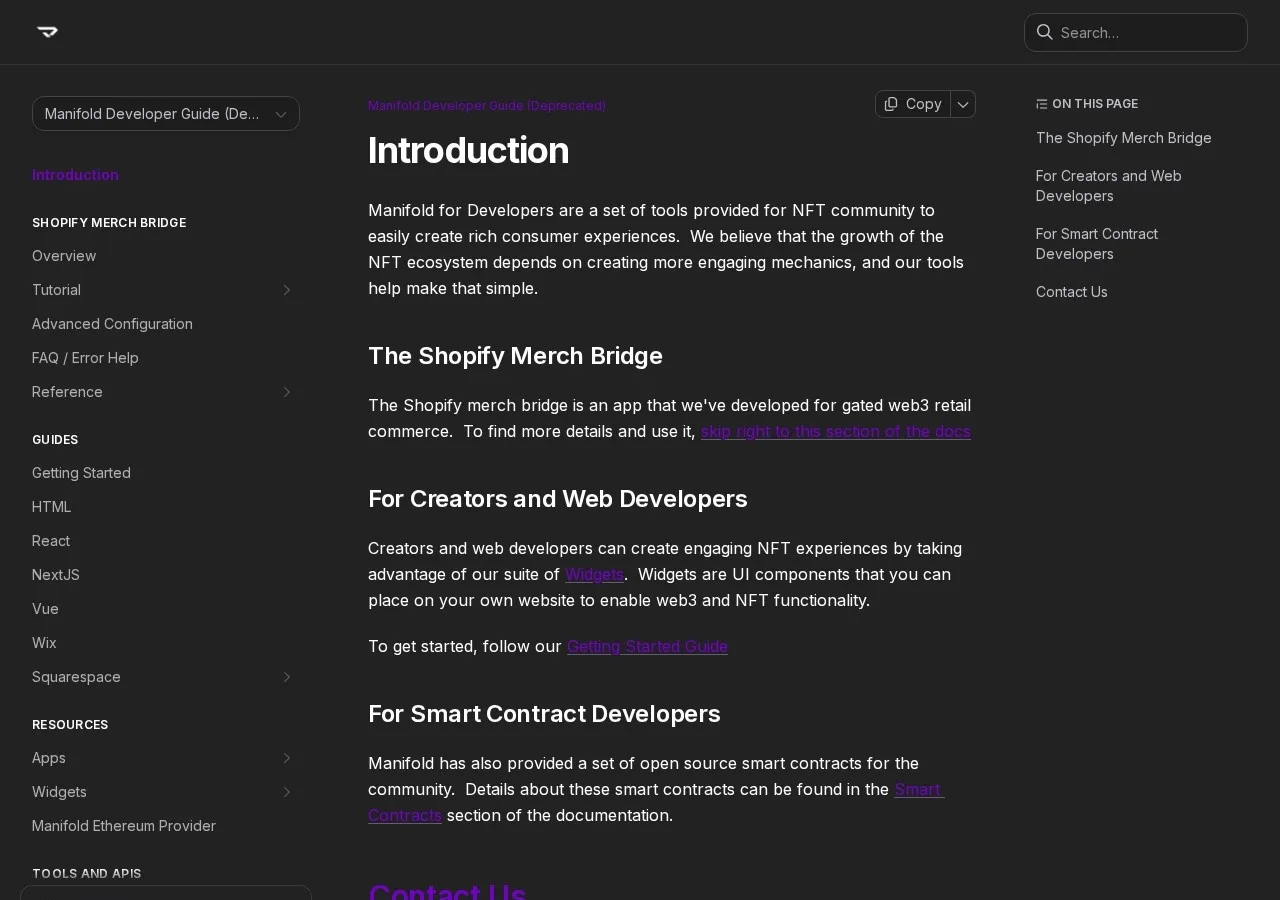
Manifold Developer tools
APIs, smart contract apps, and web widgets that let developers build custom minting and checkout experiences.
Manifold screenshots
What users say about Manifold
There is insufficient user feedback to assess Manifold, as available discussions do not mention specific product features, praise, or complaints.
Based on 1 Reddit posts and comments from the last 12 months, checked Oct 20, 2026. These are posts by users on other sites, not reviews submitted on CryptoReview.
User reviews
No user reviews yet. Have you used Manifold? Share your experience below.
FAQ
What company is behind Manifold?
Manifold is developed and operated by Manifold Technologies Ltd., an entity focused on creator sovereignty and decentralized smart contract infrastructure.
Which blockchains does Manifold support?
Manifold supports Ethereum, Base, and OP Mainnet for deploying contracts, minting tokens, and running drops.
Does Manifold require KYC identity verification?
No, Manifold operates non-custodially via connected crypto wallets, requiring no identity verification to mint or collect tokens.
Does Manifold have a native token?
No, Manifold does not have an official platform token or rewards program, with transactions settling directly in supported network currencies such as ETH.
How does Manifold differ from traditional NFT marketplaces?
Unlike standard marketplaces that mint tokens onto shared platform contracts, Manifold deploys autonomous, creator-owned smart contracts that give artists total control over provenance and distribution.
Latest from Manifold on X
Limited edition print run: https://t.co/67Le1nMGxi https://t.co/QJ3TYSrzxZ
Updates this week on https://t.co/nWSeu4xR7p
New
- Home: items sorted as Active, Tokens and Ended
- Search: find any token quickly
- Sell: List for sale and Relist button on every token
- Archive: hide ended drops in workspace
- Earnings: today's total, latest sales and bids
Updated
- Contracts: each shows its latest artwork, yay!
- Token previews: show whole artwork, uncropped
Feedback and bug reports appreciated. Have a great weekend all
Sold for 20.88 ETH ($50,152 USD) via @SuburbsGallery with @manifoldxyz https://t.co/DWAdKF6gsU

Cities // Paris by @EfdotStudio is live:
https://t.co/uJnuTgnSCx
Built with Manifold’s Creator Agent, this brings together 15 limited editions and original 1/1s, presented by @iconicculture at @ArtBasel Paris.
https://t.co/uJnuTgnSCx
Built with Manifold’s Creator Agent, this brings together 15 limited editions and original 1/1s, presented by @iconicculture at @ArtBasel Paris.
Recent public posts from @manifoldxyz, shown as published. Not reviewed or endorsed by CryptoReview.
Alternatives to Manifold

On-chain generative art marketplace and launchpad on Ethereum, Arbitrum, and Base
No KYCEthereum · Arbitrum +1EnforcedArt
Multichain NFT minting and tokenization infrastructure supporting Cardano, Solana, and Aptos
Bitcoin · Solana +2EnforcedArt · Collectibles +1

Multi-chain gaming and collectibles NFT marketplace built on the AtomicAssets standard
Polygon · Avalanche +1EnforcedGaming · Collectibles +1
Tezos digital art and NFT marketplace with 5% seller fees and royalty support
OtherEnforcedArt
Solana NFT and real-world asset ecosystem featuring embedded licensing and the AART token
Solana · SuiArt · Collectibles +1Launchpad
Bitcoin Ordinals marketplace operating on the Internet Computer with zero gas fees and fast finality
Bitcoin · OtherOrdinals / Inscriptions