
Help us shape Marfa Weekend programming for next year.
Send us your feedback! 👇
Art Blocks
On-chain generative art marketplace and launchpad on Ethereum, Arbitrum, and Base
3.9/ 5
Our score
Good
Chains
EthereumArbitrumBase
Marketplace fee
2.5%
Creator royalties
Enforced
Launchpad
Yes
Aggregates other markets
No
What is Art Blocks?
Art Blocks is a specialized NFT marketplace and primary launchpad dedicated entirely to on-chain generative art. Founded in 2020 by Erick Calderon, known online as Snowfro, the platform runs on the core design principle that creative code itself is the artwork. Rather than hosting static images or animation files on external servers, artists upload their creative algorithms directly to the blockchain, where outputs are computed in real time from mint transaction hashes.
How the platform works
Art Blocks organizes its releases across four primary tracks: Curated, which presents juried projects evaluated by an internal curatorial team; Studio, which hosts artist-directed drops; Collaborations with external cultural partners; and Engine, a white-label technical architecture for external initiatives. Smart contracts run across Ethereum mainnet, Arbitrum, and Base. Because the visual output is constructed on-chain by the Art Blocks Generator, collectors can reproduce the exact deterministic artwork in any web browser without relying on centralized cloud hosting or off-chain servers. For complex projects requiring shared JavaScript frameworks, code dependencies such as p5.js are preserved through the Art Blocks Dependency Registry.
Marketplace mechanics and fees
Art Blocks charges a 2.5% platform fee on secondary market trades across its platform and partner contracts, such as OpenSea integrations. The platform operates on non-custodial smart contracts, meaning collectors maintain direct ownership of their ERC-721 tokens in self-custody wallets without undergoing identity verification (KYC). Primary sales use custom minter mechanisms, including Dutch auctions and allowlists designed to deter automated bot manipulation, while enforcing creator royalties on secondary transactions handled via the Seaport protocol.
Track record and ecosystem risks
Since its launch in 2020, Art Blocks has logged over $1B in historical trading volume across its project verticals. Its Curated drops, such as Calderon's own Chromie Squiggle, have been exhibited in cultural institutions and auctioned at established fine-art auction houses like Christie's. In addition to collector tooling, the platform maintains an open-source Model Context Protocol server that enables automated AI agents to inspect projects, check minter parameters, and build unexecuted transactions. Collectors face typical digital asset risks, including extreme secondary-market price volatility and liquidity dry-ups on niche or non-curated releases. Ethereum mainnet primary mints can also face volatile transaction fees during competitive drops.
Founders
Erick CalderonFounder and CEO
Known as Snowfro and creator of the Chromie Squiggle project.
Best for:Generative digital art collectorsCreative coders releasing algorithmic artNon-custodial collectors using Ethereum and layer-2s
Pros and cons
Pros
- Artwork scripts are stored and executed directly on-chain rather than on centralized servers
- Multichain support covers Ethereum mainnet, Arbitrum, and Base
- Enforces creator royalties on secondary market trades
- Over $1B in cumulative platform trading volume
- Requires no KYC checks for minting, buying, or selling
Cons
- Charges a 2.5% secondary marketplace fee
- Secondary trading liquidity remains thin outside of top curated collections
- High Ethereum network gas fees can significantly inflate primary minting costs
Our review
3.9/5
Good
Art Blocks offers fully on-chain generative art minting across three chains, but its narrow algorithmic focus and 2.5% secondary fee exclude general NFT collectors.
Founded in 2020 by Erick Calderon (Snowfro), Art Blocks is an Ethereum-focused generative art platform and marketplace. Unlike marketplaces that rely on static image assets hosted on centralized servers or IPFS, Art Blocks stores the artist's generation script directly on-chain. When a collector mints an ERC-721 token, the transaction hash seeds the algorithm live, rendering an entirely unique visual output through the browser via the Art Blocks On-Chain Generator.
The ecosystem spans three networks: Ethereum mainnet, Arbitrum, and Base. The platform features four project tiers: the selective Curated vertical, artist-managed Studio projects, Collaborations, and the white-label Engine architecture. On secondary trades, Art Blocks charges a 2.5% marketplace fee and enforces creator royalties. Total trading volume surpassed $1B across its ecosystem by April 2026, driven by collections such as Chromie Squiggle.
However, the platform has clear constraints:
- Its catalog covers only generative and programmatic digital art, excluding general collectibles and profile-picture NFTs.
- Unlike generalized aggregators, it does not route bids across competing marketplaces.
- High gas costs can occur when minting or running complex generative scripts directly on Ethereum mainnet.
Art Blocks provides technical creator infrastructure, including custom minters via the Minter Suite, SeaDrop integration, and an MCP (Model Context Protocol) server. The MCP server lets AI agents query catalog parameters and build transactions. The platform suits serious digital art collectors and creative coders seeking permanent on-chain provenance. Buyers seeking mass-market collectibles or zero-fee trading should use general NFT aggregators instead.
Specs
| KYC required ⓘ | No · unverified |
|---|---|
| Chains | Ethereum, Arbitrum, Base · unverified |
| Marketplace fee | 2.5% · unverified |
| Creator royalties | Enforced · unverified |
| Focus | Art · unverified |
| Launchpad | Yes · unverified |
| Aggregates other markets | No · unverified |
| Mobile app | Yes · unverified |
| Zero marketplace fee | No · unverified |
| Points or rewards program | No · unverified |
Not disclosed by the provider: Token.
Data from the provider's website and public sources. Fees and availability change; confirm on the official site before you sign up.
Key features
On-chain generative minting
Artists deploy generative algorithms on-chain, rendering unique deterministically computed media directly from each minting transaction hash.
Multichain contract deployment
Supports generative art minting and trading across Ethereum mainnet, Arbitrum, and Base.
Curated and studio verticals
Organizes drops across juried Curated selections, artist-owned Studio releases, and external brand Collaborations.
Dependency registry
Hosts essential generative code libraries like p5.js directly on-chain to prevent external script failures.
Art Blocks Engine
Provides white-label smart contract architecture for third-party platforms building custom generative minting systems.
AI agent integration
Runs a Model Context Protocol server that lets AI agents query project metadata and construct transactions.
Inside Art Blocks
Curated
The flagship juried collection vertical selected directly by the Art Blocks curatorial team.
Studio
Artist-owned generative art drops featuring a lighter-touch curation process.
Collaborations
Generative digital art co-productions developed alongside partner cultural and community organizations.
Engine
A white-label protocol implementation enabling third-party organizations to launch branded generative art projects on-chain.
Secondary marketplace
A community trading platform supporting listings, sales, and enforced creator royalties across all Art Blocks projects.
MCP Server
A Model Context Protocol server that lets AI assistants query on-chain catalog data, inspect wallets, and construct unsigned transactions.
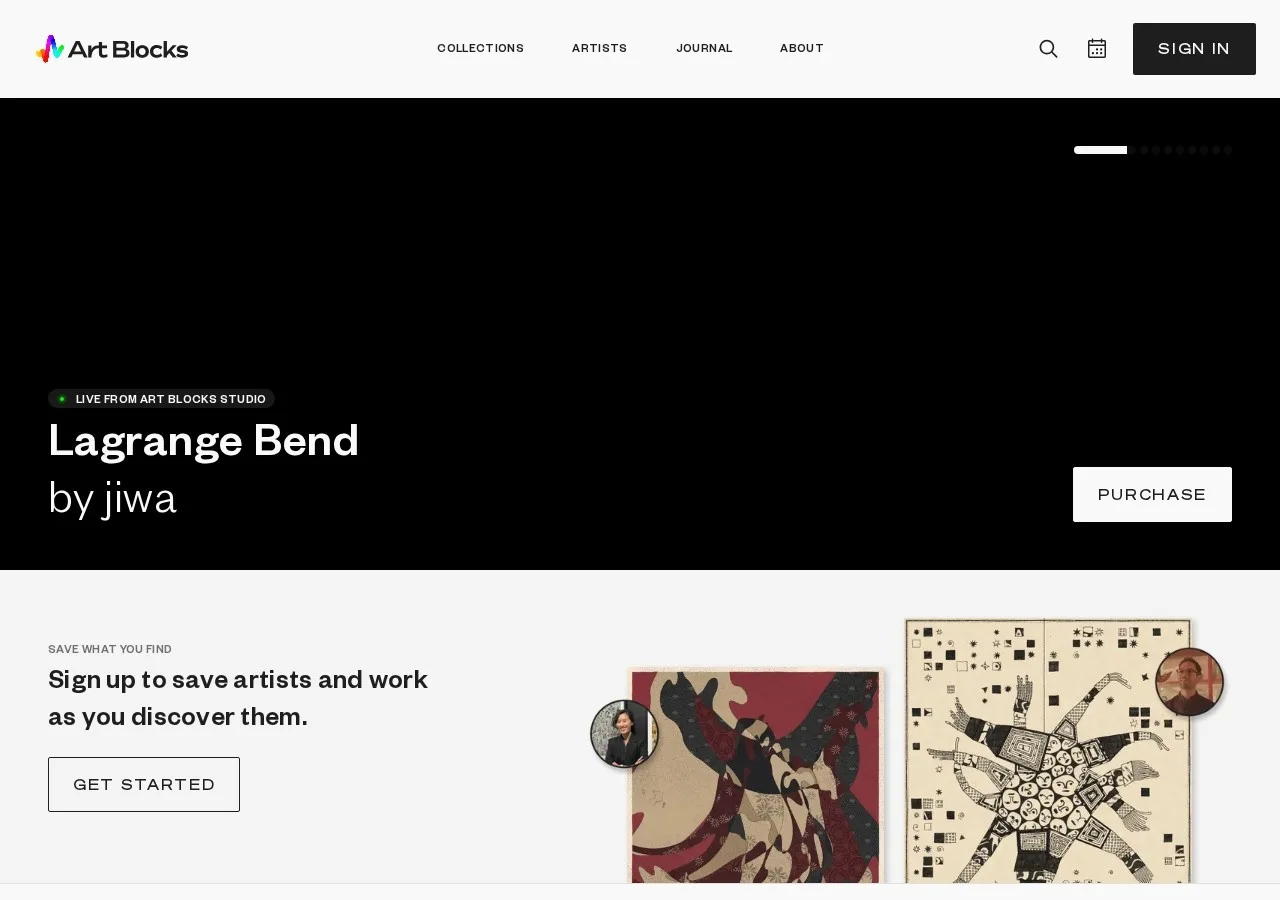
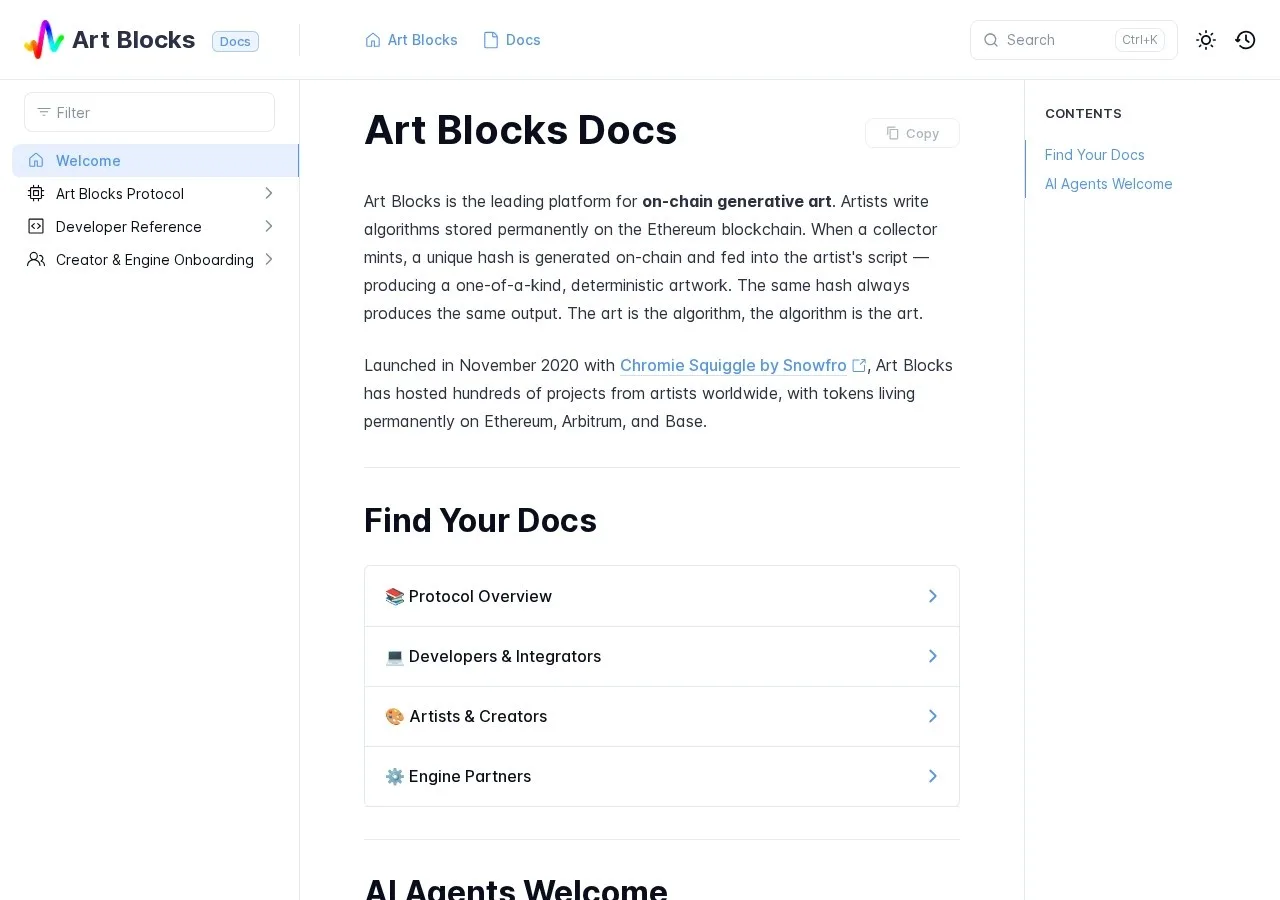
Art Blocks screenshots
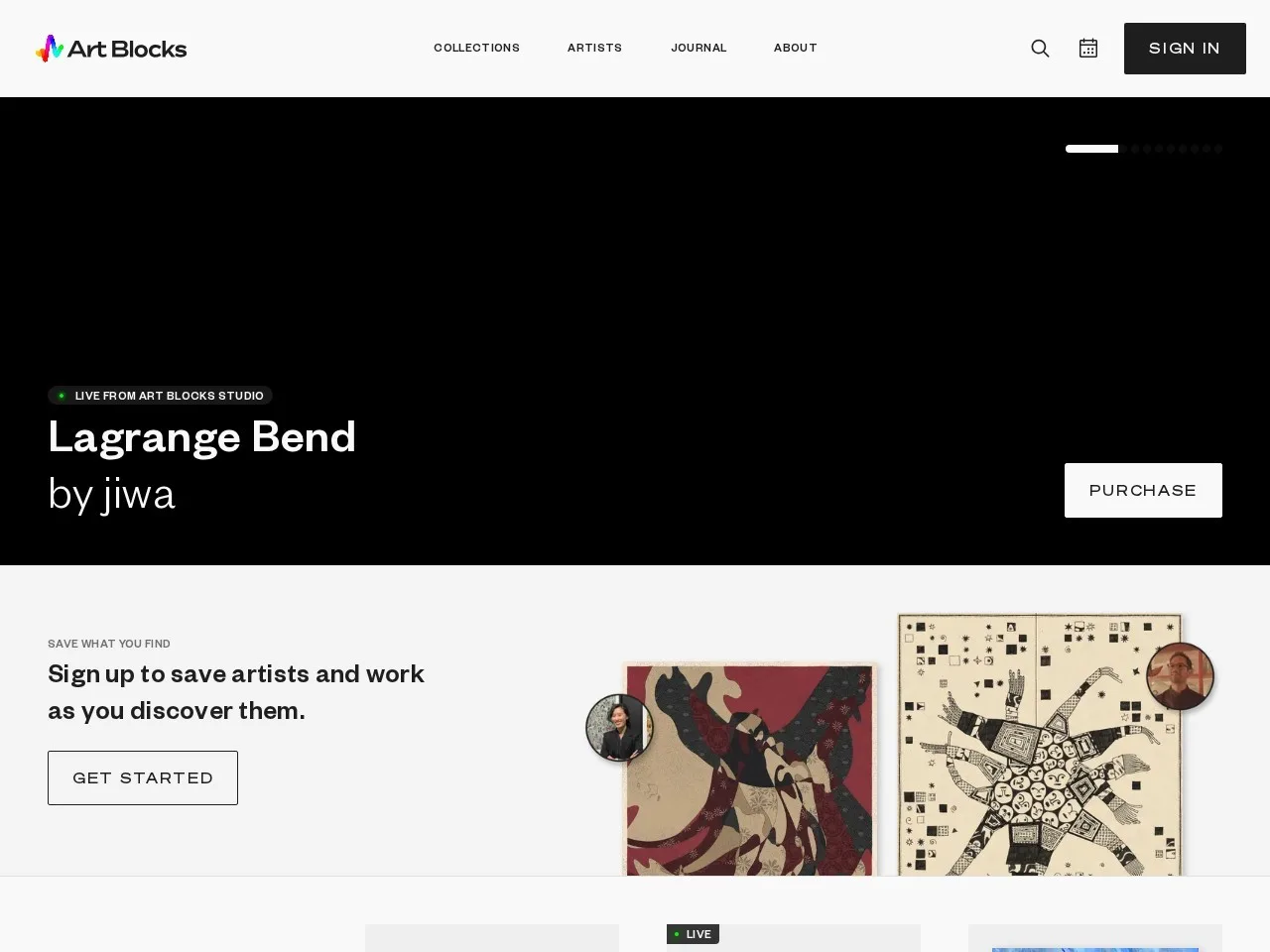
What users say about Art Blocks
There is not enough user feedback available to assess praise or complaints regarding the platform.
Based on 1 Reddit posts and comments from the last 12 months, checked Oct 23, 2026. These are posts by users on other sites, not reviews submitted on CryptoReview.
User reviews
No user reviews yet. Have you used Art Blocks? Share your experience below.
FAQ
Who founded Art Blocks?
Art Blocks was founded in 2020 by Erick Calderon, known online as Snowfro. He created the platform alongside its first project, Chromie Squiggle.
What chains does Art Blocks support?
Art Blocks supports Ethereum mainnet, Arbitrum, and Base. Users connect Web3 wallets directly to mint and trade on these networks.
What fees does Art Blocks charge?
Art Blocks charges a 2.5% marketplace fee on secondary sales. The platform also enforces secondary creator royalties on its native marketplace.
Does Art Blocks require KYC?
No, Art Blocks is a decentralized non-custodial marketplace that does not require identity verification to browse, mint, or trade. Collectors interact directly via Web3 crypto wallets.
Does Art Blocks have its own token?
No, Art Blocks does not have a native cryptocurrency or governance token. All transactions settle in the native tokens of the supported blockchains, primarily ETH.
How does Art Blocks store NFT artwork?
Art Blocks stores creative algorithms directly on-chain rather than saving static media files on servers. Outputs are assembled dynamically in the browser by passing the mint transaction hash into the stored script.
Latest from Art Blocks on X
Generative papertoys!
Generate. Print. Build.
The Hexa Quillsplice series from first-time AB Studio artist @mlibty hails from the larger Hashzznible Collective series of papertoys that includes several different buildable characters.
Hexa Quillsplice is the first generative, animated character that collectors can interact with to create unique renditions.
Releasing Monday, Nov 2 on Art Blocks Studio
New work from @ixnayokay releases today on Art Blocks Studio.
We're already missing Marfa ...
To everyone who attended, please take a moment to fill out our survey.
Your feedback is very important for helping us plan 2027. Thank you! 🙏
https://t.co/7TWYTwlFGp https://t.co/nQNcy1bjLX
To everyone who attended, please take a moment to fill out our survey.
Your feedback is very important for helping us plan 2027. Thank you! 🙏
https://t.co/7TWYTwlFGp https://t.co/nQNcy1bjLX

The survey is out! Please take a moment to tell us about your Marfa Weekend experience! We would be so grateful❣️
https://t.co/7TWYTwlFGp
https://t.co/7TWYTwlFGp
Recent public posts from @artblocks_io, shown as published. Not reviewed or endorsed by CryptoReview.
Alternatives to Art Blocks
Creator-owned smart contracts and direct NFT minting across Ethereum, Base, and OP Mainnet
No KYCEthereum · BaseEnforcedArt
Multichain NFT minting and tokenization infrastructure supporting Cardano, Solana, and Aptos
Bitcoin · Solana +2EnforcedArt · Collectibles +1
Multi-chain gaming and collectibles NFT marketplace built on the AtomicAssets standard
Polygon · Avalanche +1EnforcedGaming · Collectibles +1
Tezos digital art and NFT marketplace with 5% seller fees and royalty support
OtherEnforcedArt
Solana NFT and real-world asset ecosystem featuring embedded licensing and the AART token
Solana · SuiArt · Collectibles +1Launchpad
Bitcoin Ordinals marketplace operating on the Internet Computer with zero gas fees and fast finality
Bitcoin · OtherOrdinals / Inscriptions