

📢 Attention developers and node operators:
We strongly recommend updating to the latest version of LND to mitigate against the Linux kernel CVE.
https://t.co/S5URGlN55y

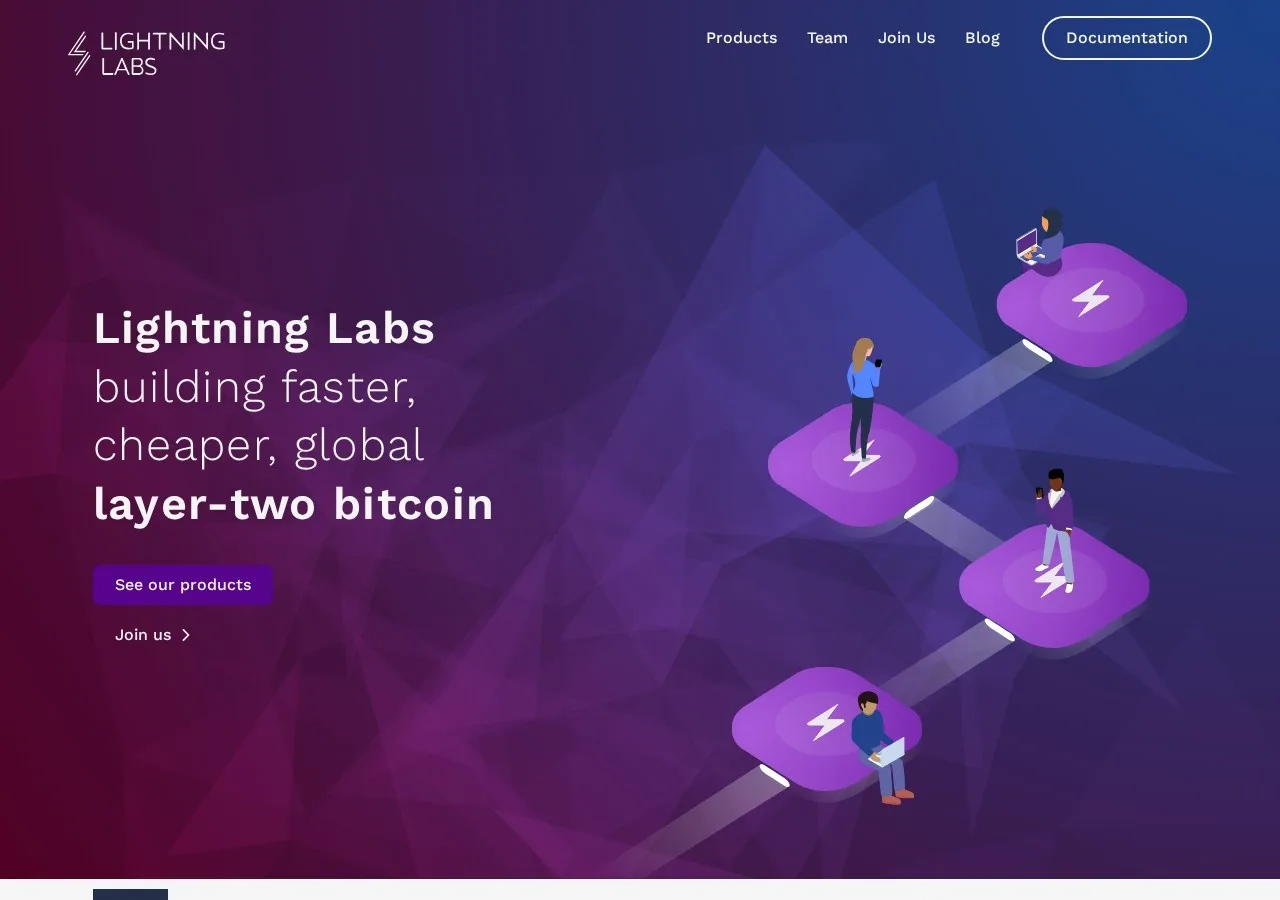
Lightning Labs
Bitcoin layer-two node software, liquidity tools, and Taproot Assets protocols founded in 2016
3.4/ 5
Our score
Fair
Services
Developer toolingRPC / nodes
Chains supported
2
Free tier
Yes
Pricing from
Free, open-source software
What is Lightning Labs?
Lightning Labs builds core infrastructure and open-source software for the Bitcoin Lightning Network. Its products include the Lightning Network Daemon (LND), non-custodial liquidity protocols, and asset issuance protocols for Bitcoin and Lightning.
Leadership and backing
The company was founded in 2016 by Elizabeth Stark and Olaoluwa Osuntokun. Stark, serving as CEO, previously lectured at Stanford and Yale and was a researcher at the Berkman Center for Internet & Society at Harvard. Osuntokun, who serves as CTO, holds degrees in computer science from UC Santa Barbara and specializes in applied cryptography and distributed systems. Lightning Labs has reached Series B stage and maintains a team of 11 to 50 employees.
Core software and protocols
Lightning Labs delivers non-custodial tooling spanning routing, asset issuance, and channel management. LND is a complete implementation of a Lightning Network node. Taproot Assets, released under the BSD-2-Clause license, uses Taproot outputs and Sparse Merkle Trees to mint and transfer assets such as stablecoins across Bitcoin and Lightning channels without congesting the base layer. Complementing these are Lightning Terminal for node health management, Lightning Loop for non-custodial submarine swaps between on-chain and off-chain states, Lightning Pool for peer-to-peer liquidity markets, and the L402 protocol designed for metered API access. In October 2026, the team introduced LayerTree, a covenant-based architecture enabling shared UTXOs across many participants.
Pricing and software access
LND and Taproot Assets are open-source and free to install without platform subscriptions. Node operators pay standard on-chain Bitcoin transaction fees when opening and closing payment channels. Routing nodes define their own base fees and proportional fee rates, charged in millisatoshis and parts per million (ppm) on forwarded payments.
Security track record and limitations
In September 2019, Lightning Labs disclosed vulnerabilities CVE-2019-12998, CVE-2019-12999, and CVE-2019-13000, which affected multiple Lightning implementations and required urgent upgrades to LND v0.7.1-beta to avoid fund exposure. While channel limits of 16.7 million satoshis historically mitigated vulnerability impact, operating Lightning infrastructure involves operational overhead, including channel rebalancing, monitoring watchtowers against fraudulent closes, and capital lockups.
Founders
Elizabeth StarkCEO & Co-Founder
Joseph PoonCo-Founder
Olaoluwa OsuntokunCTO & Co-Founder
Best for:Bitcoin routing node operatorsDevelopers building Lightning payment appsTeams issuing stablecoins on Bitcoin
Pros and cons
Pros
- Open-source core node implementation and protocols
- Non-custodial software for operators who control their own funds and keys
- Enables stablecoins and asset transfers over Lightning via Taproot Assets
- Bitcoin infrastructure company founded in 2016
Cons
- Requires active liquidity management and watchtowers to protect channel states
- Channel openings and closures remain subject to on-chain Bitcoin network fees
- Past security vulnerabilities, including three CVE disclosures in September 2019, required urgent patching
Our review
3.4/5
Fair
Lightning Labs offers mature open-source Bitcoin and Lightning infrastructure, but its narrow chain coverage and node-operation complexity limit its fit for general infrastructure teams.
Lightning Labs is a Bitcoin and Lightning Network infrastructure company founded in 2016 by Elizabeth Stark and Olaoluwa Osuntokun. Stark is CEO and co-founder, while Olaoluwa Osuntokun is CTO and co-founder. Its main products are open-source software and protocols for Bitcoin and the Lightning Network.
The strongest product is Lightning Network Daemon (LND), a complete implementation for running non-custodial Lightning nodes. Lightning Terminal adds a web dashboard and liquidity tools for node operators. Loop handles non-custodial submarine swaps between on-chain Bitcoin and Lightning channels, while Pool provides a peer-to-peer liquidity marketplace. Taproot Assets extends Bitcoin and Lightning to issued assets, including stablecoin use cases. L402 supports pay-per-use API access and applications that use Lightning payments.
Coverage is focused: the documented networks are Bitcoin and the Lightning Network. The software is distributed globally under open-source licenses, including BSD-2-Clause for Taproot Assets. Operators can set Lightning routing fees through a base fee and a fee rate, but those are node policies rather than a simple Lightning Labs service price.
The company develops LND, Lightning Terminal, and Taproot Assets. It reached Series B stage. The main operational weakness is that running LND still requires node, channel, liquidity, and key management. Infrastructure remains exposed to routing failures, liquidity shortages, and software bugs.
Lightning Labs disclosed three Lightning implementation vulnerabilities in September 2019 and recommended upgrading to lnd v0.7.1-beta or later to prevent fund loss. The issues were patched, but they show the consequences of operating payment infrastructure without timely upgrades. Lightning Labs fits developers and Bitcoin teams that want control over their stack and can operate nodes.
Specs
| Services | Developer tooling, RPC / nodes · unverified |
|---|---|
| Chains supported | 2 · unverified |
| Free tier | Yes · unverified |
| Pricing from | Free, open-source software · unverified |
| Open source | Yes · unverified |
| Free tier limits | Unrestricted self-hosted software · unverified |
Not disclosed by the provider: Enterprise SLA, Token, Uptime SLA, Server regions.
Data from the provider's website and public sources. Fees and availability change; confirm on the official site before you sign up.
Key features
Lightning Network Daemon
LND provides a complete, self-custodial node implementation for sending, receiving, and routing Bitcoin payments over layer-two channels.
Taproot Assets protocol
Enables the issuance and transfer of stablecoins and fungible assets on Bitcoin and Lightning via off-chain metadata commitments.
Lightning Terminal management
Provides a browser interface for node operators to monitor channel liquidity, analyze routing health, and access operational tooling.
Submarine swaps with Loop
Allows non-custodial exchanges between on-chain Bitcoin and off-chain channel balances to rebalance liquidity without channel teardown.
L402 payments protocol
Combines HTTP status codes and Lightning invoices to support pay-per-request API authentication for services and automated software agents.
LayerTree scaling architecture
Enables up to one million users to share a single Bitcoin UTXO using covenants while preserving unilateral exit rights.
Inside Lightning Labs
Lightning Network Daemon
Lightning Network Daemon, or LND, is an open-source implementation for running a non-custodial Lightning node. Operators can manage payment channels, invoices, routing, watchtowers, and channel fee policies.
Lightning Terminal
Lightning Terminal is a web interface for node operators. It combines a node dashboard with a network explorer and liquidity tools, and includes an alpha AI chat feature introduced in August 2026.
Taproot Assets
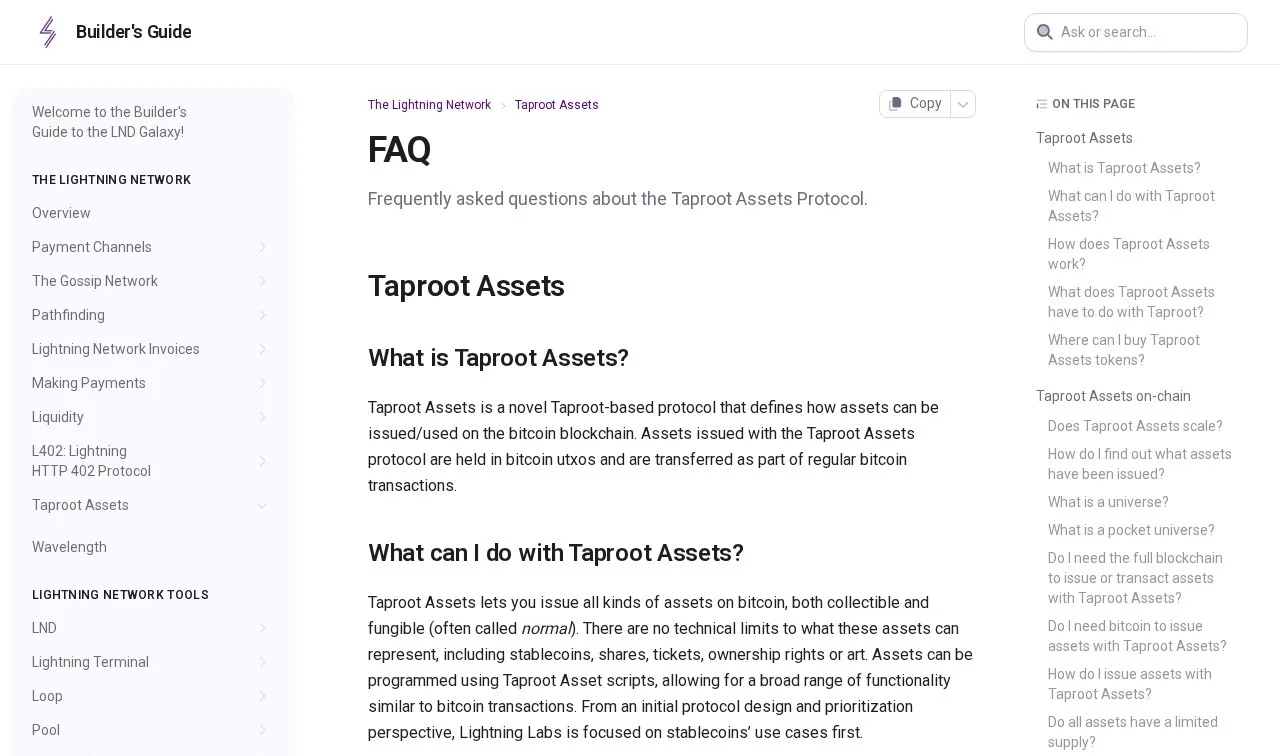
Taproot Assets is a Taproot-based protocol for issuing and transferring collectible or fungible assets on Bitcoin. It uses asset proofs and can operate without scanning the full blockchain through Neutrino mode.
Lightning Loop
Lightning Loop is a non-custodial submarine swap service. It moves funds between on-chain Bitcoin and off-chain Lightning channels.
Lightning Pool
Lightning Pool is a peer-to-peer marketplace and liquidity tool for Lightning Network node operators. It helps operators obtain or allocate channel liquidity.
L402
L402 is an internet-native payment protocol for pay-per-use APIs and software applications. It connects API access and other application actions with Lightning payments.
LayerTree
LayerTree is a non-custodial Bitcoin scaling solution connected to Lightning. Its design uses covenants so one UTXO can be shared by up to a million users, with users able to exit in a single transaction.
Lightning Labs screenshots
What users say about Lightning Labs
Discussions referencing Lightning Labs primarily consist of informational links to its technical documentation and developer blog posts. There are no consistent user praises or complaints present in the feedback.
Based on 5 Reddit posts and comments from the last 12 months, checked Oct 21, 2026. These are posts by users on other sites, not reviews submitted on CryptoReview.
User reviews
No user reviews yet. Have you used Lightning Labs? Share your experience below.
FAQ
Who founded Lightning Labs?
Lightning Labs was founded in 2016 by Elizabeth Stark and Olaoluwa Osuntokun. Stark is CEO and co-founder, and Osuntokun is CTO and co-founder.
What fees does Lightning Labs charge?
Lightning Labs documents configurable Lightning routing fees rather than a standard platform fee. Node operators can set a fixed base fee and a proportional fee rate for forwarded payments.
Where is Lightning Labs available, and does it require KYC?
Lightning Labs software is distributed globally as open-source software for Bitcoin and the Lightning Network.
Is Lightning Labs safe to use?
LND is non-custodial open-source software, so operators control their node funds and keys. Lightning Labs disclosed CVE-2019-12998, CVE-2019-12999, and CVE-2019-13000 in September 2019, with lnd v0.7.1-beta or later recommended to prevent fund loss.
What chains and assets does Lightning Labs support?
The documented network scope is Bitcoin and the Lightning Network. Taproot Assets supports issued assets on Bitcoin, including collectible and fungible assets, with Lightning Labs focused on stablecoin use cases.
Does Lightning Labs have a token?
Taproot Assets is a protocol for issuing and transferring assets on Bitcoin, not a Lightning Labs token.
Latest from Lightning Labs on X
Wavelength is now live on mainnet! 🌊
Humans and agents can now send and receive bitcoin payments with the Wavelength SDK.
A few API calls, self-custodial from the first command, with no node or liquidity to manage.
Read more and start building: https://t.co/gyXUMKVMlo
Humans and agents can now send and receive bitcoin payments with the Wavelength SDK.
A few API calls, self-custodial from the first command, with no node or liquidity to manage.
Read more and start building: https://t.co/gyXUMKVMlo
Introducing LayerTree, a non-custodial scaling solution on bitcoin that connects to Lightning.
Using covenants, one UXTO can be shared by a million users. Any user can leave at any time in a single transaction. Users don't need to be online to receive. Funds never time out.
LayerTree is the next step in bringing bitcoin to billions.
Learn more: https://t.co/4oEwnwWLBC
Using covenants, one UXTO can be shared by a million users. Any user can leave at any time in a single transaction. Users don't need to be online to receive. Funds never time out.
LayerTree is the next step in bringing bitcoin to billions.
Learn more: https://t.co/4oEwnwWLBC
Recent public posts from @lightning, shown as published. Not reviewed or endorsed by CryptoReview.
Alternatives to Lightning Labs

Open-source smart contract libraries and enterprise security tooling backing over $38T in transfers
Developer toolingFree tier10 chains supported

Blockchain infrastructure platform supporting 100+ chains with a free 30M-compute-unit tier
RPC / nodes · Data APIs +3Free tier100 chains supported

Managed blockchain infrastructure across 70+ chains with a free 3M-request monthly tier
RPC / nodes · IndexingFree tier70 chains supported

EVM development and simulation platform supporting transaction debugging and testing across 50+ chains
Developer toolingFree tier50 chains supported

Open-source distributed ledger foundation hosting Fabric, Besu, and Cacti under the Linux Foundation
RPC / nodes · Developer toolingFree tier2 chains supported

Blockchain infrastructure platform providing RPC nodes and data streams across 76 networks
RPC / nodes · Data APIsFree tier76 chains supported