






"ZK stands for integrity of operations. It's very important in the age of AI to diversify your defenses and ZK gives institutions a new protection class."
@gluk64 discusses on @therollupco why ZK is the foundational tech that will connect institutions while elevating trust. https://t.co/erGpSwPIzD

ZKsync
EVM-compatible ZK rollup ecosystem settling on Ethereum with over 700M processed transactions
3.7/ 5
Our score
Good
Layer
Layer 2
Consensus / design
ZK rollup
Native token
ZK
Block time
~1s
Typical transaction fee
$0.05
EVM compatible
Yes
What is ZKsync?
It uses cryptographic validity proofs to verify transactions offchain before submitting them to Ethereum mainnet for settlement. Beyond its public general-purpose execution environment, ZKsync Era, the ecosystem includes the ZK Stack framework for deploying customizable, interoperable ZK chains that share security and liquidity.
Team and financial backing
ZKsync is developed by Matter Labs, co-founded by CEO Alex Gluchowski, a software architect with more than 15 years of technical engineering and startup experience. The project initiated development in 2020 with initial backing from the Ethereum Foundation. Matter Labs subsequently raised capital from venture firms including Andreessen Horowitz (a16z), Union Square Ventures, Placeholder, and Coinbase Ventures.
Architecture and core mechanics
Transactions on ZKsync Era are executed by an offchain sequencer and bundled into zero-knowledge proofs settled directly on Ethereum. Smart contracts run on an EVM-compatible execution engine, allowing developers to write contracts in Solidity or Vyper using standard developer tooling such as Foundry and Hardhat. The protocol features native account abstraction at the protocol level, removing the need for external ERC-4337 wrappers and enabling passkey authentication and gas sponsorship through paymasters. Proving infrastructure includes the Boojum system and the RISC-V Airbender prover, which targets transfer costs of approximately $0.0001.
Network track record and adoption
Development on ZKsync began in the summer of 2020, followed by the mainnet launch of ZKsync Era in 2023. By October 2026, the network ecosystem processed over 700 million transactions and secured more than $4B in assets across its public and institutional deployments. The ecosystem connects 18 separate chains, including enterprise implementations like the Cari Network and Deutsche Bank's DAMA 2 project. In September 2026, Matter Labs open-sourced Prividium, its permissioning engine for regulated institutions. Security protocols include independent third-party audits and a bug bounty program offering payouts up to $1.1M.
Trade-offs and architectural risks
Users also face smart contract upgrade risks and standard bridging counterparty risks when moving liquidity between Ethereum Layer 1 and Layer 2 environments.
Founders
Alex GluchowskiCo-founder & CEO
Software architect with over 15 years of startup engineering experience, previously co-founder and CTO of PaulCamper.
Best for:Developers deploying smart accounts with passkeysInstitutions building private, compliant rollupsSolidity teams seeking low-cost ZK scaling
Pros and cons
Pros
- Native protocol-level account abstraction eliminates the need for separate ERC-4337 infrastructure
- Median transaction fees are around $0.05
- Over 700M transactions processed and $4B in network value secured by October 2026
- EVM compatibility lets developers deploy existing Solidity and Vyper contracts directly
- Maximum bug bounty reward of $1.1M for reported vulnerabilities
Cons
- Layer 1 finality on Ethereum takes several minutes due to ZK proof batching
- Cross-chain transfers rely on rollup bridge contracts with smart contract risk
Our review
3.7/5
Good
ZKsync delivers fast Ethereum-secured zero-knowledge rollups with native account abstraction, and offers enterprise customization and permissioned chain options.
ZKsync is an Ethereum Layer 2 zero-knowledge rollup ecosystem developed by Matter Labs, co-founded by CEO Alex Gluchowski. Initiated in 2020 with initial support from the Ethereum Foundation, the platform launched its EVM-compatible ZKsync Era mainnet in 2023. Backed by venture firms including Andreessen Horowitz, Union Square Ventures, and Coinbase Ventures, the network uses cryptographic validity proofs rather than fraud proofs to settle transactions back to Ethereum.
ZKsync Era incorporates native account abstraction directly at the protocol level. Because of this design, developers can implement custom paymasters, session keys, and passkey onboarding without relying on an external ERC-4337 infrastructure contract. For transaction throughput, the ecosystem handles an average of 28 transactions per second on Era, with prover upgrades like Boojum and Airbender targeting subsecond block proofs and transfer costs around $0.0001. Median transaction fees sit near $0.05.
Across the entire network of 18 connected chains, Matter Labs reports over $4B in secured value and 700M processed transactions by October 2026. Public DeFi liquidity on ZKsync Era was around $14.7M on October 16, 2026. Matter Labs has developed Prividium, and ZKsync technology is used by the Cari Network and Deutsche Bank's DAMA 2 infrastructure through Prividium and tokenized deposit networks. ZKsync uses the ZK token for governance.
ZKsync suits institutional teams needing compliant, private settlement environments anchored to Ethereum, as well as developers building applications that require native smart accounts.
Specs
| Layer | Layer 2 |
|---|---|
| Consensus / design | ZK rollup |
| Native token | ZK |
| EVM compatible | Yes |
| Smart contract languages | Solidity, Vyper |
| Block time | ~1s · unverified |
| Typical transaction fee | $0.05 · unverified |
| Finality | minutes to Ethereum · unverified |
| Mainnet since | 2,023 · unverified |
| Gas paid in | ETH · unverified |
Not disclosed by the provider: Validators / sequencer, Throughput (TPS), Sequencer, Data availability.
Data from the provider's website and public sources. Fees and availability change; confirm on the official site before you sign up.
Key features
Native account abstraction
Supports smart accounts natively at the protocol level, supporting passkey onboarding and gasless transactions via paymasters.
EVM compatibility
Executes Solidity and Vyper code directly, letting developers build using standard Ethereum developer frameworks like Hardhat and Foundry.
ZK Stack framework
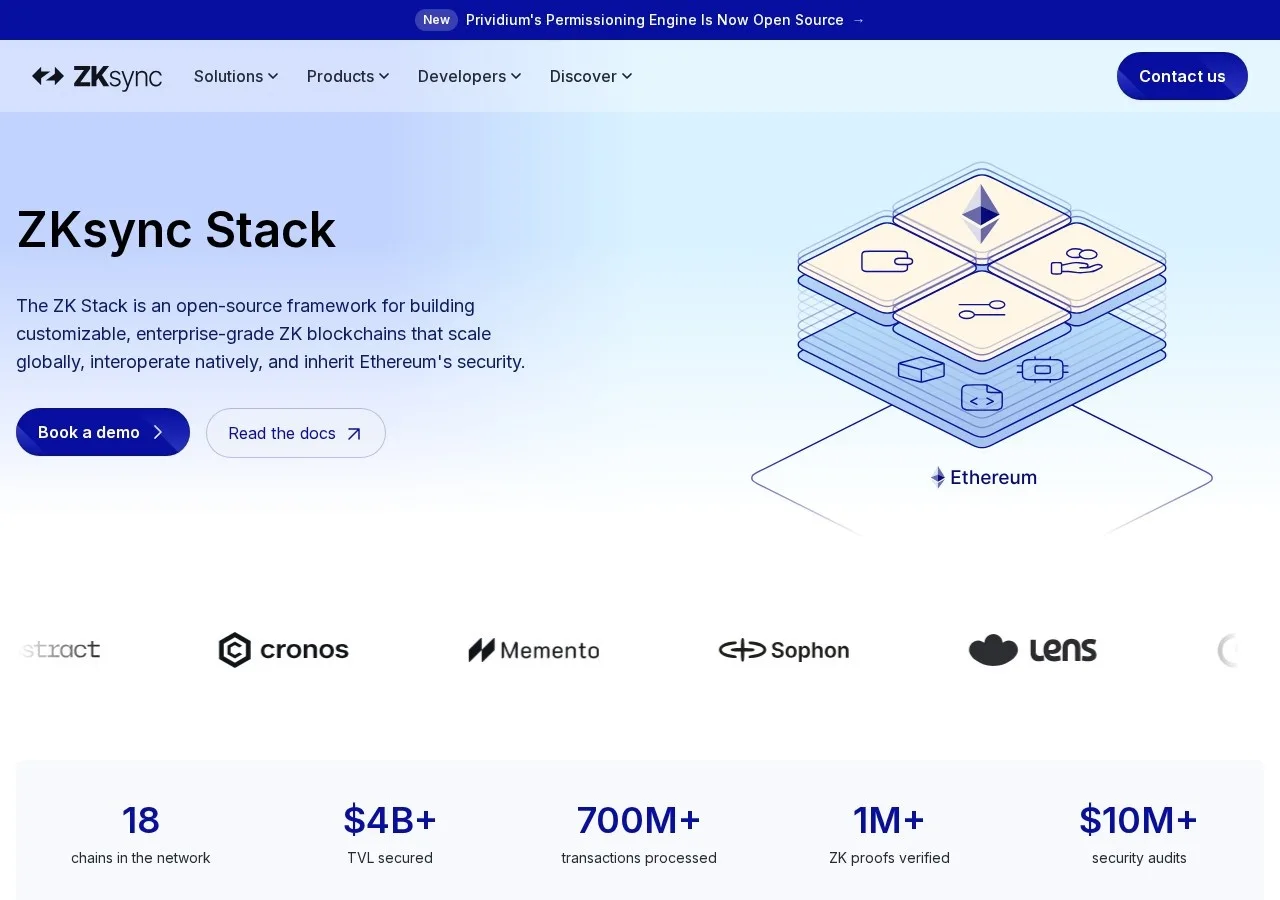
Provides an open-source modular framework to deploy customized public or private ZK chains that inherit Ethereum security.
Prividium enterprise permissioning
Offers an open-source permissioning engine designed for institutional privacy, selective data disclosure, and regulatory compliance.
ZKsync Connect settlement
Enables cross-chain interoperability with approximately 1-second network hops and atomic settlement between participating chains.
Airbender RISC-V prover
Generates subsecond block proofs on commodity GPUs, targeting transfer costs of approximately $0.0001.
Inside ZKsync
ZKsync Era
A general-purpose zero-knowledge rollup on Ethereum featuring full EVM compatibility and native protocol-level account abstraction.
ZK Stack
An open-source modular framework used to deploy customizable zero-knowledge blockchains that inherit Ethereum security.
Prividium
An enterprise-focused platform enabling institutional chains to enforce regulatory compliance, user privacy, and selective transaction disclosure.
ZKsync Connect
An interoperability protocol providing cross-chain atomic settlement and shared liquidity across public and private ZKsync networks.
Airbender
A RISC-V zero-knowledge prover designed to generate subsecond proofs using commodity hardware.
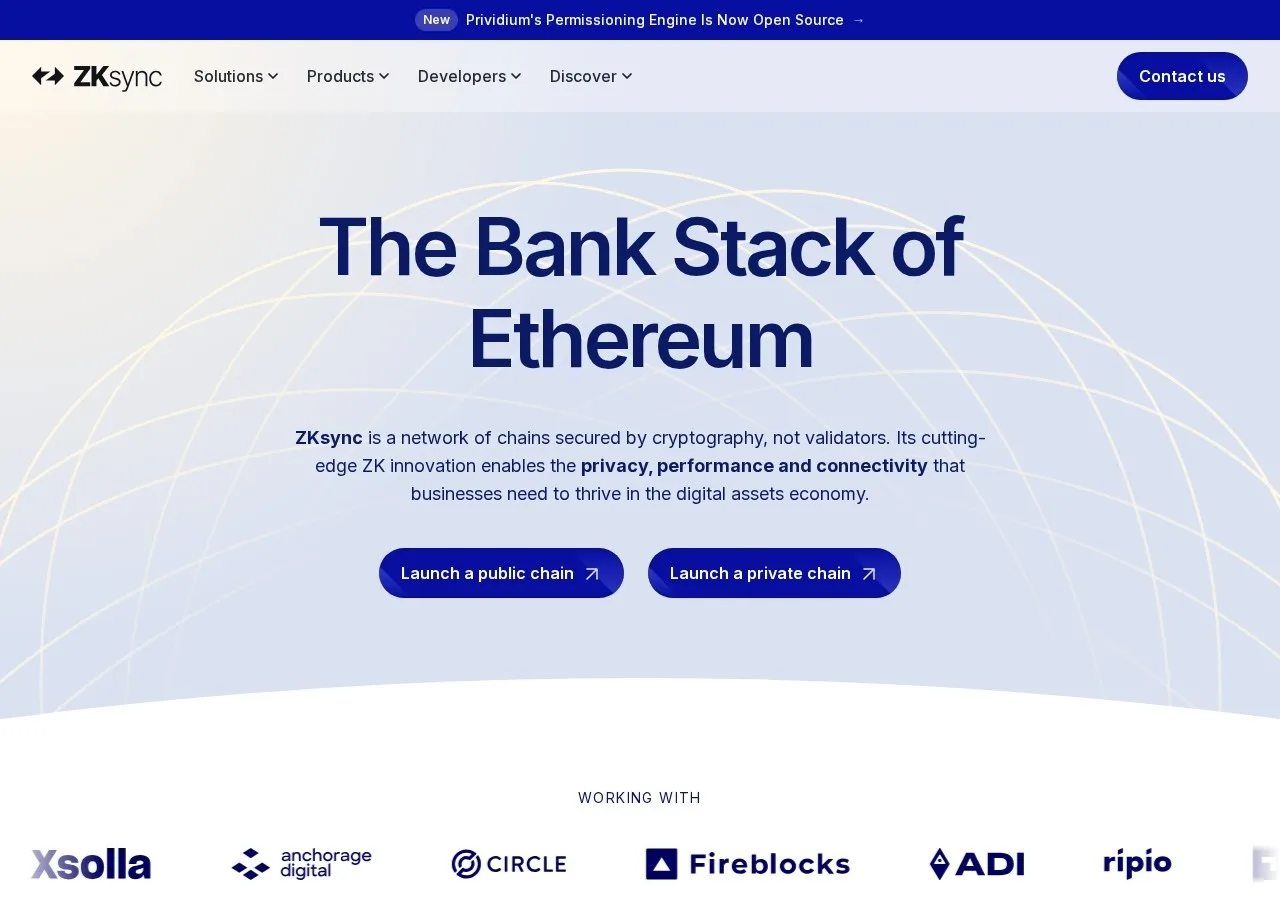
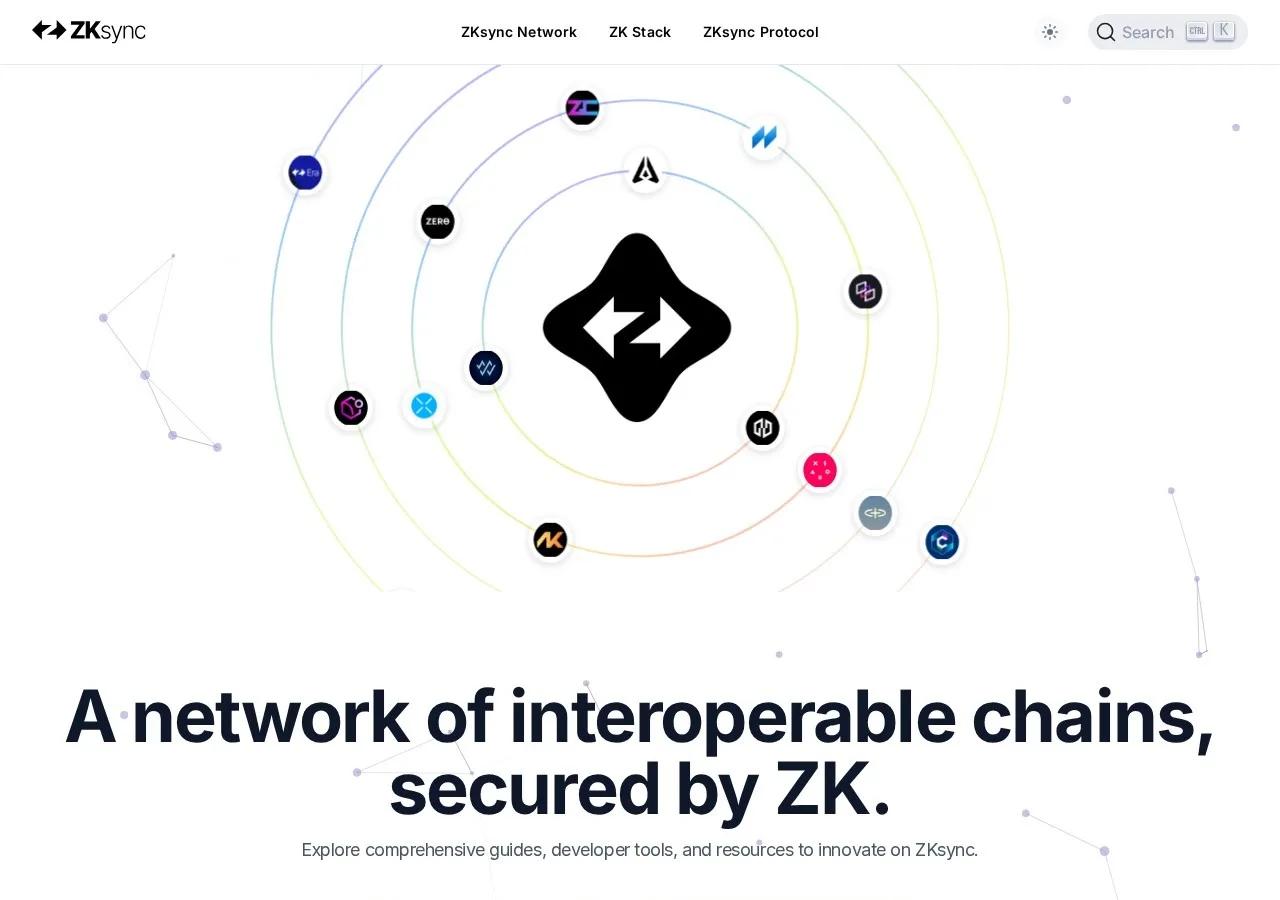
ZKsync screenshots
User reviews
No user reviews yet. Have you used ZKsync? Share your experience below.
Funding and investors
2Rounds
9Investors
-
Funding round Amount undisclosed
-
Grant / Seed Amount undisclosed
FAQ
Who founded ZKsync?
ZKsync was developed by Matter Labs, co-founded by CEO Alex Gluchowski, a software architect with more than 15 years of engineering experience.
What are typical transaction fees on ZKsync?
Median transaction fees sit around $0.05. The protocol's Airbender prover targets execution costs down to $0.0001 per transfer.
Does ZKsync have a native token?
Yes, ZKsync uses the ZK token for network governance.
How is ZKsync secured?
ZKsync uses zero-knowledge validity proofs verified by smart contracts directly on Ethereum Layer 1, backed by a bug bounty program offering payouts up to $1.1M.
What is Prividium on ZKsync?
Prividium is an institutional Ethereum-secured blockchain platform providing user-level privacy, selective disclosure, and compliance enforcement. It provides selective disclosure and private settlement anchored to Ethereum for regulated banking environments.
Latest from ZKsync on X
October was a big month for ZKsync and Prividium.
From the launch of Prividium Commander to Airbender Prime's real-time proving milestone, here's what happened across the ecosystem.
The October Monthly Roundup 🧵 https://t.co/NOIYeS2jUL
From the launch of Prividium Commander to Airbender Prime's real-time proving milestone, here's what happened across the ecosystem.
The October Monthly Roundup 🧵 https://t.co/NOIYeS2jUL
"Cybersecurity is now at the forefront of thinking for everyone. This is no longer a problem of an individual institution but rather a matter of national security."
@gluk64 on @etnshow about the strategic importance of verifiable and quantum-resistant cryptography. https://t.co/U58KGIhtAA
@gluk64 on @etnshow about the strategic importance of verifiable and quantum-resistant cryptography. https://t.co/U58KGIhtAA
ZKsync is featured in the 2026 ZK Industry Report.
Prividiums are purpose-built for institutions that demand privacy, compliance and full control of their data with many of them being in production.
Read the 2026 ZK Industry Report below 👇 https://t.co/15CObQNUSU
Prividiums are purpose-built for institutions that demand privacy, compliance and full control of their data with many of them being in production.
Read the 2026 ZK Industry Report below 👇 https://t.co/15CObQNUSU

NEW: A SOC 2 Type 2 examination for Prividium, the platform regulated institutions use to run their digital asset businesses, is complete.
Prividium operates to the highest compliance standards, exactly as our customers expect from us.
Audited & proven. Not assumed. https://t.co/GG2TCnLiAt
Prividium operates to the highest compliance standards, exactly as our customers expect from us.
Audited & proven. Not assumed. https://t.co/GG2TCnLiAt
Recent public posts from @zksync, shown as published. Not reviewed or endorsed by CryptoReview.
Alternatives to ZKsync
Proof-of-stake layer-1 blockchain securing nearly $50B in DeFi value since 2015
Layer 1Proof of StakeEVM compatible

Ethereum optimistic rollup securing over $12B with ~0.25-second block times and Stylus Rust contracts
Layer 2Optimistic rollupEVM compatible

Sharded Layer-1 blockchain supporting 1.2s finality and cross-chain execution across 35+ networks
Layer 1Proof of StakeNEAR

EVM sidechain with sub-two-second settlement, $0.002 average fees, and over 8 billion processed transactions
SidechainProof of StakeEVM compatible

Proof-of-stake layer 1 with sub-second finality and customizable sovereign appchains
Layer 1Proof of StakeEVM compatible
Ethereum layer 2 built on the OP Stack and incubated by Coinbase
Layer 2Optimistic rollupEVM compatible