

Quantum computing poses a serious threat to the cryptography blockchains currently rely on, while advances in AI compress best estimates for the threat's timeline.
That's why experts gathered in Cambridge to coordinate research upgrading our cryptography to be quantum-resistant. https://t.co/VHGbEO3l7p
Ethereum
Proof-of-stake layer-1 blockchain securing nearly $50B in DeFi value since 2015
4.3/ 5
Our score
Very good
Layer
Layer 1
Consensus / design
Proof of Stake
Native token
ETH
Block time
12 seconds
Typical transaction fee
0.15 to 0.5 gwei
EVM compatible
Yes
What is Ethereum?
Ethereum is a decentralized layer-1 blockchain and smart contract platform that serves as the base settlement layer for thousands of decentralized applications and layer-2 networks. Conceived in late 2013 and live since July 2015, the network processes over $4.6B in daily trading volume and held approximately $49.8B in total value locked in October 2026.
Founding and governance
Ethereum was conceived by programmer Vitalik Buterin, previously a co-founder of Bitcoin Magazine. The early project was established alongside co-founders including Gavin Wood, who authored the Yellow Paper detailing the Ethereum Virtual Machine, Joseph Lubin, who founded ConsenSys, Charles Hoskinson, who later founded Cardano, Anthony Di Iorio, and Mihai Alisie. The non-profit Ethereum Foundation is headquartered in Zug, Switzerland. The protocol operates without corporate control, coordinating core software upgrades through open Ethereum Improvement Proposals (EIPs) evaluated by independent client development teams.
Architecture and smart contracts
The network operates via the Ethereum Virtual Machine (EVM), a distributed computation engine that executes code written in languages like Solidity and Vyper. Consensus is maintained by an open, permissionless set of proof-of-stake validators. Native transactions require Ether (ETH), which serves as both the gas token for computational operations and the staking asset securing the network. Transactions settle directly on-chain, with basic transfers completing without intermediaries, while rollups post batch proofs and execution data directly to Ethereum for final settlement.
Transaction costs and accessibility
Users pay gas fees denominated in gwei, which fluctuate with block demand. During low-activity periods such as May 2026, standard gas tracked between 0.15 and 0.5 gwei, bringing simple transfers below one cent, though complex smart contract executions cost more during network congestion. Ethereum is globally accessible without geographical restrictions, credit checks, account approvals, or identity verification.
Track record and ecosystem risks
Following its Frontier mainnet launch on July 30, 2015, Ethereum underwent key protocol changes, including The Merge on September 15, 2022, which transitioned the network to proof-of-stake and lowered energy consumption by more than 99%. Major upgrades followed, including Dencun in March 2024, Pectra in May 2025, and Fusaka in December 2025. In Q2 2026, the network processed 203.9 million transactions and had 9.2 million monthly active addresses, while hosting roughly $180 billion in stablecoins by July 2026. Primary risks include fee spikes during periods of high base-layer congestion, potential smart contract vulnerabilities in third-party applications, and user dependencies on centralized bridge contracts or centralized layer-2 sequencers.
Founders
Vitalik ButerinCo-founder
Programmer and co-founder of Bitcoin Magazine
Gavin WoodCo-founder & initial Chief Technology Officer
Author of the Ethereum Yellow Paper specifying the Ethereum Virtual Machine
Joseph LubinCo-founder
Early Ethereum contributor and founder of ConsenSys
Charles HoskinsonCo-founder
Early contributor who later founded IOHK and Cardano
Anthony Di IorioCo-founder
Financier of the early Ethereum project in Miami
Mihai AlisieCo-founder
Early Ethereum collaborator and Bitcoin Magazine partner
Best for:DeFi liquidity providers and tradersSmart contract developers using SolidityLayer-2 rollup deployment teamsInstitutions issuing tokenized real-world assets
Pros and cons
Pros
- Uninterrupted 100% network uptime since its July 2015 launch
- Nearly $50B in total value locked in October 2026
- Hosts approximately $180B of stablecoins on mainnet as of July 2026
- Open client ecosystem with no single point of corporate failure
- Decentralized proof-of-stake consensus without centralized sequencer reliance
Cons
- Base-layer transaction fees spike significantly during periods of heavy congestion
- Layer-1 execution throughput remains limited to under 30 transactions per second
- Complex smart contract interactions can become costly during peak network demand
Our review
4.3/5
Very good
Ethereum offers substantial liquidity, developer adoption, and decentralization as the primary settlement layer, but base-layer execution capacity remains constrained compared to modern integrated alternatives.
Ethereum launched on July 30, 2015, following a design conceived by Vitalik Buterin, Gavin Wood, Joseph Lubin, and other co-founders. It is an open-source proof-of-stake Layer 1 blockchain, having moved away from proof-of-work during The Merge in September 2022. The network acts as the primary settlement and data availability foundation for smart contract applications and rollup networks.
The platform differs from competitors through its liquidity, uptime, and developer tooling. As of October 2026, Ethereum has maintained 100% historical uptime across more than a decade of continuous execution, locking $49.8B in total value. Mainnet also anchors approximately $180B in stablecoin issuance. Development environments rely primarily on Solidity and Vyper, supported by diverse client software across independent node operators worldwide.
Resource constraints and fee mechanics remain trade-offs on the base chain:
- Transaction throughput on Layer 1 is limited, requiring high-frequency applications to rely on secondary rollups.
- Base-layer fees fluctuate according to block space demand, though average gas dropped to around 0.15 to 0.5 gwei in May 2026.
- Staking requires technical overhead or delegation, while protocol changes require lengthy social and client consensus across decentralized teams.
Protocol maintenance is coordinated through decentralized client teams and the Switzerland-based Ethereum Foundation rather than a central corporate owner. Upgrades like Dencun in 2024, Pectra in May 2025, and Fusaka in December 2025 demonstrate systematic improvements to protocol efficiency. Ethereum suits developers and institutions seeking censorship resistance and deep liquidity. Users requiring micro-transactions or high single-chain throughput without layer-2 bridges will find monolithic alternative chains more suitable.
Specs
| Layer | Layer 1 |
|---|---|
| Consensus / design | Proof of Stake |
| Native token | ETH |
| EVM compatible | Yes |
| Smart contract languages | Solidity, Vyper |
| Block time | 12 seconds · unverified |
| Typical transaction fee | 0.15 to 0.5 gwei · unverified |
| Finality | 12.8 minutes · unverified |
| Mainnet since | 2,015 · unverified |
| Sequencer | Not applicable · unverified |
| Data availability | EIP-4844 blobs and calldata · unverified |
| Gas paid in | ETH · unverified |
Not disclosed by the provider: Validators / sequencer, Throughput (TPS).
Data from the provider's website and public sources. Fees and availability change; confirm on the official site before you sign up.
Key features
Proof-of-stake validation
Consensus is secured by a global validator set staking native ETH, which eliminated proof-of-work mining in September 2022.
Ethereum Virtual Machine
Executes decentralized smart contracts written in Solidity and Vyper across an open client architecture.
Native ETH gas market
Transaction fees adjust dynamically through a base fee and priority tip, burning a portion of all gas paid.
Layer-2 settlement base
Serves as the data availability and security settlement layer for optimistic and zero-knowledge rollups.
Permissionless access
Requires only an internet connection and an EVM-compatible wallet with no identity verification or sign-ups.
Inside Ethereum
Understand Ethereum
Introductory educational materials covering how the network functions, digital wallet mechanics, stablecoins, and decentralized finance basics.
Start building
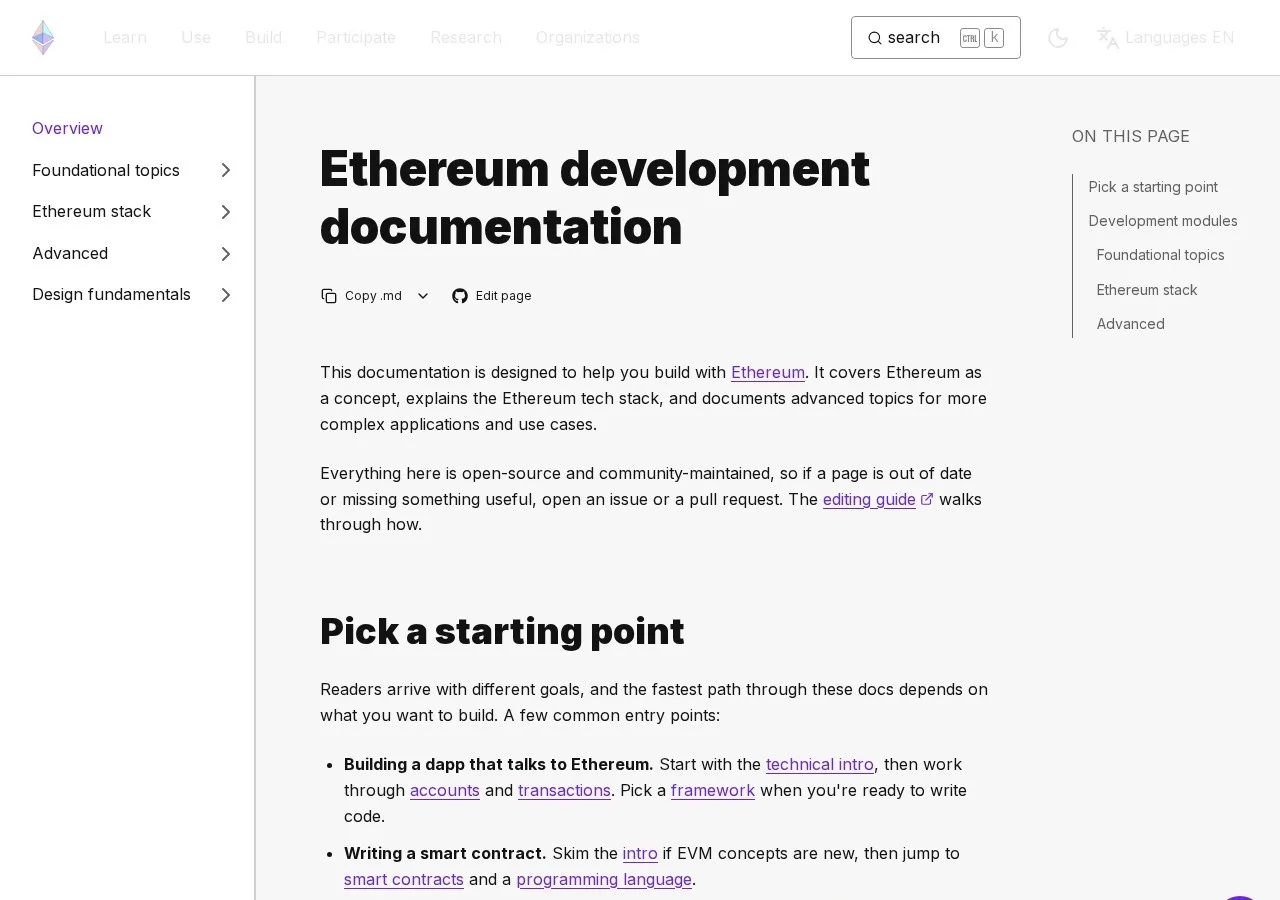
Developer documentation, tutorials, and frameworks for writing and deploying EVM smart contracts in Solidity and Vyper.
For enterprise
Organizational resources and documentation detailing permissioned network deployments, institutional custody, and business integrations.
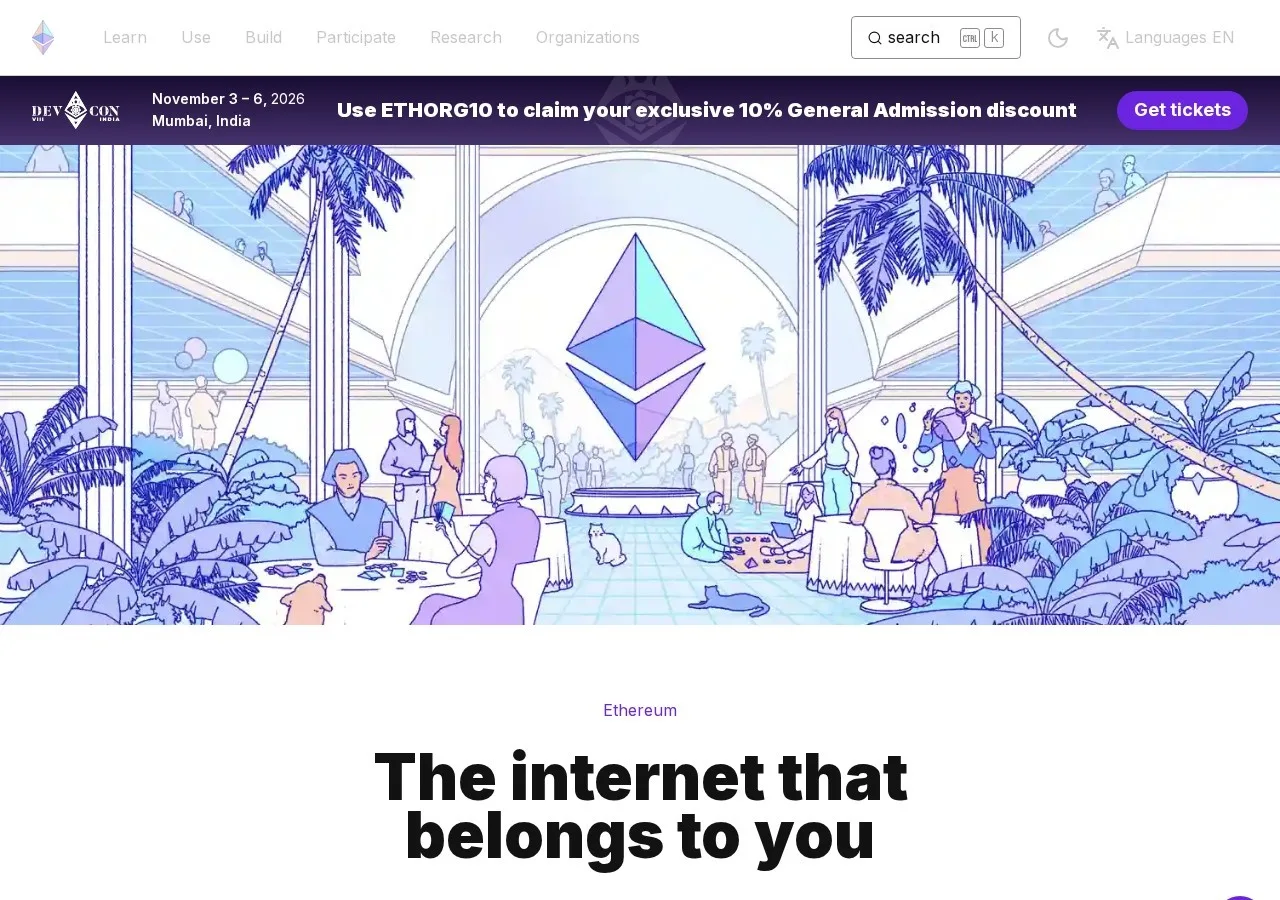
Ethereum screenshots
What users say about Ethereum
User feedback is unavailable as no experiences or reports were provided. Consequently, positive and negative trends cannot be determined.
Based on 200 Reddit posts and comments from the last 12 months, checked Oct 20, 2026. These are posts by users on other sites, not reviews submitted on CryptoReview.
User reviews
No user reviews yet. Have you used Ethereum? Share your experience below.
Funding and investors
$18.3MTotal raised
1Round
1Investor
-
Crowdsale Aug 2014 $18.3MPC Public crowdsale participants Lead
FAQ
Who founded Ethereum?
Ethereum was conceived in 2013 by Vitalik Buterin and launched in July 2015 alongside co-founders including Gavin Wood, Joseph Lubin, Charles Hoskinson, Anthony Di Iorio, and Mihai Alisie. The non-profit Ethereum Foundation coordinates protocol research from Zug, Switzerland.
What are typical Ethereum transaction fees?
Fees depend on network gas auction pricing. In May 2026, standard gas tracked between 0.15 and 0.5 gwei, keeping simple Ether transfers below one cent.
Does Ethereum require KYC or account approval?
No, Ethereum is a permissionless public blockchain network. Anyone with an internet connection can generate a key pair and submit transactions without identity verification or minimum balances.
Does Ethereum have a native cryptocurrency?
Yes, Ether (ETH) is the network's native asset. It is used to pay for computational execution and gas fees, as well as securing consensus through proof-of-stake validation.
How is Ethereum secured?
Ethereum is secured by proof-of-stake consensus, implemented during The Merge in September 2022. Independent validators stake ETH to propose and validate blocks, replacing energy-intensive mining.
Latest from Ethereum on X
Alternatives to Ethereum

Ethereum optimistic rollup securing over $12B with ~0.25-second block times and Stylus Rust contracts
Layer 2Optimistic rollupEVM compatible

Sharded Layer-1 blockchain supporting 1.2s finality and cross-chain execution across 35+ networks
Layer 1Proof of StakeNEAR

EVM sidechain with sub-two-second settlement, $0.002 average fees, and over 8 billion processed transactions
SidechainProof of StakeEVM compatible

Proof-of-stake layer 1 with sub-second finality and customizable sovereign appchains
Layer 1Proof of StakeEVM compatible

Ethereum layer 2 built on the OP Stack and incubated by Coinbase
Layer 2Optimistic rollupEVM compatible

Ethereum layer-2 optimistic rollup and modular framework powering the Superchain ecosystem
Layer 2Optimistic rollupEVM compatible