



Shipping around the clock.
Tell us your favorite Sui fact below ↓

Sui
Layer 1 Move-based blockchain engineered for parallel execution and autonomous agent workloads
4.0/ 5
Our score
Very good
Layer
Layer 1
Consensus / design
Proof of Stake
Native token
SUI
EVM compatible
No
What is Sui?
Sui is a Proof of Stake Layer 1 blockchain built around an object-centric data model and the Move programming language. Sui structures data into discrete objects that can execute in parallel when dependencies do not overlap.
Team and corporate background
Sui was created by Mysten Labs, a Web3 infrastructure company founded by former executives and researchers from Meta's Novi research unit. Co-Founder and CEO Evan Cheng previously served as Head of R&D at Novi, engineering lead at Apple, and a core maintainer for LLVM. Chief Product Officer Adeniyi Abiodun held product roles at Novi, VMware, and Oracle. Chief Scientist George Danezis and Chief Cryptographer Kostas Chalkias led cryptographic research at Novi, with Chalkias bringing prior experience from enterprise blockchain consortium R3. Mysten Labs raised $300 million in a Series B round, with participation from investors including Arrington Capital and Hack VC.
Architecture and core protocols
The network operates without EVM compatibility, using an adapted version of the Move language to establish clear asset ownership rules. Sui supports parallel execution for transactions involving independent objects, while shared-object operations use consensus. SUI pays computational and storage fees and supports Proof of Stake validator staking. Ecosystem modules extend base execution, including DeepBook as a native onchain central limit order book, SuiNS for domain identity, Walrus for decentralized data storage, Nautilus for verifiable offchain compute, and the Hashi bridging protocol for native Bitcoin collateralization.
Network milestones and adoption
The Sui mainnet launched in May 2023. By October 2026, total value locked on the network reached approximately $380M to $498M across ecosystem protocols, and the Hashi Bitcoin bridge surpassed $500 million in institutional commitments. Integrations expanded consumer access, including network integration for USDC transfers within Samsung Wallet across eligible mobile devices.
Risks and structural trade-offs
Non-EVM architecture prevents direct deployment of Solidity contracts, requiring developers to rewrite tooling and protocols in Move. Parallel processing applies to independent transactions, while shared-object operations use consensus.
Founders
Evan ChengCo-Founder and CEO
Former Head of R&D at Novi, Technical Director at Meta, engineering lead at Apple, and LLVM core maintainer.
Adeniyi AbiodunCo-Founder and CPO
Former Head of Product Development at Novi with earlier experience at VMware, Oracle, PeerNova, HSBC, and JP Morgan.
George DanezisCo-Founder and Chief Scientist
Former researcher at Novi and Meta.
Kostas ChalkiasCo-Founder and Chief Cryptographer
Former cryptographer at Novi with prior experience at R3.
Best for:Developers writing Move smart contractsAutonomous agent infrastructure buildersDeFi teams needing native order books
Pros and cons
Pros
- Object-centric state model enables parallel execution for independent operations
- Move smart contract language enforces strict asset ownership boundaries
- Native protocol order book DeepBook consolidates onchain liquidity
- Over $500 million in commitments secured through Hashi Bitcoin collateralization
Cons
- Lack of EVM compatibility prevents simple migration of Solidity contracts
- Shared-object transactions require sequential consensus ordering
Our review
4.0/5
Very good
Sui provides high-throughput parallel execution through its object-centric Move framework, but its non-EVM environment requires specialized tooling and separate developer adoption.
Sui is an independent Layer 1 blockchain engineered around an object-oriented data architecture rather than account balances. Launched on mainnet in May 2023 by Mysten Labs, the network executes transactions in parallel using the Move smart contract programming language. Because independent transactions do not contend for the same shared state, the protocol processes them in parallel.
The network is backed by substantial venture capital, including a $300 million Series B round raised by Mysten Labs, with investors such as Arrington Capital and Hack VC. Leadership consists of former Meta Novi executives and researchers, including CEO Evan Cheng, CPO Adeniyi Abiodun, Chief Scientist George Danezis, and Chief Cryptographer Kostas Chalkias. Total value locked in the ecosystem stood at approximately $498 million in October 2026, supported by protocol-level infrastructure components like DeepBook for liquidity and Hashi for institutional Bitcoin bridging.
Strengths include:
- Parallelized execution using an object-centric model, preventing independent transaction bottlenecks.
- Native infrastructure layers, such as DeepBook for onchain order books and Walrus for decentralized data storage.
Trade-offs center on ecosystem compatibility. Sui is not EVM-compatible, meaning existing Ethereum contracts and Solidity tools cannot be deployed without complete rewrites in Move.
Sui supports developers building applications with Move, parallel execution, and automated agent workflows.
Specs
| Layer | Layer 1 |
|---|---|
| Consensus / design | Proof of Stake |
| Native token | SUI |
| EVM compatible | No |
| Smart contract languages | Move |
| Mainnet since | 2,023 · unverified |
| Sequencer | Not applicable · unverified |
| Gas paid in | SUI · unverified |
Not disclosed by the provider: Block time, Typical transaction fee, Finality, Validators / sequencer, Throughput (TPS), Data availability.
Data from the provider's website and public sources. Fees and availability change; confirm on the official site before you sign up.
Key features
Object-centric parallel execution
Transactions involving independent objects bypass global ordering queues so the network processes unrelated state modifications in parallel.
DeepBook native liquidity
DeepBook operates as an onchain central limit order book directly at the protocol level, offering shared liquidity across ecosystem applications.
Hashi Bitcoin collateralization
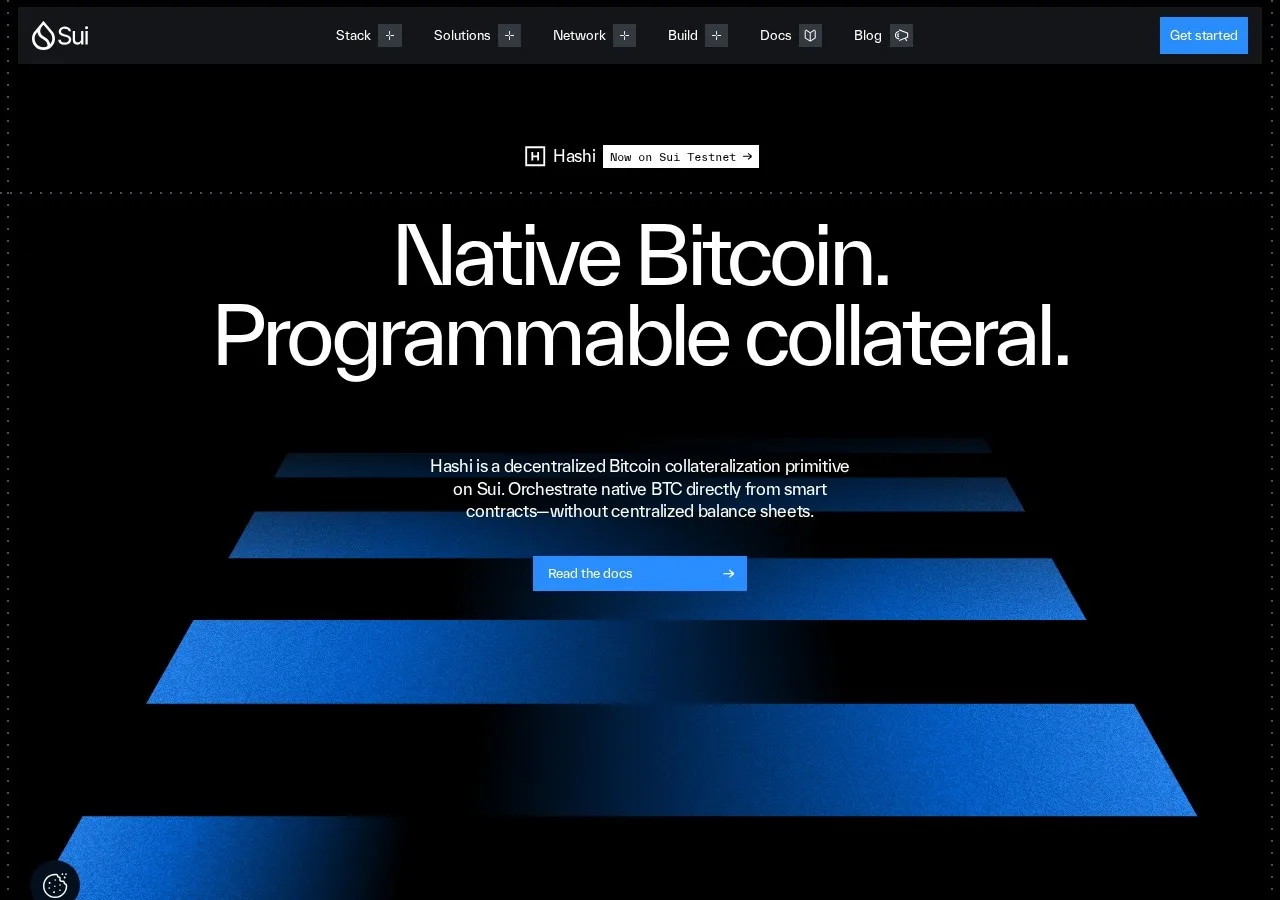
Hashi enables decentralized collateralization of Bitcoin, maintaining original assets on the Bitcoin chain while managing rights via Sui smart contracts.
Walrus storage integration
Walrus is a decentralized storage and data layer for applications and agent knowledge stores.
SuiNS identity service
SuiNS provides decentralized domain name registries and verifiable onchain identities for wallets, protocols, and autonomous agents.
Nautilus verifiable compute
Nautilus provides a verifiable offchain compute environment for autonomous systems and agents.
Inside Sui
Sui
The core Layer 1 execution layer handles parallel transaction processing, smart contracts, and policy-bound asset coordination using the Move language.
DeepBook
DeepBook operates as an open, programmable central limit order book and native liquidity layer across Sui protocols.
Walrus
Walrus provides a decentralized storage protocol and data availability layer for applications and offchain agent knowledge stores.
Hashi
Hashi serves as a native institutional Bitcoin collateralization protocol that coordinates rights without moving BTC off its origin chain.
Seal
Seal supplies decentralized access control and encryption frameworks for smart contract workflows and autonomous agents.
Nautilus
Nautilus enables verifiable offchain compute environments for autonomous applications and data processing.
SuiNS
SuiNS provides an onchain naming and identity service.
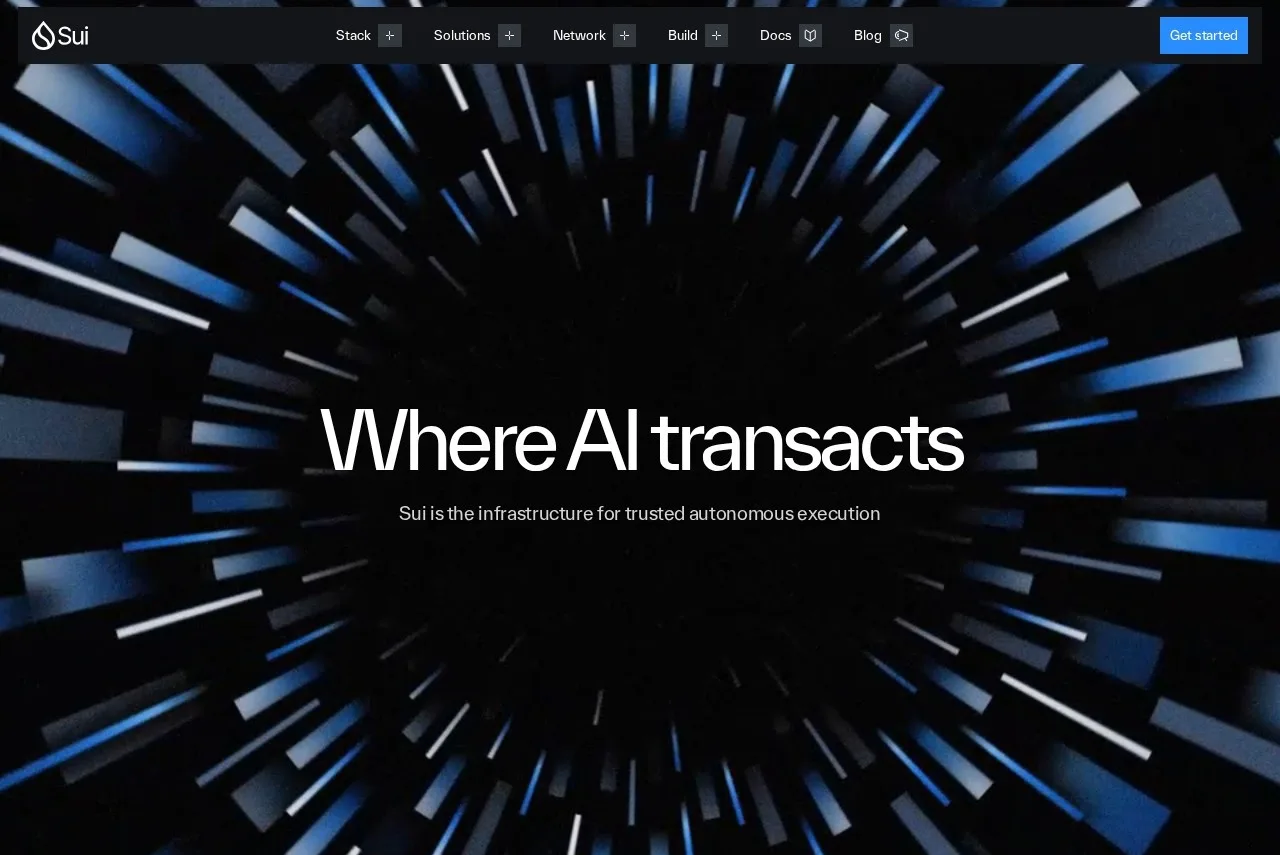
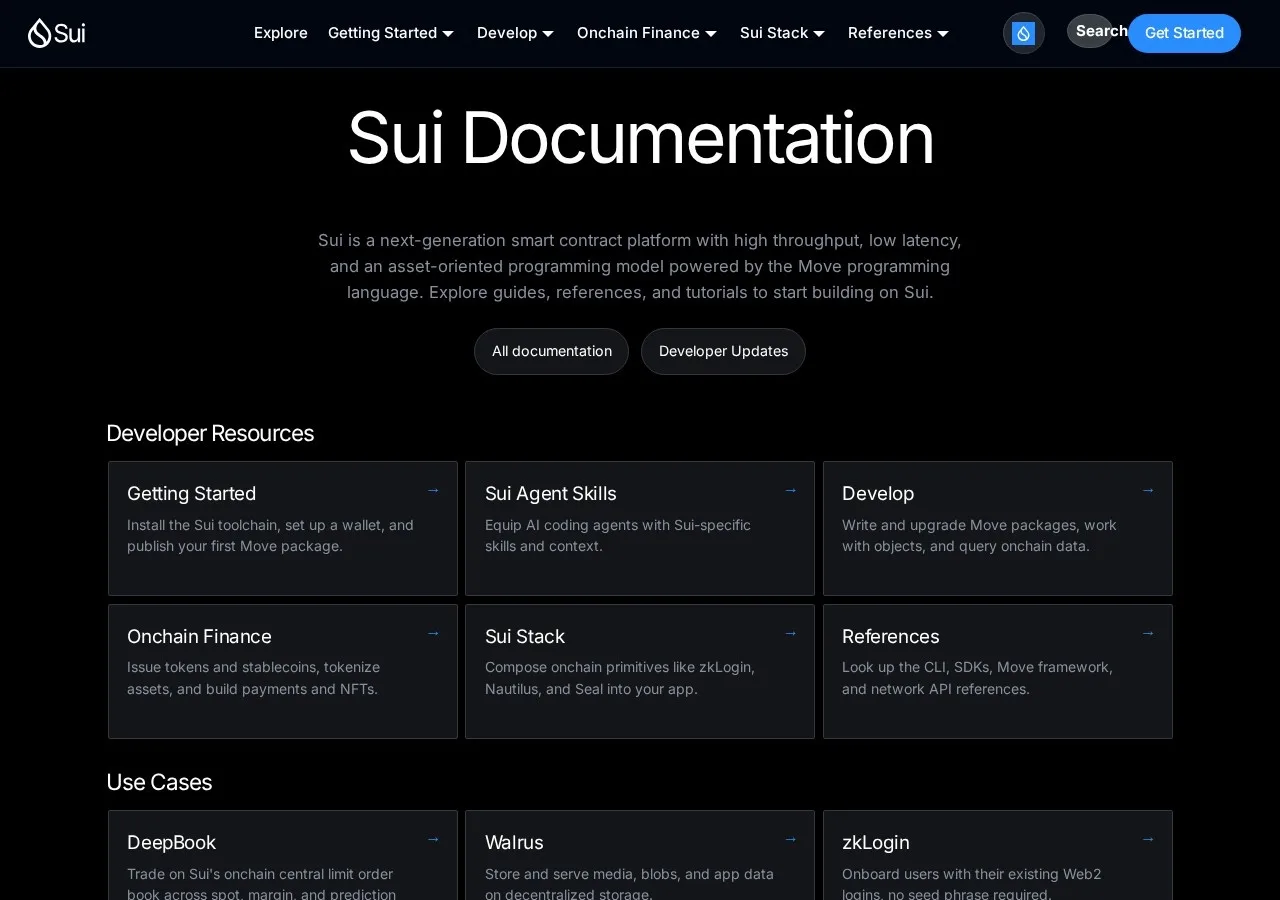
Sui screenshots
What users say about Sui
Community sentiment around Sui balances enthusiasm for its high throughput and agentic finance capabilities against concern over token dilution. Discussions focus positively on fast transaction finality and low fees, alongside criticism of upcoming token unlocks and protocol issues.
Top goods
In their own words
“We filmed a real USDC payment at a counter on Sui, start to finish (Slush, 0 gas) I'm building Suikii, a way for small shops to take SUI or USDC at the counter. The merchant types the amount and shows a QR; the customer approves in Slush; the money goes straight to the merchant's own wallet.”
“Parallel — a fast, fresh and low-fee decentralised trading terminal for Sui. Hey r/sui! We are building **Parallel** is a decentralised trading terminal built specifically for the Sui ecosystem.”
“but its very hard now compared to what happen lastime. token unlocks make it worse, no one gonna hold long term if supply unlocks monthly. unless if theres big institutions come.”
“Sui halted three times in 48 hours back in May Their response? Inviting the whole internet to break the network on purpose. The Sui Tunnels experiment opens soon. A public stress test pushing TPS limits under real load.”
“My Sui is stuck in staking on Ledger & won’t let me unstake. Not sure how to stop the loading bar from continuously swirling on ledger live. Anyone else have this issue? Pool is ledger figment.”
Scam warning: Malicious phishing apps and fake sites mimicking official wallet software have drained user funds.
Based on 200 Reddit posts and comments from the last 12 months, checked Oct 20, 2026. These are posts by users on other sites, not reviews submitted on CryptoReview.
User reviews
No user reviews yet. Have you used Sui? Share your experience below.
Funding and investors
$300MTotal raised
1Round
2Investors
-
Funding round Amount undisclosed
FAQ
Who founded Sui?
Sui was created by Mysten Labs, founded by former Meta Novi executives Evan Cheng, Adeniyi Abiodun, George Danezis, and Kostas Chalkias. The team launched the mainnet in May 2023.
Does Sui have a native token?
Yes, Sui uses SUI as its native token. It pays for gas fees and provides Proof of Stake security through staking.
Is Sui EVM compatible?
No, Sui is not EVM compatible. Smart contracts are written natively in the Move programming language and execute on an object-centric execution engine.
What are typical transaction fees on Sui?
Transaction fees on Sui are paid in SUI.
What is Hashi on Sui?
Hashi is a Bitcoin collateralization and bridging protocol built on Sui. It allows Bitcoin to back decentralized finance workflows while the underlying assets remain on the Bitcoin blockchain.
Latest from Sui on X
Sui enters Brazil, Hong Kong-regulated gold went onchain, and stablecoins can now pay all gas fees in Slush.
Here's your weekly recap of core developments across the Sui ecosystem:
• @MercadoBitcoin is the first Brazilian exchange to support Sui transfers. Its 4.5M clients can now buy, sell, send, and receive $SUI, $USDC, and $USDsui.
• XAUa, the Hong Kong-regulated gold token from @AlphaTokenHQ, is live on Sui, minted with the Permissioned Asset Standard (PAS). @realtbook's vault mints it, and each token is redeemable for physical gold held in LBMA-certified vaults.
• @SlushWallet now takes network fees in stablecoins across the whole wallet, including swaps, staking, deposits, and withdrawals. It also added an Address Book for saved contacts, recent addresses, and SuiNS names.
• @navi_protocol opened its first EVM vault, built on @lagoon_finance infrastructure. Deposit native USDC on Ethereum and earn with NAVI USDC Prime on Sui, without a new wallet.
• @zofaiperps launched Z Points, an onchain points program backed by trading fees. 90% of fees go to a weekly buyback, and points sell back for SUI based on your referral activity. The first epoch began Oct 30.
• Through @yosuku0, AI agents can trade Bitcoin predictions on DeepBook Predict for you. You approve once and set the limits, and Sui enforces them.
• @HaedalProtocol's Lending Vault crossed $7M in liquidity.
• @inspikalu took first place in @WalrusProtocol Session 8: Chatbots That Remember with Playbook, a chatbot that remembers your limits, best settings, and what already failed.
Have a great weekend, and keep shipping on Sui.
Trading on Sui, built as a game.
@PlayPipsFun runs its games on @DeepBookonSui, and the waitlist just opened.
@PlayPipsFun runs its games on @DeepBookonSui, and the waitlist just opened.
Hold stablecoins, use all of Slush.
@SlushWallet now takes network fees in stablecoins for swaps, staking, deposits and withdrawals, on top of sends and payments.
@SlushWallet now takes network fees in stablecoins for swaps, staking, deposits and withdrawals, on top of sends and payments.
Sui is coming to Brazil 🇧🇷
@MercadoBitcoin, Latin America's leading digital asset platform, is the first exchange in Brazil to support Sui asset transfers.
Its 4.5M clients can now buy, sell, send, and receive $SUI, $USDC, and $USDsui.
@MercadoBitcoin, Latin America's leading digital asset platform, is the first exchange in Brazil to support Sui asset transfers.
Its 4.5M clients can now buy, sell, send, and receive $SUI, $USDC, and $USDsui.
Recent public posts from @SuiNetwork, shown as published. Not reviewed or endorsed by CryptoReview.
Alternatives to Sui

Proof-of-stake layer-1 blockchain securing nearly $50B in DeFi value since 2015
Layer 1Proof of StakeEVM compatible

Ethereum optimistic rollup securing over $12B with ~0.25-second block times and Stylus Rust contracts
Layer 2Optimistic rollupEVM compatible

Sharded Layer-1 blockchain supporting 1.2s finality and cross-chain execution across 35+ networks
Layer 1Proof of StakeNEAR

EVM sidechain with sub-two-second settlement, $0.002 average fees, and over 8 billion processed transactions
SidechainProof of StakeEVM compatible

Proof-of-stake layer 1 with sub-second finality and customizable sovereign appchains
Layer 1Proof of StakeEVM compatible

Ethereum layer 2 built on the OP Stack and incubated by Coinbase
Layer 2Optimistic rollupEVM compatible