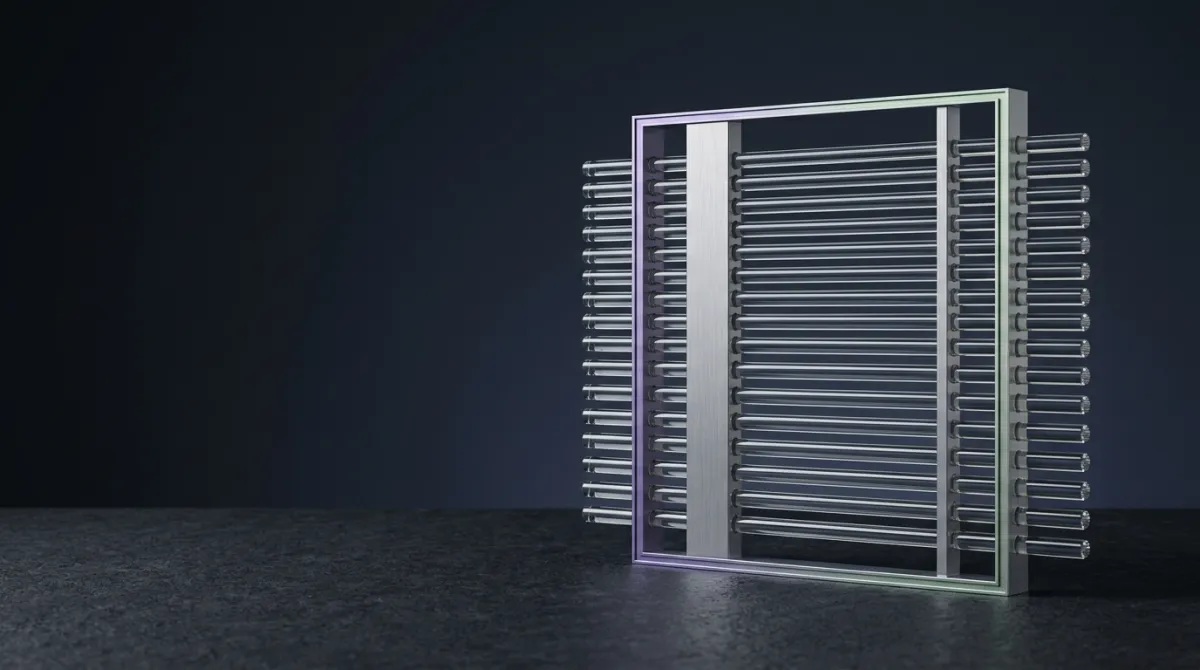







Solana on the front wing 🏁
@krakenfx @WilliamsRacing https://t.co/JS1RO9TcWe


Proof-of-stake Layer 1 launched in March 2020, with 1,790 transactions per second in Q3 2026
Solana is a public proof-of-stake Layer 1 blockchain for smart-contract applications, payments, trading and tokenized assets. Its single global state avoids splitting liquidity across shards or application-specific chains. The network processed a reported 14.2 billion transactions in Q3 2026, around 1,790 per second.
Solana was founded by Anatoly Yakovenko and Raj Gokal in 2018. Solana Labs, based in San Francisco, launched the network on March 16, 2020, while the Solana Foundation maintains the official website and supports the ecosystem. In June 2021, Solana Labs sold $314 million worth of SOL to funds led by Andreessen Horowitz and Polychain Capital. Other recorded investors include Multicoin Capital, a16z crypto, 1kx and Placeholder.
The network uses proof of stake and the SOL token for transaction fees and staking. Validators process a shared state rather than separate application rollups, and developers can deploy smart contracts primarily with Rust. Solana is not EVM compatible. Its published block time is about 400 milliseconds, while a September 2026 upgrade targeted 250-millisecond slots and a later feature gate cut slot times from 250 to 200 milliseconds after one epoch.
The ecosystem includes DeFi, trading, payments, stablecoins, tokenized assets and consumer applications. Solana also provides staking, the Solana Developer Platform, x402 machine-payment infrastructure, Agent Registry and Solana DvP for delivery-versus-payment settlement.
Transaction fees are paid in SOL. The network is designed for low-cost transactions, but the amount varies with transaction demand and the instructions used by an application. Staking can earn rewards while committing SOL to network security, so returns depend on network conditions and the validator selected.
The network reported $17.51 billion in stablecoin supply in September 2026 and about $5.95 billion in total value locked on October 17, 2026. Tokenized equity supply reached $684 million in September 2026. Samsung Wallet announced USDC cross-border transfers on Solana for 82 million U.S. Galaxy devices beginning in the last week of October 2026.
Solana has had several outages. A transaction surge caused a validator fork and about 17 hours of downtime on September 14, 2021. Bot activity caused about seven hours offline on May 1, 2022, and a consensus bug caused about six hours offline on October 1, 2022. SOL staking introduces token-price exposure.
Solana offers high throughput, low-latency infrastructure and a broad application base, but its history of outages and concentrated operational risks remain material trade-offs.
Solana is a Layer 1 proof-of-stake blockchain with one global state, rather than a rollup or app-chain that depends on another network for settlement. SOL pays for transactions and supports staking. Programs are commonly written in Rust, and the chain is not EVM compatible, so Ethereum developers cannot deploy Solidity contracts without adapting their stack.
The network activated a feature gate in October 2026 to reduce slot times from 250 milliseconds to 200 milliseconds. A recent quarterly figure put actual processing at about 1,790 transactions per second. Solana's single state avoids the liquidity fragmentation found across many separate execution environments.
Solana reports $3.3 trillion in trading volume and $3.4 billion in app revenue, while TVL was about $6.0 billion on October 17, 2026. September stablecoin supply reached $17.51 billion, and tokenized equity supply reached $684 million.
Proof of stake distributes validation through stake, but the network has experienced outages: approximately 17 hours in September 2021, seven hours in May 2022, four and a half hours later that month, and six hours in October 2022. A 2022 Slope wallet exploit affected 9,231 wallets and caused about $8 million in losses, although that incident involved wallet software rather than the base chain.
Solana was founded by Anatoly Yakovenko and Raj Gokal, launched through Solana Labs in March 2020, and is supported by the Solana Foundation. A $314 million June 2021 sale was led by Andreessen Horowitz and Polychain Capital.
| Layer | Layer 1 |
|---|---|
| Consensus / design | Proof of Stake |
| Native token | SOL |
| EVM compatible | No |
| Smart contract languages | Rust |
| Block time | ~400 ms |
| Mainnet since | 2,020 · unverified |
| Throughput (TPS) | 1,790 transactions per second · unverified |
| Sequencer | Not applicable · unverified |
| Gas paid in | SOL · unverified |
Not disclosed by the provider: Typical transaction fee, Finality, Validators / sequencer, Data availability.
Data from the provider's website and public sources, checked Oct 16, 2026. Fees and availability change; confirm on the official site before you sign up.
Validators secure the network through proof of stake, while SOL holders can delegate tokens for staking.
Applications share one global ledger instead of separate shards, which keeps liquidity on the same Layer 1.
Solana documentation and tooling support Rust programs. The network is not EVM compatible.
The published block time is about 400 milliseconds, with 2026 upgrades targeting shorter slots.
The network supports SPL Token and Token-2022 assets, including stablecoins and tokenized securities.
x402 supports machine-native payments, while Solana DvP provides open-source delivery-versus-payment infrastructure.
Solana Microscope decodes program and Squads multisig activity into Grafana dashboards and alerts.
The public proof-of-stake blockchain provides smart-contract execution for decentralized applications, payments, trading and tokenized assets. SOL is used for transaction fees and staking.
This developer infrastructure and documentation supports building applications on Solana. The documentation covers the JSON-RPC reference, finance, payments, tokenization and DeFi.
x402 is a payments product and ecosystem for machine-native and internet payments on Solana. The network documentation identifies Solana mainnet with the CAIP-2 identifier solana:5eykt4UsFv8P8NJdTREpY1vzqKqZKvdp.
Agent Registry is a Solana product for registering AI agents. It is listed alongside the network's developer and payment products.
Solana DvP provides open-source delivery-versus-payment infrastructure for financial institutions. It is designed for atomic settlement of tokenized assets and payments.
Solana staking lets SOL holders stake tokens to support network security and earn rewards. Validators run the network and receive delegated stake.
Reaction is mostly positive, centred on zero-fee USDG on and off ramps, fast finality and throughput, and strong revenue and volume growth, with stablecoin payments seen as real utility. Complaints are thin: a few users doubt the zero-fee claims or question how on-chain activity is counted.
“Finality is the number merchants feel. A card auth takes about 2 s and settles days later, so 150ms final settlement is the first spec where a chain beats Visa at the checkout counter, not just on a TPS chart.”
“Reimbursements and vendor payments are the quiet win here. Finance teams already run those through Ramp every week, so $0 fees each way on USDG lets them try a stablecoin rail without changing how they work.”
“Revenue up 48% QoQ to $299M while setting records in tokenized equities and transactions. Sustained DEX share + real economic activity is the real signal.”
“no fee sounds a bit too good to be true lol”
“Solana has been overcounting trxns for years.”
“no fee on ramps are nice but nobody actually uses stablecoins for vendor payments yet. its all just trading pairs in disguise.”
Scam warning: Fake ads and posts impersonating Solana.com redirect users to phishing sites that drain wallets
Scam warning: Scammers push wallet-linking links that empty users' funds
Based on 100 Reddit posts and comments, 100 X replies from the last 12 months, checked Oct 17, 2026. These are posts by users on other sites, not reviews submitted on CryptoReview.
No user reviews yet. Have you used Solana? Share your experience below.
Solana was founded by Anatoly Yakovenko and Raj Gokal in 2018. The network launched through Solana Labs in March 2020, and the Solana Foundation maintains the official website.
Solana's native token is SOL. It pays transaction fees and can be staked to support network security and earn rewards.
Solana is not EVM compatible.
Yes. The network went offline for approximately 17 hours in September 2021, seven hours in May 2022, four and a half hours later that month, and six hours in October 2022.
Solana supports decentralized applications for trading, payments, tokenization and consumer products. Its ecosystem also includes x402 payments, Solana DvP for delivery-versus-payment infrastructure, and staking.
Solana activated a feature gate in October 2026 to reduce slot times from 250 milliseconds to 200 milliseconds. A Q3 2026 figure reported about 1,790 transactions per second, while the website displays a 50M transactions-per-second figure.

Recent public posts from @solana, shown as published. Not reviewed or endorsed by CryptoReview.
Proof-of-stake layer-1 blockchain securing nearly $50B in DeFi value since 2015
Ethereum optimistic rollup securing over $12B with ~0.25-second block times and Stylus Rust contracts
Sharded Layer-1 blockchain supporting 1.2s finality and cross-chain execution across 35+ networks
EVM sidechain with sub-two-second settlement, $0.002 average fees, and over 8 billion processed transactions
Proof-of-stake layer 1 with sub-second finality and customizable sovereign appchains
Ethereum layer 2 built on the OP Stack and incubated by Coinbase
Type at least two characters. Press ↵ to see all results.