
Proof-of-stake layer-1 blockchain securing nearly $50B in DeFi value since 2015
Layer 1Proof of StakeEVM compatible

Permanent storage ledger and compute layer powered by Proof of Access and storage endowments
Arweave is a decentralized layer-1 storage protocol and open ledger engineered for permanent data preservation and decentralized web hosting. Unlike conventional cloud infrastructure that charges monthly rental fees, Arweave uses a blockweave data structure and a storage endowment model that lets users pay a single upfront fee in AR tokens to preserve information indefinitely.
Founded in 2018 by Sam Williams, the project originally began under the name Archain before rebranding to Arweave. The project is community-driven, with an operating team of roughly 11 to 50 people distributed globally across Europe, North America, and Asia.
Arweave operates on a Proof of Access consensus mechanism paired with verifiable delay functions. Miners compete to produce new blocks by proving they retain access to historical data chunks from past blocks, creating an economic incentive to replicate the entire dataset. In November 2025, the weave dataset was divided into 103 distinct 3.6TB partitions. Network transactions and accounts support RSA keys as well as ECDSA secp256k1 keys, activated in the 2.9 hard fork. Arweave addresses are SHA-256 hashes of the public key, meaning AR tokens cannot be sent to native Ethereum addresses. In February 2025, the ecosystem expanded its execution capabilities with the mainnet rollout of AO Computer, a hyper-parallel compute layer that uses Arweave as an immutable data availability substrate.
Uploading files requires paying an upfront network fee denominated in AR. The majority of this fee does not go immediately to the miner who mines the block. Instead, it flows into a protocol-managed storage endowment that yields payouts to miners over extended periods as storage hardware costs decrease. This structure provides miners with ongoing hardware compensation over time.
The Arweave mainnet has operated since 2018 under an open-source MIT license. In June 2026, an ecosystem incident occurred when malware was detected in third-party Arweave npm libraries. Miners and node operators must independently handle compliance with local data protection regulations such as GDPR. Because uploaded content is permanently immutable, misconfigured transactions or accidental uploads of sensitive material cannot be altered or removed from the blockweave.
Arweave provides permanent, decentralized on-chain storage backed by an upfront endowment model, but node operators face steep hardware requirements and the base layer lacks native EVM execution.
Arweave is a specialized layer-1 storage network launched in 2018 by Sam Williams. Unlike conventional blockchains focused on general-purpose smart contracts, Arweave organizes historical data into a blockweave structure secured by a Proof of Access consensus mechanism. Its core value proposition is permanent data storage: users pay an upfront fee in native AR tokens, the bulk of which enters a storage endowment pool that subsidizes miners over time as data density costs decline.
Arweave supports permanent, tamper-resistant data availability. Mining incentives are mathematically tied to storing data replicas. The 2.9 hard fork added ECDSA secp256k1 signing keys alongside standard RSA keys.
The base protocol is not EVM-compatible; AO Computer launched mainnet in February 2025. Mining requires data syncing, repacking, VDF calculations, and storage for multiple 3.6TB partitions. Arweave addresses are also fundamentally incompatible with Ethereum formats despite sharing the secp256k1 curve, which risks permanent token loss if users send assets to raw EVM public keys. Ecosystem tooling experienced security exposure when malicious npm packages affected Arweave developer libraries in June 2026.
Arweave suits developers requiring permanent file hosting and decentralized application frontends.
| Layer | Layer 1 · unverified |
|---|---|
| Consensus / design | Other · unverified |
| Native token | AR · unverified |
| EVM compatible | No · unverified |
| Typical transaction fee | One-time upfront fee in AR, dynamic based on data size and network conditions · unverified |
| Validators / sequencer | Miners and validators · unverified |
| Mainnet since | 2,018 · unverified |
| Sequencer | Not applicable · unverified |
| Data availability | Decentralized permanent storage through the Arweave weave and storage endowment model · unverified |
| Gas paid in | AR · unverified |
Not disclosed by the provider: Smart contract languages, Block time, Finality, Throughput (TPS).
Data from the provider's website and public sources. Fees and availability change; confirm on the official site before you sign up.
Data uploads require a single upfront fee in AR that enters a protocol endowment to fund miner storage costs over time.
Miners must prove access to randomized historical weave chunks to produce blocks and earn token rewards.
The network structures historical weave data into 3.6TB partitions, incentivizing nodes to store full dataset replicas.
Accounts can sign transactions and blocks using either RSA or 65-byte ECDSA secp256k1 key configurations.
A parallel computing environment built over Arweave data availability.
A decentralized permanent storage ledger using Proof of Access consensus and a sustainable tokenomic endowment model.
A hyper-parallel decentralized computing environment running on top of Arweave data availability.
Software that enables operators to participate in Proof of Access storage validation, VDF computation, and coordinated or solo mining.
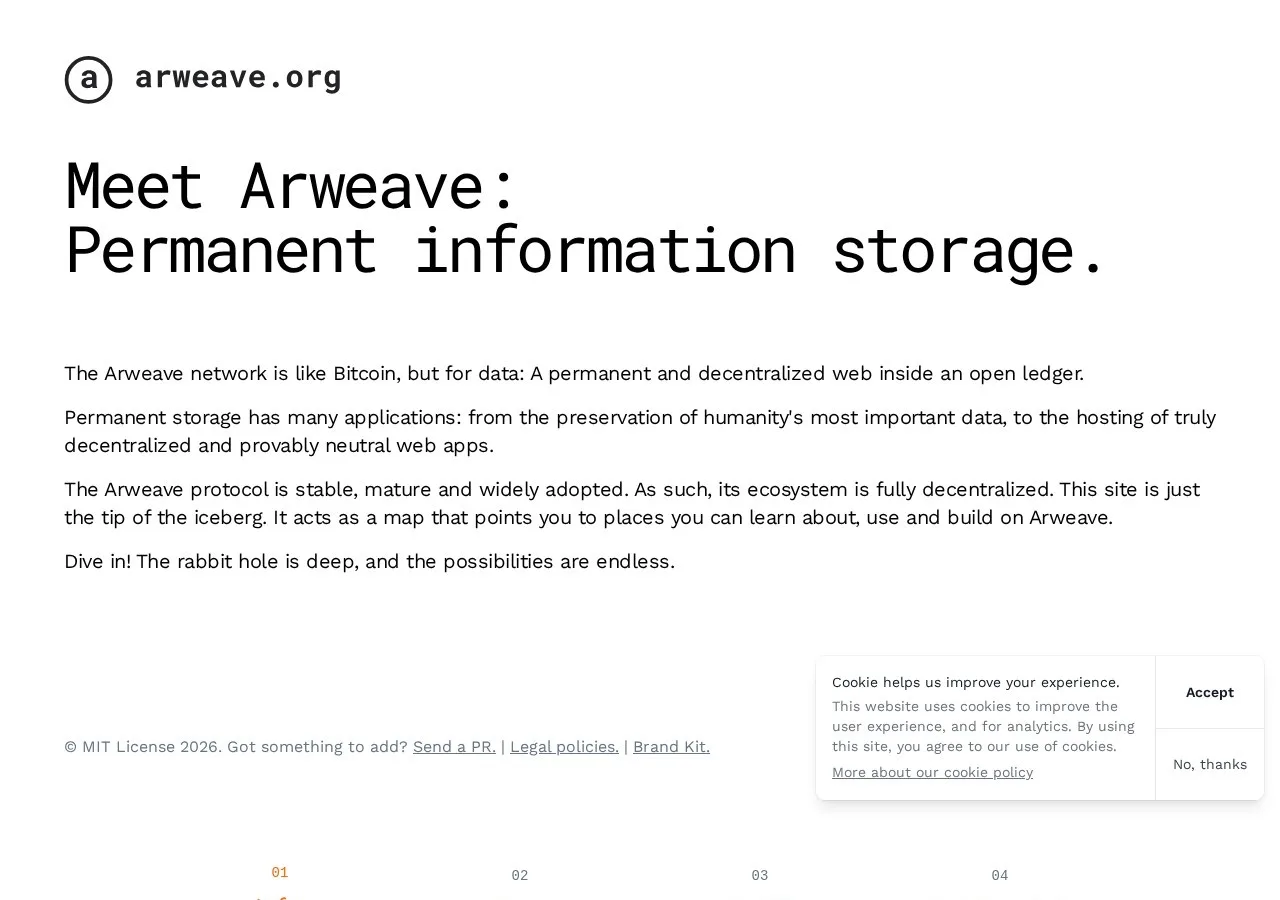
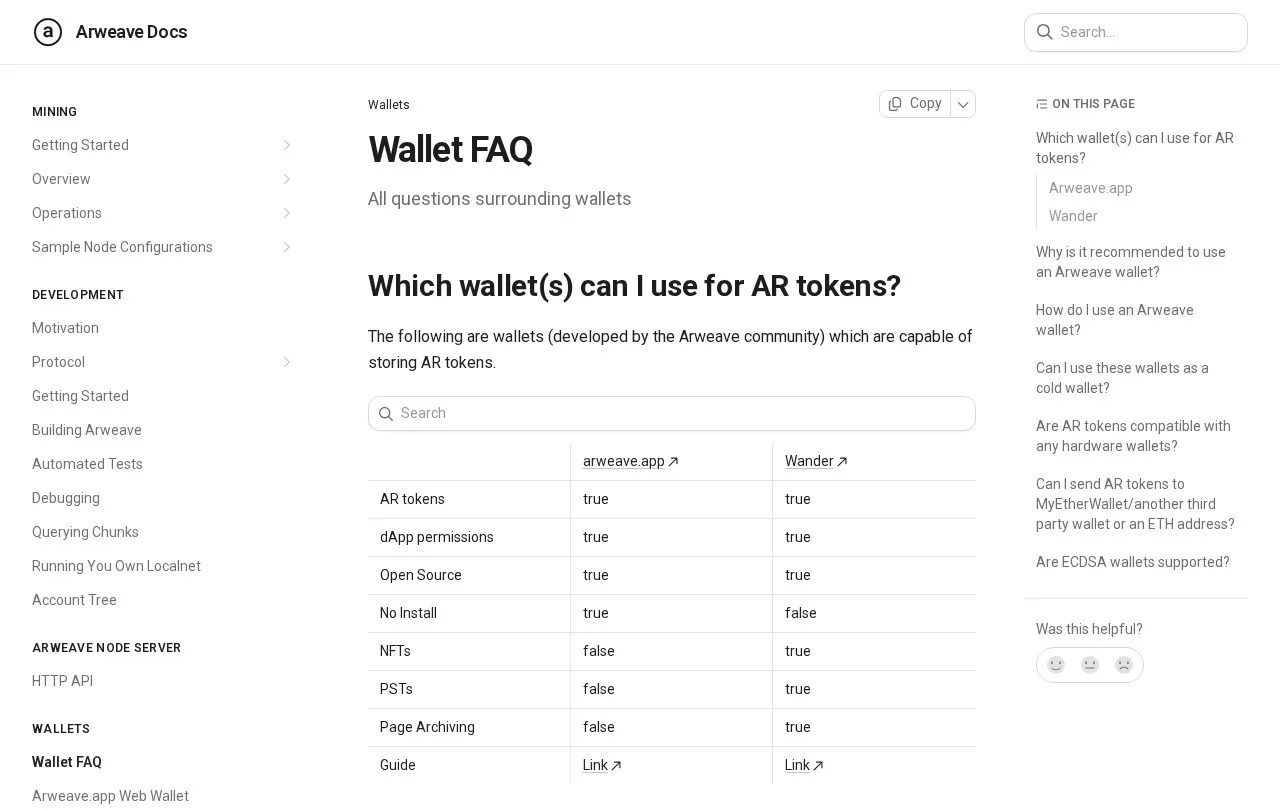
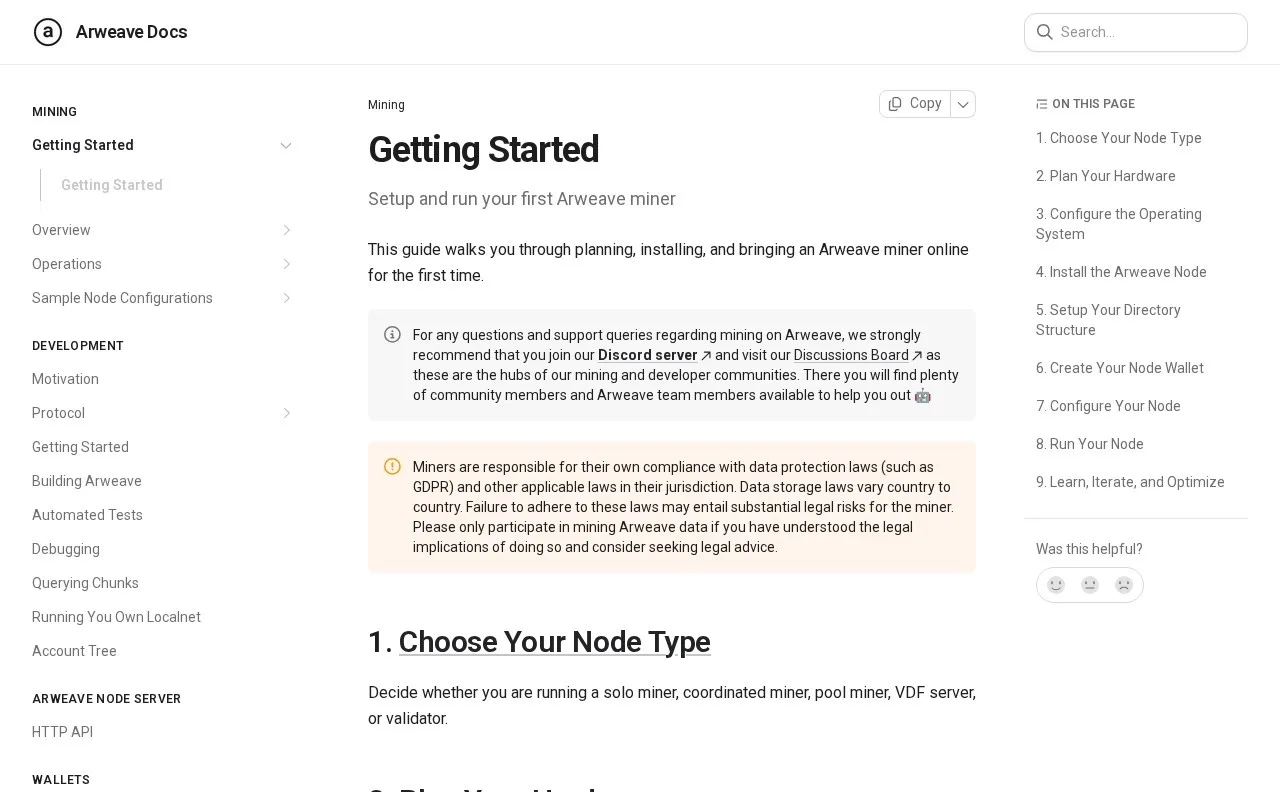
User discussions predominantly touch upon technical infrastructure and integrations, with limited direct feedback on the core product experience. There were not enough distinct shared complaints or praise points to establish recurring user trends.
Based on 7 Reddit posts and comments from the last 12 months, checked Oct 20, 2026. These are posts by users on other sites, not reviews submitted on CryptoReview.
No user reviews yet. Have you used Arweave? Share your experience below.
Arweave was founded in 2018 by Sam Williams.
Yes, Arweave uses the AR token to pay for one-time permanent data storage fees and reward network miners.
Users pay a one-time upfront fee in AR based on file size, with the majority of the fee deposited into a decentralized storage endowment that pays out miners over time.
No, Arweave addresses are SHA-256 hashes of public keys and are fundamentally incompatible with Ethereum addresses, even though both networks support secp256k1 keys.
In June 2026, a malware incident occurred that affected ecosystem npm libraries used by Arweave developers.
Arweave runs on a Proof of Access consensus mechanism that ties mining probability to storing historical blockweave data partitions alongside verifiable delay function computation.
Proof-of-stake layer-1 blockchain securing nearly $50B in DeFi value since 2015
Ethereum optimistic rollup securing over $12B with ~0.25-second block times and Stylus Rust contracts
Sharded Layer-1 blockchain supporting 1.2s finality and cross-chain execution across 35+ networks
EVM sidechain with sub-two-second settlement, $0.002 average fees, and over 8 billion processed transactions
Proof-of-stake layer 1 with sub-second finality and customizable sovereign appchains
Ethereum layer 2 built on the OP Stack and incubated by Coinbase
Type at least two characters. Press ↵ to see all results.