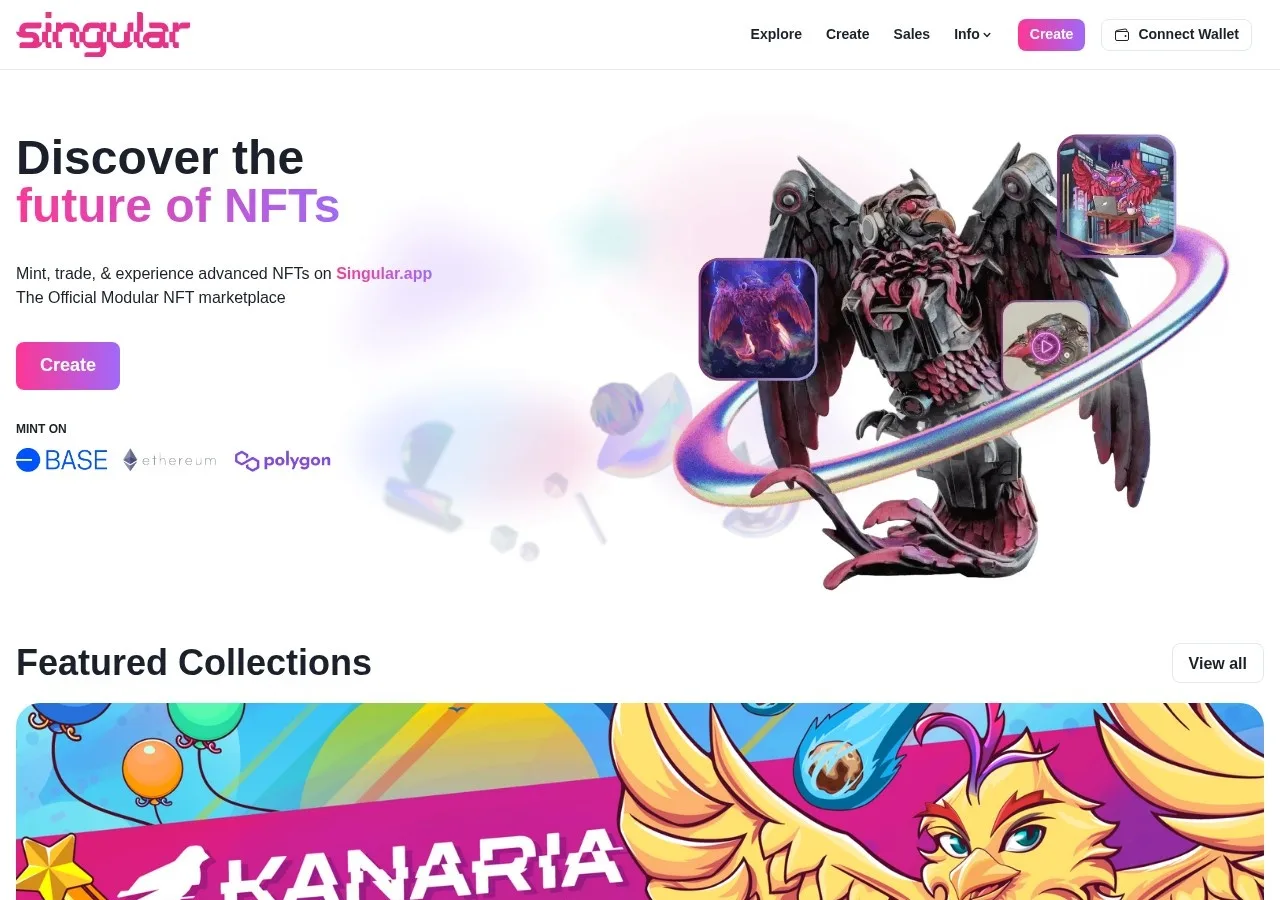
Singular is a non-custodial modular NFT marketplace developed by RMRK that focuses on programmable, multi-asset, and composable digital assets. Built originally around RMRK extensible standards, the marketplace primarily runs on the Base network for direct transactions, minting, and equippable inventory interactions, while retaining read capabilities for Ethereum Mainnet and Polygon.
Team and development
The marketplace was built by RMRK, co-founded by Bruno Škvorc alongside lead developers Yuri Petusko (CTO), Yuri Gii, and Ilia. The team authored several modular Ethereum Improvement Proposals, including ERC-5773 (multi-asset), ERC-7401 (nestable), ERC-6220 (equippable), ERC-7409 (emotable), and ERC-6454 (soulbound). While early development originated within the Kusama ecosystem, RMRK completed a full technical pivot toward EVM networksand decommissioned legacy Substrate support in early 2026.
How it works
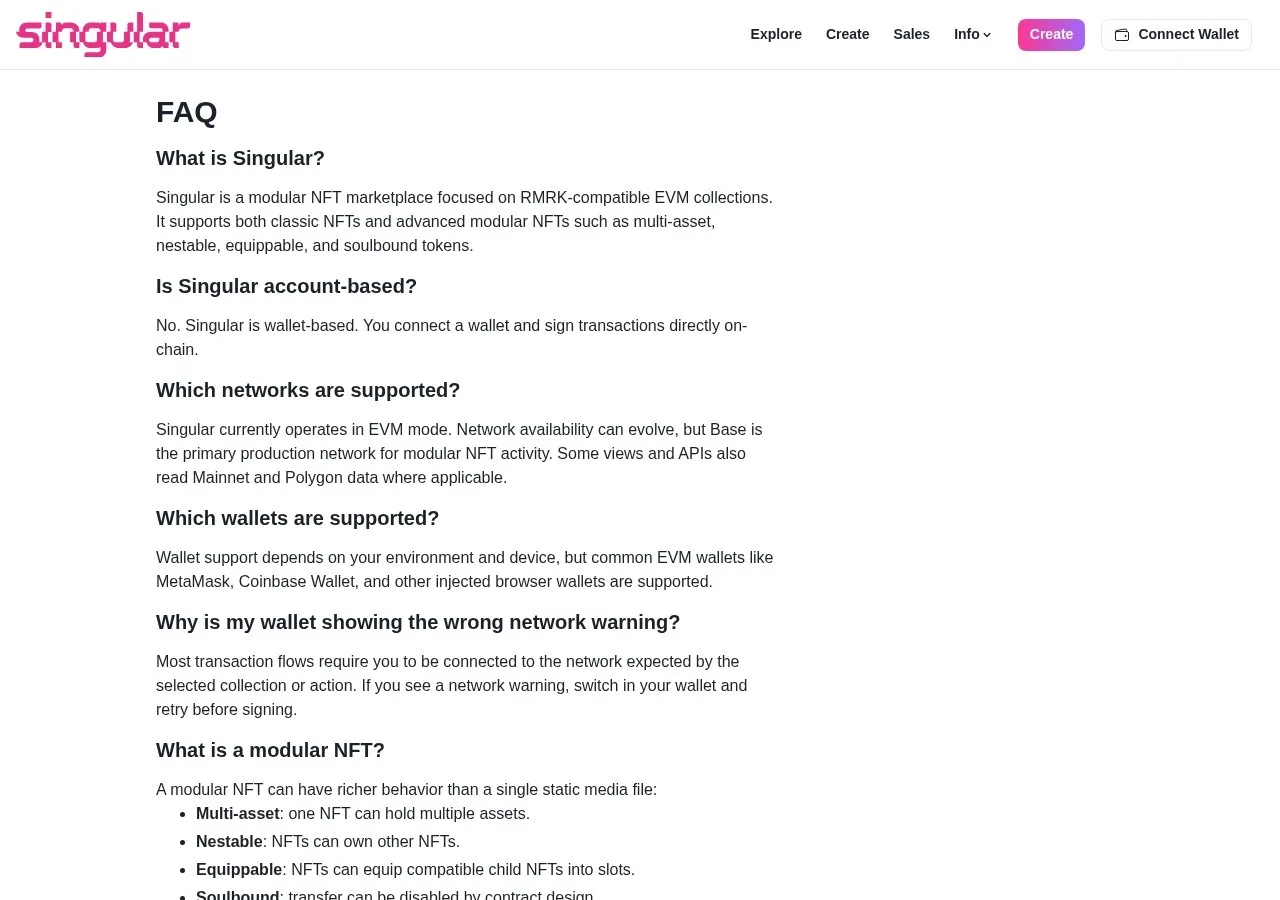
Singular is wallet-based and requires no centralized account registration. Users connect standard injected web3 wallets such as MetaMask or Coinbase Wallet to sign on-chain actions directly. The platform indexes on-chain equip states and relies on specialized rendering services to compose child NFTs into parent slot items dynamically. In addition to standard fixed-price listings and direct sales, Singular supports GBM incentivized auctions, in which bidders who are outbid receive compensatory payouts.
Fees and access
Trading and minting fees vary depending on the asset listing type and payment path, with exact breakdowns presented in the wallet interface before signing. Creator royalties are enforced on-chain, including nested royalties introduced in January 2024 to distribute secondary payouts across grouped or bundled items. Singular does not mandate KYC checks, and transactions execute directly against deployed smart contracts.
Milestones and risks
Singular has navigated infrastructure restructurings and security events. In January 2026, RMRK disclosed an exploit resulting in the theft of 1.2 million RMRK tokens. Shortly after, the team removed support for Kusama networks to focus exclusively on EVM liquidity, locking permanent liquidity positions on Base comprising 9.17% of the total RMRK token supply. Collectors and creators face liquidity risks common to niche modular standards, as composable NFTs experience fragmented demand compared to traditional ERC-721 collections on generalist platforms.