

🚀Our Weekly Wins are here!🚀
#Ardor #Ignis #Nxt #blockchain #crypto
Watch the video, thanks to @madfox1234, and read the full update on our website: https://t.co/ITVJ8W3HA6
$ARDR $IGNIS $NXT https://t.co/1mvb3HBOLc

Jelurida
Proof-of-stake blockchain development company behind the Ardor multichain network and Nxt
3.3/ 5
Our score
Fair
Layer
Layer 1
Consensus / design
Proof of Stake
Native token
ARDR
Block time
60s
EVM compatible
No
What is Jelurida?
Jelurida is a Swiss blockchain software company that develops and maintains the Ardor multichain ecosystem and the open-source Nxt blockchain platform. Built around a parent-child chain architecture, its primary network Ardor separates network security and consensus from transactional functions to resolve blockchain bloat without requiring custom base-layer protocols.
Company and leadership
Jelurida was incorporated in the Netherlands in 2016 and relocated its corporate headquarters to Lugano, Switzerland, in 2017. The firm was established by co-founders Lior Yaffe, Petko Petkov, and Kristina Kalcheva. Yaffe, who directs operations, brings over 20 years of experience in enterprise application design along with a computer science background from Technion, while Kalcheva provides legal direction for corporate structures and intellectual property licensing. Jelurida manages operations globally with a presence in countries such as Spain, Bulgaria, the Netherlands, Israel, and South Korea.
Architecture and core mechanics
The core technology stack centers on the Ardor mainnet, an energy-efficient proof-of-stake platform launched on January 1, 2018. The parent ARDOR chain exclusively processes consensus and secures the system, while distinct child chains handle day-to-day operations and application features. Ignis is the first operational child chain, providing native functionalities such as tokenization, decentralized asset exchange, and smart voting. Custom child chains can be deployed by enterprises seeking private permissioning tied to public consensus security. To execute logic, developers run Java-based lightweight contracts instead of deploying contracts directly on the parent chain, interacting with more than 250 native REST APIs.
Fee structure and bundling
Transaction fees for parent-chain transactions that directly modify Ardor balances are payable in ARDOR tokens. On child chains, users pay fees directly using that specific child chain's native asset, such as IGNIS. Decentralized network actors known as bundlers collect these child chain fees and package the transactions, paying the underlying block forgers in ARDOR at bundler-determined rates. Businesses can also deploy bundler template filters to sponsor network gas costs for end users.
Milestones and development record
Jelurida introduced testnet Lightweight Contracts alongside transaction vouchers and bundler templates with Ardor version 2.1.2 in October 2018. In February 2026, the network completed a mandatory hard fork at block 4,333,333 following the release of Ardor 2.6.0, activating the Nxt child chain migration and enabling Atomic Transaction Chains on mainnet. Jelurida released an updated Ardor Block Explorer in March 2026.
Risks and technical trade-offs
Deploying on Ardor requires using Jelurida's non-EVM, Java-focused architecture rather than standard EVM tooling like Solidity and MetaMask. Child chains also remain dependent on parent-chain forgers and active bundlers to process and settle transactions onto the parent ledger. Child chains depend on parent-chain forgers and active bundlers to process and settle transactions.
Founders
Lior YaffeCo-Founder and Director
Over 20 years of experience in enterprise application design and deployment with a degree in computer science from Technion.
Petko PetkovCo-Founder
Kristina KalchevaCo-Founder
Legal specialist.
Best for:Enterprises deploying custom child chainsJava developers building decentralized applicationsProjects requiring prebuilt tokenization and voting APIsBusinesses seeking sponsored gas fee models
Pros and cons
Pros
- Parent-child architecture isolates transaction data to prevent base-layer blockchain bloat
- Users pay transaction fees using native child tokens instead of the parent ARDOR asset
- Over 250 built-in APIs support application integration and standard blockchain functions
- Energy-efficient pure proof-of-stake consensus operating continuously on mainnet since January 2018
Cons
- Not EVM-compatible, restricting the use of Solidity tools and standard Ethereum wallets
- Requires a Java runtime, with Java 8 as the minimum and Java 11 recommended for the desktop client
- Child chain transaction settlement relies on third-party bundler availability and exchange rates
Our review
3.3/5
Fair
Jelurida offers a mature parent-child proof-of-stake architecture via Ardor and Ignis, but its non-EVM Java stack limits adoption relative to larger smart contract networks.
Jelurida is a Swiss blockchain development company incorporated in 2016 by Lior Yaffe, Petko Petkov, and Kristina Kalcheva. Rooted in the early pure proof-of-stake Nxt platform launched in 2013, Jelurida develops the multichain Ardor network, which launched its mainnet on 01 January 2018. Ardor operates on a dual-layer structure where the parent chain secures the network through proof-of-stake consensus, while dedicated child chains handle transactions and business logic.
Ardor uses parent-child separation, with the parent chain securing the network and child chains handling transactions and business logic. Transaction fees on child chains like Ignis are denominated in local tokens and bundled into ARDOR for parent chain block forgers. Ardor also supports lightweight smart contracts written in Java, built-in asset issuance, and tamperproof transaction vouchers. In February 2026, the network executed a hard fork at block 4,333,333 to activate the Nxt child chain and launch Atomic Transaction Chains.
The ecosystem faces distinct trade-offs. The network is not EVM-compatible, meaning developers cannot use Solidity or standard Ethereum developer tooling. Instead, applications rely on Jelurida's Java client and REST API collection of over 250 endpoints.
Jelurida fits enterprises and independent developers seeking built-in features like voting and child-chain fee bundling without writing smart contracts from scratch.
Specs
| Layer | Layer 1 · unverified |
|---|---|
| Consensus / design | Proof of Stake · unverified |
| Native token | ARDR · unverified |
| EVM compatible | No · unverified |
| Smart contract languages | Java · unverified |
| Block time | 60s · unverified |
| Mainnet since | 2,018 · unverified |
| Sequencer | Not applicable · unverified |
| Gas paid in | ARDR · unverified |
Not disclosed by the provider: Typical transaction fee, Finality, Validators / sequencer, Throughput (TPS), Data availability.
Data from the provider's website and public sources. Fees and availability change; confirm on the official site before you sign up.
Key features
Parent-child chain separation
The parent Ardor chain secures network consensus while child chains like Ignis manage transactional functions and application logic.
Fee bundling mechanism
Child chain fees are payable in native child tokens, which bundlers convert into ARDOR to compensate parent-chain block forgers.
Java lightweight contracts
Developers automate processes using Turing-complete Java lightweight contracts instead of running execution code directly on the base chain.
Atomic transaction chains
Activated in February 2026 at block 4,333,333, this feature is enabled on the Ardor mainnet.
Built-in REST API suite
The client includes over 250 native REST APIs for deploying token issuance, asset exchanges, and voting workflows without custom contracts.
Gas sponsorship filters
Five distinct bundler template filters allow enterprises to sponsor and pay transaction fees on behalf of specific end users.
Inside Jelurida
Ardor
The parent proof-of-stake multichain network that provides consensus and security across all connected child chains.
Nxt
An open-source, pure proof-of-stake blockchain platform launched in 2013 that served as the architectural predecessor to Ardor.
Ignis
The first public child chain on Ardor, providing built-in functions including smart voting, asset exchange, and lightweight contracts.
Enterprise Blockchain Solutions
Private blockchain implementations and custom child-chain deployments provided for corporate, institutional, and educational clients.
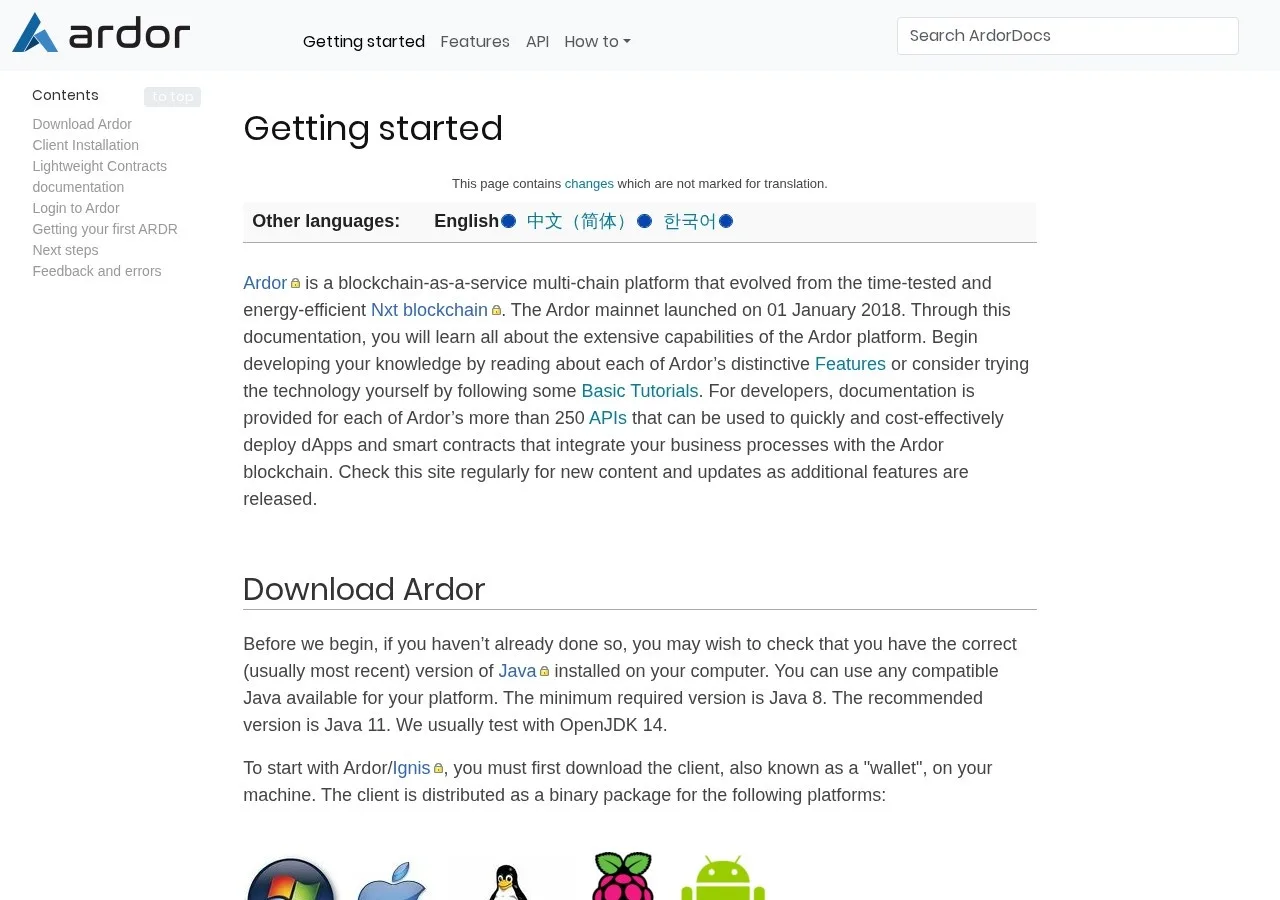
Jelurida screenshots


What users say about Jelurida
User feedback regarding Jelurida is currently insufficient to determine sentiment or common themes. Available discussions primarily consist of spam, off-topic posts, and official announcements.
Based on 7 Reddit posts and comments from the last 12 months, checked Oct 21, 2026. These are posts by users on other sites, not reviews submitted on CryptoReview.
User reviews
No user reviews yet. Have you used Jelurida? Share your experience below.
FAQ
Who founded Jelurida?
Jelurida was founded in 2016 by Lior Yaffe, Petko Petkov, and Kristina Kalcheva. The company was initially established in the Netherlands before moving its headquarters to Lugano, Switzerland.
Does Jelurida have a native token?
Jelurida's primary blockchain platform, Ardor, uses ARDR as its native parent-chain token. ARDR is used by network forgers to secure consensus across the network.
How do transaction fees work on Ardor and its child chains?
Direct modifications to Ardor parent chain balances require fees paid strictly in ARDOR. Transactions on child chains are paid in that child chain's native token, which bundlers convert into ARDOR to pay block forgers.
Is Ardor EVM compatible?
No, Ardor is not EVM compatible. It uses Turing-complete lightweight contracts written in Java and provides over 250 REST APIs for application integration.
What blockchains does Jelurida develop?
Jelurida develops and maintains the Nxt proof-of-stake blockchain, the Ardor parent-chain network, and child chains such as Ignis.
Latest from Jelurida on X
🚀Our Weekly Wins are here!🚀
#Ardor #Ignis #Nxt #blockchain #crypto
Watch the video, thanks to @madfox1234, and read the full update on our website: https://t.co/dOkO38JWik
$ARDR $IGNIS $NXT https://t.co/oIREmpgwco
#Ardor #Ignis #Nxt #blockchain #crypto
Watch the video, thanks to @madfox1234, and read the full update on our website: https://t.co/dOkO38JWik
$ARDR $IGNIS $NXT https://t.co/oIREmpgwco
🚀Our Weekly Wins are here!🚀
#Ardor #Ignis #Nxt #blockchain #crypto
Watch the video, thanks to @madfox1234, and read the full update on our website: https://t.co/SnoMACjbx9
$ARDR $IGNIS $NXT https://t.co/1KRFlvAMk7
#Ardor #Ignis #Nxt #blockchain #crypto
Watch the video, thanks to @madfox1234, and read the full update on our website: https://t.co/SnoMACjbx9
$ARDR $IGNIS $NXT https://t.co/1KRFlvAMk7
🚀Our Weekly Wins are here!🚀
#Ardor #Ignis #Nxt #blockchain #crypto
Watch the video, thanks to @madfox1234, and read the full update on our website: https://t.co/w24Io6AXmO
$ARDR $IGNIS $NXT https://t.co/AQ5ixRduUf
#Ardor #Ignis #Nxt #blockchain #crypto
Watch the video, thanks to @madfox1234, and read the full update on our website: https://t.co/w24Io6AXmO
$ARDR $IGNIS $NXT https://t.co/AQ5ixRduUf
🚀Our Weekly Wins are here!🚀
#Ardor #Ignis #Nxt #blockchain #crypto
Watch the video, thanks to @madfox1234, and read the full update on our website: https://t.co/99p8xbruyg
$ARDR $IGNIS $NXT https://t.co/hCxJUHF3dl
#Ardor #Ignis #Nxt #blockchain #crypto
Watch the video, thanks to @madfox1234, and read the full update on our website: https://t.co/99p8xbruyg
$ARDR $IGNIS $NXT https://t.co/hCxJUHF3dl
Recent public posts from @Jelurida, shown as published. Not reviewed or endorsed by CryptoReview.
Alternatives to Jelurida
Proof-of-stake layer-1 blockchain securing nearly $50B in DeFi value since 2015
Layer 1Proof of StakeEVM compatible

Ethereum optimistic rollup securing over $12B with ~0.25-second block times and Stylus Rust contracts
Layer 2Optimistic rollupEVM compatible

Sharded Layer-1 blockchain supporting 1.2s finality and cross-chain execution across 35+ networks
Layer 1Proof of StakeNEAR
EVM sidechain with sub-two-second settlement, $0.002 average fees, and over 8 billion processed transactions
SidechainProof of StakeEVM compatible
Proof-of-stake layer 1 with sub-second finality and customizable sovereign appchains
Layer 1Proof of StakeEVM compatible
Ethereum layer 2 built on the OP Stack and incubated by Coinbase
Layer 2Optimistic rollupEVM compatible