

Hong Kong has been busy lately!
Good to see more stablecoin and tokenization projects moving forward.
Nice breakdown by @SwappiDEX on what this could mean for us and the region. 👇

Conflux
Hybrid consensus layer-1 blockchain with parallel Tree-Graph processing and dual execution spaces
3.7/ 5
Our score
Good
Layer
Layer 1
Consensus / design
Other
Native token
CFX
Typical transaction fee
0
EVM compatible
Yes
What is Conflux?
Conflux is an open-source layer-1 blockchain built around a proprietary Tree-Graph ledger and the Ghast consensus algorithm. Designed for high throughput without compromising decentralization, the network processes transactions and blocks in parallel while securing execution through a hybrid Proof-of-Work and Proof-of-Stake model.
Founders and backing
Conflux was founded in 2018 by Fan Long alongside Chief Technology Officer Ming Wu and Chief Scientist Andrew Chi-Chih Yao, a Turing Award recipient. Research backing led to the establishment of the Tree-Graph Research Institute in partnership with the Shanghai government in 2020. Across its development history, the project secured $55M in total funding, including a $35 million round in December 2018 backed by Baidu Ventures, FREES, and Sequoia China.
Network architecture and mechanics
The network operates two parallel environments: Core Space and eSpace. Core Space runs the native Tree-Graph ledger with custom contracts, while eSpace is a fully EVM-compatible execution layer that allows developers to deploy standard Solidity contracts and lets users connect through tools like MetaMask. Assets and messages move across spaces via the native Space Bridge and external bridges like ShuttleFlow. Core Space natively integrates a Fee Sponsorship Mechanism, which allows application developers or third-party sponsors to subsidize users’ gas fees.
Fees and token economy
Gas on the network is paid in the native CFX token. Beyond network execution fees, CFX is used as collateral to rent on-chain storage space, to participate in decentralized governance, and to incentivize network miners. Token holders can stake CFX for protocol rewards, which yield a baseline annualized interest rate of 4% funded through network token issuance.
Track record and adoption
Conflux operates globally as a permissionless network while functioning as a regulatory-compliant public chain in China. By October 2026, the network held approximately $6.4M in decentralized finance total value locked and a stablecoin market capitalization exceeding $20M. Recent network activity included cross-border initiatives such as developing an offshore RMB stablecoin (AxCNH) alongside AnchorX, Dongxin, and Ping An.
Risks and trade-offs
Decentralized finance total value locked was approximately $6.4M as of October 2026. Assets and messages move between spaces via the native Space Bridge and external bridges like ShuttleFlow. Third-party wallet support has fluctuated, requiring users on platforms like Trust Wallet to manually configure custom EVM RPC endpoints.
Founders
Fan LongFounder
Ming WuCTO
Best for:EVM developers targeting Asian marketsWeb3 projects subsidizing user gasCross-chain decentralized application builders
Pros and cons
Pros
- Native fee sponsorship allows zero-balance users to interact with decentralized applications
- Dual-space structure gives Ethereum developers native Solidity EVM compatibility on eSpace
- Parallel Tree-Graph ledger avoids standard single-chain sequential confirmation bottlenecks
- Backed by $55M in funding from investors including Baidu Ventures
Cons
- Modest DeFi total value locked of about $6.4M as of October 2026
- Core Space and eSpace are separate execution environments
- Trust Wallet removed native support in September 2026, requiring manual custom EVM configuration
- Staking rewards of 4% are funded through inflationary token issuance
Our review
3.7/5
Good
Conflux provides high-throughput execution with dual EVM and native spaces, though its decentralized finance ecosystem remains modest with low locked value.
Conflux operates as a public layer-1 blockchain featuring a hybrid consensus model that pairs a directed acyclic graph ledger structure, named Tree-Graph, with proof-of-work mining and proof-of-stake finality. Founded in 2018 by Fan Long and Ming Wu alongside Turing Award recipient Andrew Chi-Chih Yao, the network launched with backing from investors including Baidu Ventures and Sequoia China. It maintains a dual-space architecture: Conflux Core Space operates on the native Ghast consensus engine, while Conflux eSpace provides standard EVM compatibility so developers can deploy Solidity contracts using tools such as Hardhat or connect via MetaMask.
Core Space features a native Fee Sponsorship Mechanism. Under this setup, sponsors can subsidize gas fees, so users with zero wallet balances can still send transactions. Staking on the network yields a built-in annualized rate of 4% funded via token issuance. Conflux has protocol-level protection against reentrancy attacks and a vulnerability bounty program.
Total value locked stood at about $6.4M in October 2026, alongside 24-hour decentralized exchange volume under $15,000. Moving between Core Space and eSpace requires bridging assets. Third-party wallet support has shifted as well, with Trust Wallet retiring native integrations in September 2026 and requiring manual custom network configuration.
Specs
| Layer | Layer 1 · unverified |
|---|---|
| Consensus / design | Other · unverified |
| Native token | CFX |
| EVM compatible | Yes · unverified |
| Smart contract languages | Solidity · unverified |
| Typical transaction fee | 0 · unverified |
| Sequencer | Not applicable · unverified |
| Data availability | On-chain · unverified |
| Gas paid in | CFX · unverified |
Not disclosed by the provider: Block time, Finality, Validators / sequencer, Mainnet since, Throughput (TPS).
Data from the provider's website and public sources. Fees and availability change; confirm on the official site before you sign up.
Key features
Dual execution spaces
Supports both native Tree-Graph execution in Core Space and full EVM compatibility via eSpace, accessible with standard Web3 wallets like MetaMask.
Tree-Graph consensus
Processes blocks and transactions concurrently using the Ghast algorithm combined with a hybrid Proof-of-Work and Proof-of-Stake security structure.
Fee sponsorship mechanism
Enables smart contract creators to sponsor transaction gas fees so users with a zero CFX balance can execute contracts.
Cross-space asset transfers
Internal Space Bridge routes assets directly between Core Space addresses and EVM-compatible eSpace accounts.
Built-in CFX staking
Provides protocol-level staking that earns a 4% annualized reward rate paid through protocol token issuance.
ShuttleFlow cross-chain bridge
Connects Conflux assets with external blockchain ecosystems for cross-chain transfers.
Inside Conflux
Conflux Core Space
The native layer-1 blockchain environment using the Tree-Graph ledger and Ghast consensus algorithm. It natively supports a fee sponsorship mechanism for zero-balance transactions.
Conflux eSpace
A fully EVM-compatible execution environment that allows Ethereum developers to deploy smart contracts using standard tools and connect directly to MetaMask.
CFX Token
The network's base asset used for storage collateral, staking at an annualized 4% yield, governance, and miner compensation.
Fluent Wallet
A web-based wallet built to manage accounts and sign transactions across Conflux Core Space and eSpace.
ShuttleFlow
A cross-chain bridge interface built on Conflux to move tokens across different network protocols.
ConfluxScan
The official block explorer used to inspect transactions, block height, hash rate metrics, and smart contracts across the network.
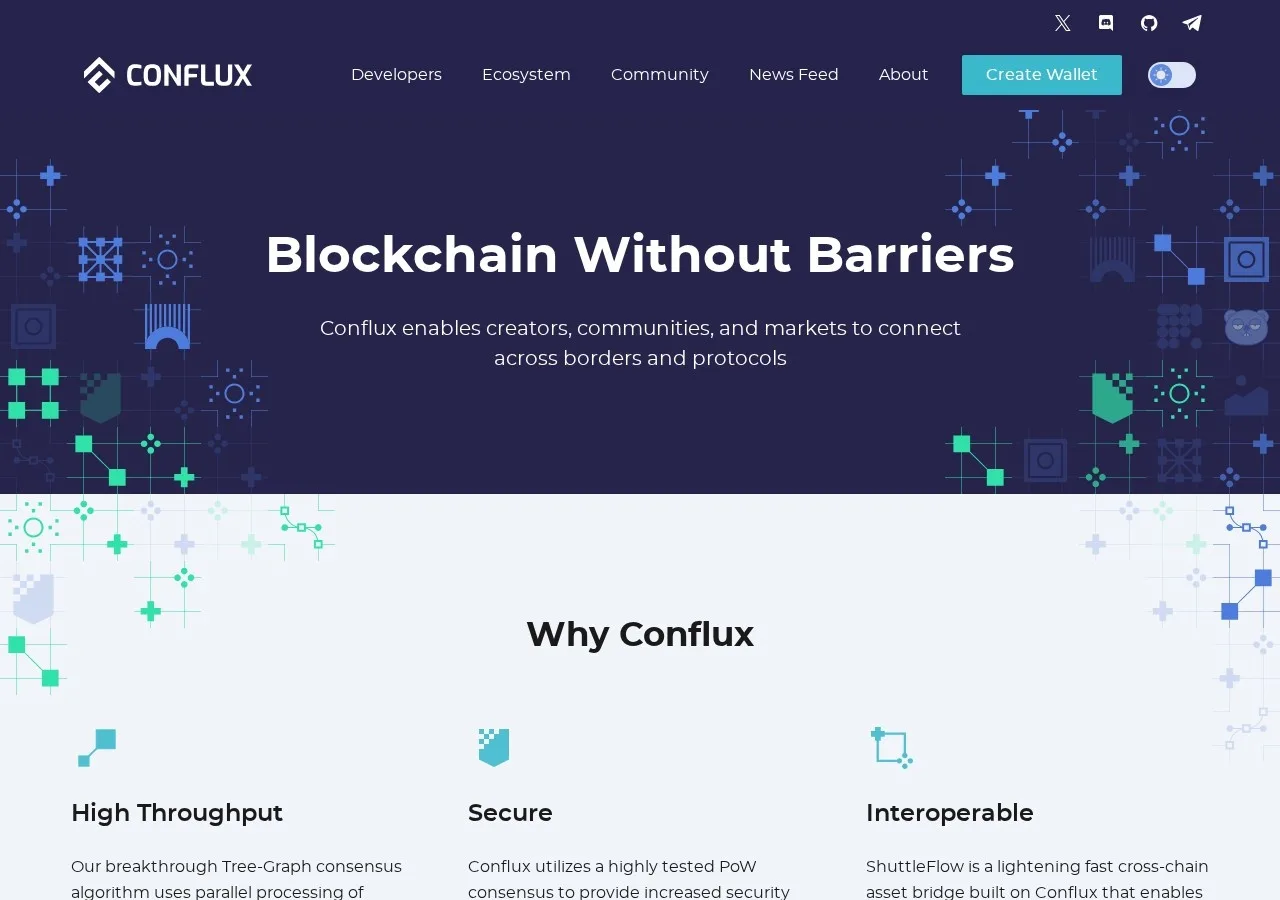
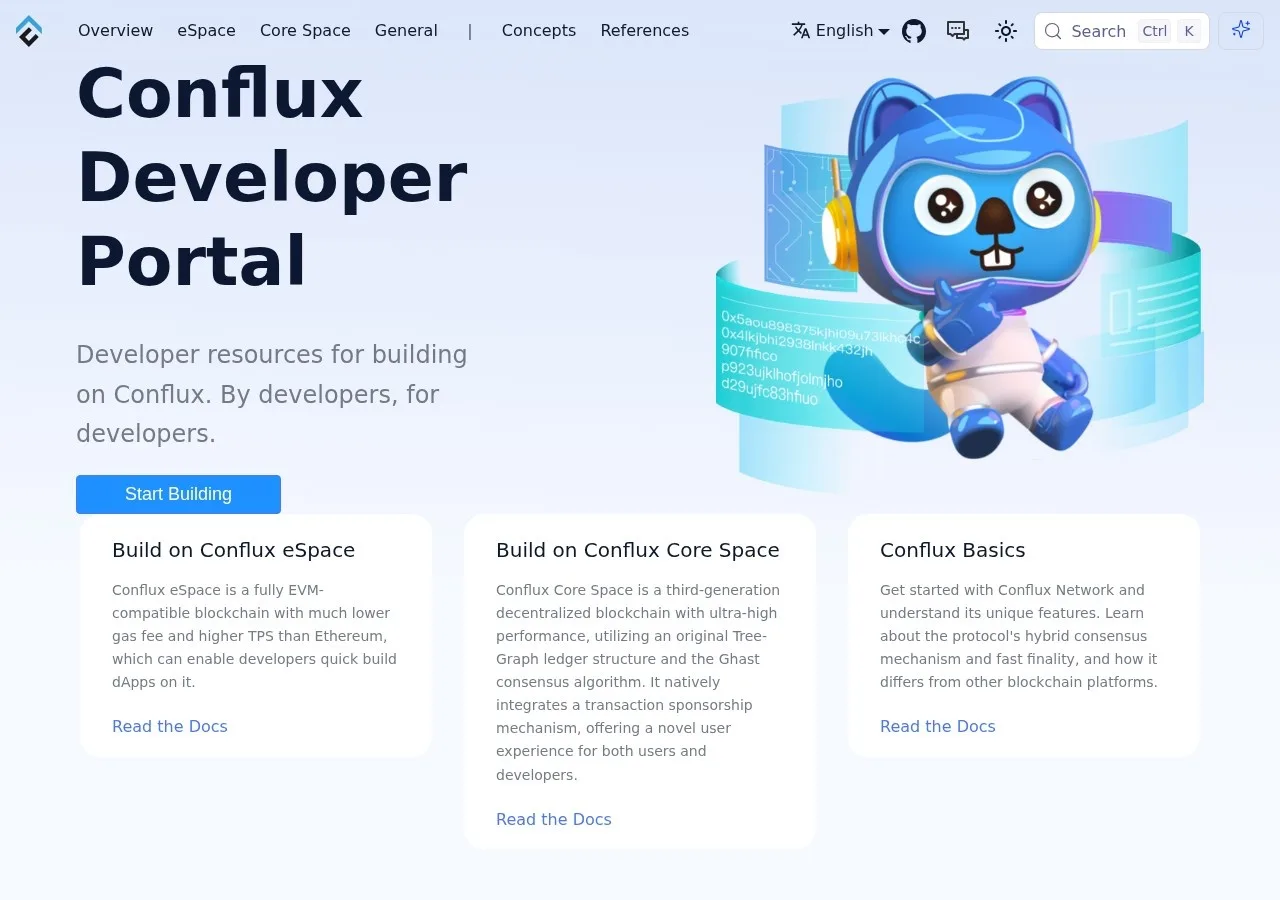
Conflux screenshots
What users say about Conflux
Community discussion regarding Conflux contains very little organic feedback, consisting mostly of announcements, spam, and news reposts. Users occasionally express excitement for new integrations.
In their own words
“Poder usar USDT0 de Conflux eSpace para pagos del día a día vía Visa/Mastercard es uno de los casos de uso más concretos que ha llegado al ecosistema. Fees bajos, confirmación rápida y una interfaz que no asusta a usuarios nuevos. Buena integración.”
“seems like Conflux is dead and no longer mineable.”
Based on 77 Reddit posts and comments from the last 12 months, checked Oct 20, 2026. These are posts by users on other sites, not reviews submitted on CryptoReview.
User reviews
No user reviews yet. Have you used Conflux? Share your experience below.
Funding and investors
$55MTotal raised
1Round
2Investors
-
Series A Dec 2018 $35M
FAQ
Who founded Conflux?
Conflux was founded in 2018 by Fan Long and Ming Wu, alongside Chief Scientist and Turing Award recipient Andrew Chi-Chih Yao.
Does Conflux have a native token?
Yes, CFX is the native token used for paying gas fees, participating in governance, staking for a 4% annualized reward, and compensating network miners.
What are Conflux transaction fees?
Transaction fees are paid in CFX and remain low, while the built-in Fee Sponsorship Mechanism lets dApp sponsors cover costs entirely so end users pay zero gas.
Is Conflux compatible with Ethereum EVM?
Yes, Conflux eSpace is a fully EVM-compatible execution layer that works with Ethereum tools like Hardhat and MetaMask.
How is Conflux secured?
Conflux uses a hybrid consensus architecture that pairs Tree-Graph proof-of-work parallel block processing with proof-of-stake finality and protocol-level anti-reentrancy protection.
What is the difference between Conflux Core Space and eSpace?
Core Space is the native environment using the Tree-Graph ledger and sponsorship model, while eSpace is an EVM-compatible layer designed for standard Ethereum smart contracts.
Latest from Conflux on X
5 years!
Love seeing @ManekiMeowOrg still building and growing after all these years.
So glad to have you in the Conflux family!
Love seeing @ManekiMeowOrg still building and growing after all these years.
So glad to have you in the Conflux family!
Heading to @labitconf in Buenos Aires? 🇦🇷
Our @Conflux_Espanol ambassador @crypto_mimi05 will be there from October 29 to November 1!
Great seeing our Español community getting involved!
Our @Conflux_Espanol ambassador @crypto_mimi05 will be there from October 29 to November 1!
Great seeing our Español community getting involved!
Hey Conflux fam! 👋
Conflux v3.1.1 Upgrade is now available!
This update focuses on improving node stability and security, fixing bugs, and making RPC and synchronization more reliable.
Node operators are encouraged to upgrade to the latest version.
https://t.co/rlLPpnS0yv
Conflux v3.1.1 Upgrade is now available!
This update focuses on improving node stability and security, fixing bugs, and making RPC and synchronization more reliable.
Node operators are encouraged to upgrade to the latest version.
https://t.co/rlLPpnS0yv
After China's National Day celebrations earlier this month, some of our communities got creative and started making Conflux logos using their traditional foods!
Can you guess the countries and dishes? Do you see yours?
Who's missing?
Share your country's version in the replies! Let's see how many countries we can bring together and which one gets the most attention!
Can you guess the countries and dishes? Do you see yours?
Who's missing?
Share your country's version in the replies! Let's see how many countries we can bring together and which one gets the most attention!

Recent public posts from @Conflux_Network, shown as published. Not reviewed or endorsed by CryptoReview.
Alternatives to Conflux
Proof-of-stake layer-1 blockchain securing nearly $50B in DeFi value since 2015
Layer 1Proof of StakeEVM compatible

Ethereum optimistic rollup securing over $12B with ~0.25-second block times and Stylus Rust contracts
Layer 2Optimistic rollupEVM compatible

Sharded Layer-1 blockchain supporting 1.2s finality and cross-chain execution across 35+ networks
Layer 1Proof of StakeNEAR

EVM sidechain with sub-two-second settlement, $0.002 average fees, and over 8 billion processed transactions
SidechainProof of StakeEVM compatible

Proof-of-stake layer 1 with sub-second finality and customizable sovereign appchains
Layer 1Proof of StakeEVM compatible

Ethereum layer 2 built on the OP Stack and incubated by Coinbase
Layer 2Optimistic rollupEVM compatible