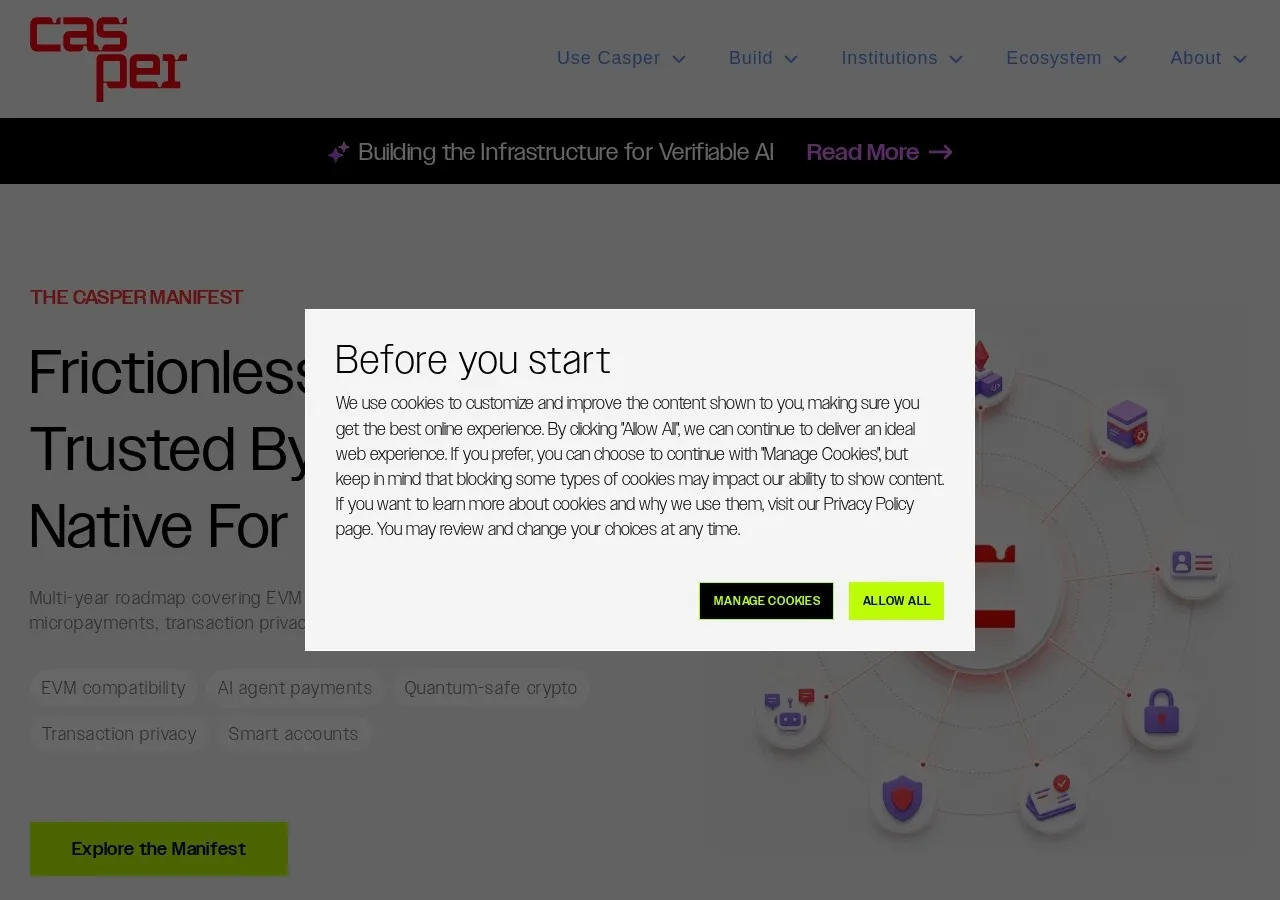
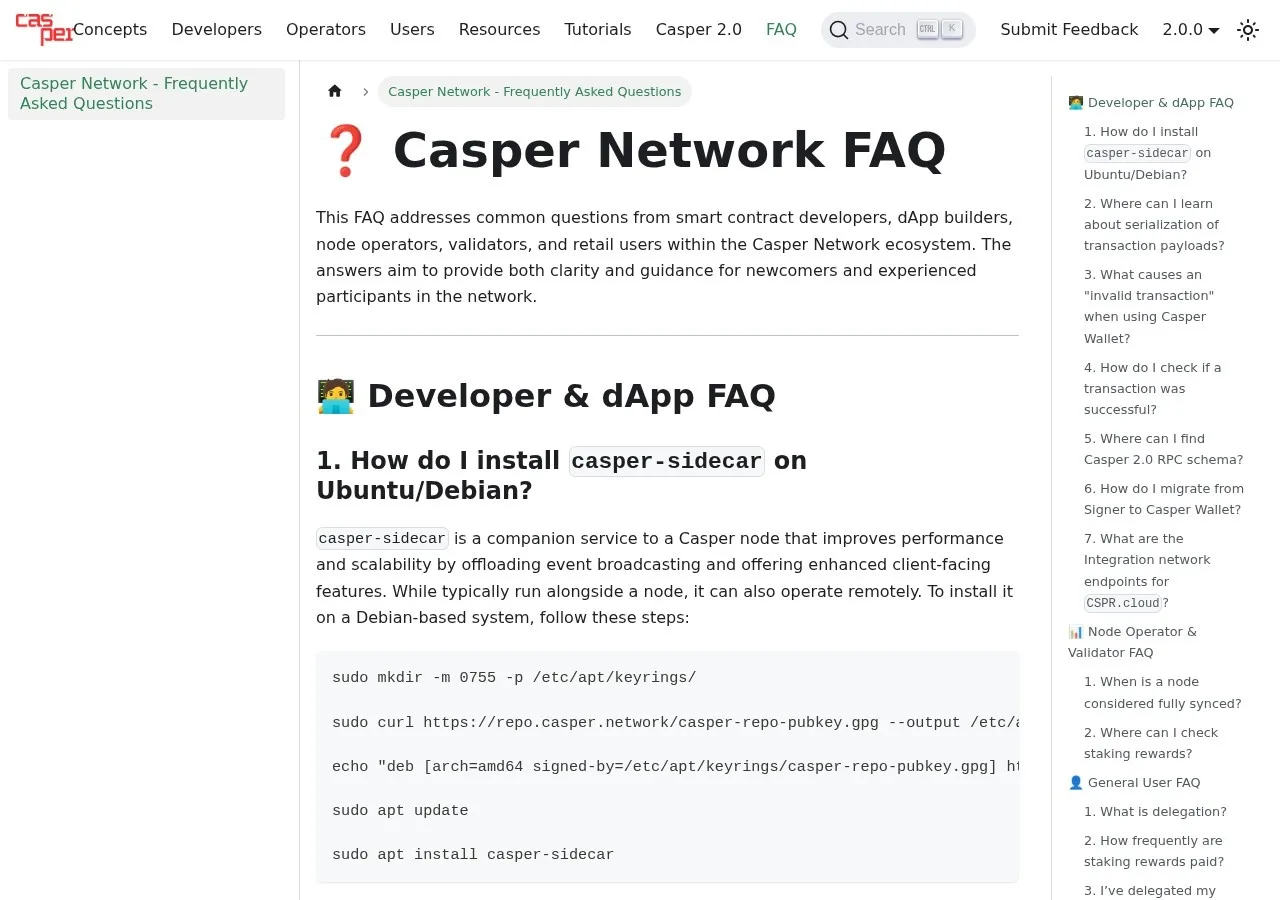
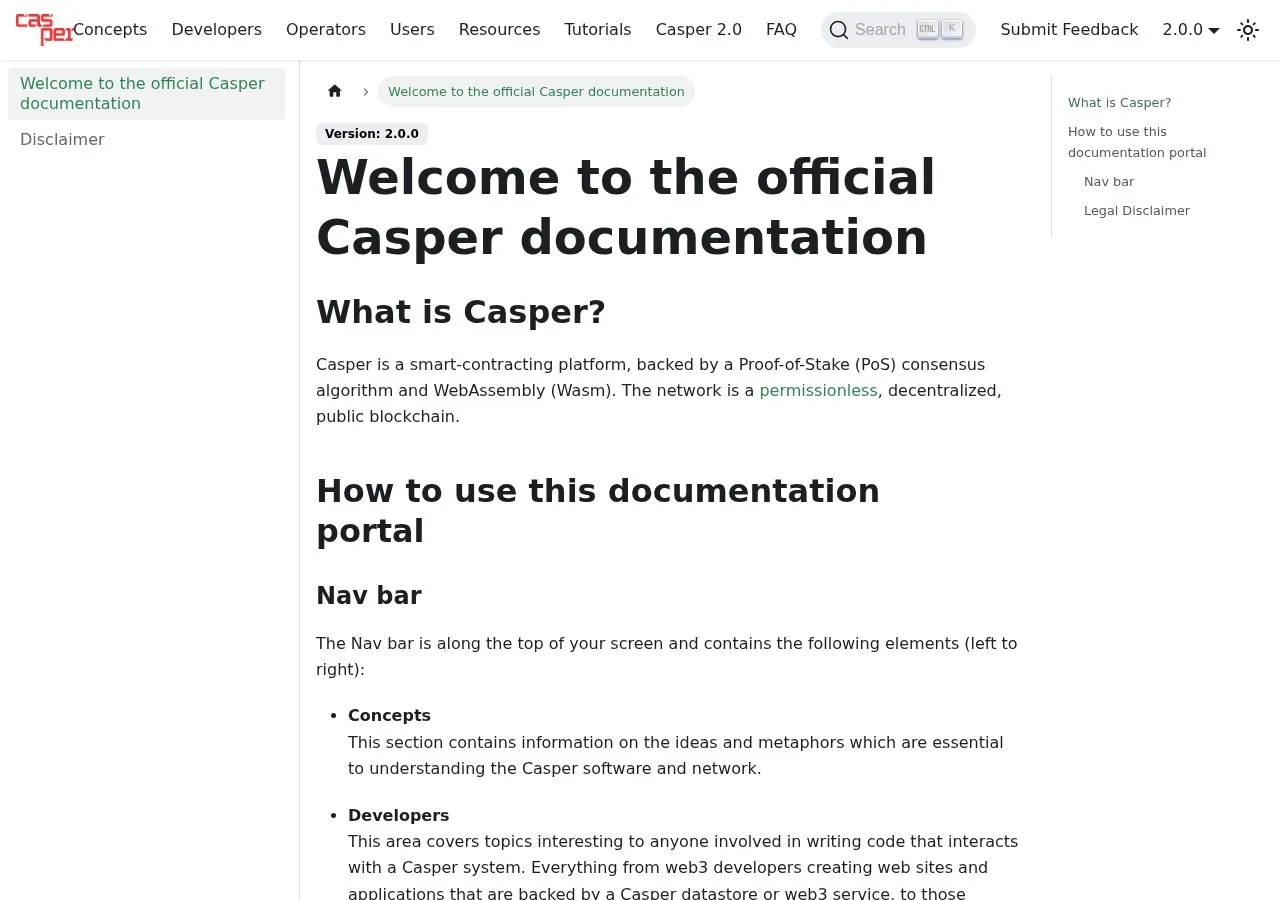
Casper Network is a public, permissionless layer-1 proof-of-stake blockchain built on WebAssembly (Wasm) smart contracts. Designed for institutional adoption, real-world asset tokenization, and machine payments, the network uses the native CSPR token for transaction fees, network governance, and validator staking.
Governance and organization
The network is supported and coordinated by the Casper Association, an entity based in Europe. Validators vote on tokenomics on-chain.
Consensus and architecture
Casper uses a Proof-of-Stake consensus mechanism. Instead of the Ethereum Virtual Machine, the base layer runs a WebAssembly execution environment, letting developers write smart contracts in languages like Rust through frameworks such as Odra. Network updates lowered block times from 16 seconds to 8 seconds. Users interact with the network via the non-custodial Casper Wallet, while AstralBeam connects Casper to Ethereum, Base, Polygon, and Robinhood Chain.
Fees and token mechanics
All network transactions and smart contract executions require gas paid in the native CSPR token. As of recent protocol updates, baseline transaction fees on Casper are permanently burned rather than redistributed entirely to validators. CSPR is traded on international exchanges, including Kraken for eligible United States users, and can be staked directly or liquid-staked.
Track record and ecosystem milestones
Casper's domain was established in June 2020 ahead of its mainnet rollout. In June 2026, the network launched an AI Toolkit with x402-standard micropayment support for automated agent requests. In August 2026, the Casper Association partnered with AmericanFortress on quantum-resistant privacy tools for tokenized assets and collaborated with Payouts.com on automated agent payments. By September 2026, the AstralBeam bridge entered public testnet, linking Casper to external EVM networks.
Risks and technical trade-offs
Because Casper uses a native WebAssembly architecture rather than native EVM bytecode, Ethereum developers must adopt Rust toolchains because EVM compatibility is on the roadmap. Moving tokenized real-world assets across external networks relies heavily on cross-chain infrastructure like the AstralBeam bridge, exposing transfers to standard bridge smart contract risks. Tokenomics remain subject to validator voting.