

Join us now live for Episode 2 of the Cardano Research Exchange:
"The Effect of Parameter Changes on SPO and Delegator Incentives, Part 1"
https://t.co/E9juWP97G2

Cardano
Proof-of-stake layer-1 blockchain with deterministic fees and non-custodial liquid staking since 2017
3.6/ 5
Our score
Good
Layer
Layer 1
Consensus / design
Proof of Stake
Native token
ADA
Block time
~20 seconds
Typical transaction fee
Deterministic fixed protocol formula
EVM compatible
No
What is Cardano?
Cardano is a decentralized layer-1 blockchain platform built on peer-reviewed academic research and formal verification methods. Operating since September 2017, the network uses the Ouroboros proof-of-stake consensus protocol and an Extended UTXO (EUTXO) accounting model, where transactions deterministically evaluate inputs and outputs before being committed on-chain.
Founders and governance structure
The network was founded by former Ethereum contributors Charles Hoskinson and Jeremy Wood, who co-founded Input Output Global (IOG) to handle core technical development. Ecosystem development, education, and legal stewardship are coordinated alongside the Zug, Switzerland-based Cardano Foundation and commercial partner EMURGO. Following the implementation of CIP-1694 during the Chang upgrade, the Voltaire governance era introduced on-chain voting where ADA holders, delegated representatives, stake pool operators, and a constitutional committee directly control parameter updates and treasury allocations.
Core protocol mechanics and fees
Cardano processes blocks at roughly 20-second intervals. Unlike account-based blockchains, Cardano uses an EUTXO architecture where transactions spend specific outputs. Users can check execution results and fees before submitting a transaction, and systems can compose transactions in parallel without gas auctions. Smart contracts run on Plutus or alternative languages like Aiken. Transaction fees follow a fixed protocol formula based on the transaction byte size and computational script steps rather than bidding markets. Staking ADA is entirely liquid and non-custodial: delegations require a refundable key deposit, funds remain liquid inside personal wallets without lockups, and validators are not subject to stake-slashing penalties.
Track record and adoption
The network completed nine years of continuous mainnet operation by late 2026. Network activity recorded 773,339 transactions over a 30-day period ending October 6, 2026, with 290,148 occurring on native decentralized applications. Decentralized finance total value locked stood at $64.5M in October 2026, alongside $70.2M in native stablecoin supply. Project Catalyst manages community grants, including a 2 million ADA pilot in September 2026 funding 12 projects with milestone-based payouts. In September 2026, the network also deployed CIP-0113 to support programmable tokens carrying on-chain transfer compliance logic.
Trade-offs and risks
Cardano is not natively EVM-compatible, meaning Ethereum-based decentralized applications cannot deploy directly without rewrites into Haskell-based Plutus or Aiken. Throughput remains limited under current parameters, though the scheduled Ouroboros Leios upgrade targets committee-certified endorser blocks to scale transactions. While the core base protocol has maintained uptime without native consensus halting, application-level risks remain: in June 2026, ecosystem wallet SecondFi suffered a key derivation breach draining over 16 million ADA from user balances.
Founders
Charles HoskinsonCo-founder
Former Ethereum co-founder; co-founded IOHK (Input Output Global) to develop Cardano.
Jeremy WoodCo-founder
Former Ethereum team member; co-founded IOHK alongside Charles Hoskinson.
Best for:Developers requiring formal contract verificationUsers prioritizing non-custodial liquid stakingParticipants seeking on-chain decentralized governance
Pros and cons
Pros
- Over nine years of continuous layer-1 mainnet operation without network halts
- Liquid staking keeps ADA unlocked in native wallets with no slashing risk
- Deterministic transaction fees calculated from fixed parameters without gas spikes
- Decentralized on-chain governance controlling protocol parameters and treasury spend
Cons
- Lacks native EVM compatibility, requiring contracts written in Plutus or Aiken
- DeFi ecosystem TVL was around $64.5M in October 2026, trailing major peers
- Block time is roughly 20 seconds, limiting rapid transaction finality
- Ecosystem wallet vulnerability in June 2026 drained over 16 million ADA
Our review
3.6/5
Good
Cardano provides liquid, non-custodial staking and deterministic fees on an extended UTXO ledger, balanced by modest DeFi liquidity and a non-EVM developer environment.
Cardano operates as an independent Layer 1 proof-of-stake blockchain launched in September 2017 by Charles Hoskinson and Jeremy Wood. Development is coordinated between the Cardano Foundation in Zug, Switzerland, Input Output Global (IOG), and EMURGO. The network relies on the Ouroboros consensus mechanism and an Extended UTXO (EUTXO) ledger model, which processes transactions deterministically. Users can calculate exact execution outcomes and fixed protocol fees locally before broadcasting them, eliminating transaction failures caused by gas price bidding wars.
Staking architecture is one of Cardano's primary operational advantages. ADA holders delegate without lock-up periods or custody transfers, meaning funds remain spendable in the user's wallet while earning rewards without slashing risk. On-chain governance enables ADA holders and stake pool operators to vote on protocol updates and allocate treasury reserves, moving away from centralized administrative keys.
However, Cardano faces structural trade-offs:
- Lack of EVM compatibility requires developers to learn Haskell-derived Plutus or Aiken, limiting direct porting of Solidity tooling.
- Block times hover around 20 seconds, resulting in slower execution throughput compared to high-speed alternatives until planned scaling upgrades like Ouroboros Leios reach mainnet.
- Decentralized finance adoption remains modest, with network TVL at $64.5M in October 2026.
Core protocol uptime has remained continuous over nine years on mainnet. Security risks typically manifest in surrounding software; for instance, the ecosystem wallet SecondFi experienced an application-level key derivation exploit in June 2026, leading to the loss of 16 million ADA while 129 million ADA was secured in custody vaults. Cardano suits long-term token holders and developers building formally verified, deterministic applications. Traders seeking deep DeFi liquidity or native EVM infrastructure should consider other ecosystems.
Specs
| Layer | Layer 1 |
|---|---|
| Consensus / design | Proof of Stake |
| Native token | ADA |
| EVM compatible | No |
| Smart contract languages | Plutus, Aiken |
| Block time | ~20 seconds |
| Typical transaction fee | Deterministic fixed protocol formula · unverified |
| Mainnet since | 2,017 · unverified |
| Sequencer | Not applicable · unverified |
| Gas paid in | ADA · unverified |
Not disclosed by the provider: Finality, Validators / sequencer, Throughput (TPS), Data availability.
Data from the provider's website and public sources. Fees and availability change; confirm on the official site before you sign up.
Key features
Extended UTXO accounting
Transactions spend specific outputs and generate new ones, allowing predictable costs and local transaction validation prior to submission.
Liquid non-custodial staking
Staking ADA delegates voting weight without lock-up periods, asset freezing, minimum delegations, or slashing penalties.
On-chain treasury and voting
ADA holders participate directly or delegate voting power to representatives to govern protocol changes and treasury disbursements under CIP-1694.
Deterministic fee calculations
Network fees are computed using fixed mathematical parameters based on byte size, preventing priority fee bidding wars.
EUTXO smart contract languages
Supports smart contract development through formal languages including Plutus and Aiken without requiring an EVM execution environment.
Programmable token framework
CIP-0113 integration allows creators to embed programmable rules and transfer constraints directly into native on-chain tokens.
Inside Cardano
Extended UTXO Ledger
Cardano processes transactions via an extended UTXO model where outputs can be verified deterministically before submission, allowing multi-party payments in a single transaction.
Liquid Staking
ADA holders delegate voting and block-production power to stake pool operators directly from their wallets without locking periods or protocol slashing.
On-Chain Governance
ADA holders, delegated representatives, and stake pool operators vote on protocol changes, parameter updates, and treasury funding directly on-chain.
Project Catalyst
A decentralized innovation fund stewarded by the Cardano Foundation where ADA holders vote to distribute treasury grants to ecosystem development teams.
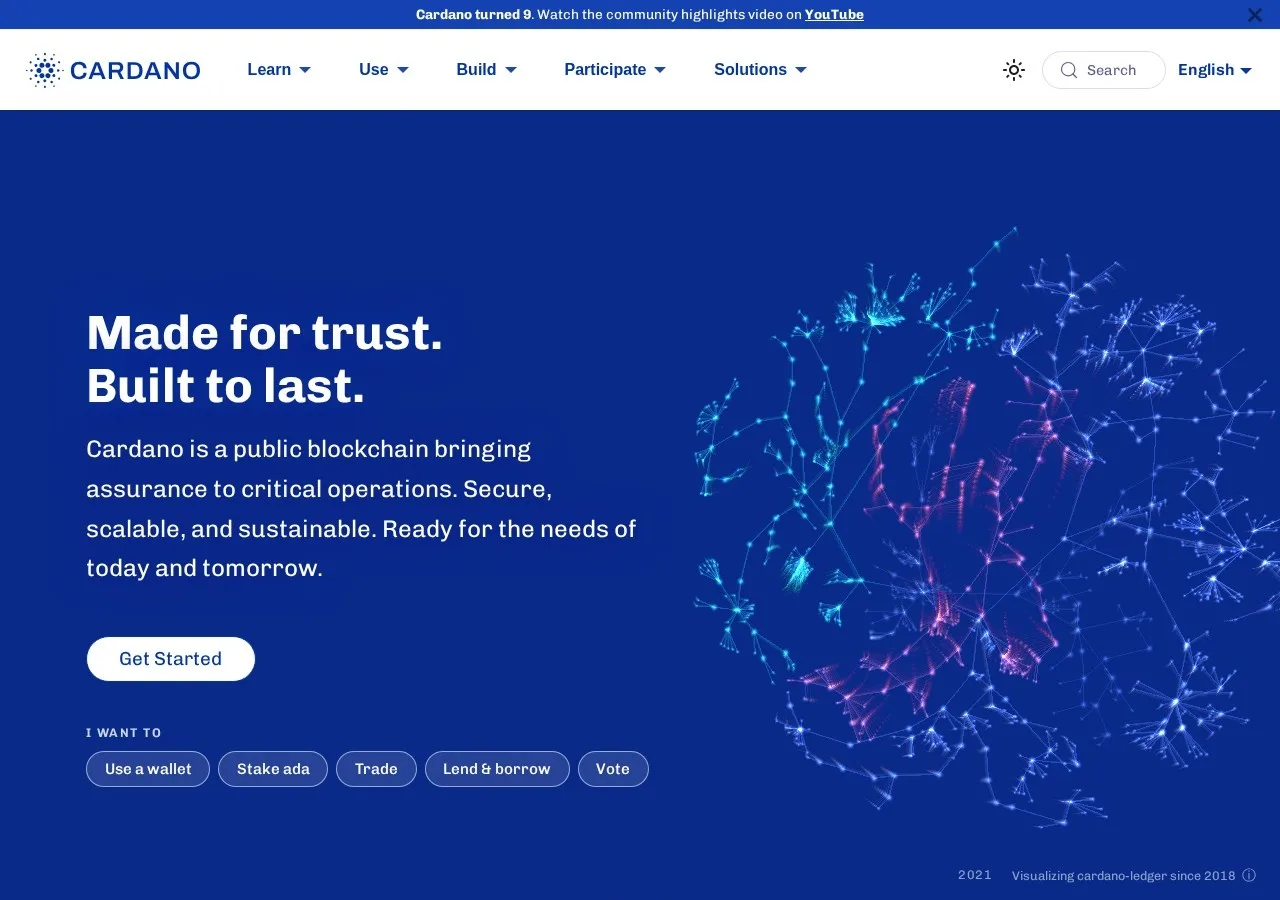
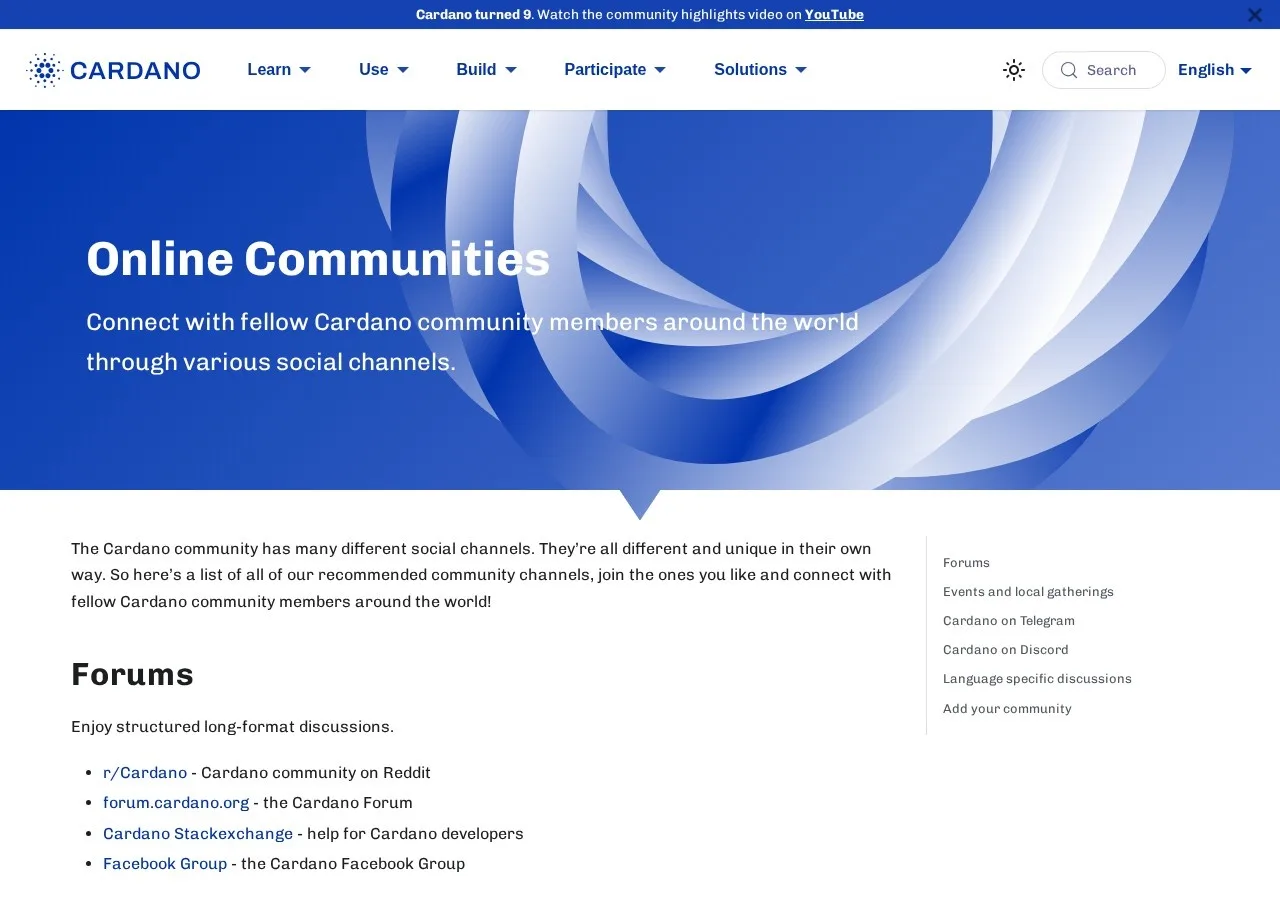
Cardano screenshots
What users say about Cardano
Cardano has on-chain governance. However, user sentiment is heavily dampened by wallet ecosystem failures, particularly unresolved asset discrepancies and difficult migration following the Yoroi/SecondFi incident, alongside confusion regarding mandatory DRep delegation to claim staking rewards.
Top goods
In their own words
“Are you kidding me, right? Are you saying to me that the most robust and secure blockchain backed with math and scientific investigation, is dead? Please…”
“SecondFi not responding to my emails/messages about recovery discrepancies So we all know SecondFi / Yoroii totally f'd up.”
“It was a Drep issue, I wasn't delegrated to a rep and hence wasn't allowed to extract my rewards. Thanks!”
“Can't migrate out of secondfi Hey all, ive already contacted secondfi support but it doesn't seem to be going anywhere. Im trying to migrate my ada from secondfi to eternl, i get a broadcast error everytime.”
Scam warning: Users report fraudulent wallet drainers actively sweeping compromised addresses whenever funds or tokens are deposited.
Based on 200 Reddit posts and comments from the last 12 months, checked Oct 20, 2026. These are posts by users on other sites, not reviews submitted on CryptoReview.
User reviews
No user reviews yet. Have you used Cardano? Share your experience below.
FAQ
Who founded Cardano?
Cardano was founded in 2017 by Charles Hoskinson and Jeremy Wood, who previously worked on Ethereum and later formed Input Output Global (IOG).
Does Cardano have a native token?
Cardano uses ADA as its native currency. ADA pays for network transaction fees, funds on-chain governance proposals, and secures the ledger via staking delegation.
How are transaction fees calculated on Cardano?
Fees follow a deterministic protocol parameter formula based on transaction data size rather than an auction market. Users know the exact fee before submitting a transaction, and failed transactions do not consume gas.
Is Cardano EVM compatible?
Cardano is not natively EVM compatible. Smart contracts run on its Extended UTXO model and are primarily written in Plutus or Aiken rather than Solidity.
Has Cardano experienced any major security incidents?
The underlying Cardano base layer has operated continuously without outages, but ecosystem applications remain vulnerable to their own flaws. In June 2026, third-party wallet SecondFi suffered a key derivation exploit that drained over 16 million ADA without affecting the Cardano network.
How does staking work on Cardano?
Staking is non-custodial and liquid, requiring a small refundable deposit to register a stake key. ADA never leaves your wallet, has no lock-up periods, and cannot be slashed by the protocol.
Latest from Cardano on X
Going Live in 30 minutes - Cardano Research Exchange:
"The Effect of Parameter Changes on SPO and Delegator Incentives, Part 1"
https://t.co/fU7vwH3ptL
"The Effect of Parameter Changes on SPO and Delegator Incentives, Part 1"
https://t.co/fU7vwH3ptL
Recording: Dev Office Hours on Nexus, the data and transaction API behind GeroWallet (@GeroWallet).
One API for Cardano, Bitcoin and Midnight. It sends blocks and events to the wallet as they happen, and builds transactions to be signed.Adam Cazes, A.D. Labs
For future sessions, register on:
https://t.co/W5dhXikZHj
One API for Cardano, Bitcoin and Midnight. It sends blocks and events to the wallet as they happen, and builds transactions to be signed.Adam Cazes, A.D. Labs
For future sessions, register on:
https://t.co/W5dhXikZHj
New week, new sessions, and plenty of Cardano conversations to tune into and get involved in 👇
📅 Mon, Nov 2
🔹13:00 UTC - Cardano Research Exchange: The Effect of Parameter Changes on SPO and Delegator Incentives, Part 1 (@DenicioBernier, @manv_sc, Juan Beccuti)
📅 Wed, Nov 4
🔹14:00 UTC - TSC Session on Post Quantum Cryptography (@IntersectMBO)
📅 Thu, Nov 5
🔹16:30 UTC - Governance Hour #13: Deep Dive Into PFMS, Bringing Government Scale Adoption to Cardano by Trivolve Tech (@NicolasC3rny, @Rahulkonudula)
Want to find more events? Head over to the Luma pages:
https://t.co/XbzPE6MDrD
https://t.co/yAMTWb5k0b
A big thank you to everyone who joined us on 29 October for our Roundtable Talk on CIP-113: What Programmable Tokens Mean for Regulated Assets.
And a special thank you to our speakers for bringing their knowledge and perspectives to the discussion:
- @wlstylr (@EncryptusGlobal)
- Oskars Jepsis (@IncDeploi)
- Edward Fleming (@brale_xyz)
- @CryptoJoe101 (@Cardano_CF)
- Estelle Roiena (@Cardano_CF)
A few points that stood out:
🔹 How CIP-113 enables issuers to embed KYC/AML, sanctions screening, transfer restrictions and freeze/seize capabilities directly into native Cardano tokens, with rules enforced by the ledger on every mint, transfer or burn, without a hard fork.
🔹 What this means in practice for regulated assets, including stablecoins and tokenized securities, and projects already building on Cardano.
Thank you again to everyone who shared their time and expertise, and to the community for joining live.
https://t.co/kFuqU14BTL
Recent public posts from @Cardano, shown as published. Not reviewed or endorsed by CryptoReview.
Alternatives to Cardano
Proof-of-stake layer-1 blockchain securing nearly $50B in DeFi value since 2015
Layer 1Proof of StakeEVM compatible

Ethereum optimistic rollup securing over $12B with ~0.25-second block times and Stylus Rust contracts
Layer 2Optimistic rollupEVM compatible

Sharded Layer-1 blockchain supporting 1.2s finality and cross-chain execution across 35+ networks
Layer 1Proof of StakeNEAR
EVM sidechain with sub-two-second settlement, $0.002 average fees, and over 8 billion processed transactions
SidechainProof of StakeEVM compatible

Proof-of-stake layer 1 with sub-second finality and customizable sovereign appchains
Layer 1Proof of StakeEVM compatible

Ethereum layer 2 built on the OP Stack and incubated by Coinbase
Layer 2Optimistic rollupEVM compatible