
Proof-of-stake layer-1 blockchain securing nearly $50B in DeFi value since 2015
Layer 1Proof of StakeEVM compatible

Decentralized proof-of-work blockchain launched in 2009 with no central operator
Bitcoin is an open-source Layer 1 blockchain and peer-to-peer payment network. It has operated since 2009 without a central authority or bank, using proof-of-work mining to validate transactions. Bitcoin.org is an independent community resource, not a company or governing body for the network.
Satoshi Nakamoto published Bitcoin’s first specification and proof of concept in 2009, then left the project in late 2010 without revealing a verified identity. Martti Malmi was an early Bitcoin developer and one of bitcoin.org’s original owners. No company or foundation controls the network. The Bitcoin Project is released under the MIT License, and developers can propose changes that network participants may adopt or reject.
Miners compete through proof of work to add blocks, while nodes validate transactions and enforce Bitcoin’s consensus rules. Blocks arrive at roughly 10-minute intervals. The native asset is BTC, used for payments and transaction fees. Bitcoin Script supports spending conditions and multisignature arrangements. The network is not EVM compatible, and Bitcoin Core lets participants run a full node rather than relying on a central validator.
Users can hold BTC through custodial services or self-custody wallets. Bitcoin.org provides guidance on hot and cold wallets, as well as backups and recovery phrases. Bitcoin.org lists the Lightning Network in its FAQ.
Bitcoin.org describes Bitcoin's processing fees as low, but no fixed amount is given. KYC depends on the wallet, exchange or payment service used to obtain and store BTC. The network itself is available worldwide.
Bitcoin’s first specification appeared in 2009, and Satoshi Nakamoto left the project in 2010. Bitcoin Core version 31.0 is listed for 2026. Bitcoin’s open development model and distributed node network reduce dependence on a single operator, while the Bitcoin Project copyright spans 2009 to 2026.
Confirmation takes time, and fees can rise when block space is busy. The network is not EVM compatible, and its scripting system is narrower than EVM smart-contract environments.
Published Bitcoin's first specification and proof of concept in 2009, then left the project in late 2010 without revealing a verified identity.
Was one of Bitcoin.org's original registrants and owners.
Bitcoin's main strengths are open, decentralized settlement and a long operating history; its trade-offs are slow base-layer confirmation and limited smart-contract flexibility.
Bitcoin is a Layer 1 network secured by proof-of-work, with BTC as its native asset and Bitcoin Script as its smart-contract language. Its first specification and proof of concept appeared in 2009, and the network operates without a central authority or bank.
The network’s clearest strengths are its open-source design, broad availability and operating history. Bitcoin.org describes worldwide payments and low processing fees, while the network has continued from its 2009 launch through 2026. Bitcoin Core software validates blocks and transactions against Bitcoin’s consensus rules, and anyone can review or modify the code. The MIT license also gives developers a permissive basis for building related software.
There are trade-offs. Blocks arrive at roughly 10-minute intervals, so base-layer settlement requires waiting for confirmations and final settlement generally depends on additional confirmations. Bitcoin is not EVM compatible, and Bitcoin Script offers a narrower application environment than Solidity-based networks. Fees are described as low, but they vary with demand rather than following a fixed network price.
Mining and node operators collectively enforce the rules, with no official company controlling the network. Satoshi Nakamoto created Bitcoin and left the project in late 2010 without a verified public identity. Bitcoin.org is an independent educational site, not the network’s owner or governing body. That separation reduces dependence on a single company, but it also means users must distinguish the protocol from wallets and exchanges built around it.
Bitcoin suits payments and self-custody, as well as applications that value a mature proof-of-work settlement network over rich native programmability. Users also manage self-custody risks: lost keys can mean lost funds. Buying and selling services may impose their own custody and identity requirements.
| Layer | Layer 1 |
|---|---|
| Consensus / design | Proof of Work |
| Native token | BTC |
| EVM compatible | No |
| Smart contract languages | Bitcoin Script |
| Block time | ~10 minutes |
| Typical transaction fee | Low processing fees · unverified |
| Validators / sequencer | Proof-of-work miners · unverified |
| Mainnet since | 2,009 · unverified |
| Sequencer | Not applicable · unverified |
| Gas paid in | BTC · unverified |
Not disclosed by the provider: Finality, Throughput (TPS), Data availability.
Data from the provider's website and public sources. Fees and availability change; confirm on the official site before you sign up.
Miners compete to add blocks, while network nodes validate transactions against Bitcoin's consensus rules.
Bitcoin is a peer-to-peer payment network that operates without a central authority or bank.
BTC is Bitcoin's native asset and Bitcoin.org lists fees as low, without a fixed amount.
Bitcoin Core lets participants download and validate the blockchain locally instead of trusting a central validator.
Bitcoin Script supports spending conditions such as multisignature transactions, without EVM compatibility.
Bitcoin.org provides guidance on hot and cold wallets, backups and recovery phrases.
Bitcoin.org includes the Lightning Network in its FAQ.
This section explains Bitcoin for personal use, including getting started, choosing a wallet and buying or selling BTC.
This section covers Bitcoin use by businesses, including payment-related information and ways to work with the network.
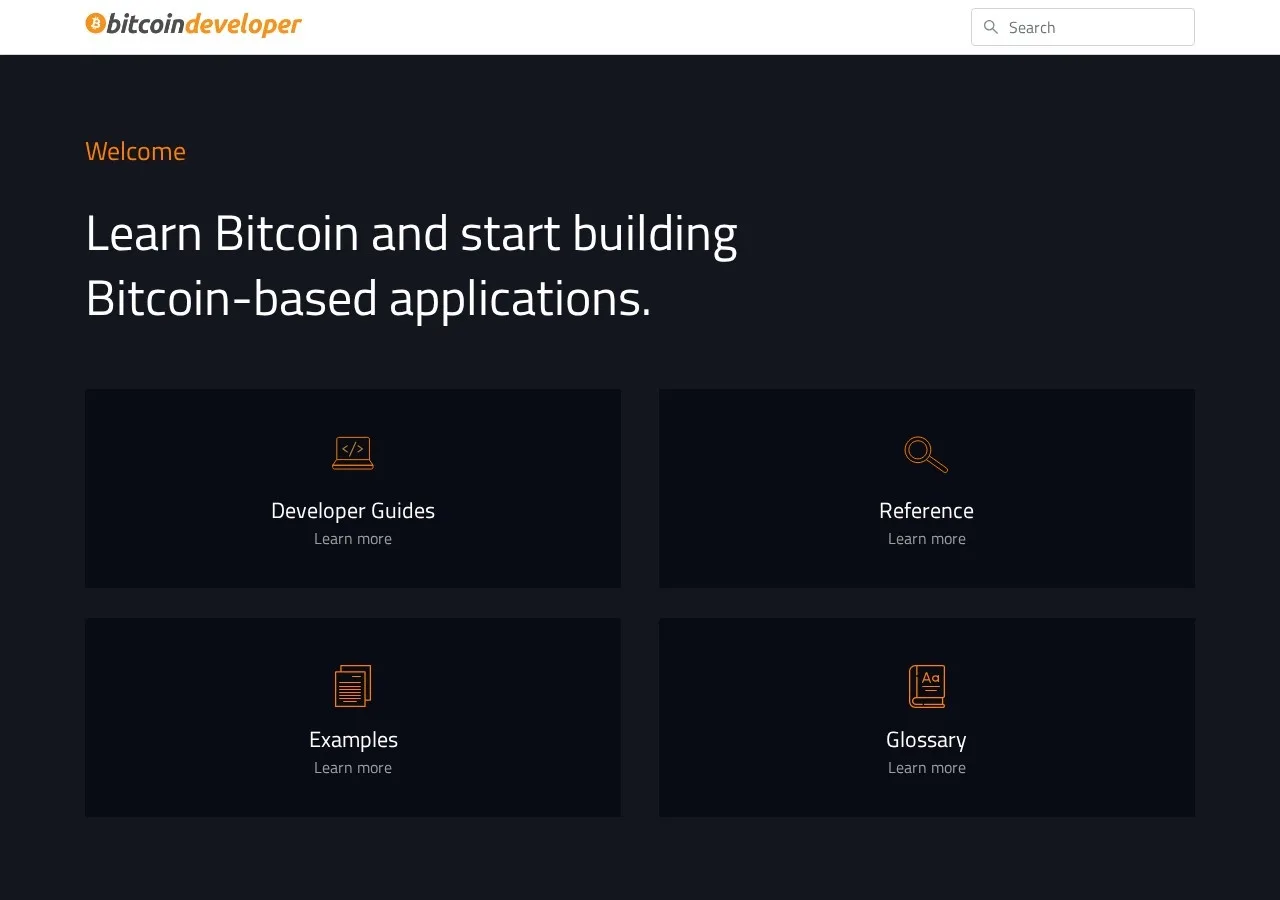
This section provides technical material for building Bitcoin applications, with links to developer documentation and Bitcoin Core resources.
This section introduces Bitcoin and links to starting points such as wallets, buying Bitcoin and basic network information.
This section explains the peer-to-peer network, transactions, mining and the way Bitcoin operates without a central authority.
Resources include the white paper, Bitcoin Improvement Proposals, developer documentation, vocabulary and information about halving.
This section covers supporting Bitcoin, buying or selling BTC, running a full node and contributing to development.
Support provides the Bitcoin FAQ and guidance on common wallet, transaction, security and mining questions.
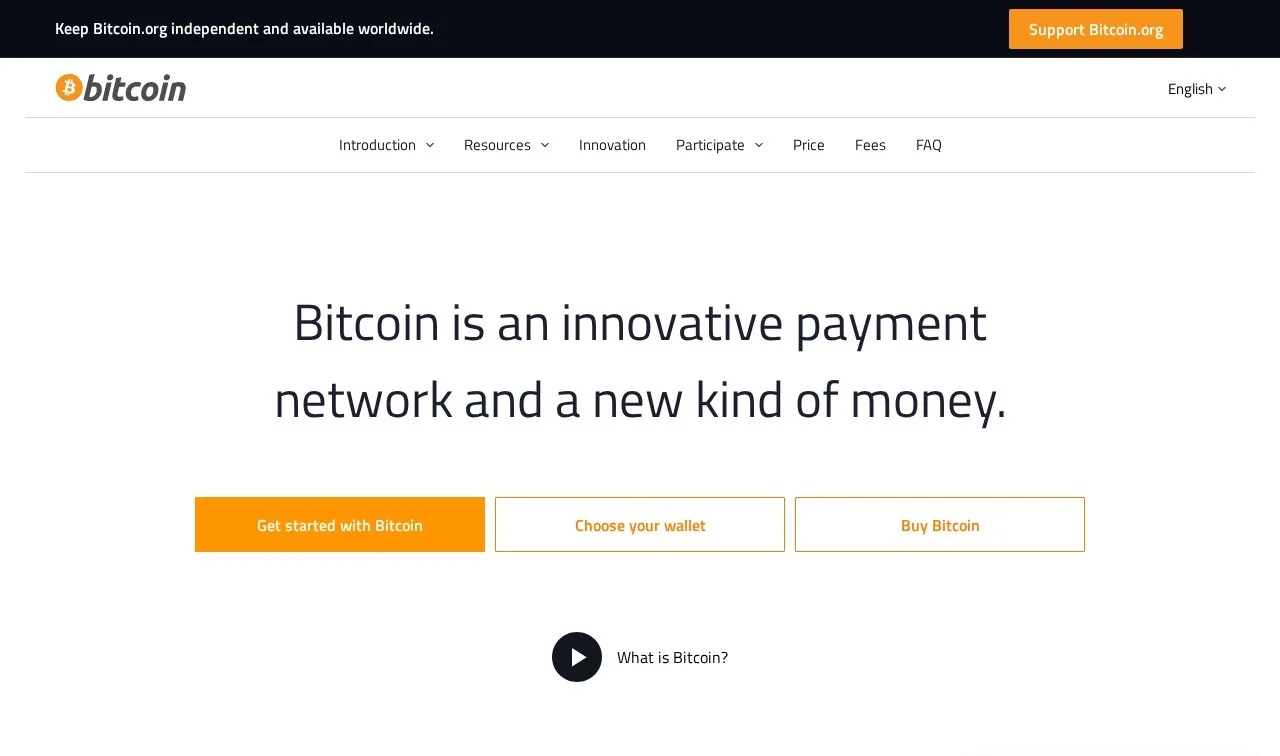
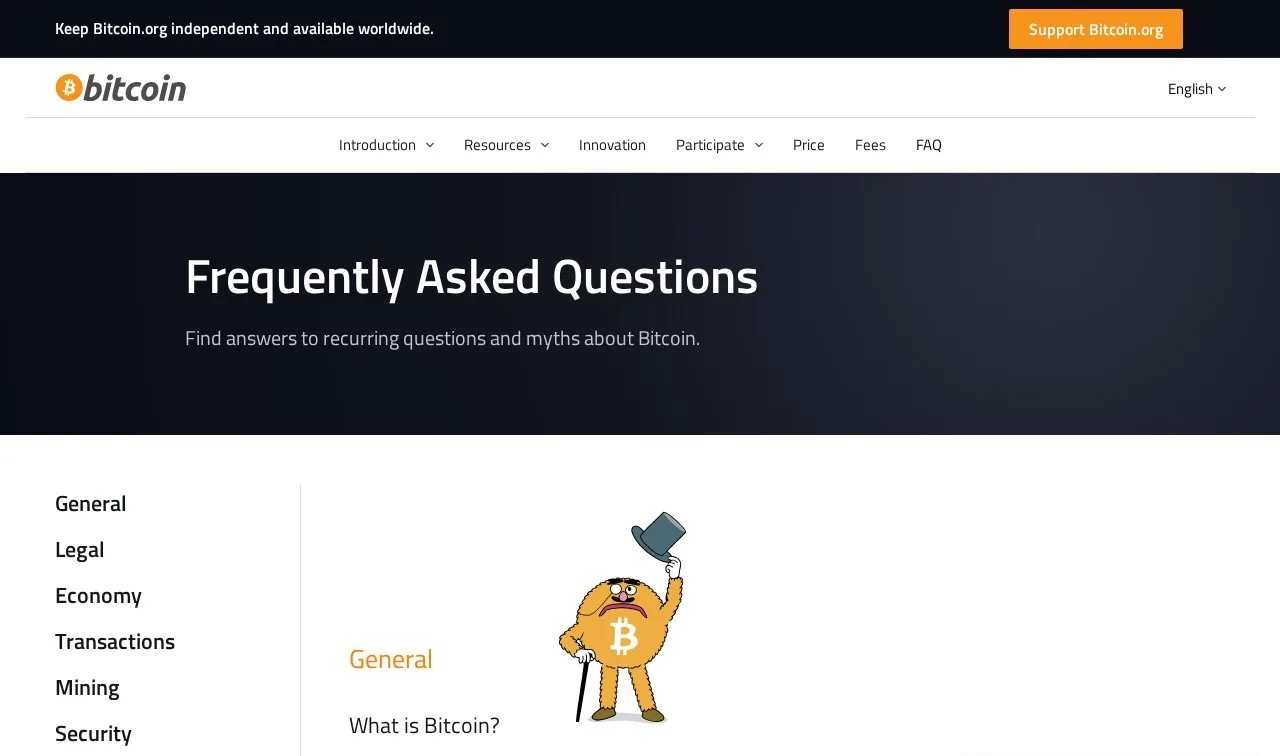
Conversation is mostly instructional and positive: users repeatedly send newcomers to the site's white paper, its wallet list and its full node guides, and direct complaints about the site itself are almost absent. The losses described come from phishing ads and fake wallet downloads rather than from the product.
“Dozens of non hardware wallets to choose from. Choose your operating system (windows, ios, android), close your eyes, pick one from the list. No need to spend money on this step.”
“A good place to start is by reading the white paper by Satoshi Nakamoto, you can find it on Bitcoin.org. Look for it in your native language and read it carefully. “But it’s too hard, I didn’t understand anything…” No problem. Download the PDF and put it into an AI.”
“Bitcoin.org's guide for the basics, then Sparrow Wallet's documentation when you're ready to move off the exchange.”
“No One Understands Bitcoin, And That’s Okay Some of the terminology you can just look up, but here you go: Node: Just the actual Bitcoin implementation (software) that you can run that does everything (except mining).”
“Well, not the best way to learn Linux tbh. I would just download a beginner friendly distro like Ubuntu or something then play around. But if you insist on a node, start here:”
Scam warning: Fake search ads impersonating hardware wallet brands have led users to send bitcoin to thieves
Scam warning: Phishing emails and fake wallet downloads have drained users' funds
Based on 200 Reddit posts and comments from the last 12 months, checked Oct 17, 2026. These are posts by users on other sites, not reviews submitted on CryptoReview.
No user reviews yet. Have you used Bitcoin? Share your experience below.
Satoshi Nakamoto published Bitcoin's first specification and proof of concept in 2009. Nakamoto left the project in late 2010 without revealing a verified identity; Martti Malmi was an early developer and original bitcoin.org owner.
Bitcoin.org describes Bitcoin's processing fees as low, but the amount changes with network demand. Wallets and services may also add their own charges.
The Bitcoin network is available worldwide and has no central authority or bank. KYC depends on the wallet, exchange or other service used to acquire or transfer BTC, rather than on the peer-to-peer protocol itself.
Bitcoin uses proof-of-work and open-source software to validate transactions and enforce consensus rules. Users can hold BTC in self-custody, but losing private keys can permanently prevent access, and Bitcoin.org is an informational site rather than a custodian or governing company.
The native Bitcoin network is one chain and its native asset is BTC. It uses Bitcoin Script rather than EVM-compatible smart contracts.
Bitcoin blocks are produced at roughly 10-minute intervals. A payment's settlement time depends on confirmation policy and network conditions, so base-layer transfers require waiting for confirmations.
Proof-of-stake layer-1 blockchain securing nearly $50B in DeFi value since 2015
Ethereum optimistic rollup securing over $12B with ~0.25-second block times and Stylus Rust contracts
Sharded Layer-1 blockchain supporting 1.2s finality and cross-chain execution across 35+ networks
EVM sidechain with sub-two-second settlement, $0.002 average fees, and over 8 billion processed transactions
Proof-of-stake layer 1 with sub-second finality and customizable sovereign appchains
Ethereum layer 2 built on the OP Stack and incubated by Coinbase
Type at least two characters. Press ↵ to see all results.