

If you're headed to @EFDevcon this week, mark these events down! Our co-founder @Zac_Aztec is speaking at multiple events across a variety of privacy-oriented topics. 🧵👇
First, catch Zac @IBWofficial mainstage on November 2, discussing onchain finance! https://t.co/HZgKDSRLUj

Aztec
Privacy-preserving Ethereum Layer 2 using client-side zero-knowledge proofs and Noir smart contracts
3.8/ 5
Our score
Good
Layer
Layer 2
Consensus / design
ZK rollup
Native token
AZTEC
EVM compatible
No
What is Aztec?
Aztec is a privacy-preserving Layer 2 rollup on Ethereum that enables programmable confidentiality for smart contracts. Unlike standard rollups that disclose execution details, Aztec allows developers to selectively separate private data from transparent onchain execution through client-side zero-knowledge proofs and its dedicated domain-specific language, Noir.
Team and funding
Aztec was founded in 2017 and is based in London, United Kingdom, with a team of 11 to 50 people. The project was co-founded by Chief Executive Officer Zachary Williamson, a co-inventor of the PLONK zero-knowledge proof system and former particle physics researcher at CERN, alongside Chief Product Officer Joe Andrews, former CTO of Radish who holds an engineering degree from Imperial College London. In December 2021, Aztec closed a $17 million Series A round led by Paradigm, with participation from a_capital, Ethereal Ventures, Libertus Capital, and angel investors including Vitalik Buterin.
Architecture and core mechanics
The network operates a hybrid state model combining an account-based system for transparent operations with an encrypted UTXO note model for private state. Private computations execute on the user's device inside a Private Execution Environment, generating zero-knowledge proofs before submitting transactions to the network. Transparent functions run across Aztec's decentralized network of sequencers and provers, with the entire system settling cryptographic proofs on Ethereum Layer 1. Cross-chain operations connect via the Nyx App Shield Bridge for compliant private transfers, while smart contracts are authored using Aztec.nr rather than Solidity.
Network economics and track record
Block validation and transaction ordering rely on decentralized node operators who stake the AZTEC token. Block rewards are structured so that 70% goes to sequencers and 30% goes to provers per 32-block epoch. Staking directly on the base protocol requires a minimum threshold of 200,000 AZTEC tokens, though third-party liquid staking protocols provide access without a deposit floor. Aztec deployed its Ignition Chain to Ethereum mainnet in November 2025. By January 2026, the network counted more than 185 operators across five continents, 3,400 active sequencers, and over 75,000 blocks produced.
Risks and limitations
Aztec is not EVM-compatible, meaning developers must learn Noir and rewrite smart contracts rather than reusing existing Solidity toolchains. In July 2026, internal AI audit tooling uncovered a critical vulnerability in the V5 Alpha proving system that placed user state and funds at risk, prompting protocol changes scheduled for the V6 release. Users also take on smart contract bridge dependencies between Ethereum and the Layer 2 rollup.
Founders
Zachary WilliamsonCo-Founder and CEO
Joe AndrewsCo-founder and Head of Product
Best for:Developers building confidential smart contractsTraders requiring shielded execution from mempoolsDeFi teams needing client-side data privacy
Pros and cons
Pros
- Protects transaction data by generating zero-knowledge proofs directly on the user device
- Decentralized sequencing model launched with over 3,400 active sequencers
- Composes private UTXO states with public account balances within single transactions
- Settles cryptographic validity proofs on Ethereum Layer 1
Cons
- Not EVM compatible, requiring developers to learn the Noir programming language
- Proving system vulnerability identified in V5 Alpha exposed contract state to risk
- Native protocol staking demands a high threshold of 200,000 AZTEC tokens
- Relies on bridge infrastructure to transfer assets from Ethereum Layer 1
Our review
3.8/5
Good
Aztec delivers programmable privacy and decentralized sequencing as an Ethereum Layer 2, but its non-EVM architecture requires learning Noir and introduces distinct proving vulnerability risks.
Aztec is a privacy-first Layer 2 zero-knowledge rollup settling on Ethereum. Co-founded in 2017 by Zachary Williamson and Joe Andrews, the London-based team deployed its Ignition Chain to mainnet in November 2025. Unlike conventional optimistic or zero-knowledge rollups that publish transaction state openly, Aztec combines a UTXO-based private state model with an account-based public state model. This architecture enables developers to choose which transaction elements remain private and which execute transparently on the Aztec Virtual Machine.
The network distinguishes itself through decentralized sequencing and proving from inception. The protocol launched with decentralized sequencing governed by AZTEC token staking, recording over 3,400 active sequencers and more than 185 operators across five continents by January 2026. Epoch rewards divide 70% to sequencers and 30% to provers every 32 blocks. Furthermore, Aztec runs client-side proofs via its Private Execution Environment (PXE), keeping sensitive data on user devices before proofs hit the chain.
The primary barrier for builders is the lack of EVM compatibility. Contracts are authored exclusively in Noir, Aztec's domain-specific Rust-like language. Teams cannot copy over Solidity codebases, requiring custom development using the Aztec.nr framework and aztec.js library. Security complexity is another genuine trade-off: in July 2026, Aztec contributors discovered a critical flaw in the V5 Alpha proving system through an internal AI audit harness, which required network updates for the V6 release to isolate affected proof circuits.
Backed by $17M in Series A funding led by Paradigm, Aztec suits decentralized application developers who require end-to-end user privacy, shielded DeFi settlement, and decentralized infrastructure. Teams seeking instant EVM tooling migration or established public smart contract templates should look toward standard Ethereum rollups instead.
Specs
| Layer | Layer 2 · unverified |
|---|---|
| Consensus / design | ZK rollup · unverified |
| Native token | AZTEC · unverified |
| EVM compatible | No · unverified |
| Smart contract languages | Noir · unverified |
| Validators / sequencer | 3,400+ active sequencers across 185+ operators · unverified |
| Mainnet since | 2,025 · unverified |
| Sequencer | Decentralized · unverified |
| Data availability | Ethereum · unverified |
Not disclosed by the provider: Block time, Typical transaction fee, Finality, Throughput (TPS), Gas paid in.
Data from the provider's website and public sources. Fees and availability change; confirm on the official site before you sign up.
Key features
Client-side proving
Executes private smart contract functions directly on user devices to generate zero-knowledge proofs before broadcasting to the network.
Dual state execution
Combines an encrypted UTXO note architecture for private data with an account model for public transactions in one transaction.
Noir smart contracts
Uses Aztec.nr, a domain-specific Rust-like language created specifically for writing zero-knowledge applications.
Decentralized sequencing
Validates and orders blocks through a permissionless proof-of-stake network of over 3,400 sequencers backed by AZTEC staking.
Layer 1 settlement
Settles validity proofs and anchors state updates directly on Ethereum mainnet.
Shield Bridge connectivity
Facilitates asset transfers between Ethereum and Aztec while applying compliance checks for integrated applications.
Inside Aztec
Ignition Chain
The mainnet Layer 2 zkRollup on Ethereum, executing private smart contracts with decentralized sequencing and client-side proof generation.
Noir
A Rust-like domain-specific programming language for writing zero-knowledge circuits and confidential smart contracts across private and public state.
Shield Bridge
An Ethereum-to-Aztec asset bridge that allows users to deposit and withdraw assets privately while preserving application compliance requirements.
Azguard Wallet
A browser extension wallet designed to manage balances, execute shielded transactions, and connect to decentralized applications on Aztec.
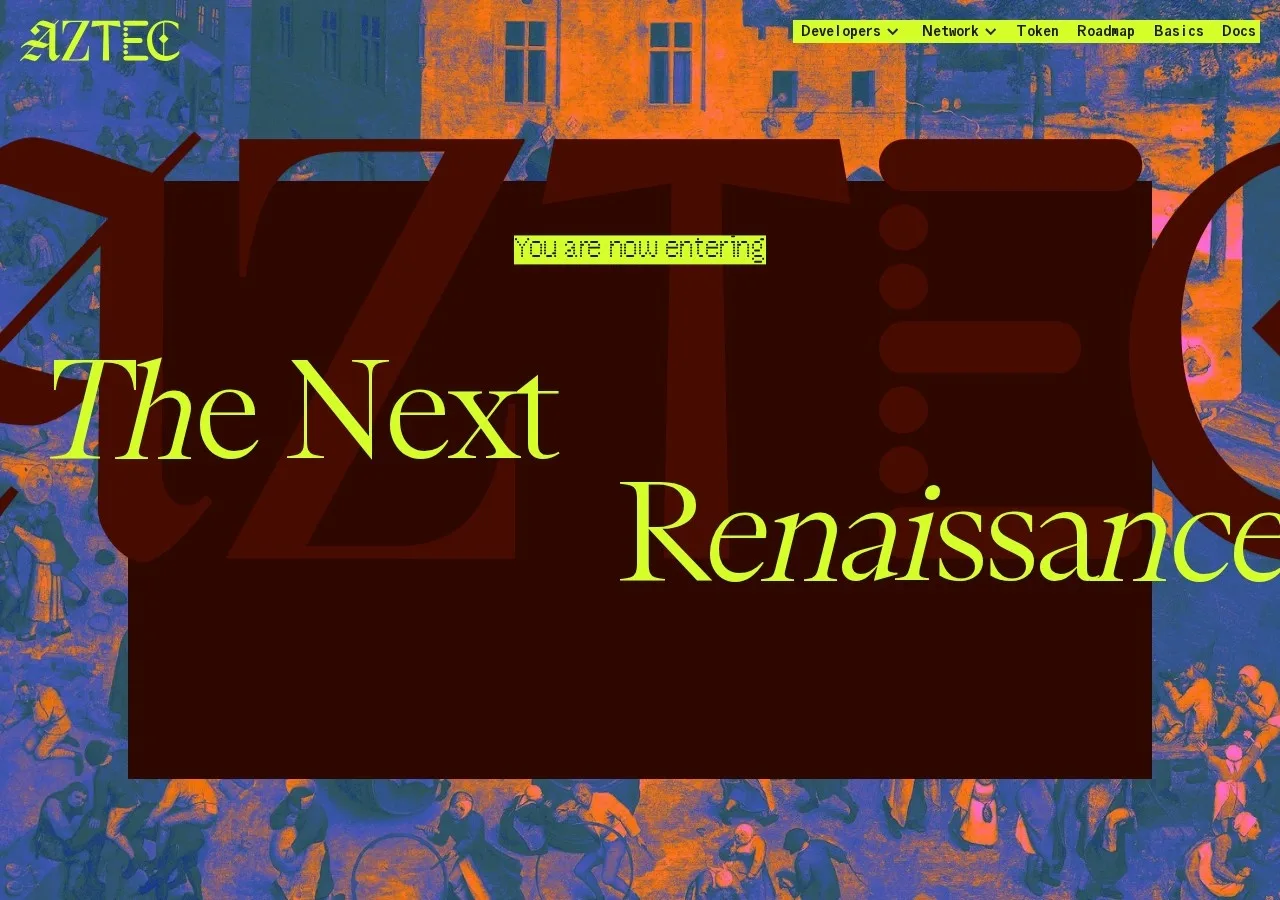
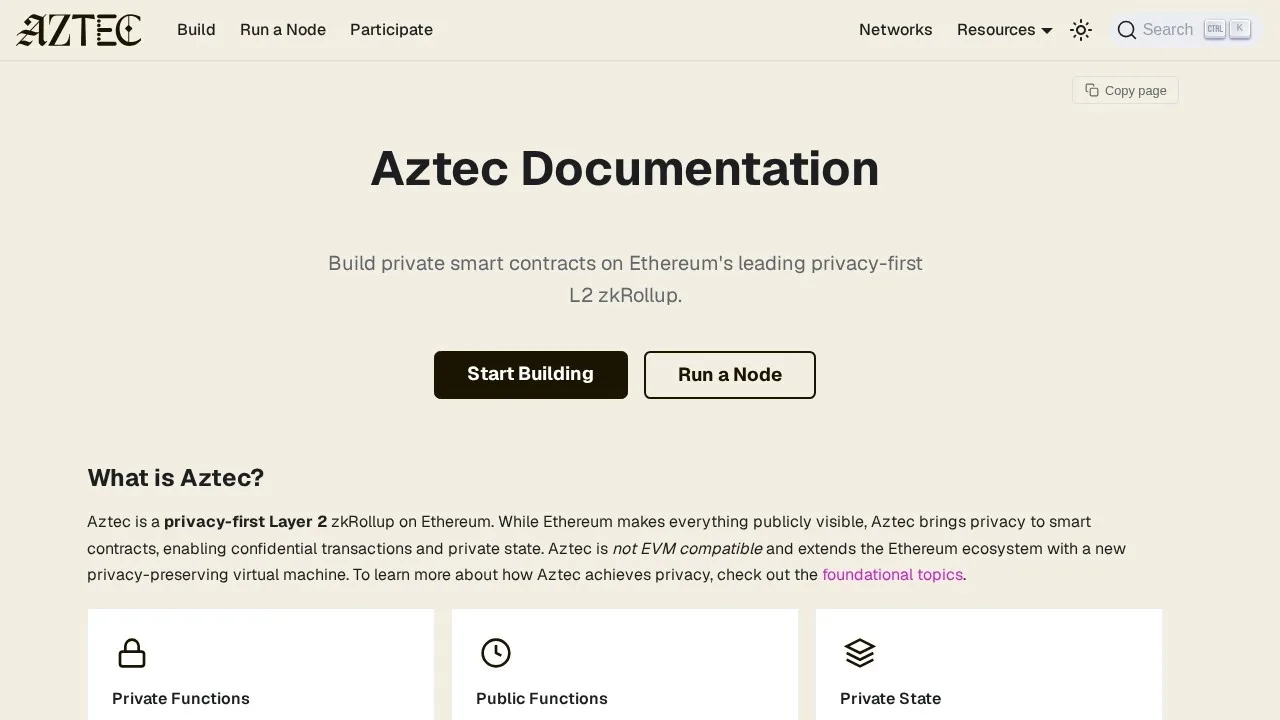
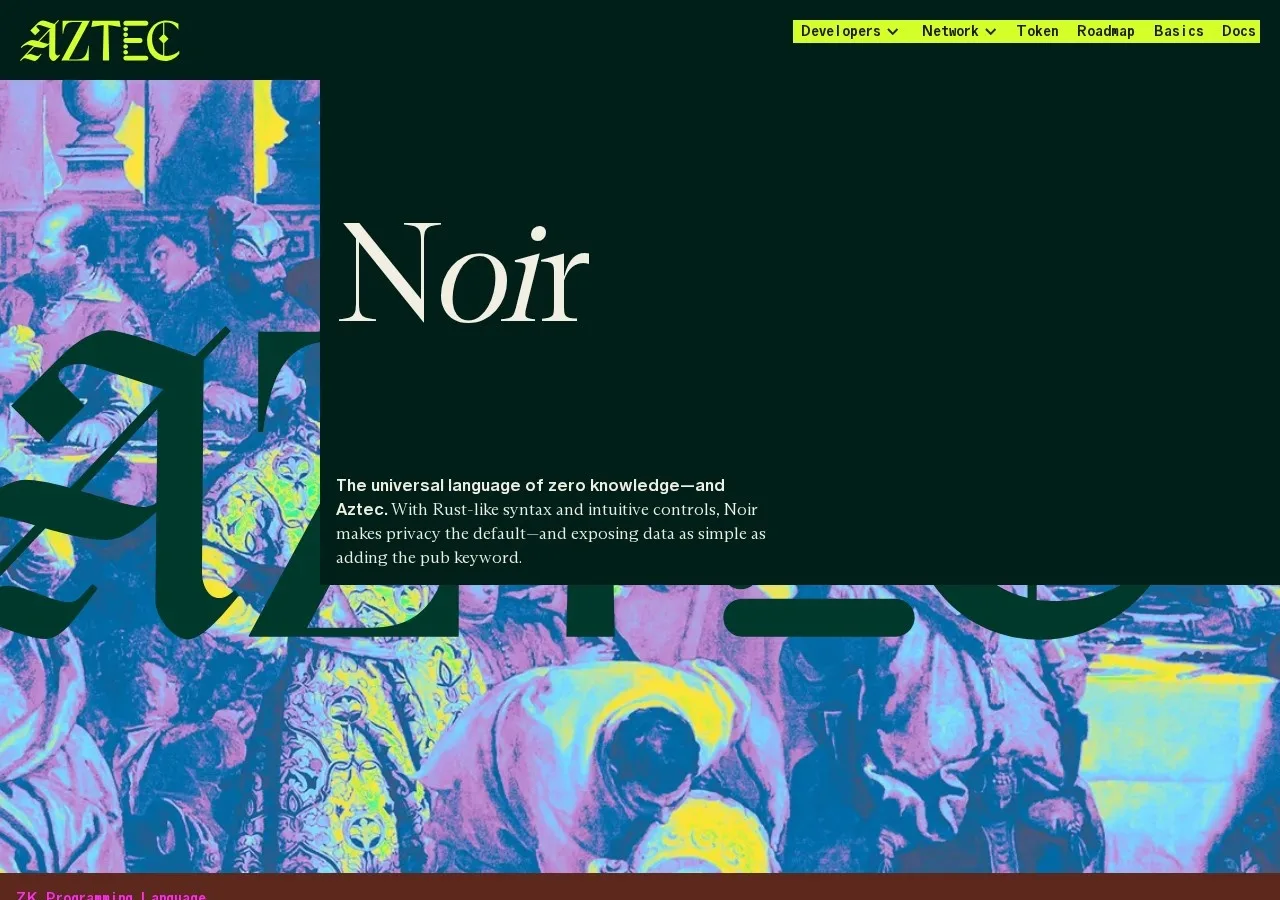
Aztec screenshots
What users say about Aztec
User sentiment around Aztec focuses on its technology. Discussions often emphasize the network's decentralization model, balanced by concerns over initial low throughput and an absence of major ecosystem applications.
Based on 6 Reddit posts and comments from the last 12 months, checked Oct 20, 2026. These are posts by users on other sites, not reviews submitted on CryptoReview.
User reviews
No user reviews yet. Have you used Aztec? Share your experience below.
Funding and investors
$68MTotal raised
1Round
4Investors
FAQ
Who founded Aztec?
Aztec was founded in 2017 by Zachary Williamson and Joe Andrews. Williamson is a former particle physics researcher and co-inventor of PLONK, while Andrews previously served as CTO of Radish.
Does Aztec have a native token?
Yes, Aztec uses the AZTEC token. Network participants stake AZTEC to operate sequencers and secure the Layer 2 network, earning a portion of block rewards.
Is Aztec EVM compatible?
No, Aztec is not EVM compatible. Smart contracts are written in Noir, a domain-specific Rust-like language designed for zero-knowledge proofs and executed inside the Aztec Virtual Machine.
Has Aztec experienced any security incidents or vulnerabilities?
Core contributors discovered a critical vulnerability in the V5 Alpha proving system in July 2026 using an automated AI audit harness. The flaw placed contract state and funds at risk before circuit patches were scheduled into the V6 release.
What chains and assets does Aztec support?
Aztec operates as a Layer 2 rollup settling directly on Ethereum. Assets like ETH bridge into the network using Aztec's Shield Bridge or partner solutions like Nyx for private transactions.
Latest from Aztec on X
Share an address once, and anyone can watch what it does afterward.
@nyxmoney receivers let you hand out a different Ethereum address each time, with no visible link between any of them and your private account.
Launching soon on Aztec Alpha V6.
@nyxmoney receivers let you hand out a different Ethereum address each time, with no visible link between any of them and your private account.
Launching soon on Aztec Alpha V6.
Private apps need a stable foundation.
Noir 1.0 is that foundation: the language behind Aztec’s private smart contracts and protocol circuits, now audited, fuzzed, and production-ready.
Next up: Aztec Alpha V6.
Noir 1.0 is that foundation: the language behind Aztec’s private smart contracts and protocol circuits, now audited, fuzzed, and production-ready.
Next up: Aztec Alpha V6.
"Privacy" is a crowded word now.
Zac co-wrote PLONK in 2019, before many of the projects using that word today existed.
Aztec has been building the same thing ever since: programmable privacy made accessible for everyone.
Zac co-wrote PLONK in 2019, before many of the projects using that word today existed.
Aztec has been building the same thing ever since: programmable privacy made accessible for everyone.
V6 Launch partner @nulo_sh is the wallet Aztec developers have been asking for.
Clean, fast, and built so any app can connect and start shipping private features.
Users pick what each app sees and approve every send. Free, open source, and live at launch.
Clean, fast, and built so any app can connect and start shipping private features.
Users pick what each app sees and approve every send. Free, open source, and live at launch.
Recent public posts from @aztecnetwork, shown as published. Not reviewed or endorsed by CryptoReview.
Alternatives to Aztec
Proof-of-stake layer-1 blockchain securing nearly $50B in DeFi value since 2015
Layer 1Proof of StakeEVM compatible

Ethereum optimistic rollup securing over $12B with ~0.25-second block times and Stylus Rust contracts
Layer 2Optimistic rollupEVM compatible

Sharded Layer-1 blockchain supporting 1.2s finality and cross-chain execution across 35+ networks
Layer 1Proof of StakeNEAR

EVM sidechain with sub-two-second settlement, $0.002 average fees, and over 8 billion processed transactions
SidechainProof of StakeEVM compatible

Proof-of-stake layer 1 with sub-second finality and customizable sovereign appchains
Layer 1Proof of StakeEVM compatible

Ethereum layer 2 built on the OP Stack and incubated by Coinbase
Layer 2Optimistic rollupEVM compatible