
Boom: ⚡️⚡️⚡️
Your next mining move should bring more hashrate and fewer surprises.
Reserve 188 TH/s Antminer S21s and prepay hosting in one step. Qualifying fleet sizes unlock up to 56% off hardware and hosting as low as 6.74¢/kWh.
Explore:https://t.co/xKYvITDM6K

Compass Mining
Bitcoin ASIC procurement and hosting platform managing 5.9 EH/s across 20 facilities
3.6/ 5
Our score
Good
Type
Hosting
Pool fee
1%
Payout schemes
FPPS
Hashrate
5.9 EH/s
Coins
BTC
What is Compass Mining?
Compass Mining is a Bitcoin mining infrastructure and hardware provider based in Wilmington, Delaware. The platform sells ASIC miners to individuals and institutions, deploying the equipment into commercial data centers to participate in Bitcoin network consensus without requiring local home or warehouse setups. As of October 2026, the company manages roughly 160.0 MW of hosted capacity and 5.9 EH/s of hashrate across 20 hosting facilities.
Team and corporate background
Compass Mining Inc. was co-founded by Chief Executive Officer Paul Gosker and co-founder Thomas Heller. The executive team also includes Chief Information Security Officer Emre Demirors, Chief Revenue Officer Christopher Burnett, Chief Mining Officer Shanon Squires, and Chief Financial Officer Eric Alfuth. Operational headquarters are located in Wilmington, Delaware, with hosting infrastructure distributed across commercial data-center facilities throughout North America.
How the hosting service works
Customers purchase ASIC hardware directly through the Compass online marketplace or source hardware for deployment. Once units are energized at a designated facility, miners point their machines to their chosen Bitcoin mining pool, receiving payouts from their chosen Bitcoin mining pool. Compass provides an online dashboard to track machine hash rates, monitor power draw, and manage configuration settings. The company includes a 95% uptime guarantee delivered through a blend of miner availability and service-level credits for downtime. In April 2026, Compass partnered with SpiderPool to offer users a discounted 1% FPPS pool fee for machines routed through designated sub-accounts.
Expansion milestones and operational scale
Compass Mining has sold more than 100,000 machines to over 10,000 customers. In January 2026, the company energized its Texas 8 site near Odessa, Texas, adding 10 megawatts of capacity capable of supporting approximately 3,000 ASIC miners. Subsequent capacity additions included an energized 20 MW site in Texas. Ancillary offerings include a site accelerator program for third-party hosting partners, as well as on-site hardware maintenance and diagnostic repair services.
Operational trade-offs and risks
Miners face third-party hosting counterparty risk, as physical hardware remains situated in commercial data centers subject to local utility contracts and facility operations. Operational margins remain exposed to Bitcoin network difficulty retargets, halving cycles, and variable electricity prices. Hardware obsolescence also limits the operational lifespan of deployed ASICs as newer, more efficient machines enter the market.
Founders
Paul GoskerCofounder and Chief Technology Officer
Thomas HellerCofounder and Chief Mining Officer
Vincent Vuong Vincent VuongSenior Director Of Growth
Best for:Miners without commercial power accessBuyers seeking managed ASIC hostingFirms deploying multi-rig Bitcoin fleets
Pros and cons
Pros
- Manages 5.9 EH/s and 160 MW across 20 facilities
- Mining payouts go directly from pools to user-controlled wallets
- Discounted 1% FPPS fee arrangement through SpiderPool
- Contractual 95% uptime guarantee with service-level credit coverage
Cons
- Physical hardware is held off-site, introducing hosting counterparty risk
- Exclusively supports Bitcoin mining without multi-asset support
- Hosting margins are exposed to power rates and network difficulty jumps
- Uptime is covered by a 95% guarantee with service-level credits for excessive downtime
Our review
3.6/5
Good
Compass Mining provides turnkey Bitcoin ASIC hardware and commercial hosting across 20 facilities, but buyers take on facility operational risks and downtime remedies rely on service credits.
Compass Mining is a turnkey Bitcoin mining infrastructure provider based in Wilmington, Delaware. Co-founded by Chief Executive Officer Paul Gosker and Thomas Heller, the platform serves over 10,000 customers by letting retail and commercial buyers purchase ASIC machines, host them in professional data centers, and point hashrate to their chosen mining pool. By October 2026, Compass managed 5.9 EH/s of hashrate and 160.0 MW of power capacity spread across 20 hosting facilities, having sold more than 100,000 machines.
Users select hardware from an online marketplace, direct hashpower through an online dashboard, and benefit from a 1% FPPS fee arrangement with SpiderPool. Fleet expansion continues across North America, including the energization of the 10 MW Texas 8 site near Odessa, Texas, which added capacity for approximately 3,000 customer machines.
Hosting operations carry clear trade-offs:
- Facility counterparty exposure: Operational performance is affected by hosting-site operations and electricity conditions.
- Uptime guarantees rely on credits: The platform advertises a 95% uptime guarantee, but remedies are delivered through service-level credits for excessive downtime.
- Market volatility and difficulty adjustments: Mining profitability remains sensitive to Bitcoin price fluctuations, rising network difficulty, and periodic reward halvings.
Compass Mining suits retail and institutional miners who want direct ownership of Bitcoin ASIC hardware without managing industrial power supplies and heat ventilation at home.
Specs
| Type | Hosting · unverified |
|---|---|
| Coins | BTC · unverified |
| Pool fee | 1% · unverified |
| Payout schemes | FPPS · unverified |
| Hashrate | 5.9 EH/s · unverified |
| Locations | United States, Texas · unverified |
Not disclosed by the provider: Minimum payout, Stock ticker, Energy sources, Hardware models.
Data from the provider's website and public sources. Fees and availability change; confirm on the official site before you sign up.
Key features
Hardware marketplace
Lets clients purchase vetted Bitcoin ASIC mining rigs for direct placement into managed partner facilities.
Turnkey data-center hosting
Deploys customer-owned hardware across 20 commercial facilities representing 160 MW of aggregate power capacity.
Custom pool routing
Allows hardware owners to point their machines to a selected Bitcoin mining pool.
SpiderPool fee discount
Provides an integrated 1% FPPS mining pool fee when routing hashrate through partner sub-accounts.
Uptime guarantee credits
Includes a 95% operational uptime service-level policy backed by compensation credits for excess downtime.
Equipment repair and maintenance
Offers diagnostic, servicing, and component upgrade support for ASICs operating at hosting facilities.
Inside Compass Mining
Hosted Mining
Lets clients purchase Bitcoin ASIC hardware and host it across commercial facilities while directing hashrate to their selected pool.
Hardware Marketplace
An online catalog for browsing, buying, and selling vetted Bitcoin mining machines based on budget and efficiency targets.
Miner Repairs & Upgrades
Provides maintenance, hardware diagnostics, and component upgrades for active customer ASICs deployed at hosted sites.
Site Accelerator Program
An infrastructure partnership program designed to develop data centers and deploy enterprise-scale mining capacity.
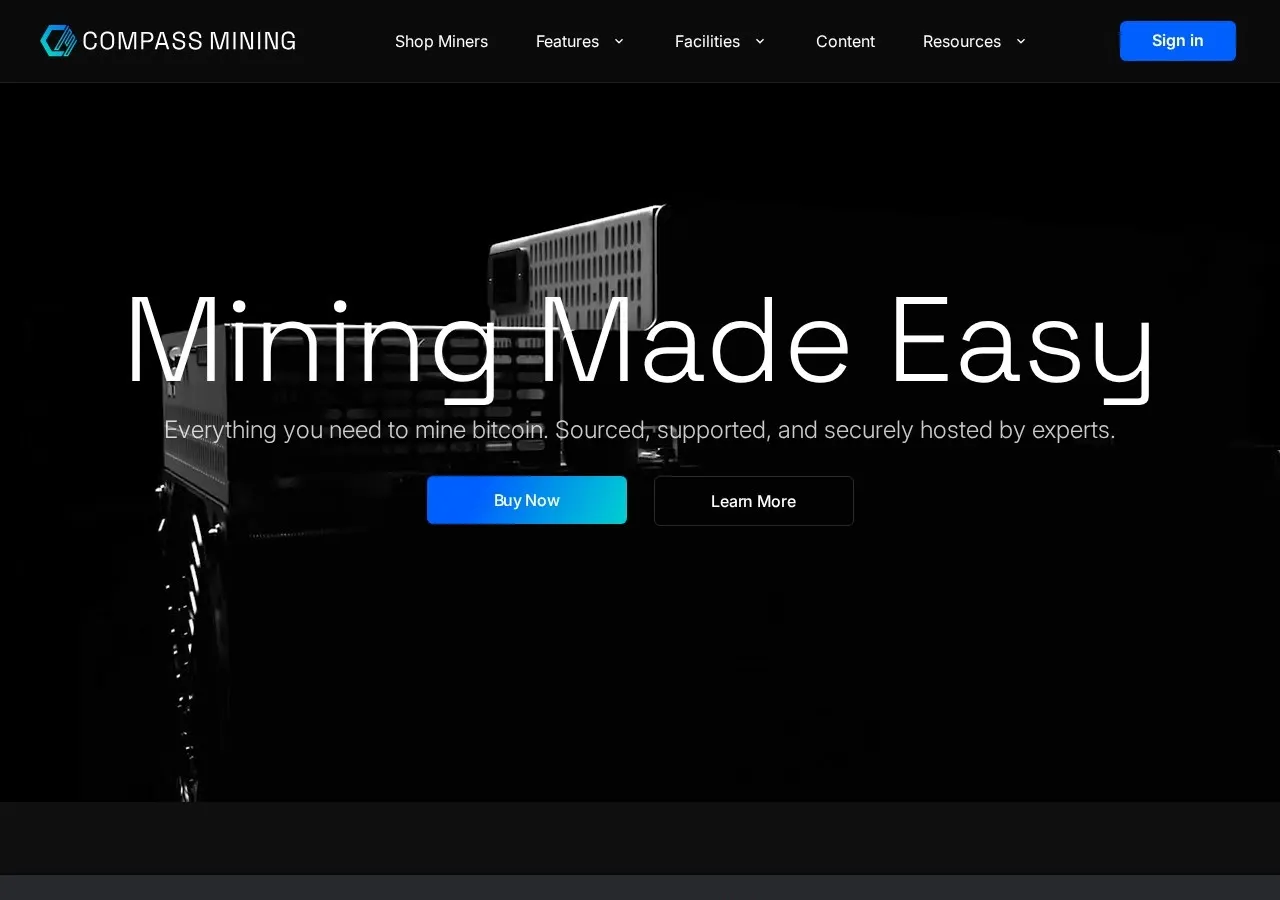
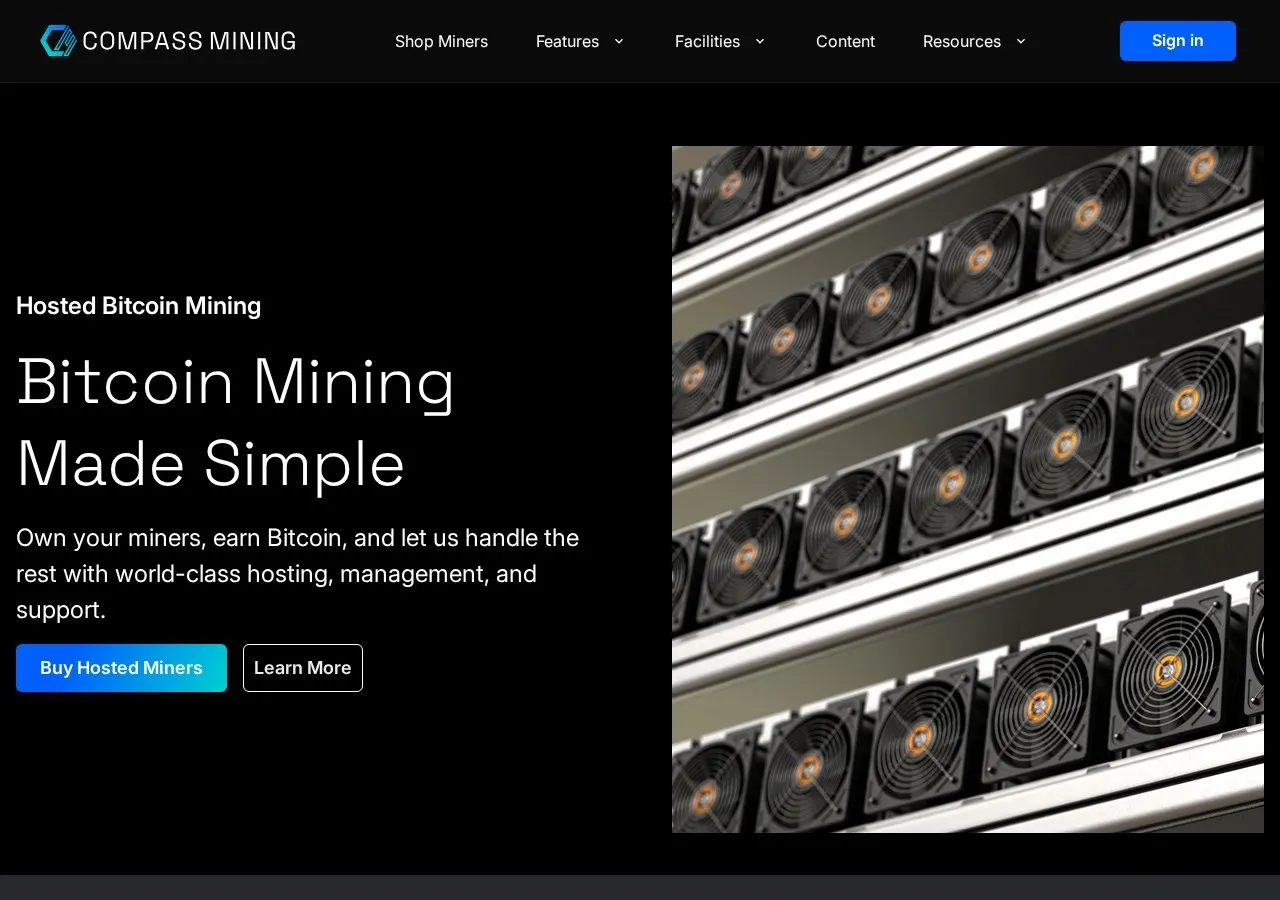
Compass Mining screenshots
What users say about Compass Mining
User discussions regarding Compass Mining are currently sparse and lack recurring detailed praise or complaints. Comments primarily revolve around routine platform queries, such as dealing with remaining account credits.
Based on 5 Reddit posts and comments from the last 12 months, checked Oct 26, 2026. These are posts by users on other sites, not reviews submitted on CryptoReview.
User reviews
No user reviews yet. Have you used Compass Mining? Share your experience below.
FAQ
Who founded Compass Mining?
Compass Mining was co-founded by Chief Executive Officer Paul Gosker and Thomas Heller. The company is headquartered in Wilmington, Delaware.
What coins can you mine with Compass Mining?
Compass Mining focuses exclusively on Bitcoin mining. Customers purchase ASIC machines designed to secure the Bitcoin network.
What pool fees does Compass Mining offer?
Compass Mining partnered with SpiderPool to provide customers with a discounted 1% FPPS pool fee. Users activate the rate by linking a SpiderPool sub-account with a compass prefix to their dashboard.
What is the Compass Mining uptime guarantee?
Compass Mining advertises a 95% uptime guarantee across its hosting agreements. The guarantee is fulfilled through actual miner uptime combined with service level credits for excessive downtime.
Does Compass Mining offer cloud mining?
Compass Mining sells physical ASIC hardware for hosting in commercial data centers.
Latest from Compass Mining on X
Happy Monday, miners! New month, fresh energy, and new earning potential to explore. ⛏️
We’ve been working on something designed to help you move into a new hashrate with more clarity around hardware and hosting costs.
Stay positive. Stay ready. Something powerful is coming. 👀
We’ve been working on something designed to help you move into a new hashrate with more clarity around hardware and hosting costs.
Stay positive. Stay ready. Something powerful is coming. 👀
Clocking out, miners. The jack-o’-lantern is still glowing. 🎃⛏️
We’re keeping what’s inside under wraps a little longer, but your next move is taking shape.
Enjoy your evening. We’ll bring more into the light soon. 👀
We’re keeping what’s inside under wraps a little longer, but your next move is taking shape.
Enjoy your evening. We’ll bring more into the light soon. 👀
Miners, we’ve been carving out something for you. 🎃⛏️
A little less bite in the costs. A little more power behind your next move.
Only a few pieces are showing… for now. 👀
Something’s glowing at Compass Mining. Coming soon. https://t.co/G2rSwXYRbc
A little less bite in the costs. A little more power behind your next move.
Only a few pieces are showing… for now. 👀
Something’s glowing at Compass Mining. Coming soon. https://t.co/G2rSwXYRbc

Spooky season miner check: BTC is near $80.7K, difficulty is 140.58T, and just two blocks remain before today’s retarget; now tracking near +5.7%. 🎃
The forecast may look scary, but prepared miners don’t panic. Know your power cost, protect uptime, and keep hashing. ⛏️ https://t.co/VqOWdUu3GK
The forecast may look scary, but prepared miners don’t panic. Know your power cost, protect uptime, and keep hashing. ⛏️ https://t.co/VqOWdUu3GK

Recent public posts from @Compass_Mining, shown as published. Not reviewed or endorsed by CryptoReview.
Alternatives to Compass Mining

Institutional digital asset mining infrastructure operating the largest Bitcoin mining pool
Mining pool · Firmware & softwareBTC · ZEC0%

Public Bitcoin miner operating 50 EH/s across self-managed data centers
Public minerBTC50 EH/s

Bitcoin mining pool, LuxOS firmware, and compute derivatives with over 40 EH/s in hashrate
Mining pool · Firmware & softwareFPPS · Fixed +1>40 EH/s

Publicly traded clean-energy Bitcoin miner and HPC provider operating 440 MW of data center capacity
Public miner · HostingBTC25.1 EH/s

Publicly traded digital infrastructure enterprise and Bitcoin miner with 1.9 GW of energized power capacity
Public miner · Mining pool +1BTCNASDAQ: MARA

ADX-listed digital infrastructure operator running over 550 MW of power across six markets
Public miner · HostingBTC15.9 EH/s