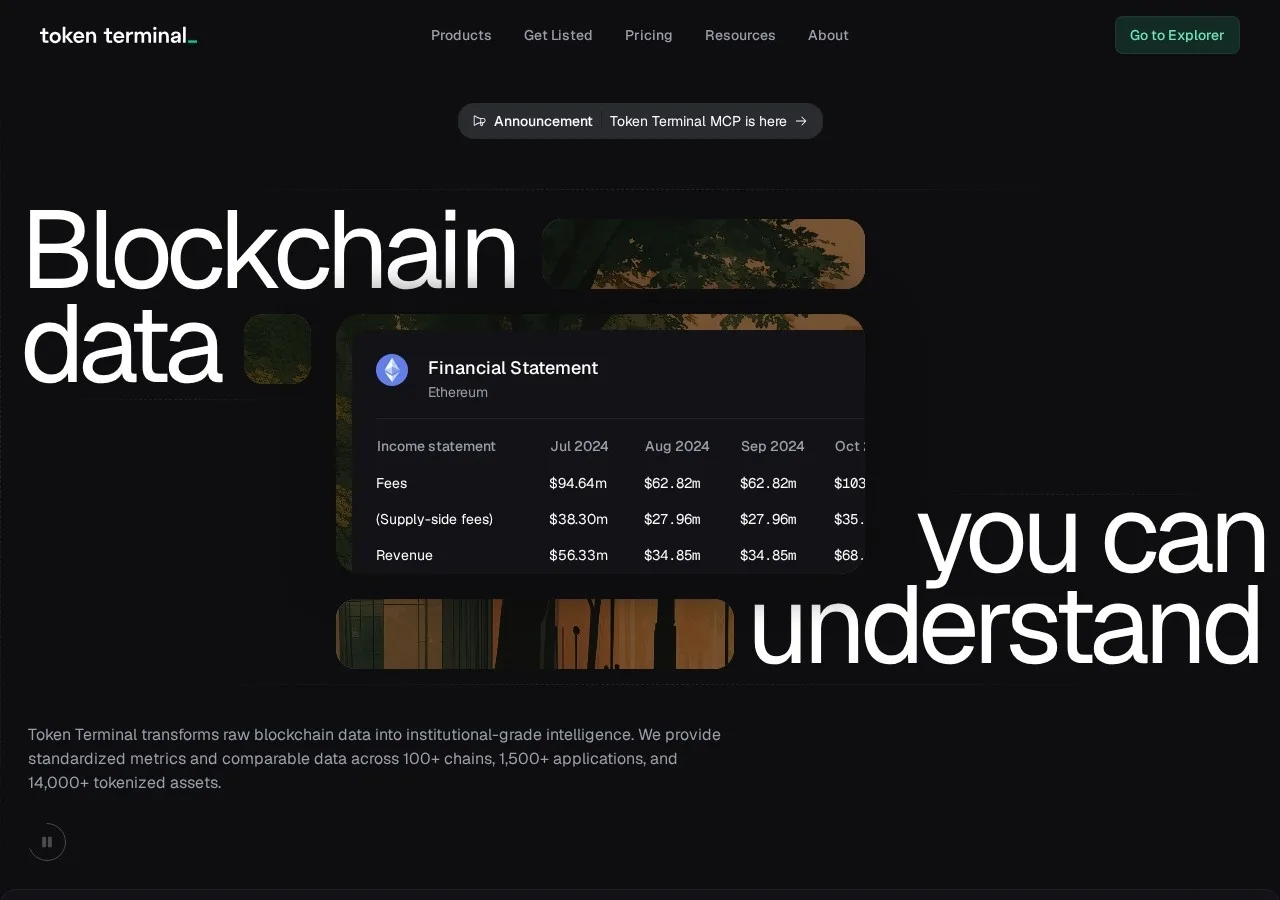
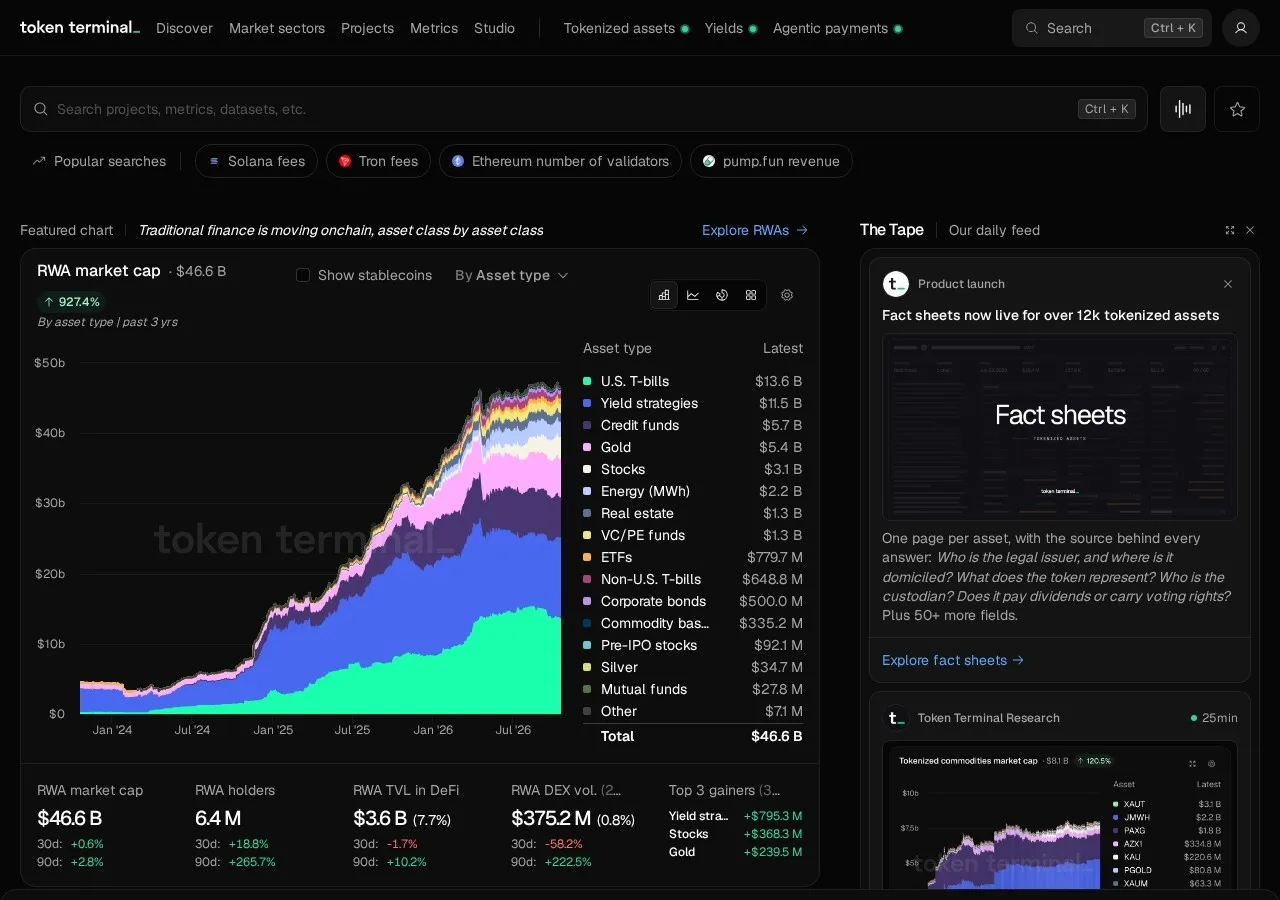
Token Terminal is a cryptocurrency analytics platform that transforms raw on-chain data into standardized financial accounting statements and usage metrics. Based in Helsinki, Finland, and founded in 2020, the platform normalizes smart contract accounting across more than 100 blockchains, 1,500 applications, and 14,000 tokenized assets. It frames protocol performance through traditional corporate metrics such as fees, supply-side revenue, operating expenses, and daily active users.
Data pipeline and analytics suite
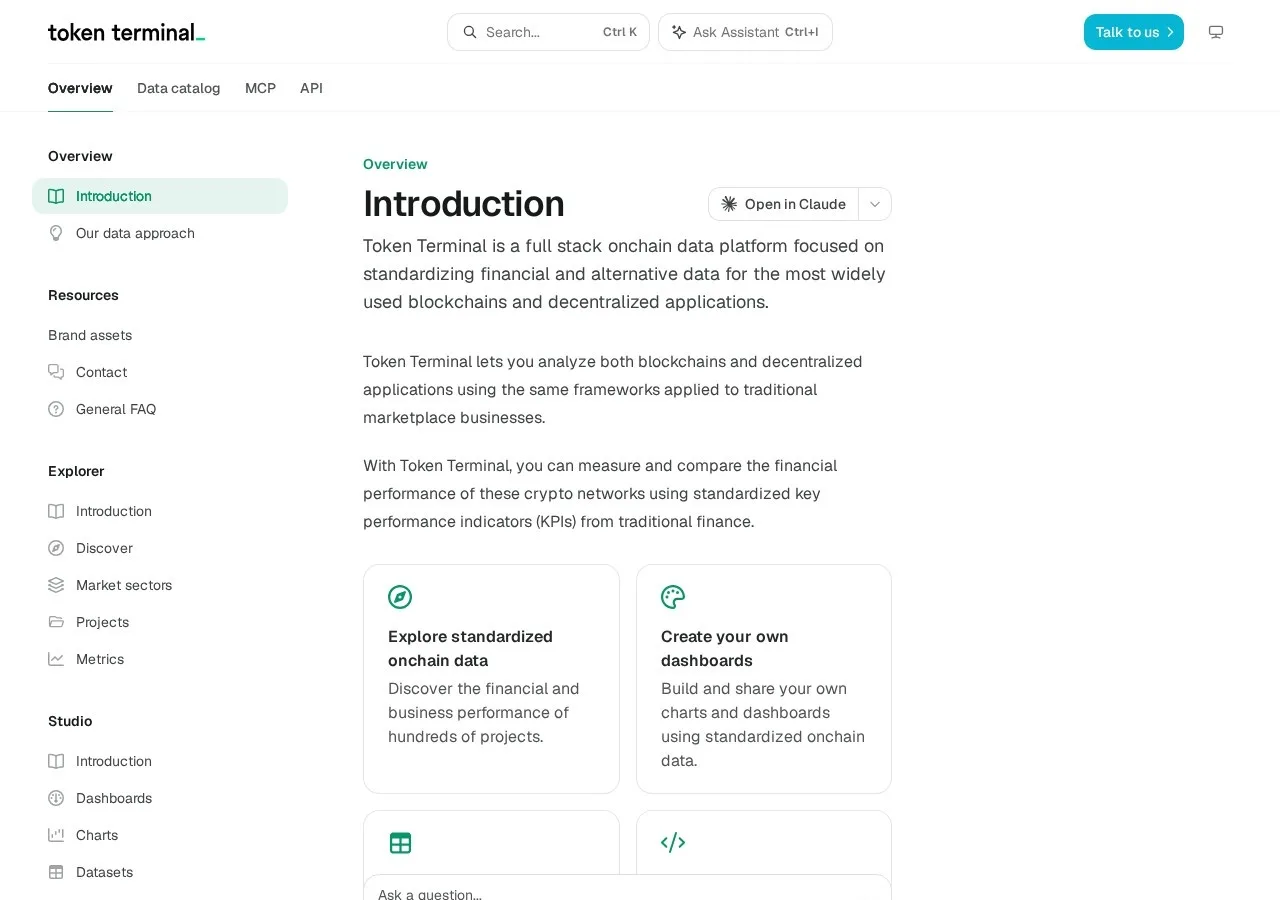
The platform ingests raw transaction data directly from RPC nodes, decodes events at the contract level, and maps project-specific logic into comparable balance sheets and income statements. Users explore this data through Explorer, build custom queries using SQL in Studio, or export financial figures into Google Sheets and Microsoft Excel. For developers and institutional integrations, Token Terminal provides a dedicated REST API, data warehouse access through Datashare, and a Model Context Protocol (MCP) connector for querying on-chain metrics inside large language models.
Pricing and enterprise distribution
Token Terminal provides free access to core platform metrics on its web dashboard, while advanced features, data downloads, custom queries, and automated feeds require paid subscriptions. Paid tiers offer a 15% discount when billed annually. Beyond individual web subscriptions, the service distributes on-chain datasets via the Bloomberg Terminal under the APPS TOKEN GO command, alongside integrations into external interfaces like CoinMarketCap and Robinhood Agents.
Milestones and integrations
The service launched Methodologies in October 2025 to disclose calculation pipelines linking raw smart contract transactions to final reporting figures. In 2026, Token Terminal expanded its infrastructure footprint: it launched MCP 2.0 in June, introduced Token Terminal AI and CoinMarketCap integrations in July, and became an official connector on Claude in August. By September 2026, on-chain metrics were added to The Block and Robinhood Agents, followed by the rollout of Fact Sheets covering standardized disclosures across more than 10,000 tokenized assets in October 2026.
Risks and limitations
Interpreting on-chain protocols as traditional corporations introduces structural trade-offs. Token incentive distributions or supply-side splits vary heavily by governance rules, meaning standardized accounting models may not capture every idiosyncratic incentive mechanism. In addition, deep historical downloads and high-frequency REST API calls are restricted to paid subscription tiers, which limit automated workflows for free users.